Bahrain
Kingdom of Bahrain · البحرين
Ancient Dilmun civilisation and pearl-diving centre. The Al Khalifa family has ruled since 1783; British protectorate until 1971.
See Bahrain on the 3D globeTake a quiz
Population1.6 million
Area765 km²
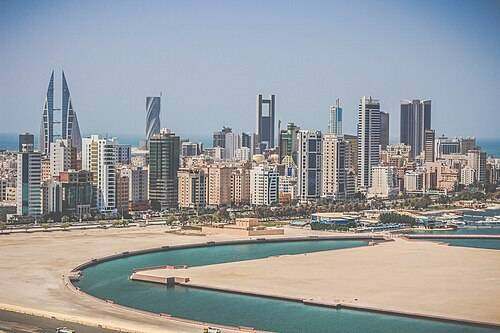
CapitalManama
RegionWestern Asia
Did you know?
- Linked to Saudi Arabia by the 25 km King Fahd Causeway
- The Tree of Life has survived 400 years in the desert
- Hosted the Middle East's first Formula 1 race (2004)
Key facts about Bahrain
- Government
- Constitutional monarchy (kingdom)
- Religion
- Islam ~70% (Shia majority, Sunni royal family)
- Founded / independence
- 1971 (from UK)
- Rich in
- Oil refining, banking, aluminium
- Languages
- Arabic
Arabic (Bahrani dialect), English, Persian - Currency
- Bahraini dinar (.د.ب)
- People are called
- Bahraini
- Main cities
- Manama, Riffa, Muharraq
Timeline of Bahrain
- 2000 BCDilmun civilisation
- 1783Al Khalifa rule
- 1861British protectorate
- 1932Oil discovered
- 1971Independence
- 2011Uprising suppressed
Places to see in Bahrain
- Bahrain Fort (Qal'at al-Bahrain)
- Tree of Life
- Al Fateh Mosque
- Bahrain International Circuit
- pearling path in Muharraq
Food and drink
Machboos (spiced rice with meat) · halwa
Culture and famous for
Pearl diving history (UNESCO); ancient Dilmun burial mounds
Popular sports
Formula 1, football
Geography and climate
- Highest point
- Mountain of Smoke, 135 m
- Rivers, lakes and seas
- No rivers; 33 islands
- Climate
- Hot desert
- Coastline
- Has a sea coast
- Population density
- 2,092 people per km²
Wars and conflicts
- 2011 uprising suppressed
Alliances and memberships
Political unions and regional organisations
Arab LeagueGulf Cooperation CouncilOrganisation of Islamic Cooperation
Economy and trade
OPEC (OPEC+ partner (not a member))
Bahrain in depth
Detailed facts from the CIA World Factbook (public domain, latest edition).
Overview
- History in brief
- In 1783, the Sunni AL-KHALIFA family took power in Bahrain. In order to secure these holdings, it entered into a series of treaties with the UK during the 19th century that made Bahrain a British protectorate. The archipelago attained its independence in 1971. A steady decline in oil production and reserves since 1970 prompted Bahrain to take steps to diversify its economy, in the process developing petroleum processing and refining, aluminum production, and hospitality and retail sectors. It has also endeavored to become a leading regional banking center, especially with respect to Islamic finance. Bahrain's small size, central location among Gulf countries, economic dependence on Saudi Arabia, and proximity to Iran require it to play a delicate balancing act in foreign affairs among its larger neighbors. Its foreign policy activities usually fall in line with Saudi Arabia and the UAE. In 2022, the United States designated Bahrain as a major non-NATO ally.The Sunni royal family has long struggled to manage relations with its Shia-majority population. In 2011, amid Arab uprisings elsewhere in the region, the Bahraini Government responded to similar pro-democracy and reform protests at home with police and military action, including deploying Gulf Cooperation Council security forces. Ongoing dissatisfaction with the political status quo continues to factor into sporadic clashes between demonstrators and security forces. In 2020, Bahrain and the United Arab Emirates signed the US-brokered Abraham Accords with Israel. In 2023, Bahrain and the United States signed the Comprehensive Security Integration and Prosperity Agreement to enhance cooperation across a wide range of areas, from defense and security to emerging technology, trade, and investment.
Geography
- Location
- Middle East, archipelago in the Persian Gulf, east of Saudi Arabia
- Size compared
- 3.5 times the size of Washington, D.C.
- Land borders
- Total: 0 km
- Coastline
- 161 km
- Climate
- arid; mild, pleasant winters; very hot, humid summers
- Terrain
- mostly low desert plain rising gently to low central escarpment
- Elevation
- Highest point: Jabal ad Dukhan 135 mLowest point: Persian Gulf 0 m
- Natural resources
- oil, associated and nonassociated natural gas, fish, pearls
- Natural hazards
- periodic droughts; dust storms
- Notes
- close to primary Middle Eastern petroleum sources; strategic location in Persian Gulf, through which much of the Western world's petroleum must transit to reach open ocean
- Environmental issues
- desertification; drought; coastal degradation from oil spills and other discharges from large tankers, oil refineries, and distribution stations; lack of freshwater resources; saline contamination from lowered water table
People and society
- Population
- Total: 1,566,888 (2024 est.)Male: 940,022Female: 626,866
- Nationality
- Noun: Bahraini(s)Adjective: Bahraini
- Ethnic groups
- Bahraini 47.4%, Asian 43.4%, other Arab 4.9%, African 1.4%, North American 1.1%, Gulf Co-operative countries 0.9%, European 0.8%, other 0.1% (2020 est.)
- Languages
- Arabic (official), English, Farsi, UrduMajor-language sample(s): كتاب حقائق العالم، المصدر الذي لا يمكن الاستغناء عنه للمعلومات الأساسية (Arabic)The World Factbook, the indispensable source for basic information.
- Religions
- Muslim 74.2%, other 25.9% (2020 est)
- Median age
- Total: 33.5 years (2025 est.)Male: 34.6 yearsFemale: 31.2 years
- Population growth
- 0.79% (2025 est.)
- Life expectancy
- Total population: 80.4 years (2024 est.)Male: 78.1 yearsFemale: 82.7 years
- Children per woman
- 1.64 children born/woman (2025 est.)
- Urbanization
- Urban population: 89.9% of total population (2023)Rate of urbanization: 1.99% annual rate of change (2020-25 est.)
- Largest cities
- 709,000 MANAMA (capital) (2023)
- Literacy
- Total population: 97.8% (2024 est.)Male: 98.7% (2024 est.)Female: 96.3% (2024 est.)
- Years in school
- Total: 16 years (2023 est.)Male: 15 years (2023 est.)Female: 17 years (2023 est.)
Government
- Official names
- Conventional long form: Kingdom of BahrainConventional short form: BahrainLocal long form: Mamlakat al BahraynLocal short form: Al BahraynFormer: Dilmun, Tylos, Awal, Mishmahig, Bahrayn, State of BahrainEtymology: the name means "the two seas" in Arabic and refers to the water bodies on each side of the archipelago
- Government type
- constitutional monarchy
- Capital
- Name: ManamaGeographic coordinates: 26 14 N, 50 34 ETime difference: UTC+3 (8 hours ahead of Washington, DC, during Standard Time)Etymology: name derives from the Arabic word al-manama, meaning "place of rest" or "place of dreams"
- Regions
- 4 governorates (muhafazat, singular - muhafazah); Asimah (Capital), Janubiyah (Southern), Muharraq, Shamaliyah (Northern)
- Independence
- 15 August 1971 (from the UK)
- National holiday
- National Day, 16 December (1971)
- Constitution
- History: previous 1973; latest adopted 14 February 2002, entry into force 14 February 2002Amendment process: proposed by the king or by at least 15 members of either chamber of the National Assembly followed by submission to an Assembly committee for review and, if approved, submitted to the government for restatement as drafts; passage requires a two-thirds majority vote by the membership of both chambers and validation by the king; constitutional articles on the state religion (Islam), state language (Arabic), and the monarchy and "inherited rule" cannot be amended
- Legal system
- mixed legal system of Islamic (sharia) law, English common law, Egyptian civil, criminal, and commercial codes; customary law
- Voting age
- 20 years of age; universal
- Flag meaning
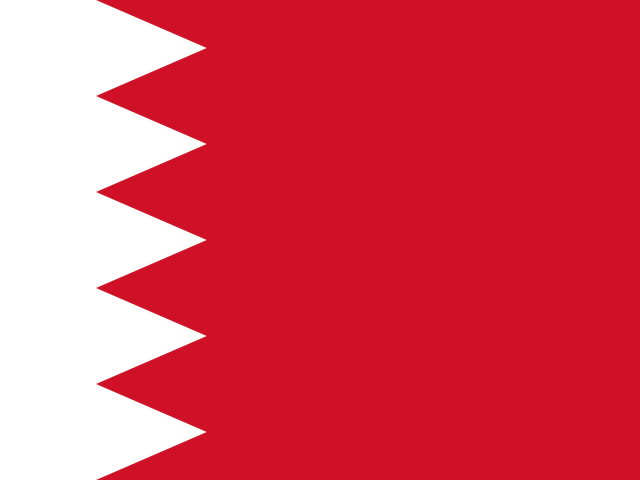
- Description: red, with a white serrated band of five white points on the left sideMeaning: red is the traditional color for flags of Persian Gulf states; the five points represent the five pillars of IslamHistory: until 2002, the flag had eight white points, but this was reduced to five to avoid confusion with the Qatari flag
- National symbols
- a white serrated band with five white points on top of a red field
- National colours
- red, white
- National anthem
- Title: "Bahrainona" (Our Bahrain)Lyrics/music: unknownHistory: adopted 1971; Mohamed Sudqi AYYASH wrote the original lyrics, but they were changed in 2002 after Bahrain became a kingdom
- UNESCO World Heritage Sites
- Total World Heritage Sites: 3 (all cultural)Selected World Heritage Site locales: Dilmun Burial Mounds; Qal'at al-Bahrain – Ancient Harbor and Capital of Dilmun; Bahrain Pearling Path
Economy
- Overview
- high-income, growing Middle Eastern island economy; oil and aluminum exporter with diversification led by services, construction and manufacturing; regional finance and tourism hub; high public debt linked to oil revenue dependence and limited tax base; vulnerable to water reservoir depletion
- GDP (PPP)
- $93.937 billion (2024 est.)
- GDP per person (PPP)
- $59,100 (2024 est.)
- GDP growth
- 3% (2024 est.)
- Inflation
- 0.9% (2024 est.)
- Unemployment
- 1.2% (2024 est.)
- Farm products
- lamb/mutton, dates, milk, tomatoes, chicken, eggs, sheep offal, sheepskins, eggplants, chillies/peppers (2023)
- Industries
- petroleum processing and refining, aluminum smelting, iron pelletization, fertilizers, Islamic and offshore banking, insurance, ship repairing, tourism
- Exports
- $41.303 billion (2024 est.)
- Main exports
- refined petroleum, aluminum, iron ore, aluminum wire, jewelry (2023)
- Export partners
- UAE 16%, Saudi Arabia 15%, South Africa 8%, USA 6%, India 4% (2023)
- Main imports
- iron ore, aluminum oxide, ships, cars, gold (2023)
- Import partners
- China 13%, Saudi Arabia 12%, UAE 11%, Brazil 8%, Australia 7% (2023)
- Money sent home from abroad
- 0% of GDP (2023 est.)
Energy, internet and transport
- Electricity access
- Electrification - total population: 100% (2022 est.)
- Electricity sources
- Fossil fuels: 99.7% of total installed capacity (2023 est.)Solar: 0.2% of total installed capacity (2023 est.)
- Internet users
- Percent of population: 100% (2023 est.)
- Mobile phones
- Total subscriptions: 2,415,720 (2023 est.)Subscriptions per 100 inhabitants: 160 (2024 est.)
- TV and radio
- state-run Bahrain Radio and Television Corporation (BRTC) operates 6 terrestrial TV networks and several radio stations; satellite TV systems provide access to international broadcasts; 1 private FM station has broadcasts for Indian listeners; radio and TV broadcasts from countries in the region are available (2023)
- Airports
- 3 (2025)
- Merchant ships
- Total: 184 (2023)By type: general cargo 12, oil tanker 3, other 169
Military and space
- Armed forces
- Bahrain Defense Force (BDF): Royal Bahraini Army (includes the Royal Guard), Royal Bahraini Navy, Royal Bahraini Air ForceMinistry of Interior: National Guard, Special Security Forces Command (SSFC), Coast Guard (2025)
- Military spending
- 3% of GDP (2024 est.)
- Military service
- 18 years of age for voluntary military service; 18-55 to voluntarily join the reserves (2025)
- Space programme
- focuses on promoting space research and science, applying space-related technologies, and building capacity in the fields of satellite manufacturing, tracking, control, data processing and analysis, and remote sensing; cooperates with a variety of foreign agencies and commercial entities, including those of India, Italy, Japan, Oman, Saudi Arabia, the UK, the UAE, and the US; also a member of the Arab Space Coordination Group (2025)
- Space milestones
- 2022 - first scientific nanosatellite (Light-1 CubeSat) built with assistance from the UAE and launched by Japan; joined US-led Artemis Accords for space exploration2023 - first domestically built technology-demonstrator nanosatellite (Kuwait Sat-1) launched by US2025 - first domestically built remote-sensing nanosatellite (Al Munther) launched by US
Global issues
- Refugees and displaced people
- Refugees: 371 (2024 est.)
- Phone code
- +973
- Internet domain
- .bh