Barbados
Barbados
An English sugar colony from 1627 that was never conquered by another power. Removed the British monarch as head of state in 2021.
See Barbados on the 3D globeTake a quiz
Population280 thousand
Area430 km²
CapitalBridgetown
RegionCaribbean
Did you know?
- Claimed birthplace of rum
- Removed the British monarch as head of state in 2021
- Rihanna was named a national hero
Key facts about Barbados
- Government
- Parliamentary republic (since 2021)
- Religion
- Christian ~75%
- Founded / independence
- 1966 (from UK)
- Rich in
- Tourism, offshore finance, rum, sugar
- Languages
- English
English; Bajan Creole - Currency
- Barbadian dollar ($)
- People are called
- Barbadian
- Main cities
- Bridgetown, Speightstown
Timeline of Barbados
- 1627English settlement
- 1834Slavery abolished
- 1966Independence
- 2021Republic
Places to see in Barbados
- Harrison's Cave
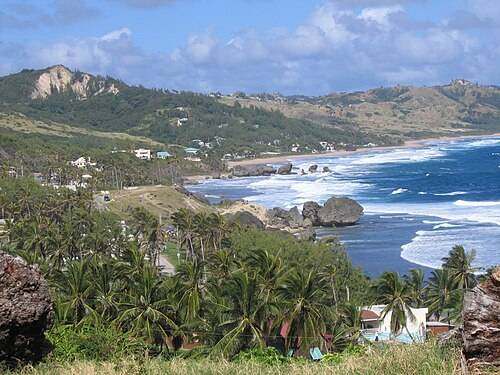
- Bathsheba
- Bridgetown and Garrison (UNESCO)
- Mount Gay rum distillery
Food and drink
Cou-cou and flying fish · fish cakes
Culture and famous for
Crop Over festival; birthplace of rum; singer Rihanna
Popular sports
Cricket
Geography and climate
- Highest point
- Mount Hillaby, 340 m
- Rivers, lakes and seas
- No major rivers
- Climate
- Tropical
- Coastline
- Has a sea coast
- Population density
- 651 people per km²
Wars and conflicts
- None
Alliances and memberships
Political unions and regional organisations
CARICOMCELACOrganization of American StatesCommonwealth of Nations
Barbados in depth
Detailed facts from the CIA World Factbook (public domain, latest edition).
Overview
- History in brief
- Barbados was uninhabited when first settled by the British in 1627. Enslaved Africans worked the sugar plantations established on the island, which initially dominated the Caribbean sugar industry. By 1720, Barbados was no longer a dominant force within the sugar industry, having been surpassed by the Leeward Islands and Jamaica. Slavery was abolished in 1834. The Barbadian economy remained heavily dependent on sugar, rum, and molasses production through most of the 20th century. The gradual introduction of social and political reforms in the 1940s and 1950s led to independence from the UK in 1966. In the 1990s, tourism and manufacturing surpassed the sugar industry in economic importance. Barbados became a republic in 2021, with the former Governor-General Sandra MASON elected as the first president.
Geography
- Location
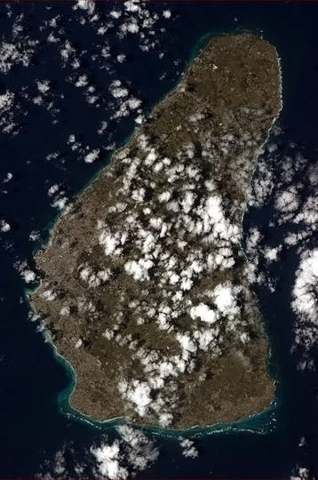
- Caribbean, island in the North Atlantic Ocean, northeast of Venezuela
- Size compared
- 2.5 times the size of Washington, D.C.
- Land borders
- Total: 0 km
- Coastline
- 97 km
- Climate
- tropical; rainy season (June to October)
- Terrain
- relatively flat; rises gently to central highland region
- Elevation
- Highest point: Mount Hillaby 336 mLowest point: Atlantic Ocean 0 m
- Natural resources
- petroleum, fish, natural gas
- Natural hazards
- infrequent hurricanes; periodic landslides
- Notes
- easternmost Caribbean island
- Environmental issues
- pollution of coastal waters from waste disposal by ships; soil erosion; illegal solid-waste disposal
People and society
- Population
- Total: 304,139 (2024 est.)Male: 146,587Female: 157,552
- Nationality
- Noun: Barbadian(s) or Bajan (colloquial)Adjective: Barbadian or Bajan (colloquial)
- Ethnic groups
- African descent 92.4%, mixed 3.1%, White 2.7%, East Indian 1.3%, other 0.2%, unspecified 0.3% (2010 est.)
- Languages
- English (official), Bajan (English-based creole language, widely spoken in informal settings)
- Religions
- Protestant 66.4% (includes Anglican 23.9%, other Pentecostal 19.5%, Adventist 5.9%, Methodist 4.2%, Wesleyan 3.4%, Nazarene 3.2%, Church of God 2.4%, Baptist 1.8%, Moravian 1.2%, other Protestant 0.9%), Roman Catholic 3.8%, other Christian 5.4% (includes Jehovah's Witness 2.0%, other 3.4%), Rastafarian 1%, other 1.5%, none 20.6%, unspecified 1.2% (2010 est.)
- Median age
- Total: 42.2 years (2025 est.)Male: 40.3 yearsFemale: 42.5 years
- Population growth
- -0.42% (2025 est.)
- Life expectancy
- Total population: 79 years (2024 est.)Male: 76.3 yearsFemale: 81.8 years
- Children per woman
- 1.24 children born/woman (2025 est.)
- Urbanization
- Urban population: 31.4% of total population (2023)Rate of urbanization: 0.46% annual rate of change (2020-25 est.)
- Largest cities
- 89,000 BRIDGETOWN (capital) (2018)
Government
- Official names
- Conventional long form: noneConventional short form: BarbadosEtymology: the name is the plural of the Spanish word barbado and means "the bearded ones," which could refer either to the beard-like leaves of the island's fig trees or to the beards of Carib inhabitants
- Government type
- parliamentary republic; a Commonwealth realm
- Capital
- Name: BridgetownGeographic coordinates: 13 06 N, 59 37 WTime difference: UTC-4 (1 hour ahead of Washington, DC, during Standard Time)Etymology: originally named Indian Bridge in 1628 for a bridge built beside Carlisle Bay, then called St. Michael's Town until the 19th century; now named after a bridge built over the Constitution River that flows through the center of the city
- Regions
- 11 parishes and 1 city*; Bridgetown*, Christ Church, Saint Andrew, Saint George, Saint James, Saint John, Saint Joseph, Saint Lucy, Saint Michael, Saint Peter, Saint Philip, Saint Thomas
- Independence
- 30 November 1966 (from the UK)
- National holiday
- Independence Day, 30 November (1966)
- Constitution
- History: adopted 22 November 1966, effective 30 November 1966; Constitution (Amendment) (No. 2) Bill, 2021 establishes Barbados as a republic and revokes the earlier Order in CouncilAmendment process: proposed by Parliament; passage of amendments to constitutional sections such as citizenship, fundamental rights and freedoms, and the organization and authorities of the branches of government requires two-thirds majority vote by the membership of both houses of Parliament; passage of other amendments only requires a majority vote of both houses
- Legal system
- English common law; no judicial review of legislative acts
- Voting age
- 18 years of age; universal
- Flag meaning
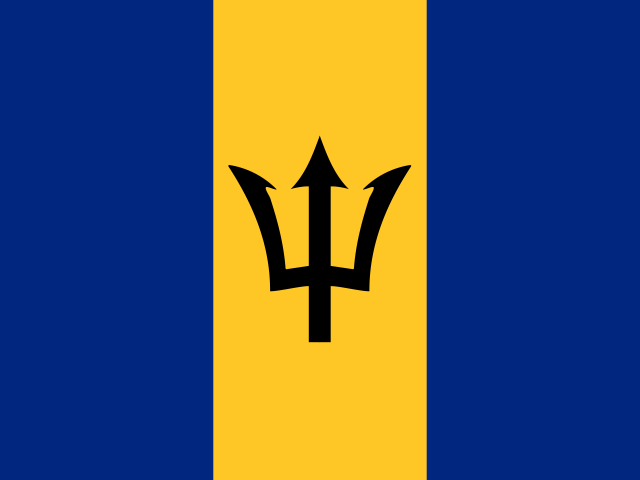
- Description: three equal vertical bands of ultramarine blue (left side), gold, and ultramarine blue with a black trident head centered on the gold bandMeaning: blue stands for the sea and sky, and gold for the beaches; the trident head represents independence and a break with the past
- National symbols
- Neptune's trident, pelican, red bird of paradise flower (also known as "Pride of Barbados")
- National colours
- blue, yellow, black
- National anthem
- Title: "The National Anthem of Barbados"Lyrics/music: Irving BURGIE/C. Van Roland EDWARDSHistory: adopted 1966
- UNESCO World Heritage Sites
- Total World Heritage Sites: 1 (cultural)Selected World Heritage Site locales: Historic Bridgetown and its Garrison
Economy
- Overview
- high-income Eastern Caribbean economy; high standard of living among regional peers; key tourism, construction, and financial sectors driving recent GDP growth; declining but still very high public debt leading to IMF support programs; susceptible to natural disasters and reliance on import partners
- GDP (PPP)
- $5.634 billion (2024 est.)
- GDP per person (PPP)
- $19,900 (2024 est.)
- GDP growth
- 3.8% (2024 est.)
- Inflation
- -0.5% (2024 est.)
- Unemployment
- 7.6% (2024 est.)
- Farm products
- sugarcane, chicken, vegetables, milk, eggs, sweet potatoes, pork, coconuts, tropical fruits, pulses (2023)
- Industries
- tourism, sugar, light manufacturing, component assembly for export
- Exports
- $2.228 billion (2017 est.)
- Main exports
- liquor, refined petroleum, packaged medicine, margarine, baked goods (2023)
- Export partners
- USA 22%, Jamaica 17%, Trinidad & Tobago 8%, Canada 6%, Guyana 6% (2023)
- Main imports
- refined petroleum, crude petroleum, cars, plastic products, ships (2023)
- Import partners
- USA 32%, Trinidad & Tobago 19%, Netherlands 6%, UK 6%, Guyana 5% (2023)
- Money sent home from abroad
- 1.3% of GDP (2023 est.)
Energy, internet and transport
- Electricity access
- Electrification - total population: 100% (2022 est.)
- Electricity sources
- Fossil fuels: 91.9% of total installed capacity (2023 est.)Solar: 7.9% of total installed capacity (2023 est.)Biomass and waste: 0.2% of total installed capacity (2023 est.)
- Internet users
- Percent of population: 80% (2023 est.)
- Mobile phones
- Total subscriptions: 323,482 (2022 est.)Subscriptions per 100 inhabitants: 115 (2022 est.)
- TV and radio
- government-owned Caribbean Broadcasting Corporation (CBC) operates the lone terrestrial TV station; CBC also has a multi-channel cable TV subscription service; roughly a dozen CBC-operated radio stations operate alongside privately owned radio stations (2019)
- Airports
- 1 (2025)
- Merchant ships
- Total: 272 (2023)By type: bulk carrier 90, general cargo 149, oil tanker 5, other 28
Military and space
- Armed forces
- Barbados Defense Force (BDF): The Barbados Regiment, The Barbados Coast Guard (2025)
- Military spending
- 0.7% of GDP (2024 est.)
- Military service
- 18-25 for voluntary active service at the start of recruit training; 18-30 for reserves (2025)
Global issues
- Refugees and displaced people
- Refugees: 13 (2024 est.)
- Phone code
- +1246
- Internet domain
- .bb