Cuba
Republic of Cuba
Spanish colony until 1898. Fidel Castro's 1959 revolution created a communist state allied with the USSR. Deep economic crisis and blackouts since 2021.
See Cuba on the 3D globeTake a quiz
Population10.9 million
Area109,884 km²
CapitalHavana
RegionCaribbean
Did you know?
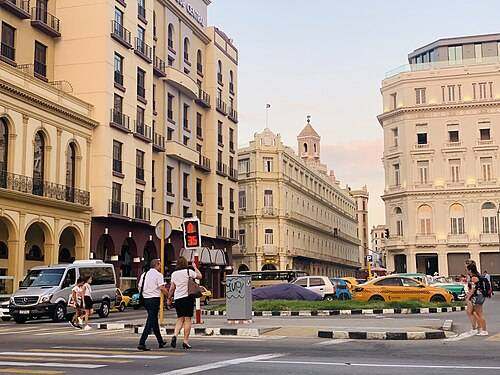
- Has about 60,000 classic American cars still on the road
- The bee hummingbird, the smallest bird, lives here
- Has one of the world's highest doctor-to-patient ratios
Key facts about Cuba
- Government
- Communist one-party socialist republic
- Religion
- Catholic ~60% (nominal), Santería widespread
- Founded / independence
- 1902 (from US occupation; Spain 1898)
- Rich in
- Tourism, nickel, cigars, sugar, doctors abroad
- Languages
- Spanish
Spanish (Cuban); Lucumí in Santería - Currency
- Cuban convertible peso ($), Cuban peso ($)
- People are called
- Cuban
- Main cities
- Havana, Santiago de Cuba, Camagüey, Holguín
Timeline of Cuba
- 1492Columbus lands
- 1898Spanish-American War
- 1902Independence
- 1959Revolution
- 1962Missile Crisis
- 2015US relations restored
Places to see in Cuba
- Old Havana
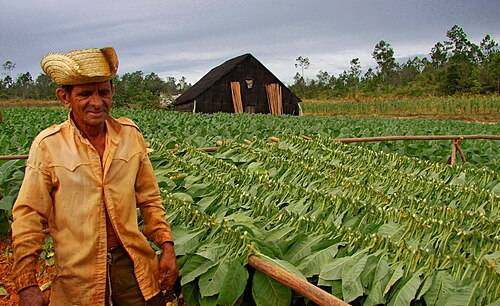
- Viñales Valley
- Trinidad
- Varadero beach
- Malecón
- Che Guevara memorial, Santa Clara
Food and drink
Ropa vieja · moros y cristianos · Cuban sandwich
Culture and famous for
Cigars; son and salsa music; classic 1950s cars
Popular sports
Baseball, boxing, volleyball
Geography and climate
- Highest point
- Pico Turquino, 1,974 m
- Rivers, lakes and seas
- Cauto River
- Climate
- Tropical
- Coastline
- Has a sea coast
- Population density
- 99 people per km²
Wars and conflicts
- Wars of Independence
- Spanish-American War 1898
- Cuban Revolution 1953–59
- Bay of Pigs 1961
- Cuban Missile Crisis 1962
Alliances and memberships
Political unions and regional organisations
Eurasian Economic Union (observer)BRICS (partner country)CELACOrganization of American States (not participating since 1962)
Cuba in depth
Detailed facts from the CIA World Factbook (public domain, latest edition).
Overview
- History in brief
- The native Amerindian population of Cuba began to decline after the arrival of Christopher COLUMBUS in 1492, as the country was developed as a Spanish colony during the next several centuries. Large numbers of African slaves were imported to work the coffee and sugar plantations, and Havana became the launching point for the annual treasure fleets bound for Spain from Mexico and Peru. Spanish rule eventually provoked an independence movement, and occasional rebellions were harshly suppressed. US intervention during the Spanish-American War in 1898 assisted the Cubans in overthrowing Spanish rule. The Treaty of Paris established Cuban independence from Spain in 1898, and after three-and-a-half years of subsequent US military rule, Cuba became an independent republic in 1902.Cuba then experienced a string of governments mostly dominated by the military and corrupt politicians. Fidel CASTRO led a rebel army to victory in 1959; his authoritarian rule held the subsequent regime together for nearly five decades. He handed off the presidency to his younger brother Raul CASTRO in 2008. Cuba's communist revolution, with Soviet support, was exported throughout Latin America and Africa during the 1960s, 1970s, and 1980s. Miguel DIAZ-CANEL Bermudez, hand-picked by Raul CASTRO to succeed him, was approved as president by the National Assembly and took office in 2018. DIAZ-CANEL was appointed First Secretary of the Communist Party in 2021 after the retirement of Raul CASTRO and continues to serve as both president and first secretary. Cuba traditionally and consistently portrays the US embargo, in place since 1961, as the source of its socioeconomic difficulties. As a result of efforts begun in 2014 to reestablish diplomatic relations, the US and Cuba reopened embassies in their respective countries in 2015. The embargo remains in place, however, and the relationship between the US and Cuba remains tense. Illicit migration of Cuban nationals to the US via maritime and overland routes has been a longstanding challenge. In 2017, the US and Cuba signed a Joint Statement ending the so-called "wet-foot, dry-foot" policy, by which Cuban nationals who reached US soil were permitted to stay. Irregular Cuban maritime migration has dropped significantly since 2016, when migrant interdictions at sea topped 5,000, but land border crossings continue.
Geography
- Location
- Caribbean, island between the Caribbean Sea and the North Atlantic Ocean, 150 km south of Key West, Florida
- Size compared
- slightly smaller than Pennsylvania
- Land borders
- Total: 28.5 kmBorder countries: US Naval Base at Guantanamo Bay 28.5 km
- Coastline
- 3,735 km
- Climate
- tropical; moderated by trade winds; dry season (November to April); rainy season (May to October)
- Terrain
- mostly flat to rolling plains, with rugged hills and mountains in the southeast
- Elevation
- Highest point: Pico Turquino 1,974 mLowest point: Caribbean Sea 0 mMean elevation: 108 m
- Natural resources
- cobalt, nickel, iron ore, chromium, copper, salt, timber, silica, petroleum, arable land
- Natural hazards
- the east coast is subject to hurricanes from August to November (in general, the country averages about one hurricane every other year); droughts are common
- Notes
- largest country in Caribbean and westernmost island of the Greater Antilles
- Environmental issues
- soil degradation and desertification (brought on by poor farming techniques and natural disasters); biodiversity loss; deforestation; air and water pollution
People and society
- Population
- Total: 10,059,519 (2025 est.)Male: 4,950,615Female: 5,108,904
- Nationality
- Noun: Cuban(s)Adjective: Cuban
- Ethnic groups
- White 64.1%, Mulatto or mixed 26.6%, Black 9.3% (2012 est.)
- Languages
- Spanish (official)Major-language sample(s): La Libreta Informativa del Mundo, la fuente indispensable de información básica. (Spanish)The World Factbook, the indispensable source for basic information.
- Religions
- Christian 58.9%, folk religion 17.6%, Buddhist <1%, Hindu <1%, Jewish <1%, Muslim <1%, other <1%, none 23.2% (2020 est.)
- Median age
- Total: 46.2 years (2025 est.)Male: 41 yearsFemale: 44.4 years
- Population growth
- -0.6% (2025 est.)
- Life expectancy
- Total population: 80.1 years (2024 est.)Male: 77.8 yearsFemale: 82.6 years
- Children per woman
- 1.49 children born/woman (2025 est.)
- Urbanization
- Urban population: 77.5% of total population (2023)Rate of urbanization: 0.19% annual rate of change (2020-25 est.)
- Largest cities
- 2.149 million HAVANA (capital) (2023)
- Literacy
- Total population: 97.7% (2019 est.)Male: 99% (2019 est.)Female: 96.3% (2019 est.)
- Years in school
- Total: 14 years (2023 est.)Male: 13 years (2023 est.)Female: 15 years (2023 est.)
Government
- Official names
- Conventional long form: Republic of CubaConventional short form: CubaLocal long form: República de CubaLocal short form: CubaEtymology: the origin of the name is disputed; it could be derived from a local Taino word, either cubao, meaning "where fertile land is abundant," or coabana, meaning "great place"
- Government type
- communist state
- Capital
- Name: HavanaGeographic coordinates: 23 07 N, 82 21 WTime difference: UTC-5 (same time as Washington, DC, during Standard Time)Daylight saving time: +1hr, begins second Sunday in March; ends first Sunday in November; note - Cuba has been known to alter the schedule of DST on short notice in an attempt to conserve electricity for lightingEtymology: Spanish soldier Diego VELAZQUEZ named the city San Cristobal de la Habana, or Saint Christopher of the Habana; "Habana" may have been the name of a local ethnic group, but the meaning of the word is unknown
- Regions
- 15 provinces (provincias, singular - provincia) and 1 special municipality* (municipio especial); Artemisa, Camaguey, Ciego de Avila, Cienfuegos, Granma, Guantanamo, Holguin, Isla de la Juventud*, La Habana (Havana), Las Tunas, Matanzas, Mayabeque, Pinar del Río, Sancti Spiritus, Santiago de Cuba, Villa Clara
- Independence
- 20 May 1902 (from US administration); 10 December 1898 (from Spain); not acknowledged by the Cuban Government as days of independence
- National holiday
- Triumph of the Revolution (Liberation Day), 1 January (1959)
- Constitution
- History: several previous; latest drafted 14 July 2018, approved by the National Assembly 22 December 2018, approved by referendum 24 February 2019Amendment process: proposed by the National Assembly of People’s Power; passage requires approval of at least two-thirds majority of the National Assembly membership; amendments to constitutional articles on the authorities of the National Assembly, Council of State, or any rights and duties in the constitution also require approval in a referendum; constitutional articles on the Cuban political, social, and economic system cannot be amended
- Legal system
- civil law system based on Spanish civil code
- Voting age
- 16 years of age; universal
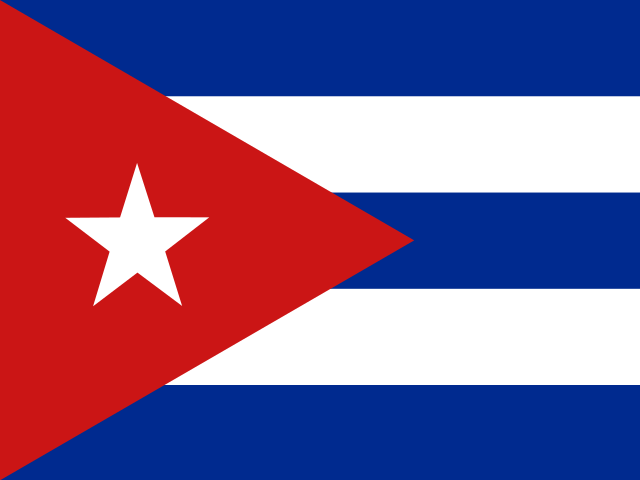
- Flag meaning
- Description: five equal horizontal bands of blue (top, center, and bottom) alternating with white; a red equilateral triangle based on the left side has a five-pointed white star in the centerMeaning: the blue bands stand for the islands' three former departments: Central, Occidental, and Oriental; the white bands for the purity of the independence ideal; the triangle for liberty, equality, and fraternity; the red color for the blood shed in the independence struggle; the white star, called "La Estrella Solitaria" (the Lone Star), lights the way to freedom and was inspired by the state flag of Texas
- National symbols
- royal palm
- National colours
- red, white, blue
- National anthem
- Title: "La Bayamesa" (The Bayamo Song)Lyrics/music: Pedro FIGUEREDOHistory: adopted 1940; Pedro FIGUEREDO first performed it in 1868 during the Ten Years War against the Spanish; a leading figure in the uprising, FIGUEREDO was captured in 1870 and executed by a firing squad; just before being shot, he is said to have shouted, "Morir por la Patria es vivir" (To die for the country is to live), a line from the anthem
- UNESCO World Heritage Sites
- Total World Heritage Sites: 9 (7 cultural, 2 natural)Selected World Heritage Site locales: Old Havana (c); Trinidad and the Valley de los Ingenios (c); San Pedro de la Roca Castle (c); Desembarco del Granma National Park (n); Viñales Valley (c); Archaeological Landscape of the First Coffee Plantations (c); Alejandro de Humboldt National Park (n); Historic Cienfuegos (c); Historic Camagüey (c)
Economy
- Overview
- still largely state-run planned economy, although privatization increasing under new constitution; widespread protests due to lack of basic necessities and electricity; massive foreign investment increases recently; known tobacco exporter; unique oil-for-doctors relationship with Venezuela; widespread corruption
- GDP (PPP)
- $81.165 billion (2024 est.)
- GDP per person (PPP)
- $23,700 (2024 est.)
- GDP growth
- -1.9% (2023 est.)
- Inflation
- 76.1% (2022 est.)
- Unemployment
- 1.6% (2024 est.)
- Farm products
- sugarcane, cassava, plantains, vegetables, mangoes/guavas, milk, tomatoes, pumpkins/squash, sweet potatoes, bananas (2023)
- Industries
- petroleum, nickel, cobalt, pharmaceuticals, tobacco, construction, steel, cement, agricultural machinery, sugar
- Exports
- $8.768 billion (2020 est.)
- Main exports
- tobacco, nickel, liquor, zinc ore, precious metal ore (2023)
- Export partners
- China 34%, Spain 12%, Germany 6%, Switzerland 5%, Hong Kong 4% (2023)
- Main imports
- beer, poultry, rice, plastic products, soybean oil (2023)
- Import partners
- Spain 24%, China 13%, Netherlands 10%, USA 9%, Canada 6% (2023)
Energy, internet and transport
- Electricity access
- Electrification - total population: 100% (2022 est.)
- Electricity sources
- Fossil fuels: 95.2% of total installed capacity (2023 est.)Solar: 1.4% of total installed capacity (2023 est.)Wind: 0.4% of total installed capacity (2023 est.)Hydroelectricity: 0.8% of total installed capacity (2023 est.)Biomass and waste: 2.2% of total installed capacity (2023 est.)
- Internet users
- Percent of population: 71% (2023 est.)
- Mobile phones
- Total subscriptions: 8.01 million (2024 est.)Subscriptions per 100 inhabitants: 73 (2024 est.)
- TV and radio
- Government owns and controls all broadcast media: 8 national TV channels (Cubavision, Cubavision Plus, Tele Rebelde, Multivision, Educational Channel 1 and 2, Canal Clave, Canal Habana), 2 international channels (Cubavision Internacional and Canal Caribe), multiple regional TV stations, 7 national radio networks, and multiple regional radio stations; the government uses the Radio-TV Marti signal; private ownership of electronic media is officially prohibited, with several online independent news sites tolerated but blocked if critical of the government; YouTube popular; Christian denominations create original video content to distribute via social media (2023)
- Airports
- 120 (2025)
- Railways
- Total: 8,367 km (2017)Standard gauge: 8,195 km (2017) 1.435-m gauge (124 km electrified)Narrow gauge: 172 km (2017) 1.000-m gauge
- Merchant ships
- Total: 65 (2023)By type: general cargo 13, oil tanker 10, other 42
Military and space
- Armed forces
- Revolutionary Armed Forces (Fuerzas Armadas Revolucionarias, FAR): Ground Troops (Tropas Terrestres), Revolutionary Navy (Marina de Guerra Revolucionaria, MGR), Revolutionary Air and Air Defense Forces (Defensas Anti-Aereas y Fuerza Aerea Revolucionaria, DAAFAR)Paramilitary forces under the FAR: Youth Labor Army (Ejercito Juvenil del Trabajo, EJT), Territorial Militia Troops (Milicia de Tropas de Territoriales, MTT), Defense and Production Brigades (Brigadas de Producción y Defensa, BPD), Civil Defense Organization (Defensa Civil de Cuba)Ministry of Interior: National Revolutionary Police (Policía Nacional Revolucionaria, PNR), Directorate of Border Guard Troops (Dirección de Tropas de Guardia Fronteriza, TGF), Department of State Security (Departamento de Seguridad del Estado, DSE) (2025)
- Military spending
- 4.2% of GDP (2020 est.)
- Military service
- military service is mandatory for all men and voluntary for women (ages 17-28); service obligation is 24 months with the Armed Forces or the Ministry of Interior; reserve commitment for men until age 45 (2025)
Global issues
- Refugees and displaced people
- Refugees: 171 (2024 est.)IDPs: 37,171 (2024 est.)
- Phone code
- +53
- Internet domain
- .cu