Iceland
Iceland · Ísland
Settled by Norse in 874; its Althing (930) is one of the world's oldest parliaments. Under Norway and then Denmark until full independence in 1944. Runs almost entirely on renewable energy.
See Iceland on the 3D globeTake a quiz
Population390 thousand
Area103,000 km²
CapitalReykjavik
RegionNorthern Europe
Did you know?
- Has no army and no mosquitoes
- Its parliament, the Althing, was founded in 930
- Sits on the Mid-Atlantic Ridge, with about 30 active volcanic systems
Key facts about Iceland
- Government
- Parliamentary republic
- Religion
- Lutheran ~58%
- Founded / independence
- 1944 (from Denmark)
- Rich in
- Fishing, geothermal and hydro energy, aluminium smelting, tourism
- Languages
- Icelandic
Icelandic — changed little since Old Norse - Currency
- Icelandic króna (kr)
- People are called
- Icelander
- Main cities
- Reykjavík, Kópavogur, Hafnarfjörður, Akureyri
Timeline of Iceland
- 874Norse settlement
- 930Althing founded
- 1262Norwegian rule
- 1918Sovereign kingdom under Denmark
- 1944Republic
- 1980First elected female president in the world
Places to see in Iceland
- Blue Lagoon
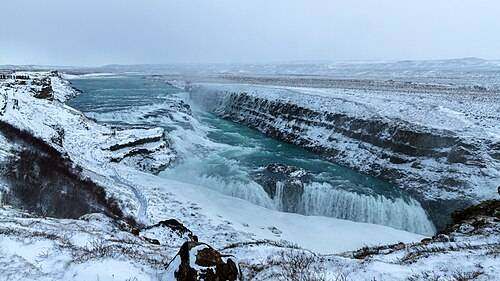
- Gullfoss waterfall
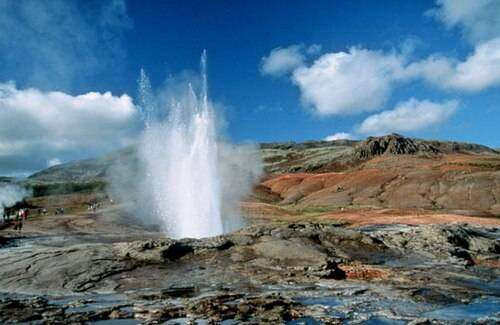
- Geysir
- Þingvellir
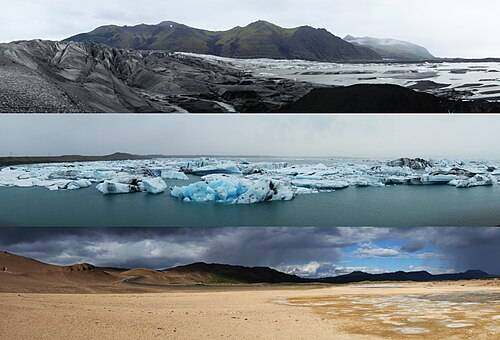
- Jökulsárlón glacier lagoon
- Northern lights
Food and drink
Lamb soup · skyr · fermented shark · Icelandic hot dogs
Culture and famous for
Sagas of medieval Iceland; singer Björk; very high rates of book publishing
Popular sports
Handball, football
Geography and climate
- Highest point
- Hvannadalshnúkur, 2,110 m
- Rivers, lakes and seas
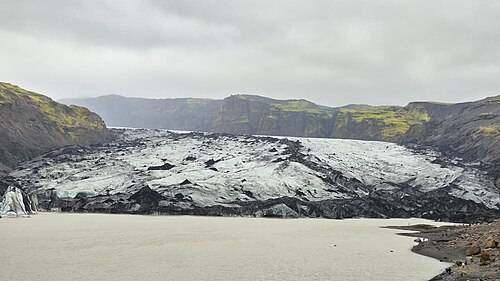
- Glaciers cover about 11%; Vatnajökull
- Climate
- Cool oceanic
- Coastline
- Has a sea coast
- Population density
- 4 people per km²
Wars and conflicts
- Cod Wars with UK (1958–76)
- no army
Alliances and memberships
Military and security
Political unions and regional organisations
Council of EuropeNordic Council
Economy and trade
Iceland in depth
Detailed facts from the CIA World Factbook (public domain, latest edition).
Overview
- History in brief
- Settled by Norwegian and Celtic (Scottish and Irish) immigrants during the late 9th and 10th centuries A.D., Iceland boasts the world's oldest functioning legislative assembly, the Althingi, which was established in 930. Independent for over 300 years, Iceland was subsequently ruled by Norway and Denmark. Fallout from the Askja volcano of 1875 devastated the Icelandic economy and caused widespread famine. Over the next quarter-century, 20% of the island's population emigrated, mostly to Canada and the US. Denmark granted limited home rule in 1874 and complete independence in 1944. The second half of the 20th century saw substantial economic growth driven primarily by the fishing industry. The economy diversified greatly after the country joined the European Economic Area in 1994, but the global financial crisis hit Iceland especially hard in the years after 2008. The economy is now on an upward trajectory, primarily thanks to a tourism and construction boom. Literacy, longevity, and social cohesion are first-rate by world standards.
Geography
- Location
- Northern Europe, island between the Greenland Sea and the North Atlantic Ocean, northwest of the United Kingdom
- Size compared
- slightly smaller than Pennsylvania; about the same size as Kentucky
- Land borders
- Total: 0 km
- Coastline
- 4,970 km
- Climate
- temperate; moderated by North Atlantic Current; mild, windy winters; damp, cool summers
- Terrain
- mostly plateau interspersed with mountain peaks, icefields; coast deeply indented by bays and fiords
- Elevation
- Highest point: Hvannadalshnukur (at Vatnajokull Glacier) 2,110 mLowest point: Atlantic Ocean 0 mMean elevation: 557 m
- Natural resources
- fish, hydropower, geothermal power, diatomite
- Natural hazards
- earthquakes and volcanic activityVolcanism: Iceland is situated on top of a hotspot and experiences severe volcanic activity; Eyjafjallajokull (1,666 m) erupted in 2010, sending ash high into the atmosphere and seriously disrupting European air traffic; scientists continue to monitor nearby Katla (1,512 m), which has a high probability of eruption; Grimsvoetn and Hekla are Iceland's most active volcanoes; other historically active volcanoes include Askja, Bardarbunga, Brennisteinsfjoll, Esjufjoll, Hengill, Krafla, Krisuvik, Kverkfjoll, Oraefajokull, Reykjanes, Torfajokull, and Vestmannaeyjar
- Notes
- strategic location between Greenland and Europe; westernmost European country; Reykjavik is the northernmost national capital in the world; more land covered by glaciers than in all of continental Europe
- Environmental issues
- water pollution from fertilizer runoff
People and society
- Population
- Total: 364,036 (2024 est.)Male: 182,268Female: 181,768
- Nationality
- Noun: Icelander(s)Adjective: Icelandic
- Ethnic groups
- Icelandic 78.7%, Polish 5.8%, Danish 1%, Ukrainian 1%, other 13.5% (2024 est.)
- Languages
- Icelandic, English, Polish, Nordic languages, German
- Religions
- Evangelical Lutheran Church of Iceland (official) 58.6% Roman Catholic 3.8%, Independent Congregation of Reykjavik 2.6%, Independent Congregation of Hafnarfjordur 1.9%, pagan worship 1.5%, Icelandic Ethical Humanist Association 1.4%, other (includes Zuist and Pentecostal) or unspecified 18.7%, none 7.7% (2024 est.)
- Median age
- Total: 38.2 years (2025 est.)Male: 37.4 yearsFemale: 38.6 years
- Population growth
- 0.82% (2025 est.)
- Life expectancy
- Total population: 84 years (2024 est.)Male: 81.8 yearsFemale: 86.3 years
- Children per woman
- 1.93 children born/woman (2025 est.)
- Urbanization
- Urban population: 94% of total population (2023)Rate of urbanization: 0.74% annual rate of change (2020-25 est.)
- Largest cities
- 216,000 REYKJAVIK (capital) (2018)
- Years in school
- Total: 19 years (2022 est.)Male: 18 years (2022 est.)Female: 20 years (2022 est.)
Government
- Official names
- Conventional long form: noneConventional short form: IcelandLocal long form: noneLocal short form: IslandEtymology: Floki VILGERDARSON, an early Norse explorer of the island in the 10th century, applied the name "Land of Ice," from the local words ís (ice) and land (land)
- Government type
- unitary parliamentary republic
- Capital
- Name: ReykjavikGeographic coordinates: 64 09 N, 21 57 WTime difference: UTC 0 (5 hours ahead of Washington, DC, during Standard Time)Etymology: the name means "smoky bay" in Icelandic and refers to the steam from the hot springs in the area
- Regions
- 64 municipalities (sveitarfelog, singular - sveitarfelagidh); Akranes, Akureyri, Arneshreppur, Asahreppur, Blaskogabyggdh, Bolungarvik, Borgarbyggdh, Dalabyggdh, Dalvikurbyggdh, Eyjafjardharsveit, Eyja-og Miklaholtshreppur, Fjallabyggdh, Fjardhabyggdh, Fljotsdalshreppur, Floahreppur, Gardhabaer, Grimsnes-og Grafningshreppur, Grindavikurbaer, Grundarfjardharbaer, Grytubakkahreppur, Hafnarfjordhur, Horgarsveit, Hrunamannahreppur, Hunathing Vestra, Hunabyggdh, Hvalfjardharsveit, Hveragerdhi, Isafjardharbaer, Kaldrananeshreppur, Kjosarhreppur, Kopavogur, Langanesbyggdh, Mosfellsbaer, Mulathing, Myrdalshreppur, Nordhurthing, Rangarthing Eystra, Rangarthing Ytra, Reykholahreppur, Reykjanesbaer, Reykjavik, Seltjarnarnes, Skaftarhreppur, Skagabyggdh, Skagafjordhur, Skeidha-og Gnupverjahreppur, Skorradalshreppur, Snaefellsbaer, Strandabyggdh, Stykkisholmur, Sudhavikurhreppur, Sudhurnesjabaer, Svalbardhsstrandarhreppur, Sveitarfelagidh Arborg, Sveitarfelagidh Hornafjordhur, Sveitarfelagidh Olfus, Sveitarfelagidh Skagastrond, Sveitarfelagidh Vogar, Talknafjardharhreppur, Thingeyjarsveit, Tjorneshreppur, Vestmannaeyjar, Vesturbyggdh, Vopnafjardharhreppur
- Independence
- 1 December 1918 (became a sovereign state under the Danish Crown); 17 June 1944 (from Denmark; birthday of Jon SIGURDSSON, leader of Iceland's 19th-century independence movement)
- National holiday
- Independence Day, 17 June (1944)
- Constitution
- History: several previous; latest ratified 16 June 1944, effective 17 June 1944 (at independence)Amendment process: proposed by the Althingi; passage requires approval by the Althingi and by the next elected Althingi, and confirmation by the president of the republic; proposed amendments to Article 62 of the constitution – that the Evangelical Lutheran Church shall be the state church of Iceland – also require passage by referendum
- Legal system
- civil law system influenced by the Danish model
- Voting age
- 18 years of age; universal
- Flag meaning
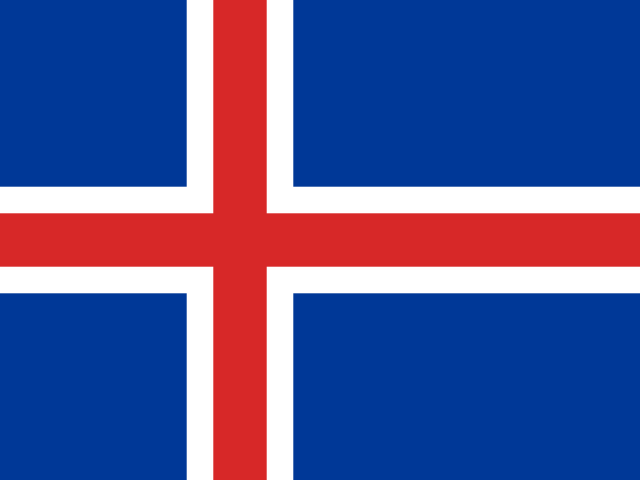
- Description: blue with a red cross outlined in white extending to the edges of the flag; the cross is shifted to the left in the style of the Dannebrog (Danish flag)Meaning: red stands for the island's volcanic fires, white for the snow and ice fields, and blue for the ocean
- National symbols
- gyrfalcon
- National colours
- blue, white, red
- National anthem
- Title: "Lofsongur" (Song of Praise)Lyrics/music: Matthias JOCHUMSSON/Sveinbjorn SVEINBJORNSSONHistory: adopted 1918
- UNESCO World Heritage Sites
- Total World Heritage Sites: 3 (1 cultural, 2 natural)Selected World Heritage Site locales: Thingvellir National Park (c); Surtsey (n); Vatnajökull National Park - Dynamic Nature of Fire and Ice (n)
Economy
- Overview
- high-income North Atlantic island economy; not an EU member but market integration via European Economic Area (EEA); dominant tourism, fishing, and aluminum industries vulnerable to demand swings and disruption from volcanic activity; inflation remains above target rate; barriers to foreign business access and economic diversification
- GDP (PPP)
- $26.561 billion (2024 est.)
- GDP per person (PPP)
- $65,600 (2024 est.)
- GDP growth
- 0.5% (2024 est.)
- Inflation
- 5.9% (2024 est.)
- Unemployment
- 3.2% (2024 est.)
- Below poverty line
- 8.8% (2017 est.)
- Farm products
- milk, chicken, lamb/mutton, barley, potatoes, pork, beef, eggs, other meats, cucumbers/gherkins (2023)
- Industries
- tourism, fish processing; aluminum smelting; geothermal power, hydropower; medical/pharmaceutical products
- Exports
- $13.916 billion (2024 est.)
- Main exports
- aluminum, fish, orthopedic appliances, animal meal, iron alloys (2023)
- Export partners
- Netherlands 27%, Germany 11%, USA 10%, UK 8%, Norway 6% (2023)
- Main imports
- refined petroleum, cars, carbon-based electronics, aluminum oxide, computers (2023)
- Import partners
- Norway 11%, China 9%, Germany 9%, Netherlands 8%, USA 7% (2023)
- Money sent home from abroad
- 0.7% of GDP (2024 est.)
Energy, internet and transport
- Electricity access
- Electrification - total population: 100% (2022 est.)
- Electricity sources
- Hydroelectricity: 70.1% of total installed capacity (2023 est.)Geothermal: 29.9% of total installed capacity (2023 est.)
- Internet users
- Percent of population: 100% (2023 est.)
- Mobile phones
- Total subscriptions: 478,000 (2023 est.)Subscriptions per 100 inhabitants: 123 (2022 est.)
- TV and radio
- state-owned public TV broadcaster (RUV) operates 21 TV channels nationally; every household is required to have RUV, which doubles as the emergency broadcast network; 3 privately owned TV stations; 100% of households have multi-channel services though digital and/or fiber-optic connections; RUV operates 3 national and 4 regional radio stations; 1 privately owned radio conglomerate, Syn (4 stations), broadcasts nationwide; over 20 regional radio stations (2019)
- Airports
- 82 (2025)
- Merchant ships
- Total: 39 (2023)By type: general cargo 5, oil tanker 2, other 32
Military and space
- Armed forces
- no regular military forces; the Icelandic National Police, the regional police forces, and the Icelandic Coast Guard fall under the purview of the Ministry of Justice (2025)
Global issues
- Refugees and displaced people
- Refugees: 8,960 (2024 est.)IDPs: 3,700 (2024 est.)Stateless persons: 31 (2024 est.)
- Phone code
- +354
- Internet domain
- .is