Jamaica
Jamaica
Spanish then British sugar colony. Birthplace of reggae and Rastafari; devastated by Hurricane Melissa in 2025.
See Jamaica on the 3D globeTake a quiz
Population2.8 million
Area10,991 km²
CapitalKingston
RegionCaribbean
Did you know?
- Usain Bolt holds the 100 m and 200 m world records
- Had a bobsled team at the 1988 Winter Olympics
- Its Blue Mountain coffee is among the world's most prized
Key facts about Jamaica
- Government
- Parliamentary constitutional monarchy (Commonwealth realm)
- Religion
- Christian ~68%, Rastafari
- Founded / independence
- 1962 (from UK)
- Rich in
- Bauxite, tourism, music (reggae), athletes
- Languages
- English, Jamaican Patois
English; Jamaican Patois - Currency
- Jamaican dollar ($)
- People are called
- Jamaican
- Main cities
- Kingston, Montego Bay, Spanish Town
Timeline of Jamaica
- 1494Columbus arrives
- 1655English capture
- 1838Emancipation
- 1962Independence
- 2025Hurricane Melissa
Places to see in Jamaica
- Dunn's River Falls
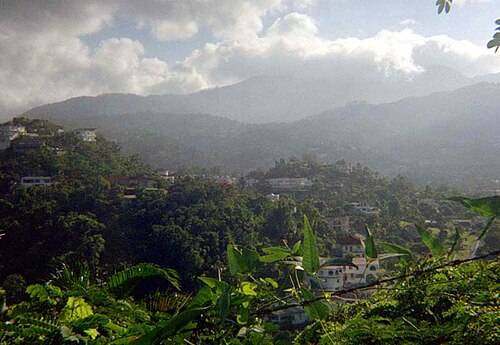
- Blue Mountains
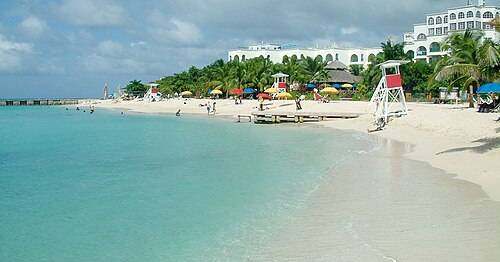
- Negril's Seven Mile Beach
- Bob Marley Museum
- Rick's Café
Food and drink
Jerk chicken · ackee and saltfish · patties
Culture and famous for
Reggae (Bob Marley); Rastafari; Blue Mountain coffee
Popular sports
Athletics (Usain Bolt), cricket
Geography and climate
- Highest point
- Blue Mountain Peak, 2,256 m
- Rivers, lakes and seas
- Black River
- Climate
- Tropical
- Coastline
- Has a sea coast
- Population density
- 255 people per km²
Wars and conflicts
- Maroon wars
- Morant Bay rebellion 1865
- Hurricane Melissa 2025
Alliances and memberships
Political unions and regional organisations
CARICOMCELACOrganization of American StatesCommonwealth of Nations
Culture, religion and history
Jamaica in depth
Detailed facts from the CIA World Factbook (public domain, latest edition).
Overview
- History in brief
- Europeans first saw Jamaica when Christopher COLUMBUS arrived in 1494, and the Spanish settled the island early in the 16th century. The Native Taino, who had inhabited Jamaica for centuries, were gradually exterminated and replaced with African slaves. England seized the island in 1655 and established a plantation economy based on sugar, cocoa, and coffee. The abolition of slavery in 1834 freed a quarter-million slaves, many of whom became small farmers. Jamaica gradually increased its independence from Britain. In 1958, it joined other British Caribbean colonies in forming the Federation of the West Indies. Jamaica withdrew from the Federation in 1961 and gained full independence in 1962. Deteriorating economic conditions during the 1970s led to recurring violence as rival gangs affiliated with the major political parties evolved into powerful organized crime networks involved in international drug smuggling and money laundering. Violent crime, drug trafficking, corruption, and poverty pose significant challenges to the government today. Nonetheless, many rural and resort areas remain relatively safe and contribute substantially to the economy.
Geography
- Location
- Caribbean, island in the Caribbean Sea, south of Cuba
- Size compared
- about half the size of New Jersey; slightly smaller than Connecticut
- Land borders
- Total: 0 km
- Coastline
- 1,022 km
- Climate
- tropical; hot, humid; temperate interior
- Terrain
- mostly mountains, with narrow, discontinuous coastal plain
- Elevation
- Highest point: Blue Mountain Peak 2,256 mLowest point: Caribbean Sea 0 mMean elevation: 18 m
- Natural resources
- bauxite, alumina, gypsum, limestone
- Natural hazards
- hurricanes (especially July to November)
- Notes
- third largest island in the Caribbean (after Cuba and Hispaniola); strategic location between Cayman Trench and Jamaica Channel, the main sea lanes for the Panama Canal
- Environmental issues
- heavy rates of deforestation; coastal waters polluted by industrial waste, sewage, and oil spills; damage to coral reefs; air pollution in Kingston from vehicle emissions; land erosion
People and society
- Population
- Total: 2,938,503 (2025 est.)Male: 1,453,759Female: 1,484,744
- Nationality
- Noun: Jamaican(s)Adjective: Jamaican
- Ethnic groups
- Black 92.1%, mixed 6.1%, East Indian 0.8%, other 0.4%, unspecified 0.7% (2011 est.)
- Languages
- English, Jamaican patois
- Religions
- Protestant 64.8% (includes Seventh Day Adventist 12.0%, Pentecostal 11.0%, Other Church of God 9.2%, New Testament Church of God 7.2%, Baptist 6.7%, Church of God in Jamaica 4.8%, Church of God of Prophecy 4.5%, Anglican 2.8%, United Church 2.1%, Methodist 1.6%, Revived 1.4%, Brethren 0.9%, and Moravian 0.7%), Roman Catholic 2.2%, Jehovah's Witness 1.9%, Rastafarian 1.1%, other 6.5%, none 21.3%, unspecified 2.3% (2011 est.)
- Median age
- Total: 28.8 years (2025 est.)Male: 30.1 yearsFemale: 31.7 years
- Population growth
- 0.25% (2025 est.)
- Life expectancy
- Total population: 76.3 years (2024 est.)Male: 74.5 yearsFemale: 78.1 years
- Children per woman
- 1.86 children born/woman (2025 est.)
- Urbanization
- Urban population: 57.4% of total population (2023)Rate of urbanization: 0.79% annual rate of change (2020-25 est.)
- Largest cities
- 597,000 KINGSTON (capital) (2023)
- Literacy
- Female: 90.8% (2022 est.)
- Years in school
- Total: 13 years (2015 est.)Male: 12 years (2015 est.)Female: 14 years (2015 est.)
Government
- Official names
- Conventional long form: noneConventional short form: JamaicaEtymology: from the Arawak word xaymaca, meaning "Land of Wood and Water" or possibly "Land of Springs"
- Government type
- parliamentary democracy (Parliament) under a constitutional monarchy; a Commonwealth realm
- Capital
- Name: KingstonGeographic coordinates: 18 00 N, 76 48 WTime difference: UTC-5 (same time as Washington, DC, during Standard Time)Etymology: the name is a blend of the words "king's" and "town;" named after the English king at the time of the city's founding in 1692, WILLIAM III
- Regions
- 14 parishes; Clarendon, Hanover, Kingston, Manchester, Portland, Saint Andrew, Saint Ann, Saint Catherine, Saint Elizabeth, Saint James, Saint Mary, Saint Thomas, Trelawny, Westmoreland
- Independence
- 6 August 1962 (from the UK)
- National holiday
- Independence Day, 6 August (1962)
- Constitution
- History: several previous (pre-independence); latest drafted 1961-62, submitted to British Parliament 24 July 1962, entered into force 6 August 1962 (at independence)Amendment process: proposed by Parliament; passage of amendments to "non-entrenched" constitutional sections, such as lowering the voting age, requires majority vote by the Parliament membership; passage of amendments to "entrenched" sections, such as fundamental rights and freedoms, requires two-thirds majority vote of Parliament; passage of amendments to "specially entrenched" sections such as the dissolution of Parliament or the executive authority of the monarch requires two-thirds approval by Parliament and approval in a referendum
- Legal system
- common law system based on the English model
- Voting age
- 18 years of age; universal
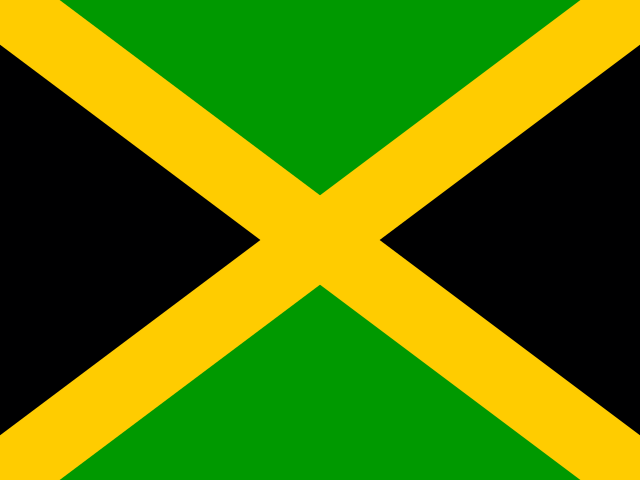
- Flag meaning
- Description: diagonal yellow cross divides the flag into four triangles, two green (top and bottom) and two black (left and right)Meaning: green stands for hope, vegetation, and agriculture; black for hardships overcome and to be faced; and yellow for sunshine and natural resources
- National symbols
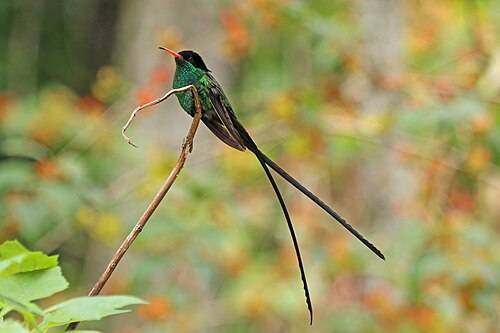
- green-and-black streamertail (bird), guaiacwood (Guiacum officinale)
- National colours
- green, yellow, black
- National anthem
- Title: "Jamaica, Land We Love"Lyrics/music: Hugh Braham SHERLOCK/Robert Charles LIGHTBOURNEHistory: adopted 1962
- UNESCO World Heritage Sites
- Total World Heritage Sites: 2 ( 1mixed,1 cultural)Selected World Heritage Site locales: Blue and John Crow Mountains (m); The Archaeological Ensemble of 17th Century Port Royal (c)
Economy
- Overview
- upper-middle-income Caribbean island economy; key agriculture and tourism sectors; high crime, youth unemployment, and poverty; susceptible to natural disasters and global commodity price shocks; progress in reducing public debt and moderating inflation within target range
- GDP (PPP)
- $29.13 billion (2024 est.)
- GDP per person (PPP)
- $10,300 (2024 est.)
- GDP growth
- -0.7% (2024 est.)
- Inflation
- 5.4% (2024 est.)
- Unemployment
- 4.9% (2024 est.)
- Below poverty line
- 16.7% (2021 est.)
- Farm products
- sugarcane, goat milk, yams, chicken, oranges, coconuts, bananas, plantains, pumpkins/squash, pineapples (2023)
- Industries
- agriculture, mining, manufacture, construction, financial and insurance services, tourism, telecommunications
- Exports
- $7.124 billion (2024 est.)
- Main exports
- aluminum oxide, refined petroleum, natural gas, liquor, processed fruits and nuts (2023)
- Export partners
- USA 37%, Russia 7%, Latvia 7%, Iceland 7%, UK 5% (2023)
- Main imports
- refined petroleum, natural gas, cars, crude petroleum, plastic products (2023)
- Import partners
- USA 39%, China 11%, Brazil 4%, Colombia 4%, Japan 4% (2023)
- Money sent home from abroad
- 17.9% of GDP (2024 est.)
Energy, internet and transport
- Electricity access
- Electrification - total population: 100% (2022 est.)
- Electricity sources
- Fossil fuels: 87.1% of total installed capacity (2023 est.)Solar: 2.9% of total installed capacity (2023 est.)Wind: 6.1% of total installed capacity (2023 est.)Hydroelectricity: 2.7% of total installed capacity (2023 est.)Biomass and waste: 1.3% of total installed capacity (2023 est.)
- Internet users
- Percent of population: 83% (2023 est.)
- Mobile phones
- Total subscriptions: 3.34 million (2024 est.)Subscriptions per 100 inhabitants: 118 (2024 est.)
- TV and radio
- 3 free-to-air TV stations, subscription cable services, and roughly 30 radio stations (2019)
- Airports
- 20 (2025)
- Merchant ships
- Total: 40 (2023)By type: bulk carrier 1, general cargo 11, oil tanker 1, other 27
Military and space
- Armed forces
- Jamaica Defense Force (JDF): Jamaica Regiment (Land Force), Maritime, Air, and Cyber Command (MACC), Support Brigade, Caribbean Military Academy, Jamaica National Reserve (2025)
- Military spending
- 1.4% of GDP (2024 est.)
- Military service
- 18-23 for voluntary military service (17 with parental consent) for men and women; 18-28 for the reserves; no conscription; since 2017, the JDF's standard mode of recruitment is to enroll recruits ages 18-23 through the Jamaica National Service Corps (JNSC), which has a service requirement of 12 months (2025)
Global issues
- Drug trade
- USG identification: major illicit drug-producing and/or drug-transit country (2025)
- Phone code
- +1876
- Internet domain
- .jm