Japan
Japan · 日本
Isolated under the Tokugawa shogunate, it modernised rapidly after 1868 and built an empire across Asia. Defeated in WWII, it became a pacifist democracy and economic giant. Its imperial line is the world's oldest monarchy.
See Japan on the 3D globeTake a quiz
Population124 million
Area377,930 km²
CapitalTokyo
RegionEastern Asia
Did you know?
- Has about 6,800 islands
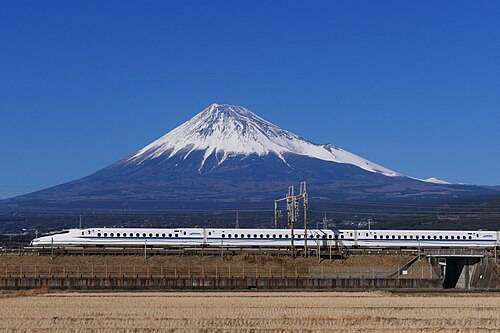
- Bullet trains average delays of under a minute
- Has more centenarians per person than almost anywhere
Key facts about Japan
- Government
- Parliamentary constitutional monarchy
- Religion
- Shinto and Buddhism (often both)
- Founded / independence
- 660 BC (legendary); 1868 Meiji state
- Rich in
- Cars, electronics, robotics, anime and games — world's fourth-largest economy
- Languages
- Japanese
Japanese: Kansai, Tohoku, Kyushu dialects; Ryukyuan languages; Ainu - Currency
- Japanese yen (¥)
- People are called
- Japanese
- Main cities
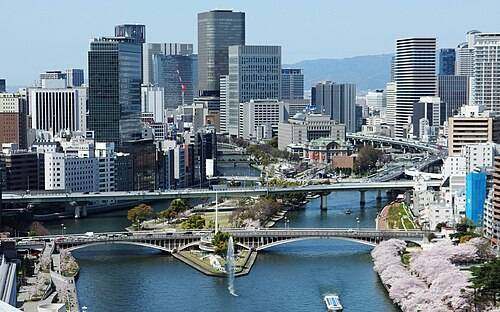
- Tokyo, Yokohama, Osaka, Nagoya, Sapporo, Fukuoka, Kyoto
Timeline of Japan
- 660 BCLegendary first emperor
- 1185Shogunate begins
- 1603Tokugawa era
- 1868Meiji Restoration
- 1941Pearl Harbor
- 1945Atomic bombings
- 1964Tokyo Olympics
- 2011Tsunami and Fukushima
Places to see in Japan
- Mount Fuji
- Kyoto temples (Fushimi Inari, Kinkaku-ji)
- Tokyo Shibuya
- Hiroshima Peace Memorial
- Nara deer park
- Himeji Castle
Food and drink
Sushi · ramen · tempura · wagyu · matcha
Culture and famous for
Anime and manga; video games (Nintendo, Sony); bullet trains; tea ceremony; cherry blossoms
Popular sports
Baseball, sumo, football
Geography and climate
- Highest point
- Mount Fuji, 3,776 m
- Rivers, lakes and seas
- Shinano River; Lake Biwa
- Climate
- Temperate; subtropical south, snowy north
- Coastline
- Has a sea coast
- Population density
- 328 people per km²
Wars and conflicts
- Mongol invasions
- Sengoku period
- Russo-Japanese War
- WWII (atomic bombings 1945)
Empires and states that once stood here
Alliances and memberships
Military and security
Political unions and regional organisations
Economy and trade
Defence treaties
- US–Japan Security Treaty (1960): The US defends Japan; about 50,000 US troops are based there.
Japan in depth
Detailed facts from the CIA World Factbook (public domain, latest edition).
Overview
- History in brief
- In 1603, after decades of civil warfare, the Tokugawa shogunate (a military-led, dynastic government) ushered in a long period of relative political stability and isolation from foreign influence. For more than two centuries, this policy enabled Japan to enjoy a flowering of its indigenous culture. Japan opened its ports after signing the Treaty of Kanagawa with the US in 1854 and began to intensively modernize and industrialize. During the late 19th and early 20th centuries, Japan became a regional power that was able to defeat the forces of both China and Russia. It occupied Korea, Formosa (Taiwan), and southern Sakhalin Island. In 1931-32, Japan occupied Manchuria, and in 1937, it launched a full-scale invasion of China. Japan attacked US forces at Pearl Harbor, Hawaii, in 1941, triggering America's entry into World War II, and Japan soon occupied much of East and Southeast Asia. After its defeat in World War II, the country recovered to become an economic power and a US ally.While the emperor retains his throne as a symbol of national unity, elected politicians hold the decision-making power. After three decades of unprecedented growth, Japan's economy experienced a major slowdown starting in the 1990s, but the country remains an economic power. In 2011, Japan's strongest-ever earthquake and an accompanying tsunami devastated the northeast part of Honshu, killed thousands, and damaged several nuclear power plants. ABE Shinzo was reelected as prime minister in 2012, and he embarked on ambitious economic and security reforms to improve Japan's economy and bolster the country's international standing. In 2019, ABE became Japan's longest-serving post-war prime minister; he resigned in 2020 and was succeeded by SUGA Yoshihide. KISHIDA Fumio became prime minister in 2021.
Geography
- Location
- Eastern Asia, island chain between the North Pacific Ocean and the Sea of Japan, east of the Korean Peninsula
- Size compared
- slightly smaller than California
- Land borders
- Total: 0 km
- Coastline
- 29,751 km
- Climate
- varies from tropical in south to cool temperate in north
- Terrain
- mostly rugged and mountainous
- Elevation
- Highest point: Mount Fuji 3,776 mLowest point: Hachiro-gata -4 mMean elevation: 438 m
- Natural resources
- negligible mineral resources, fish
- Major lakes
- Fresh water lake(s): Biwa-ko 688 sq km
- Natural hazards
- many dormant and some active volcanoes; about 1,500 seismic occurrences (mostly tremors but occasional severe earthquakes) every year; tsunamis; typhoonsVolcanism: both Unzen (1,500 m) and Sakura-jima (1,117 m), which lies near the densely populated city of Kagoshima, have been deemed Decade Volcanoes by the International Association of Volcanology and Chemistry of the Earth's Interior, worthy of study due to their explosive history and close proximity to human populations; other notable historically active volcanoes include Asama (Honshu Island's most active volcano), Aso, Bandai, Fuji, Iwo-Jima, Kikai, Kirishima, Komaga-take, Oshima, Suwanosejima, Tokachi, Yake-dake, and Usu; see note 2 under "Geography - note"
- Notes
- Note 1: strategic location in northeast Asia; composed of four main islands (the "Home Islands") -- Hokkaido, Honshu (the largest, most populous, and site of Tokyo, the capital), Shikoku, and KyushuNote 2: a 2023 Geospatial Information Authority of Japan survey detected 100,000 islands and islets, but only the 14,125 islands with a circumference of at least 100 m (330 ft) were officially counted; about 260 of the islands are inhabitedNote 3: Japan annually records the most earthquakes in the world; it is one of the countries along the Ring of Fire, which is a belt bordering the Pacific Ocean that contains about 75% of the world's volcanoes and up to 90% of the world's earthquakes
- Environmental issues
- air pollution from power plants results in acid rain; acidification of lakes and reservoirs degrading water quality; waste management issues; ongoing environmental clean-up in small area of Fukushima after nuclear accident in 2011
People and society
- Population
- Total: 123,201,945 (2024 est.)Male: 59,875,269Female: 63,326,676
- Nationality
- Noun: Japanese (singular and plural)Adjective: Japanese
- Ethnic groups
- Japanese 97.5%, Chinese 0.6%, Vietnam 0.4%, South Korean 0.3%, other 1.2% (includes Filipino, Brazilian, Nepalese, Indonesian, American, and Taiwanese) (2022 est.)
- Languages
- JapaneseMajor-language sample(s): 必要不可欠な基本情報の源、ワールド・ファクトブック(Japanese)The World Factbook, the indispensable source for basic information.
- Religions
- Shintoism 48.6%, Buddhism 46.4%, Christianity 1.1%, other 4% (2021 est.)
- Median age
- Total: 50.2 years (2025 est.)Male: 48.3 yearsFemale: 51.3 years
- Population growth
- -0.45% (2025 est.)
- Life expectancy
- Total population: 85.2 years (2024 est.)Male: 82.3 yearsFemale: 88.2 years
- Children per woman
- 1.41 children born/woman (2025 est.)
- Urbanization
- Urban population: 92% of total population (2023)Rate of urbanization: -0.25% annual rate of change (2020-25 est.)
- Largest cities
- 37.194 million TOKYO (capital), 19.013 million Osaka, 9.569 million Nagoya, 5.490 million Kitakyushu-Fukuoka, 2.937 million Shizuoka-Hamamatsu, 2.666 million Sapporo (2023)
- Years in school
- Total: 16 years (2022 est.)Male: 16 years (2022 est.)Female: 16 years (2022 est.)
Government
- Official names
- Conventional long form: noneConventional short form: JapanLocal long form: Nihon-koku/Nippon-kokuLocal short form: Nihon/NipponEtymology: the English word for Japan comes from the Chinese name for the country, Cipangu; both Nihon and Nippon come from the Japanese words nichi, or "sun," and hon, or "origin," which is frequently translated as "Land of the Rising Sun"
- Government type
- parliamentary constitutional monarchy
- Capital
- Name: TokyoGeographic coordinates: 35 41 N, 139 45 ETime difference: UTC+9 (14 hours ahead of Washington, DC, during Standard Time)Etymology: originally known as Edo, meaning "estuary" because of its location on a bay; the name was changed to Tokyo, meaning "eastern capital," in 1868, as a contrast to Kyoto, the previous capital to the west
- Regions
- 47 prefectures; Aichi, Akita, Aomori, Chiba, Ehime, Fukui, Fukuoka, Fukushima, Gifu, Gunma, Hiroshima, Hokkaido, Hyogo, Ibaraki, Ishikawa, Iwate, Kagawa, Kagoshima, Kanagawa, Kochi, Kumamoto, Kyoto, Mie, Miyagi, Miyazaki, Nagano, Nagasaki, Nara, Niigata, Oita, Okayama, Okinawa, Osaka, Saga, Saitama, Shiga, Shimane, Shizuoka, Tochigi, Tokushima, Tokyo, Tottori, Toyama, Wakayama, Yamagata, Yamaguchi, Yamanashi
- Independence
- 3 May 1947 (current constitution adopted as amendment to Meiji Constitution); notable earlier dates: 11 February 660 B.C. (mythological date of Emperor JIMMU founding the nation); 29 November 1890 (Meiji Constitution provides for constitutional monarchy)
- National holiday
- Birthday of Emperor NARUHITO, 23 February (1960)
- Constitution
- History: previous 1890; latest approved 6 October 1946, adopted 3 November 1946, effective 3 May 1947Amendment process: proposed by the Diet; passage requires approval by at least two-thirds majority of both houses of the Diet and approval by majority in a referendum
- Legal system
- civil law system based on German model; also reflects Anglo-American influence and Japanese traditions; Supreme Court reviews legislative acts
- Voting age
- 18 years of age; universal
- Flag meaning
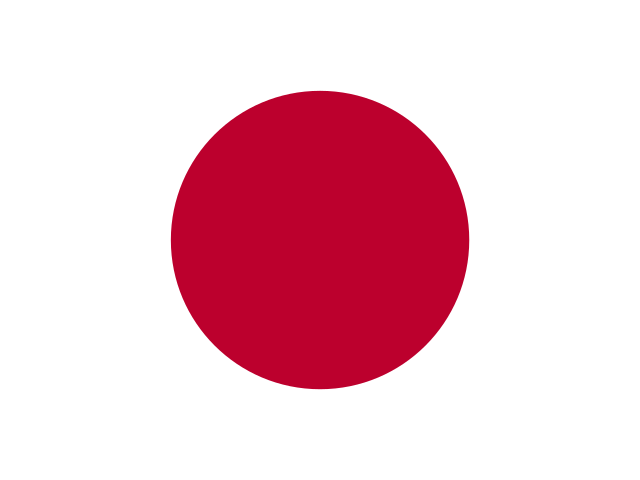
- Description: white with a large red disk that symbolizes the sun without rays, in the centerHistory: the current flag was adopted in 1854, but a sun flag has been in use in Japan since at least 1184; the sun has long been a national symbol: according to tradition, the sun goddess Amaterasu founded the country in the 7th century B.C.
- National symbols
- red sun disc, chrysanthemum
- National colours
- red, white
- National anthem
- Title: "Kimigayo" (“His Majesty’s Reign)Lyrics/music: unknown/Hiromori HAYASHIHistory: adopted 1999; unofficial national anthem since 1883; oldest anthem lyrics in the world, dating to the 10th century or earlier; some oppose the anthem because of its association with militarism and worship of the emperor
- UNESCO World Heritage Sites
- Total World Heritage Sites: 26 (21 cultural, 5 natural)Selected World Heritage Site locales: Buddhist Monuments in the Horyu-ji Area (c); Historic Monuments of Ancient Nara (c); Himeji-jo (c); Shiretoko (n); Mozu-Furuichi Kofun Group: Mounded Tombs of Ancient Japan (c); Jomon Prehistoric Sites in Northern Japan (c); Yakushima (n); Historic Monuments of Ancient Kyoto (Kyoto, Uji and Otsu Cities) (c); Hiroshima Peace Memorial (Genbaku Dome) (c); Shirakami-Sanchi (n); Historic Villages of Shirakawa-go and Gokayama (c); Itsukushima Shinto Shrine (c); Historic Monuments of Ancient Nara (c); Shrines and Temples of Nikko (c); Gusuku Sites and Related Properties of the Kingdom of Ryukyu (c); Sacred Sites and Pilgrimage Routes in the Kii Mountain Range (c); Hiraizumi – Temples, Gardens and Archaeological Sites Representing the Buddhist Pure Land (c); Ogasawara Islands (n); Sacred Island of Okinoshima and Associated Sites in the Munakata Region (c); Hidden Christian Sites in the Nagasaki Region (c); Amami-Oshima Island, Tokunoshima Island, Northern part of Okinawa Island, and Iriomote Island (n); Jomon Prehistoric Sites in Northern Japan (c)
Economy
- Overview
- second-largest East Asian economy; trade-oriented and highly diversified; high public debt levels; following years of near-zero interest rates, gradual increases to address inflation and depreciation of yen; strong rebound in tourism; aging population poses challenges to labor force participation
- GDP (PPP)
- $5.715 trillion (2024 est.)
- GDP per person (PPP)
- $46,100 (2024 est.)
- GDP growth
- 0.1% (2024 est.)
- Inflation
- 2.7% (2024 est.)
- Unemployment
- 2.6% (2024 est.)
- Farm products
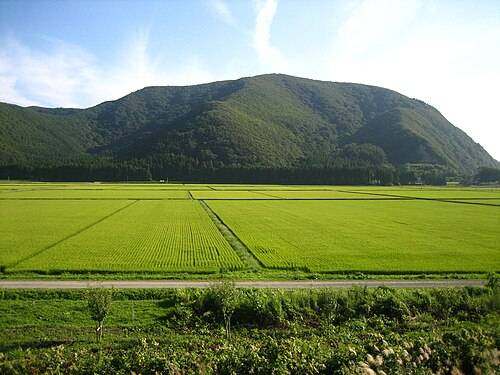
- rice, milk, sugar beets, vegetables, eggs, chicken, potatoes, onions, cabbages, pork (2023)
- Industries
- motor vehicles, electronic equipment, machine tools, steel and nonferrous metals, ships, chemicals, textiles, processed foods
- Exports
- $922.447 billion (2024 est.)
- Main exports
- cars, integrated circuits, machinery, vehicle parts/accessories, construction vehicles (2023)
- Export partners
- USA 19%, China 18%, Taiwan 6%, S. Korea 6%, Hong Kong 4% (2023)
- Main imports
- crude petroleum, natural gas, coal, integrated circuits, broadcasting equipment (2023)
- Import partners
- China 22%, USA 11%, Australia 8%, UAE 5%, Saudi Arabia 5% (2023)
- Money sent home from abroad
- 0.1% of GDP (2024 est.)
Energy, internet and transport
- Electricity access
- Electrification - total population: 100% (2022 est.)
- Electricity sources
- Fossil fuels: 65.8% of total installed capacity (2023 est.)Nuclear: 8.9% of total installed capacity (2023 est.)Solar: 10.3% of total installed capacity (2023 est.)Wind: 1.1% of total installed capacity (2023 est.)Hydroelectricity: 7.1% of total installed capacity (2023 est.)Geothermal: 0.3% of total installed capacity (2023 est.)Biomass and waste: 6.5% of total installed capacity (2023 est.)
- Internet users
- Percent of population: 87% (2023 est.)
- Mobile phones
- Total subscriptions: 219 million (2023 est.)Subscriptions per 100 inhabitants: 168 (2022 est.)
- TV and radio
- a mix of public and commercial TV and radio stations; 5 national terrestrial TV networks including 1 public broadcaster; large number of radio and TV stations; satellite and cable services provide access to international channels (2023)
- Airports
- 280 (2025)
- Railways
- Total: 27,311 km (2015)Standard gauge: 4,800 km (2015) 1.435-m gauge (4,800 km electrified)Narrow gauge: 124 km (2015) 1.372-m gauge (124 km electrified)Dual gauge: 132 km (2015) 1.435-1.067-m gauge (132 km electrified)
- Merchant ships
- Total: 5,229 (2023)By type: bulk carrier 166, container ship 49, general cargo 1,893, oil tanker 666, other 2,455
Military and space
- Armed forces
- Japan Self-Defense Force (JSDF): Ground Self-Defense Force (Rikujou Jieitai, GSDF; includes aviation), Maritime Self-Defense Force (Kaijou Jieitai, MSDF; includes naval aviation), Air Self-Defense Force (Koukuu Jieitai, ASDF) (2025)
- Military spending
- 1.4% of GDP (2024 est.)
- Military service
- 18-32 years of age for voluntary military service for men and women; no conscription (2025)
- Space programme
- has one of the world’s largest and most advanced space programs, with independent capabilities in all areas except autonomous manned space flight; designs, builds, launches, and operates the full spectrum of satellites; designs, builds, and independently launches satellite/space launch vehicles (SLVs) and other spacecraft; has a wide range of research and development programs; has an astronaut training program; participates in international programs such as the International Space Station and the Square Kilometer Array radio telescope project; leads the Asia-Pacific Regional Space Agency Forum and co-leads the Global Earth Observation System of Systems; cooperates with a variety of foreign space agencies and industries, including those of Canada, the ESA and its member states, India, Russia, the UAE, the US; has a commercial space industry that develops space-related capabilities and technologies, including satellites, satellite payloads and subcomponents, and SLVs; in recent years, the Japanese Government has supported space startup companies (2025)
- Space milestones
- 1966-1970 - initiated satellite launch vehicle (SLV) program and launched first domestically produced satellite (OHSUMI)1985 - launched two Halley’s Comet observation satellites (Japan’s first missions beyond Earth’s orbit)1992 - first astronaut in space on US Space Shuttle1998 - launched its first Mars orbiter (failed to enter orbit)2003 - launched world’s first uncrewed spacecraft (Hayabusa 1) to return with a sample from an asteroid (2010)2007 - launched Lunar orbiter (Kaguya) mission2010 - launched Venus orbiter (Akatsuki) mission2014 - launched asteroid probe with lander/rover (Hayabusa 2); first Japanese International Space Station commander2018 - launched joint Japan-ESA probe to Mercury (BepiColombo); began operation of a navigational/positioning satellite constellation (Quasi-Zenith Satellite System, QZSS)2019 - began participating in US-led lunar orbital station and Moon exploration programs2024 - soft-landed unmanned spacecraft (Smart Lander for Investigating Moon or SLIM) on the Moon; conducted first successful test launch of domestically produced H3 medium-lift SLV
Global issues
- Refugees and displaced people
- Refugees: 60,361 (2024 est.)IDPs: 29,244 (2024 est.)Stateless persons: 505 (2024 est.)
- Phone code
- +81
- Internet domain
- .jp