Madagascar
Republic of Madagascar · Madagasikara
Settled by Austronesian sailors from Borneo. The Merina kingdom unified the island before French conquest in 1897. About 90% of its wildlife exists nowhere else.
See Madagascar on the 3D globeTake a quiz
Population32 million
Area587,041 km²
CapitalAntananarivo
RegionEastern Africa
Did you know?
- About 90% of its wildlife exists nowhere else
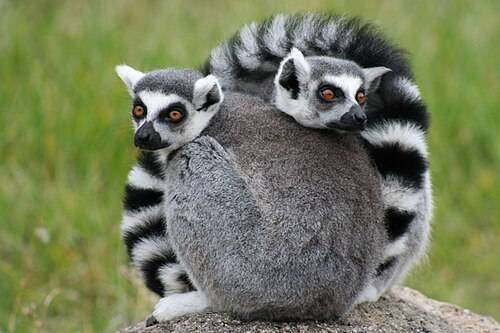
- Home to about 100 kinds of lemurs
- The world's fourth-largest island
Key facts about Madagascar
- Government
- Military-led transition (after Oct 2025 takeover)
- Religion
- Christian ~85%, traditional
- Founded / independence
- 1960 (from France)
- Rich in
- Vanilla (world's largest), nickel, graphite, unique wildlife
- Languages
- French, Malagasy
Malagasy (Austronesian) and French - Currency
- Malagasy ariary (Ar)
- People are called
- Malagasy
- Main cities
- Antananarivo, Toamasina, Antsirabe
Timeline of Madagascar
- 500Austronesian settlement
- 1817Merina kingdom
- 1897French colony
- 1960Independence
- 2009Political crisis
- 2025Military takeover
Places to see in Madagascar
- Avenue of the Baobabs
- Tsingy de Bemaraha
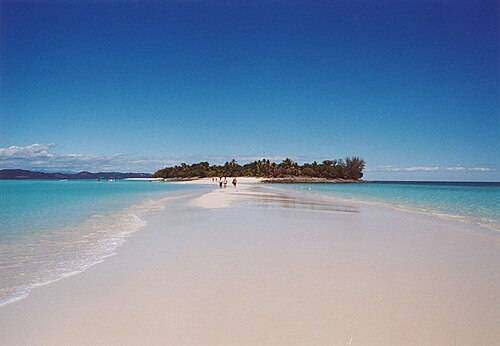
- Nosy Be
- Ranomafana
- Isalo National Park
Food and drink
Romazava (meat and greens stew) · rice (eaten three times a day) · ravitoto
Culture and famous for
Lemurs; vanilla; famadihana "turning of the bones" ceremony
Popular sports
Rugby, football
Geography and climate
- Highest point
- Maromokotro, 2,876 m
- Rivers, lakes and seas
- Betsiboka River
- Climate
- Tropical coast, temperate highlands
- Coastline
- Has a sea coast
- Population density
- 55 people per km²
Wars and conflicts
- 1947 uprising
- 2009 crisis
- 2025 youth protests and military takeover
Alliances and memberships
Political unions and regional organisations
Madagascar in depth
Detailed facts from the CIA World Factbook (public domain, latest edition).
Overview
- History in brief
- Madagascar was one of the last major habitable landmasses on earth to be settled by humans. While there is some evidence of human presence on the island in the millennia B.C., large-scale settlement began between A.D. 350 and 550 with settlers from present-day Indonesia. The island attracted Arab and Persian traders as early as the 7th century, and migrants from Africa arrived around A.D. 1000. Madagascar was a pirate stronghold during the late 17th and early 18th centuries and served as a slave trading center into the 19th century. From the 16th to the late 19th century, a native Merina Kingdom dominated much of Madagascar. The French conquered the island in 1896 and made it a colony; independence was regained in 1960.Free presidential and National Assembly elections were held in 1992-93, ending 17 years of single-party rule. In 1997, in the second presidential race, Didier RATSIRAKA, the leader during the 1970s and 1980s, returned to the presidency. The 2001 presidential election was contested between the followers of RATSIRAKA and Marc RAVALOMANANA, nearly causing half the country to secede. In 2002, the High Constitutional Court announced RAVALOMANANA the winner. He won a second term in 2006 but, following protests in 2009, handed over power to the military, which then conferred the presidency on the mayor of Antananarivo, Andry RAJOELINA, in what amounted to a coup d'etat. After a lengthy mediation process, Madagascar held UN-supported presidential and parliamentary elections in 2013. Former de facto finance minister Hery RAJAONARIMAMPIANINA won in a runoff and was inaugurated in 2014. In 2019, RAJOELINA was declared the winner against RAVALOMANANA. In 2023, RAJOELINA won another term in an election that most of the opposition boycotted, including RAJAONARIMAMPIANINA and RAVALOMANANA, who claimed it was rigged in favor of RAJOELINA. International observers, however, saw no evidence of systemic fraud, leading the international community to accept the election results.
Geography
- Location
- Southern Africa, island in the Indian Ocean, east of Mozambique
- Size compared
- almost four times the size of Georgia; slightly less than twice the size of Arizona
- Land borders
- Total: 0 km
- Coastline
- 4,828 km
- Climate
- tropical along coast, temperate inland, arid in south
- Terrain
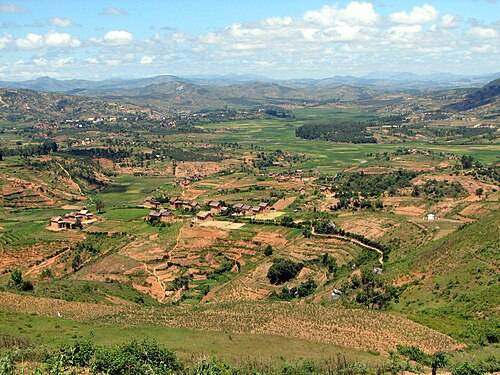
- narrow coastal plain, high plateau and mountains in center
- Elevation
- Highest point: Maromokotro 2,876 mLowest point: Indian Ocean 0 mMean elevation: 615 m
- Natural resources
- graphite, chromite, coal, bauxite, rare earth elements, salt, quartz, tar sands, semiprecious stones, mica, fish, hydropower
- Natural hazards
- periodic cyclones; drought; and locust infestationVolcanism: Madagascar's volcanoes have not erupted in recorded history
- Notes
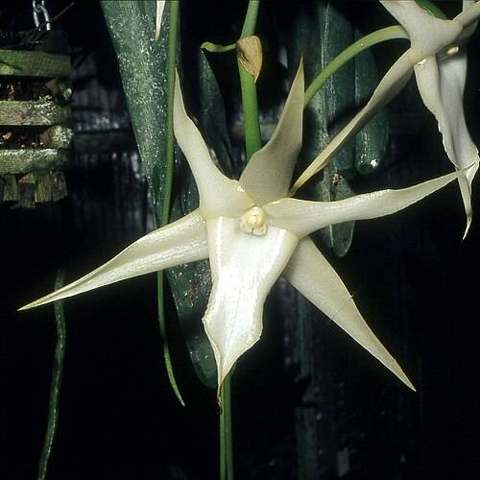
- world's fourth-largest island; strategic location along Mozambique Channel; despite Madagascar’s close proximity to the African continent, ocean currents isolate the island, resulting in high rates of endemic plant and animal species; approximately 90% of the flora and fauna on the island are found nowhere else
- Environmental issues
- erosion and soil degradation from deforestation and overgrazing; desertification; agricultural fires; water pollution from raw sewage and other organic wastes; wildlife preservation
People and society
- Population
- Total: 31,345,040 (2025 est.)Male: 15,647,362Female: 15,697,678
- Nationality
- Noun: Malagasy (singular and plural)Adjective: Malagasy
- Ethnic groups
- Malayo-Indonesian (Merina and related Betsileo), Cotiers (mixed African, Malayo-Indonesian, and Arab ancestry - Betsimisaraka, Tsimihety, Antaisaka, Sakalava), French, Indian, Creole, Comoran
- Languages
- Malagasy (official) 99.9%, French (official) 23.6%, English 8.2%, other 0.6% (2018 est.)
- Religions
- Church of Jesus Christ in Madagascar/Malagasy Lutheran Church/Anglican Church 34%, Roman Catholic 32.3%, other Christian 8.1%, traditional/Animist 1.7%, Muslim 1.4%, other 0.6%, none 21.9% (2021 est.)
- Median age
- Total: 20.5 years (2025 est.)Male: 21.1 yearsFemale: 21.5 years
- Population growth
- 2.15% (2025 est.)
- Life expectancy
- Total population: 68.8 years (2024 est.)Male: 67.3 yearsFemale: 70.3 years
- Children per woman
- 3.47 children born/woman (2025 est.)
- Urbanization
- Urban population: 40.6% of total population (2023)Rate of urbanization: 4.26% annual rate of change (2020-25 est.)
- Largest cities
- 3.872 million ANTANANARIVO (capital) (2023)
- Literacy
- Total population: 74.7% (2021 est.)Male: 77.9% (2021 est.)Female: 71.8% (2021 est.)
- Years in school
- Total: 9 years (2019 est.)Male: 9 years (2019 est.)Female: 9 years (2019 est.)
Government
- Official names
- Conventional long form: Republic of MadagascarConventional short form: MadagascarLocal long form: République de Madagascar/Repoblikan'i MadagasikaraLocal short form: Madagascar/MadagasikaraFormer: Malagasy RepublicEtymology: a variant of the name was first used by 13th-century Venetian explorer Marco POLO when he confused the island with the Somali port of Mogadishu; the transliteration was later adopted as the official name
- Government type
- semi-presidential republic
- Capital
- Name: AntananarivoGeographic coordinates: 18 55 S, 47 31 ETime difference: UTC+3 (8 hours ahead of Washington, DC, during Standard Time)Etymology: the name means "City of the Thousand," from the Malagasy an- (a prefix denoting a place name), tanana (town), and arivo (thousand); in the 17th century, King ADRIANJAKA named the original fortress after the 1,000 soldiers stationed there
- Regions
- 6 provinces (faritany); Antananarivo, Antsiranana, Fianarantsoa, Mahajanga, Toamasina, Toliara
- Independence
- 26 June 1960 (from France)
- National holiday
- Independence Day, 26 June (1960)
- Constitution
- History: previous 1992; latest passed by referendum 17 November 2010, promulgated 11 December 2010Amendment process: proposed by the president of the republic in consultation with the cabinet or supported by a least two thirds of both the Senate and National Assembly membership; passage requires at least three-fourths approval of both the Senate and National Assembly and approval in a referendum; constitutional articles, including the form and powers of government, the sovereignty of the state, and the autonomy of Madagascar’s collectivities, cannot be amended
- Legal system
- civil law system based on the old French civil code and customary law in matters of marriage, family, and obligation
- Voting age
- 18 years of age; universal
- Flag meaning
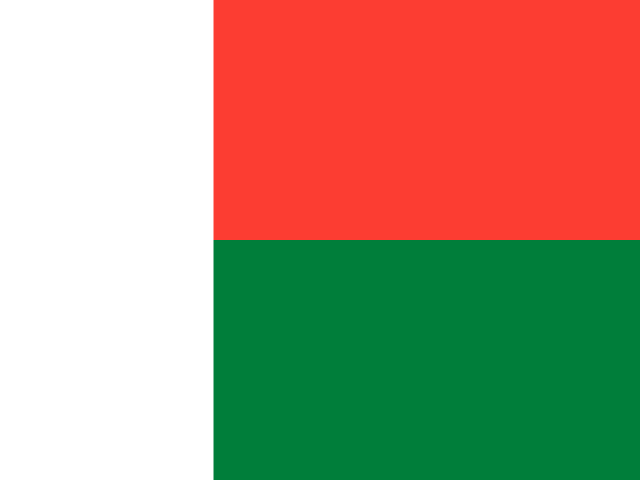
- Description: two equal horizontal bands of red (top) and green, with a vertical white band on the left sideMeaning: red stands for sovereignty, green for hope, and white for purity
- National symbols
- traveller's palm (ravenala), zebu
- National colours
- red, green, white
- National anthem
- Title: "Ry Tanindraza nay malala o" (O Our Beloved Fatherland)Lyrics/music: Pasteur RAHAJASON/Norbert RAHARISOAHistory: adopted 1959
- UNESCO World Heritage Sites
- Total World Heritage Sites: 3 (1 cultural, 2 natural)Selected World Heritage Site locales: Tsingy de Bemaraha Strict Nature Reserve (n); Ambohimanga Royal Hill (c); Atsinanana Rainforests (n)
Economy
- Overview
- low-income East African island economy; natural resource rich; extreme poverty; return of political stability has helped growth; sharp tax revenue drop due to COVID-19; leading vanilla producer; environmentally fragile
- GDP (PPP)
- $52.968 billion (2024 est.)
- GDP per person (PPP)
- $1,700 (2024 est.)
- GDP growth
- 4.2% (2024 est.)
- Inflation
- 9.9% (2023 est.)
- Unemployment
- 3.1% (2024 est.)
- Farm products
- rice, sugarcane, cassava, sweet potatoes, milk, bananas, vegetables, mangoes/guavas, maize, potatoes (2023)
- Industries
- meat processing, seafood, soap, beer, leather, sugar, textiles, glassware, cement, automobile assembly plant, paper, petroleum, tourism, mining
- Exports
- $4.689 billion (2022 est.)
- Main exports
- garments, nickel, vanilla, cloves, gold (2023)
- Export partners
- USA 16%, France 15%, Japan 8%, China 6%, S. Korea 6% (2023)
- Main imports
- refined petroleum, rice, fabric, cotton fabric, wheat (2023)
- Import partners
- China 19%, Oman 13%, France 10%, India 8%, South Africa 5% (2023)
- Money sent home from abroad
- 2.4% of GDP (2023 est.)
Energy, internet and transport
- Electricity access
- Electrification - total population: 36.1% (2022 est.)Electrification - urban areas: 71.6%Electrification - rural areas: 10.9%
- Electricity sources
- Fossil fuels: 64.8% of total installed capacity (2023 est.)Solar: 3.2% of total installed capacity (2023 est.)Hydroelectricity: 31.1% of total installed capacity (2023 est.)Biomass and waste: 0.9% of total installed capacity (2023 est.)
- Internet users
- Percent of population: 20% (2023 est.)
- Mobile phones
- Total subscriptions: 23.5 million (2023 est.)Subscriptions per 100 inhabitants: 76 (2023 est.)
- TV and radio
- state-owned Radio Nationale Malagasy (RNM) and Television Malagasy (TVM) have an extensive national network reach; privately owned radio and TV broadcasters in cities and major towns; state-run radio dominates in rural areas; relays of 2 international broadcasters are available in Antananarivo (2019)
- Airports
- 93 (2025)
- Railways
- Total: 836 km (2018)Narrow gauge: 836 km (2018) 1.000-m gauge
- Merchant ships
- Total: 29 (2023)By type: general cargo 16, oil tanker 2, other 11
Military and space
- Armed forces
- Madagascar Armed Forces (aka Armed forces of the Republic of Madagascar); Malagasy Army, Naval Forces (or National Navy), Air Force; Malagasy National Gendarmerie (2025)
- Military spending
- 0.7% of GDP (2024 est.)
- Military service
- 18 years of age for voluntary military service for men and women; service obligation 18 months; conscription available in times of national emergency or war (2025)
Global issues
- Refugees and displaced people
- Refugees: 1,256 (2024 est.)IDPs: 9,868 (2024 est.)
- Phone code
- +261
- Internet domain
- .mg