Maldives
Republic of the Maldives · ދިވެހިރާއްޖޭގެ
A chain of 1,192 coral islands, Muslim since 1153 and ruled by sultans. The lowest-lying country, threatened by rising seas.
See Maldives on the 3D globeTake a quiz
Population520 thousand
Area300 km²
CapitalMalé
RegionSouthern Asia
Did you know?
- The world's lowest-lying country, averaging 1.5 m above sea level
- Held a cabinet meeting underwater in 2009 to warn of climate change
- 99% of its territory is ocean
Key facts about Maldives
- Government
- Presidential republic
- Religion
- Sunni Islam ~100% (state religion)
- Founded / independence
- 1965 (from UK)
- Rich in
- Tourism (luxury resorts), fishing
- Languages
- Maldivian
Dhivehi - Currency
- Maldivian rufiyaa (.ރ)
- People are called
- Maldivan
- Main cities
- Malé, Addu City
Timeline of Maldives
- 1153Converts to Islam
- 1887British protectorate
- 1965Independence
- 1968Republic
- 2004Tsunami
Places to see in Maldives
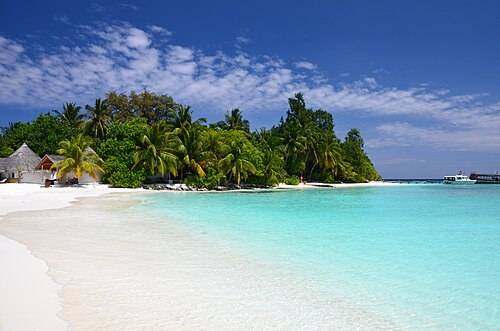
- Overwater resort villas
- Malé Friday Mosque
- Vaadhoo's glowing beach
- manta rays at Hanifaru Bay
Food and drink
Garudhiya (fish soup) · mas huni (tuna and coconut)
Culture and famous for
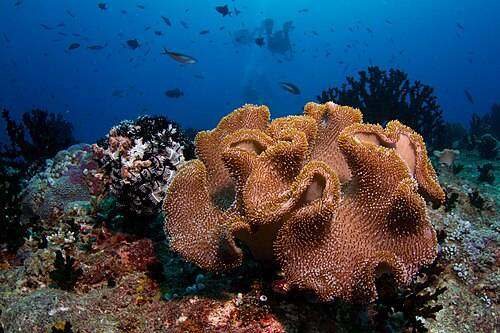
Coral reefs and diving
Popular sports
Football, cricket
Geography and climate
- Highest point
- Mount Villingili, 5 m
- Rivers, lakes and seas
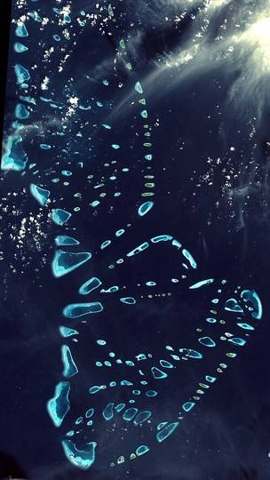
- Coral atolls
- Climate
- Tropical
- Coastline
- Has a sea coast
- Population density
- 1,733 people per km²
Wars and conflicts
- 1988 coup attempt
Alliances and memberships
Political unions and regional organisations
SAARCOrganisation of Islamic CooperationCommonwealth of Nations
Maldives in depth
Detailed facts from the CIA World Factbook (public domain, latest edition).
Overview
- History in brief
- A sultanate since the 12th century, the Maldives became a British protectorate in 1887 and a republic in 1968, three years after independence. President Maumoon Abdul GAYOOM dominated Maldives' political scene for 30 years, elected to six successive terms by single-party referendums. After political demonstrations in the capital Male in 2003, GAYOOM and his government pledged to embark upon a process of liberalization and democratic reforms, including a more representative political system and expanded political freedoms. Political parties were legalized in 2005. In 2008, a constituent assembly -- termed the "Special Majlis" -- finalized a new constitution ratified by GAYOOM. The first-ever presidential elections under a multi-candidate, multi-party system were held later that year. GAYOOM was defeated in a runoff by Mohamed NASHEED, a political activist whom the regime had jailed several years earlier. In 2012, after several weeks of street protests in response to a top judge's arrest, NASHEED resigned the presidency and handed over power to Vice President Mohammed WAHEED Hassan Maniku. A government-appointed Commission of National Inquiry concluded that there was no evidence of a coup, but NASHEED contended that police and military personnel forced him to resign. NASHEED, WAHEED, and Abdulla YAMEEN Abdul Gayoom ran in the 2013 elections with YAMEEN ultimately winning the presidency after three rounds of voting. In 2018, YAMEEN lost his reelection bid to parliamentarian Ibrahim Mohamed SOLIH. YAMEEN was arrested and jailed in 2022 on corruption charges. Maldives' fourth democratic election was held in September 2023. The winner, Male City Mayor Dr. Mohamed MUIZZU, campaigned on a platform of Maldivian sovereignty, vowing to remove Indian military personnel from the country. MUIZZU represents a joint Progressive Pary of Maldives and People's National Congress (PPM/PNC) coalition.
Geography
- Location
- Southern Asia, group of atolls in the Indian Ocean, south-southwest of India
- Size compared
- about 1.7 times the size of Washington, D.C.
- Land borders
- Total: 0 km
- Coastline
- 644 km
- Climate
- tropical; hot, humid; dry, northeast monsoon (November to March); rainy, southwest monsoon (June to August)
- Terrain
- flat coral atolls, with white sandy beaches; sits atop the submarine volcanic Chagos-Laccadive Ridge
- Elevation
- Highest point: 8th tee, golf course, Villingi Island 5 mLowest point: Indian Ocean 0 mMean elevation: 2 m
- Natural resources
- fish
- Natural hazards
- tsunamis; low elevation of islands makes them sensitive to sea level rise
- Notes
- smallest Asian country; archipelago of 1,190 coral islands grouped into 26 atolls (200 inhabited islands, plus 80 islands with tourist resorts); strategic location along major sea lanes in Indian Ocean
- Environmental issues
- rising sea levels; depletion of freshwater aquifers; inadequate sewage treatment; coral reef bleaching
People and society
- Population
- Total: 388,858 (2024 est.)Male: 197,739Female: 191,119
- Nationality
- Noun: Maldivian(s)Adjective: Maldivian
- Ethnic groups
- homogeneous mixture of Sinhalese, Dravidian, Arab, Australasian, and African resulting from historical changes in regional hegemony over marine trade routes
- Languages
- Dhivehi (official, closely related to Sinhala, script derived from Arabic), English (spoken by most government officials)
- Religions
- Sunni Muslim (official)
- Median age
- Total: 32.4 years (2025 est.)Male: 31.3 yearsFemale: 32.4 years
- Population growth
- -0.24% (2025 est.)
- Life expectancy
- Total population: 77.4 years (2024 est.)Male: 75.1 yearsFemale: 79.9 years
- Children per woman
- 1.7 children born/woman (2025 est.)
- Urbanization
- Urban population: 42% of total population (2023)Rate of urbanization: 2.34% annual rate of change (2020-25 est.)
- Largest cities
- 177,000 MALE (capital) (2018)
- Literacy
- Total population: 98.2% (2019 est.)Male: 98.2% (2019 est.)Female: 98.3% (2019 est.)
- Years in school
- Total: 13 years (2022 est.)Male: 11 years (2022 est.)Female: 15 years (2022 est.)
Government
- Official names
- Conventional long form: Republic of MaldivesConventional short form: MaldivesLocal long form: Dhivehi Raajjeyge JumhooriyyaaLocal short form: Dhivehi RaajjeEtymology: the origin of the name is obscure but may derive from the Sanskrit word maladvipa, meaning "garland of islands;" the local name, Dhivehi Raajje, means "land of the Dhivehi people" in the local language
- Government type
- presidential republic
- Capital
- Name: MaléGeographic coordinates: 4 10 N, 73 30 ETime difference: UTC+5 (10 hours ahead of Washington, DC, during Standard Time)Etymology: the name may come from the Sanskrit word mala, or "garland"
- Regions
- 21 administrative atolls (atholhuthah, singular - atholhu); Addu (Addu City), Ariatholhu Dhekunuburi (South Ari Atoll), Ariatholhu Uthuruburi (North Ari Atoll), Faadhippolhu, Felidhuatholhu (Felidhu Atoll), Fuvammulah, Hahdhunmathi, Huvadhuatholhu Dhekunuburi (South Huvadhu Atoll), Huvadhuatholhu Uthuruburi (North Huvadhu Atoll), Kolhumadulu, Maale (Male), Maaleatholhu (Male Atoll), Maalhosmadulu Dhekunuburi (South Maalhosmadulu), Maalhosmadulu Uthuruburi (North Maalhosmadulu), Miladhunmadulu Dhekunuburi (South Miladhunmadulu), Miladhunmadulu Uthuruburi (North Miladhunmadulu), Mulakatholhu (Mulaku Atoll), Nilandheatholhu Dhekunuburi (South Nilandhe Atoll), Nilandheatholhu Uthuruburi (North Nilandhe Atoll), Thiladhunmathee Dhekunuburi (South Thiladhunmathi), Thiladhunmathee Uthuruburi (North Thiladhunmathi)
- Independence
- 26 July 1965 (from the UK)
- National holiday
- Independence Day, 26 July (1965)
- Constitution
- History: many previous; latest ratified 7 August 2008Amendment process: proposed by Parliament; passage requires at least three-quarters majority vote by its membership and the signature of the president of the republic; passage of amendments to constitutional articles on rights and freedoms and the terms of office of Parliament and of the president also requires a majority vote in a referendum
- Legal system
- Islamic (sharia) legal system with English common law influences, primarily in commercial matters
- Voting age
- 18 years of age; universal
- Flag meaning
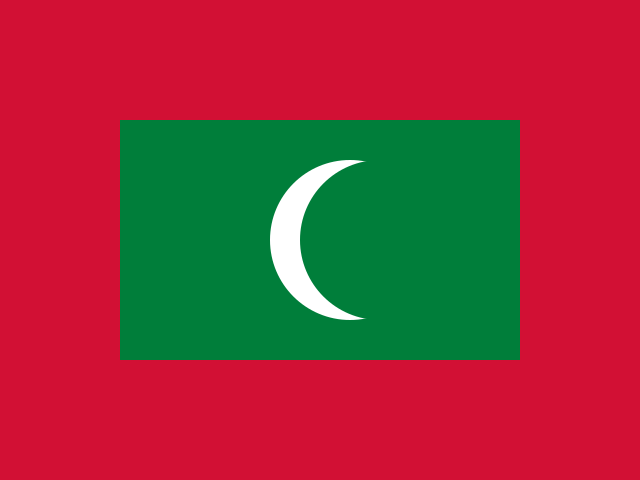
- Description: red with a large green rectangle in the center and a vertical white crescent moon centered on the rectangleMeaning: red stands for those who have sacrificed their lives to defend the country, green for peace and prosperity, and the white crescent is a symbol of Islam
- National symbols
- coconut palm, yellowfin tuna
- National colours
- red, green, white
- National anthem
- Title: "Gaumee Salaam" (National Salute)Lyrics/music: Mohamed Jameel DIDI/Wannakuwattawaduge DON AMARADEVAHistory: lyrics adopted 1948, music adopted 1972; the anthem has seven verses, but only the first two are commonly used
Economy
- Overview
- upper middle-income Indian Ocean island economy; major tourism, fishing, and shipping industries; high public debt; systemic corruption; crippled by COVID-19; ongoing deflation; poverty has tripled since pandemic began
- GDP (PPP)
- $12.325 billion (2024 est.)
- GDP per person (PPP)
- $23,400 (2024 est.)
- GDP growth
- 5.1% (2024 est.)
- Inflation
- 1.4% (2024 est.)
- Unemployment
- 4.7% (2024 est.)
- Below poverty line
- 5.4% (2019 est.)
- Farm products
- fruits, vegetables, nuts, other meats, papayas, bananas, tomatoes, maize, pulses, chillies/peppers (2023)
- Industries
- tourism, fish processing, shipping, boat building, coconut processing, woven mats, rope, handicrafts, coral and sand mining
- Exports
- $5.413 billion (2024 est.)
- Main exports
- fish, aircraft, refined petroleum, scrap iron, natural gas (2023)
- Export partners
- Thailand 32%, India 21%, Singapore 9%, UK 7%, Germany 5% (2023)
- Main imports
- refined petroleum, plastic products, aircraft, granite, ships (2023)
- Import partners
- India 15%, UAE 15%, Oman 14%, China 12%, Singapore 8% (2023)
- Money sent home from abroad
- 0.1% of GDP (2024 est.)
Energy, internet and transport
- Electricity access
- Electrification - total population: 100% (2022 est.)
- Electricity sources
- Fossil fuels: 93.2% of total installed capacity (2023 est.)Solar: 6.6% of total installed capacity (2023 est.)Wind: 0.2% of total installed capacity (2023 est.)
- Internet users
- Percent of population: 85% (2023 est.)
- Mobile phones
- Total subscriptions: 745,000 (2023 est.)Subscriptions per 100 inhabitants: 137 (2022 est.)
- TV and radio
- formerly a state-owned radio and TV monopoly; now 4 state-operated and 7 privately owned TV stations; 4 state-operated and 7 privately owned radio stations (2019)
- Airports
- 20 (2025)
- Merchant ships
- Total: 82 (2023)By type: general cargo 30, oil tanker 20, other 32
Military and space
- Armed forces
- Maldives National Defense Force (MNDF): Coast Guard, Marine Corps, Air Corps, Fire and Rescue ServiceMinistry of Homeland Security and Technology (MOHST): Maldives Police Service (2025)
- Military spending
- not available
- Military service
- 18-25 years of age for voluntary service; no conscription (2025)
Global issues
- Refugees and displaced people
- IDPs: 54 (2023 est.)
- Phone code
- +960
- Internet domain
- .mv