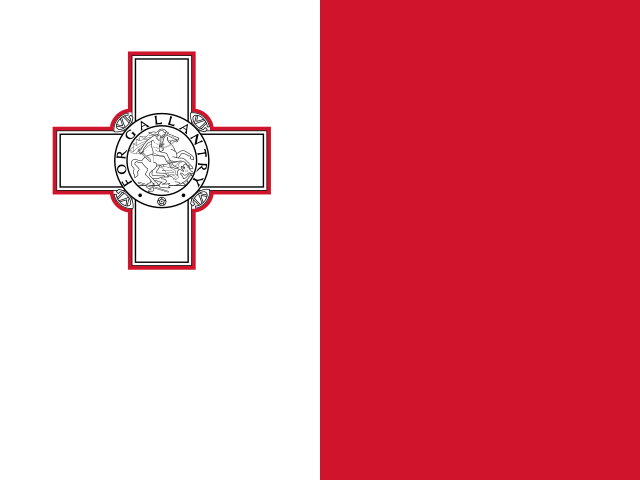
Malta
Republic of Malta
Ruled by Phoenicians, Romans, Arabs, Normans, the Knights of St John, France and Britain. The island was awarded the George Cross for resisting WWII siege. EU member since 2004.
See Malta on the 3D globeTake a quiz
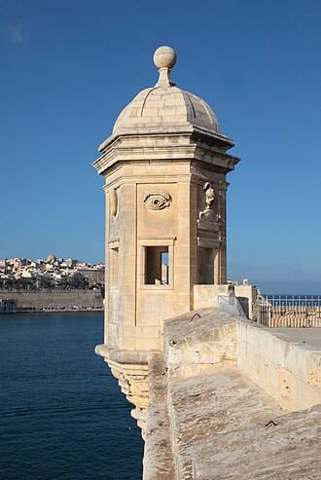
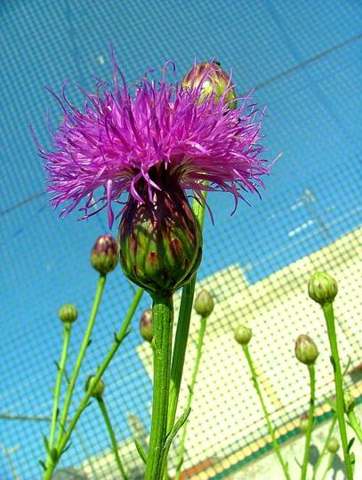
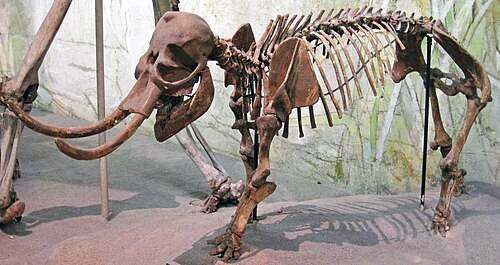
Population550 thousand
Area316 km²
CapitalValletta
RegionSouthern Europe
Did you know?
- Its temples are among the oldest freestanding buildings on Earth
- Valletta is one of Europe's smallest capitals
- Has an official language that is Semitic but written in Latin letters
Key facts about Malta
- Government
- Parliamentary republic
- Religion
- Catholic ~83%
- Founded / independence
- 1964 (from UK)
- Rich in
- Tourism, online gaming, financial services, shipping
- Languages
- English, Maltese
Maltese (Semitic, written in Latin script) and English - Currency
- Euro (€)
- People are called
- Maltese
- Main cities
- Valletta, Birkirkara, Mosta, Sliema
Timeline of Malta
- 1530Knights of St John arrive
- 1565Great Siege
- 1800British rule
- 1942George Cross awarded
- 1964Independence
- 1974Republic
- 2004Joins EU
Places to see in Malta
- Valletta
- Megalithic temples (Ħaġar Qim, older than Stonehenge)
- Mdina
- Blue Grotto
- Gozo
Food and drink
Pastizzi · rabbit stew (fenkata) · ftira
Culture and famous for
Knights of Malta; Baroque churches; festa village feasts
Popular sports
Football, waterpolo
Geography and climate
- Highest point
- Ta' Dmejrek, 253 m
- Rivers, lakes and seas
- No rivers
- Climate
- Mediterranean
- Coastline
- Has a sea coast
- Population density
- 1,741 people per km²
Wars and conflicts
- Great Siege 1565
- Siege of Malta in WWII
Alliances and memberships
Political unions and regional organisations
European UnionEurozoneCouncil of EuropeCommonwealth of Nations
Economy and trade
Malta in depth
Detailed facts from the CIA World Factbook (public domain, latest edition).
Overview
- History in brief
- With a civilization that dates back thousands of years, Malta boasts some of the oldest megalithic sites in the world. Situated in the center of the Mediterranean, Malta’s islands have long served as a strategic military asset, with the islands at various times falling under the control of the Phoenicians, Carthaginians, Greeks, Romans, Byzantines, Moors, Normans, Sicilians, Spanish, Knights of St. John, and French. Most recently a British colony (since 1814), Malta gained its independence in 1964 and declared itself a republic 10 years later. While under British rule, the island staunchly supported the UK through both world wars. Since the mid-1980s, the island has transformed itself into a freight transshipment point, a financial center, and a tourist destination, as its key industries moved toward more service-oriented activities. Malta became an EU member in 2004 and joined the eurozone in 2008.
Geography
- Location
- Southern Europe, islands in the Mediterranean Sea, south of Sicily (Italy)
- Size compared
- slightly less than twice the size of Washington, D.C.
- Land borders
- Total: 0 km
- Coastline
- 196.8 km (excludes 56 km for the island of Gozo)
- Climate
- Mediterranean; mild, rainy winters; hot, dry summers
- Terrain
- mostly low, rocky, flat to dissected plains; many coastal cliffs
- Elevation
- Highest point: Ta'Dmejrek on Dingli Cliffs 253 mLowest point: Mediterranean Sea 0 m
- Natural resources
- limestone, salt, arable land
- Natural hazards
- occasional droughts
- Notes
- the country is an archipelago, with only the three largest islands (Malta, Ghawdex or Gozo, and Kemmuna or Comino) inhabited; numerous bays provide good harbors
- Environmental issues
- limited natural freshwater resources; deforestation; wildlife preservation
People and society
- Population
- Total: 521,828 (2025 est.)Male: 271,180Female: 250,648
- Nationality
- Noun: Maltese (singular and plural)Adjective: Maltese
- Ethnic groups
- Maltese (descendants of ancient Carthaginians and Phoenicians with strong elements of Italian and other Mediterranean stock)
- Languages
- Maltese (official) 90.1%, English (official) 6%, multilingual 3%, other 0.9% (2005 est.)
- Religions
- Roman Catholic (official) more than 90% (2006 est.)
- Median age
- Total: 42.1 years (2025 est.)Male: 42.4 yearsFemale: 44.7 years
- Population growth
- 0.65% (2025 est.)
- Life expectancy
- Total population: 83.6 years (2024 est.)Male: 81.5 yearsFemale: 85.8 years
- Children per woman
- 1.18 children born/woman (2025 est.)
- Urbanization
- Urban population: 94.9% of total population (2023)Rate of urbanization: 0.28% annual rate of change (2020-25 est.)
- Largest cities
- 213,000 VALLETTA (capital) (2018)
- Years in school
- Total: 16 years (2023 est.)Male: 15 years (2023 est.)Female: 17 years (2023 est.)
Government
- Official names
- Conventional long form: Republic of MaltaConventional short form: MaltaLocal long form: Repubblika ta' MaltaLocal short form: MaltaEtymology: the origin is unclear; the name may come from the ancient term mel, meaning "high" and probably referring to the island's rocks; the ancient Greeks called the island "Melite," possibly from the Greek word meli, meaning "honey" and referring to the island's honey production
- Government type
- parliamentary republic
- Capital
- Name: VallettaGeographic coordinates: 35 53 N, 14 30 ETime difference: UTC+1 (6 hours ahead of Washington, DC, during Standard Time)Daylight saving time: +1hr, begins last Sunday in March; ends last Sunday in OctoberEtymology: named in honor of Jean Parizot de la VALETTE, the Grand Master of the Order of Saint John (crusader knights), who founded the city in 1566
- Regions
- 68 localities (Il-lokalita); Attard, Balzan, Birgu, Birkirkara, Birzebbuga, Bormla, Dingli, Fgura, Floriana, Fontana, Ghajnsielem, Gharb, Gharghur, Ghasri, Ghaxaq, Gudja, Gzira, Hamrun, Iklin, Imdina, Imgarr, Imqabba, Imsida, Imtarfa, Isla, Kalkara, Kercem, Kirkop, Lija, Luqa, Marsa, Marsaskala, Marsaxlokk, Mellieha, Mosta, Munxar, Nadur, Naxxar, Paola, Pembroke, Pieta, Qala, Qormi, Qrendi, Rabat, Rabat (Ghawdex), Safi, San Giljan/Saint Julian, San Gwann/Saint John, San Lawrenz/Saint Lawrence, Sannat, San Pawl il-Bahar/Saint Paul's Bay, Santa Lucija/Saint Lucia, Santa Venera/Saint Venera, Siggiewi, Sliema, Swieqi, Tarxien, Ta' Xbiex, Valletta, Xaghra, Xewkija, Xghajra, Zabbar, Zebbug, Zebbug (Ghawdex), Zejtun, Zurrieq
- Independence
- 21 September 1964 (from the UK)
- National holiday
- Independence Day, 21 September (1964); Republic Day, 13 December (1974)
- Constitution
- History: many previous; latest adopted 21 September 1964Amendment process: proposals (Acts of Parliament) require at least two-thirds majority vote by the House of Representatives; passage of Acts requires majority vote by referendum, followed by final majority vote by the House and assent of the president of the republic
- Legal system
- mixed system of English common law and civil law based on the Roman and Napoleonic civil codes; subject to European Union law
- Voting age
- 18 years of age (16 in local council elections); universal
- Flag meaning
- Description: two equal vertical bands of white (left side) and red; in the upper-left corner is the George Cross, edged in redHistory: according to legend, the colors come from the red-and-white checkered banner of Count Roger of Sicily, who removed a bicolored corner and granted it to Malta in 1091, but the colors more likely come from the Knights of Saint John, who ruled Malta from 1530 to 1798; in 1942, Britain's King George VI awarded the George Cross to the islanders for their exceptional bravery and gallantry in World War II, and the George Cross bordered in red was added to the flag after independence in 1964
- National symbols
- Maltese eight-pointed cross
- National colours
- red, white
- National anthem
- Title: "L-Innu Malti" (The Hymn of Malta)Lyrics/music: Dun Karm PSAILA/Robert SAMMUTHistory: adopted 1945; written in the form of a prayer to bind together the political parties and the country
- UNESCO World Heritage Sites
- Total World Heritage Sites: 3 (all cultural)Selected World Heritage Site locales: City of Valletta; Ħal Saflieni Hypogeum; Megalithic Temples of Malta
Economy
- Overview
- high-income, EU-member European economy; diversified portfolio; euro user; dependent on food and energy imports; strong tourism, trade, and manufacturing sectors; high North African immigration; large welfare system; educated workforce
- GDP (PPP)
- $34.731 billion (2024 est.)
- GDP per person (PPP)
- $60,500 (2024 est.)
- GDP growth
- 6% (2024 est.)
- Inflation
- 1.7% (2024 est.)
- Unemployment
- 2.8% (2024 est.)
- Below poverty line
- 16.7% (2021 est.)
- Farm products
- milk, tomatoes, onions, potatoes, chicken, cauliflower/broccoli, cabbages, pork, pumpkins/squash, watermelons (2023)
- Industries
- tourism, electronics, ship building and repair, construction, food and beverages, pharmaceuticals, footwear, clothing, tobacco, aviation services, financial services, information technology services
- Exports
- $29.245 billion (2024 est.)
- Main exports
- refined petroleum, integrated circuits, packaged medicine, ships, postage stamps/documents (2023)
- Export partners
- Nigeria 28%, Germany 10%, China 6%, Singapore 5%, Hong Kong 4% (2023)
- Main imports
- ships, refined petroleum, integrated circuits, aircraft, packaged medicine (2023)
- Import partners
- Italy 18%, China 10%, Germany 8%, France 7%, Turkey 7% (2023)
- Money sent home from abroad
- 0.1% of GDP (2024 est.)
Energy, internet and transport
- Electricity access
- Electrification - total population: 100% (2022 est.)
- Electricity sources
- Fossil fuels: 86.4% of total installed capacity (2023 est.)Solar: 13.2% of total installed capacity (2023 est.)Biomass and waste: 0.4% of total installed capacity (2023 est.)
- Internet users
- Percent of population: 92% (2023 est.)
- Mobile phones
- Total subscriptions: 767,000 (2024 est.)Subscriptions per 100 inhabitants: 142 (2024 est.)
- TV and radio
- 2 publicly owned TV stations, Television Malta and an educational channel; several privately owned national television stations, 2 of which are owned by political parties; Italian and British broadcast programs are available; multi-channel cable and satellite TV services are available; publicly owned radio broadcaster operates 3 stations; roughly 20 commercial radio stations (2019)
- Airports
- 1 (2025)
- Merchant ships
- Total: 1,957 (2023)By type: bulk carrier 490, container ship 348, general cargo 152, oil tanker 354, other 613
Military and space
- Armed forces
- The Armed Forces of Malta (AFM): Land Component (combat, combat support, and combat service support divided into three regiments), Maritime Squadron, Air Wing; Volunteer Reserve Force (2025)
- Military spending
- 0.5% of GDP (2024 est.)
- Military service
- 18-30 years of age for men and women for voluntary military service; no conscription (2026)
Global issues
- Refugees and displaced people
- Refugees: 9,284 (2024 est.)Stateless persons: 171 (2024 est.)
- Phone code
- +356
- Internet domain
- .mt