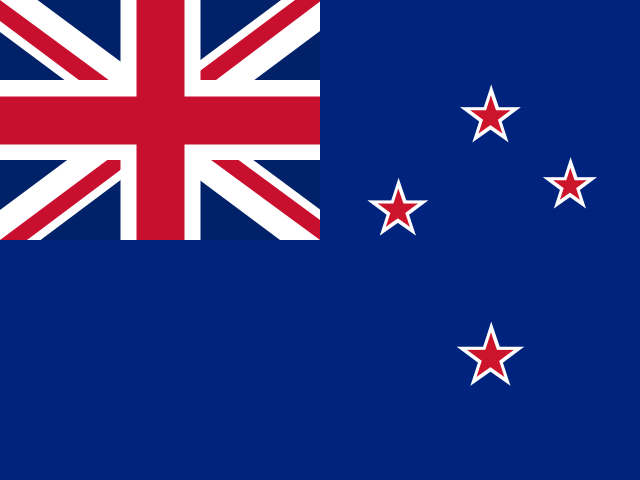
New Zealand
New Zealand · Aotearoa
The last major landmass settled by humans, by Polynesian Māori around 1300. The 1840 Treaty of Waitangi with Britain. First country to give women the vote (1893).
See New Zealand on the 3D globeTake a quiz
Population5.3 million
Area270,467 km²
CapitalWellington
RegionAustralia and New Zealand
Did you know?
- First country to give women the vote (1893)
- Has about five sheep per person
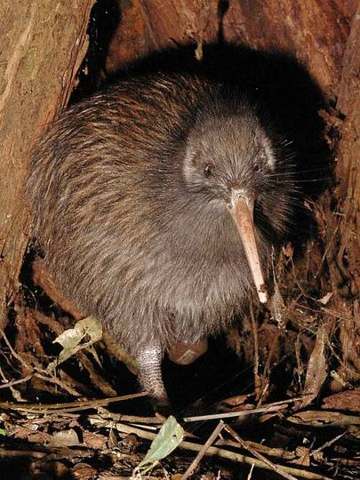
- The kiwi bird cannot fly
Key facts about New Zealand
- Government
- Parliamentary constitutional monarchy (Commonwealth realm)
- Religion
- Unaffiliated ~52%, Christian ~37%
- Founded / independence
- 1907 dominion; 1947 full independence
- Rich in
- Dairy, meat, wool, kiwifruit, wine, tourism, film
- Languages
- English, Māori, New Zealand Sign Language
English, Māori (te reo), NZ Sign Language - Currency
- New Zealand dollar ($)
- People are called
- New Zealander
- Main cities
- Auckland, Wellington, Christchurch, Hamilton
Timeline of New Zealand
- 1300Māori arrival
- 1840Treaty of Waitangi
- 1893Women's vote
- 1907Dominion
- 1953Hillary climbs Everest
- 1987Nuclear-free law
Places to see in New Zealand
- Milford Sound
- Hobbiton
- Rotorua geysers
- Tongariro Crossing
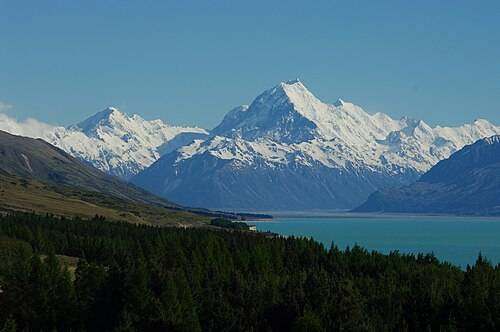
- Aoraki/Mount Cook
- Bay of Islands
- Waitomo glowworm caves
Food and drink
Hāngī · pavlova · lamb · kiwifruit · hokey pokey ice cream
Culture and famous for
Māori culture and the haka; Lord of the Rings filming; bungee jumping commercialised here
Popular sports
Rugby (All Blacks), cricket, sailing
Geography and climate
- Highest point
- Aoraki/Mount Cook, 3,724 m
- Rivers, lakes and seas
- Waikato; Lake Taupō
- Climate
- Temperate maritime
- Coastline
- Has a sea coast
- Population density
- 20 people per km²
Wars and conflicts
- New Zealand Wars 1845–72
- WWI (Gallipoli)
- WWII
Alliances and memberships
Military and security
Political unions and regional organisations
Pacific Islands ForumCommonwealth of Nations
Economy and trade
Culture, religion and history
New Zealand in depth
Detailed facts from the CIA World Factbook (public domain, latest edition).
Overview
- History in brief
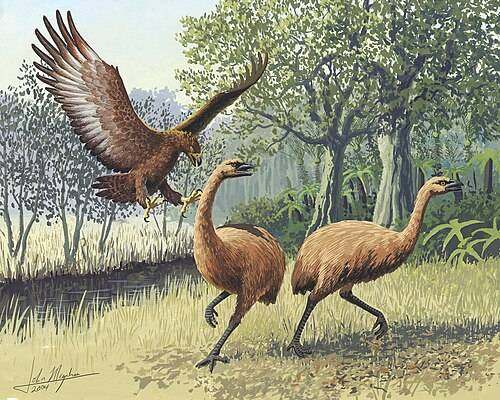
- Polynesians settled New Zealand between the late 1200s and the mid-1300s. They called the land Aotearoa, which legend holds is the name of the canoe that Kupe, the first Polynesian in New Zealand, used to sail to the country; the name Aotearoa is now in widespread use as the local Maori name for the country. By the 1500s, competition for land and resources led to intermittent fighting between different Maori tribes as large game became extinct. Dutch explorer Abel TASMAN was the first European to see the islands in 1642 but left after an encounter with local Maori. British sea captain James COOK arrived in 1769, followed by whalers, sealers, and traders. The UK only nominally claimed New Zealand and included it as part of New South Wales in Australia. Concerns about increasing lawlessness led the UK to appoint its first British Resident in New Zealand in 1832, although the position had few legal powers. In 1835, some Maori tribes from the North Island declared independence. Fearing an impending French settlement and takeover, the majority of Maori chiefs signed the Treaty of Waitangi with the British in 1840. Land tenure issues stemming from the treaty are still being actively negotiated in New Zealand.The UK declared New Zealand a separate colony in 1841 and granted limited self-government in 1852. Different traditions of authority and land use led to a series of wars between Europeans and various Maori tribes from the 1840s to the 1870s. Along with disease, these conflicts halved the Maori population. In the 1890s, New Zealand initially expressed interest in joining independence talks with Australia but ultimately opted against it and changed its status to an independent dominion in 1907. New Zealand provided more than 100,000 troops during each World War, many of whom fought as part of the Australia and New Zealand Army Corps (ANZAC). New Zealand reaffirmed its independence in 1947 and signed the Australia, New Zealand, and US (ANZUS) Treaty in 1951.Beginning in 1984, New Zealand began to adopt nuclear-free policies, contributing to a dispute with the US over naval ship visits that led the US to suspend its defense obligations to New Zealand in 1986, but bilateral relations and military ties have been revitalized since the 2010s with new security agreements. A key challenge for Auckland that has emerged over the past decade is balancing concerns over China’s growing influence in the Pacific region with its role as New Zealand's largest export destinat
Geography
- Location
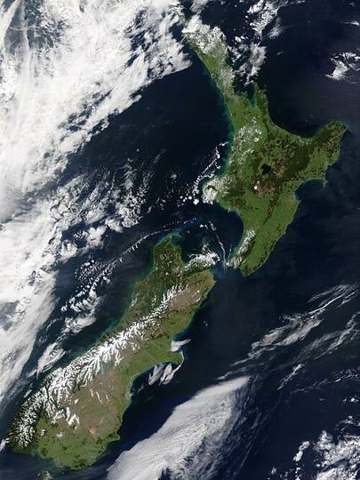
- Oceania, islands in the South Pacific Ocean, southeast of Australia
- Size compared
- almost twice the size of North Carolina; about the size of Colorado
- Land borders
- Total: 0 km
- Coastline
- 15,134 km
- Climate
- temperate with sharp regional contrasts
- Terrain
- predominately mountainous with large coastal plains
- Elevation
- Highest point: Aoraki/Mount Cook 3,724 m; note - the mountain's height was 3,764 m until 14 December 1991 when it lost about 10 m in an avalanche of rock and ice; erosion of the ice cap since then has brought the height down another 30 mLowest point: Pacific Ocean 0 mMean elevation: 388 m
- Natural resources
- natural gas, iron ore, sand, coal, timber, hydropower, gold, limestone
- Major lakes
- Fresh water lake(s): Lake Taupo - 610 sq km
- Natural hazards
- earthquakes are common, though usually not severe; volcanic activityVolcanism: significant volcanism on North Island; Ruapehu (2,797 m) has a history of large eruptions in the past century; Taranaki has the potential to produce dangerous avalanches and lahars; other historically active volcanoes include Okataina, Raoul Island, Tongariro, and White Island; see note 2 under "Geography - note"
- Notes
- Note 1: consists of two main islands and a number of smaller islands; South Island, the larger main island, is the 12th-largest island in the world and is divided along its length by the Southern Alps; North Island is the 14th-largest island in the world and is not as mountainous, but it is marked by volcanismNote 2: New Zealand lies along the Ring of Fire, which is a belt bordering the Pacific Ocean that contains about 75% of the world's volcanoes and up to 90% of the world's earthquakesNote 3: almost 90% of the population lives in cities and over three-quarters on North Island; Wellington is the southernmost national capital in the world
- Environmental issues
- water quality and availability; rapid urbanization; deforestation; soil erosion and degradation; native flora and fauna hard-hit by invasive species
People and society
- Population
- Total: 5,161,211 (2024 est.)Male: 2,584,607Female: 2,576,604
- Nationality
- Noun: New Zealander(s)Adjective: New Zealand
- Ethnic groups
- European 64.1%, Maori 16.5%, Chinese 4.9%, Indian 4.7%, Samoan 3.9%, Tongan 1.8%, Cook Islands Maori 1.7%, English 1.5%, Filipino 1.5%, New Zealander 1%, other 13.7% (2018 est.)
- Languages
- English (de facto official) 95.4%, Maori (de jure official) 4%, Samoan 2.2%, Northern Chinese 2%, Hindi 1.5%, French 1.2%, Yue 1.1%, New Zealand Sign Language (de jure official) 0.5%, other or not stated 17.2% (2018 est.)
- Religions
- Christian 37.3% (Catholic 10.1%, Anglican 6.8%, Presbyterian and Congregational 5.2%, Pentecostal 1.8%, Methodist 1.6%, Church of Jesus Christ 1.2%, other 10.7%), Hindu 2.7%, Maori 1.3%, Muslim, 1.3%, Buddhist 1.1%, other religion 1.6% (includes Judaism, Spiritualism and New Age religions, Baha'i, Asian religions other than Buddhism), no religion 48.6%, objected to answering 6.7% (2018 est.)
- Median age
- Total: 38.1 years (2025 est.)Male: 37.2 yearsFemale: 38.6 years
- Population growth
- 0.83% (2025 est.)
- Life expectancy
- Total population: 82.9 years (2024 est.)Male: 81.2 yearsFemale: 84.8 years
- Children per woman
- 1.84 children born/woman (2025 est.)
- Urbanization
- Urban population: 87% of total population (2023)Rate of urbanization: 0.92% annual rate of change (2020-25 est.)
- Largest cities
- 1.673 million Auckland, 422,000 WELLINGTON (capital) (2023)
- Years in school
- Total: 19 years (2023 est.)Male: 19 years (2023 est.)Female: 20 years (2023 est.)
Government
- Official names
- Conventional long form: noneConventional short form: New ZealandFormer: Nieuw ZeelandAbbreviation: NZEtymology: the name is an anglicized form of the Dutch name Nieuw Zeeland, or "New Sea Land," which was first used in 1643 in honor of the Dutch province of Zeeland
- Government type
- parliamentary democracy under a constitutional monarchy; a Commonwealth realm
- Capital
- Name: WellingtonGeographic coordinates: 41 18 S, 174 47 ETime difference: UTC+12 (17 hours ahead of Washington, DC, during Standard Time)Daylight saving time: +1hr, begins last Sunday in September; ends first Sunday in AprilTime zone note: New Zealand has two time zones: New Zealand standard time (UTC+12) and Chatham Islands time (45 minutes in advance of New Zealand standard time; UTC+12:45)Etymology: named in 1840 after Arthur WELLESLEY, the first Duke of Wellington, who was famous for his victory at Waterloo in 1815 and was a benefactor of the New Zealand Company that settled North Island
- Regions
- 16 regions and 1 territory*; Auckland, Bay of Plenty, Canterbury, Chatham Islands*, Gisborne, Hawke's Bay, Manawatu-Wanganui, Marlborough, Nelson, Northland, Otago, Southland, Taranaki, Tasman, Waikato, Wellington, West Coast
- Independence
- 26 September 1907 (from the UK)
- National holiday
- Waitangi Day, 6 February (1840); Anzac Day, 25 April (1915)
- Constitution
- History: New Zealand has no single constitution document; the Constitution Act 1986, effective 1 January 1987, includes only part of the uncodified constitution; others include a collection of statutes or "acts of Parliament," the Treaty of Waitangi, Orders in Council, letters patent, court decisions, and unwritten conventionsAmendment process: proposed as bill by Parliament or by referendum called either by the government or by citizens; passage of a bill as an act normally requires two separate readings with committee reviews in between to make changes and corrections, a third reading approved by the House of Representatives membership or by the majority of votes in a referendum, and assent of the governor-general; passage of amendments to reserved constitutional provisions affecting the term of Parliament, electoral districts, and voting restrictions requires approval by 75% of the House membership or the majority of votes in a referendum
- Legal system
- common law system, based on English model, with special legislation and land courts for the Maori
- Voting age
- 18 years of age; universal
- Flag meaning
- Description: blue with the UK flag in the upper-left quadrant, with four five-pointed red stars edged in white centered in the right half of the flagMeaning: the stars represent the Southern Cross constellation
- National symbols
- Southern Cross constellation (four five-pointed stars), kiwi (bird), silver fern
- National colours
- black, white, red (ochre)
- National anthem
- Title: "God Save the King"Lyrics/music: unknownHistory: royal anthem and one of two official national anthems; usually played only when a member of the royal family or a representative is present or when allegiance to the crown is demonstrated
- UNESCO World Heritage Sites
- Total World Heritage Sites: 3 (2 natural, 1 mixed)Selected World Heritage Site locales: Te Wahipounamu – South West New Zealand (n); Tongariro National Park (m); New Zealand Sub-Antarctic Islands (n)
Economy
- Overview
- high-income, globally integrated Pacific island economy; strong agriculture, manufacturing, and tourism sectors; reliant on Chinese market for exports; recovery trajectory following deep post-pandemic recession; challenges of fiscal deficits, below-average productivity, cost of living, and drop in net migration
- GDP (PPP)
- $257.117 billion (2024 est.)
- GDP per person (PPP)
- $48,200 (2024 est.)
- GDP growth
- -0.1% (2024 est.)
- Inflation
- 2.9% (2024 est.)
- Unemployment
- 4.9% (2024 est.)
- Farm products
- milk, beef, kiwifruit, apples, grapes, lamb/mutton, potatoes, wheat, barley, chicken (2023)
- Industries
- agriculture, forestry, fishing, logs and wood articles, manufacturing, mining, construction, financial services, real estate services, tourism
- Exports
- $61.799 billion (2024 est.)
- Main exports
- milk, wood, beef, butter, sheep and goat meat (2023)
- Export partners
- China 28%, USA 12%, Australia 12%, Japan 6%, S. Korea 3% (2023)
- Main imports
- refined petroleum, cars, gas turbines, broadcasting equipment, trucks (2023)
- Import partners
- China 20%, Australia 11%, USA 9%, S. Korea 7%, Japan 7% (2023)
- Money sent home from abroad
- 0.3% of GDP (2023 est.)
Energy, internet and transport
- Electricity access
- Electrification - total population: 100% (2022 est.)
- Electricity sources
- Fossil fuels: 12.4% of total installed capacity (2023 est.)Solar: 0.8% of total installed capacity (2023 est.)Wind: 8% of total installed capacity (2023 est.)Hydroelectricity: 59.7% of total installed capacity (2023 est.)Geothermal: 17.6% of total installed capacity (2023 est.)Biomass and waste: 1.5% of total installed capacity (2023 est.)
- Internet users
- Percent of population: 96% (2023 est.)
- Mobile phones
- Total subscriptions: 6.56 million (2023 est.)Subscriptions per 100 inhabitants: 115 (2022 est.)
- TV and radio
- state-owned Television New Zealand operates multiple TV networks; state-owned Radio New Zealand operates 3 radio networks and an external shortwave radio service to the South Pacific region; a small number of national commercial TV and radio stations and many regional commercial TV and radio stations are available; cable and satellite TV systems are available (2019)
- Airports
- 206 (2025)
- Railways
- Total: 4,128 km (2018)Narrow gauge: 4,128 km (2018) 1.067-m gauge (506 km electrified)
- Merchant ships
- Total: 117 (2023)By type: container ship 2, general cargo 12, oil tanker 3, other 100
Military and space
- Armed forces
- New Zealand Defense Force (NZDF): New Zealand Army, Royal New Zealand Navy, Royal New Zealand Air Force (2025)
- Military spending
- 1.2% of GDP (2024 est.)
- Military service
- 17 years of age for voluntary military service for men and women; soldiers cannot be deployed until the age of 18; no conscription (2025)
- Space programme
- has a national space program focused largely on the development of a commercial space sector, particularly in the field of satellites and satellite launch vehicles (SLV); manufactures and launches commercial satellites and SLVs; researches and develops a range of other space-related technologies, including propulsion systems; participates in international programs and partners with a range of foreign space agencies and industries, including those of Australia, Canada, the EU, the ESA, individual European countries, South Africa, and the US; has a growing commercial space sector (2025)
- Space milestones
- 2009 - launched a 2-stage suborbital sounding rocket (Atea-1)2018 - placed satellite in orbit on rocket built by a New Zealand-US commercial company and launched from a privately owned domestic launch site2019 - began operations of the Kiwi Space Radar, which is designed to track debris in low Earth orbit2021 - signed the US-led Artemis Accords for space and lunar exploration2024 - first domestically made science payload sent to International Space Station on US rocket
Global issues
- Refugees and displaced people
- Refugees: 5,622 (2024 est.)IDPs: 26 (2024 est.)Stateless persons: 29 (2024 est.)
- Phone code
- +64
- Internet domain
- .nz