Saint Vincent and the Grenadines
Saint Vincent and the Grenadines
The Garifuna people resisted Britain until deported in 1797.
See Saint Vincent and the Grenadines on the 3D globeTake a quiz
Population100 thousand
Area389 km²
CapitalKingstown
RegionCaribbean
Did you know?
- Has one of the oldest botanical gardens in the Americas (1765)
- Pirates of the Caribbean was filmed here
- La Soufrière erupted in 2021
Key facts about Saint Vincent and the Grenadines
- Government
- Parliamentary constitutional monarchy (Commonwealth realm)
- Religion
- Christian ~90%
- Founded / independence
- 1979 (from UK)
- Rich in
- Bananas, tourism
- Languages
- English
English; Vincentian Creole - Currency
- Eastern Caribbean dollar ($)
- People are called
- Saint Vincentian
- Main cities
- Kingstown
Timeline of Saint Vincent and the Grenadines
- 1719French settlement
- 1797Garifuna deported
- 1979Independence
- 2021Volcanic eruption
Places to see in Saint Vincent and the Grenadines
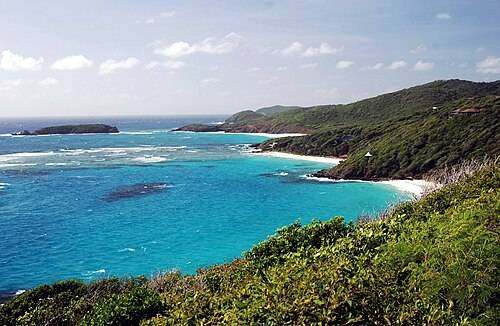
- Tobago Cays
- Mustique
- La Soufrière volcano
- Botanical Gardens, Kingstown
Food and drink
Roasted breadfruit and fried jackfish
Culture and famous for
Garifuna heritage; Pirates of the Caribbean filmed here
Popular sports
Cricket
Geography and climate
- Highest point
- La Soufrière, 1,234 m
- Rivers, lakes and seas
- Short rivers
- Climate
- Tropical
- Coastline
- Has a sea coast
- Population density
- 257 people per km²
Wars and conflicts
- Carib Wars
Alliances and memberships
Political unions and regional organisations
CARICOMCELACOrganization of American StatesCommonwealth of Nations
Culture, religion and history
Saint Vincent and the Grenadines in depth
Detailed facts from the CIA World Factbook (public domain, latest edition).
Overview
- History in brief
- Resistance from native Caribs prevented colonization on Saint Vincent until 1719. France and England disputed the island for most of the 18th century, but it was ceded to England in 1783. The British prized Saint Vincent because of its fertile soil, which allowed for thriving slave-run plantations of sugar, coffee, indigo, tobacco, cotton, and cocoa. In 1834, the British abolished slavery. Immigration of indentured servants eased the ensuing labor shortage, as did subsequent immigrant waves from Portugal and East India. Conditions remained harsh for both former slaves and immigrant agricultural workers, however, as depressed world sugar prices kept the economy stagnant until the early 1900s. The economy then went into a period of decline, with many landowners abandoning their estates and leaving the land to be cultivated by liberated slaves.Between 1960 and 1962, Saint Vincent and the Grenadines was a separate administrative unit of the Federation of the West Indies. Autonomy was granted in 1969 and independence in 1979. In 2021, the eruption of the La Soufrière volcano in the north of Saint Vincent destroyed much of Saint Vincent’s most productive agricultural lands. Unlike most of its tourism-dependent neighbors, the Vincentian economy is primarily agricultural.
Geography
- Location
- Caribbean, islands between the Caribbean Sea and North Atlantic Ocean, north of Trinidad and Tobago
- Size compared
- twice the size of Washington, D.C.
- Land borders
- Total: 0 km
- Coastline
- 84 km
- Climate
- tropical; little seasonal temperature variation; rainy season (May to November)
- Terrain
- volcanic, mountainous
- Elevation
- Highest point: La Soufriere 1,234 mLowest point: Caribbean Sea 0 m
- Natural resources
- hydropower, arable land
- Natural hazards
- hurricanes; La Soufrière volcano on the island of Saint Vincent is a constant threatVolcanism: La Soufrière (1,234 m) last erupted in 1979; the island of Saint Vincent is part of the volcanic-island arc of the Lesser Antilles that extends from Saba in the north to Grenada in the south
- Notes
- the administration of the islands of the Grenadines group is divided between Saint Vincent and the Grenadines and Grenada; Saint Vincent and the Grenadines is composed of 32 islands and cays
- Environmental issues
- pollution of coastal waters and shorelines from boats; poor land-use planning; deforestation; watershed management; squatter settlement control
People and society
- Population
- Total: 100,647 (2024 est.)Male: 51,249Female: 49,398
- Nationality
- Noun: Saint Vincentian(s) or Vincentian(s)Adjective: Saint Vincentian or Vincentian
- Ethnic groups
- African descent 71.2%, mixed 23%, Indigenous 3%, East Indian/Indian 1.1%, European 1.5%, other 0.2% (2012 est.)
- Languages
- English, Vincentian Creole English, French patois
- Religions
- Protestant 75% (Pentecostal 27.6%, Anglican 13.9%, Seventh Day Adventist 11.6%, Baptist 8.9%, Methodist 8.7%, Evangelical 3.8%, Salvation Army 0.3%, Presbyterian/Congregational 0.3%), Roman Catholic 6.3%, Rastafarian 1.1%, Jehovah's Witness 0.8%, other 4.7%, none 7.5%, unspecified 4.7% (2012 est.)
- Median age
- Total: 38.1 years (2025 est.)Male: 37.7 yearsFemale: 37.4 years
- Population growth
- -0.15% (2025 est.)
- Life expectancy
- Total population: 77.2 years (2024 est.)Male: 75.2 yearsFemale: 79.3 years
- Children per woman
- 1.73 children born/woman (2025 est.)
- Urbanization
- Urban population: 54.3% of total population (2023)Rate of urbanization: 0.94% annual rate of change (2020-25 est.)
- Largest cities
- 27,000 KINGSTOWN (capital) (2018)
- Years in school
- Total: 15 years (2015 est.)Male: 14 years (2015 est.)Female: 15 years (2015 est.)
Government
- Official names
- Conventional long form: noneConventional short form: Saint Vincent and the GrenadinesEtymology: explorer Christopher COLUMBUS named the island after Saint VINCENT of Saragossa because 22 January 1498, the day of discovery, was the saint's feast day
- Government type
- parliamentary democracy under a constitutional monarchy; a Commonwealth realm
- Capital
- Name: KingstownGeographic coordinates: 13 08 N, 61 13 WTime difference: UTC-4 (1 hour ahead of Washington, DC, during Standard Time)
- Regions
- 6 parishes; Charlotte, Grenadines, Saint Andrew, Saint David, Saint George, Saint Patrick
- Independence
- 27 October 1979 (from the UK)
- National holiday
- Independence Day, 27 October (1979)
- Constitution
- History: previous 1969, 1975; latest drafted 26 July 1979, effective 27 October 1979 (The Saint Vincent Constitution Order 1979)Amendment process: proposed by the House of Assembly; passage requires at least two-thirds majority vote of the Assembly membership and assent of the governor general; passage of amendments to constitutional sections on fundamental rights and freedoms, citizen protections, various government functions and authorities, and constitutional amendment procedures requires approval by the Assembly membership, approval in a referendum of at least two thirds of the votes cast, and assent of the governor general
- Legal system
- English common law
- Voting age
- 18 years of age; universal
- Flag meaning
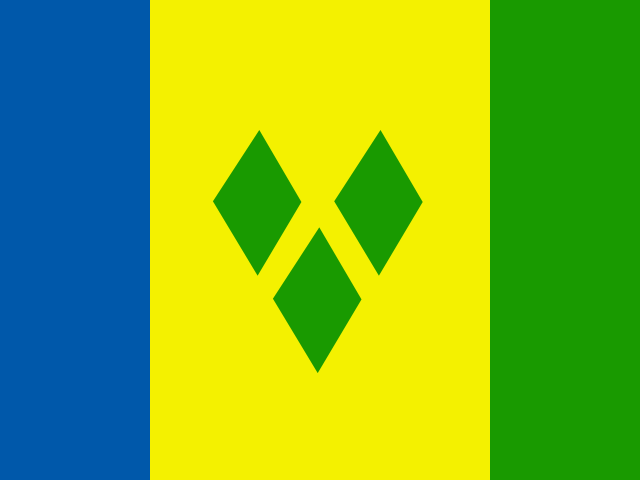
- Description: three vertical bands of blue (left side), gold (double-width), and green; the gold band has three green diamonds arranged in a "V" pattern that stands for "Vincent"Meaning: the diamonds represent the islands as "the Gems of the Antilles" and are set slightly lowered in the gold band to reflect the country's position in the Antilles; blue stands for the tropical sky and sea, yellow for the sand, and green for vegetation
- National symbols
- Saint Vincent parrot
- National colours
- blue, gold, green
- National anthem
- Title: "God Save the King"Lyrics/music: unknownHistory: in use since 1745
Economy
- Overview
- upper middle-income Caribbean island economy; key agriculture and tourism sectors; environmentally fragile; diversifying economy across services, science and knowledge, and creative industries; CARICOM member and US Caribbean Basin Initiative beneficiary
- GDP (PPP)
- $1.883 billion (2024 est.)
- GDP per person (PPP)
- $18,700 (2024 est.)
- GDP growth
- 4.1% (2024 est.)
- Inflation
- 3.6% (2024 est.)
- Unemployment
- 18.1% (2024 est.)
- Farm products
- bananas, root vegetables, plantains, spices, coconuts, fruits, apples, vegetables, mangoes/guavas, sweet potatoes (2023)
- Industries
- tourism; food processing, cement, furniture, clothing, starch
- Exports
- $425.182 million (2024 est.)
- Main exports
- ships, wheat flours, animal food, shellfish, construction vehicles (2023)
- Export partners
- Croatia 16%, Barbados 14%, USA 10%, St. Lucia 10%, St. Kitts & Nevis 8% (2023)
- Main imports
- ships, refined petroleum, wheat, coal, poultry (2023)
- Import partners
- USA 37%, Italy 7%, Trinidad & Tobago 7%, China 6%, UK 6% (2023)
- Money sent home from abroad
- 8.2% of GDP (2024 est.)
Energy, internet and transport
- Electricity access
- Electrification - total population: 100% (2022 est.)
- Electricity sources
- Fossil fuels: 86.1% of total installed capacity (2023 est.)Solar: 1.3% of total installed capacity (2023 est.)Hydroelectricity: 12.6% of total installed capacity (2023 est.)
- Internet users
- Percent of population: 76% (2023 est.)
- Mobile phones
- Total subscriptions: 103,000 (2023 est.)Subscriptions per 100 inhabitants: 100 (2022 est.)
- TV and radio
- St. Vincent and the Grenadines Broadcasting Corporation operates 1 TV station and 5 repeater stations that provide near total coverage to the multi-island state; multi-channel cable TV service available; a partially government-funded national radio service broadcasts on 1 station and has 2 repeater stations; about a dozen privately owned radio stations and repeater stations
- Airports
- 5 (2025)
- Merchant ships
- Total: 830 (2023)By type: bulk carrier 30, container ship 18, general cargo 137, oil tanker 16, other 629
Military and space
- Armed forces
- No regular military forces; Ministry of National Security: Royal Saint Vincent and the Grenadines Police Force (RSVPF) (2025)
- Phone code
- +1784
- Internet domain
- .vc