Singapore
Republic of Singapore · Singapura · சிங்கப்பூர் · 新加坡
A British trading post founded in 1819. Expelled from Malaysia in 1965, it grew under Lee Kuan Yew from a poor port into a global hub.
See Singapore on the 3D globeTake a quiz
Population6 million
Area710 km²
CapitalSingapore
RegionSouth-Eastern Asia
Did you know?
- Chewing gum sales are banned
- One of only three city-states
- Changi Airport is often rated the world's best
Key facts about Singapore
- Government
- Parliamentary republic (one-party dominant)
- Religion
- Buddhist ~31%, Christian ~19%, Islam ~16%, Taoist ~9%, Hindu ~5%
- Founded / independence
- 1965 (from Malaysia)
- Rich in
- Finance, port, refining, semiconductors — among the world's richest
- Languages
- English, Malay, Tamil, Chinese
English, Malay, Mandarin, Tamil; Singlish - Currency
- Singapore dollar ($)
- People are called
- Singaporean
- Main cities
- Singapore
Timeline of Singapore
- 1819British trading post
- 1942Japanese occupation
- 1963Joins Malaysia
- 1965Independence
- 1990Lee Kuan Yew steps down
Places to see in Singapore
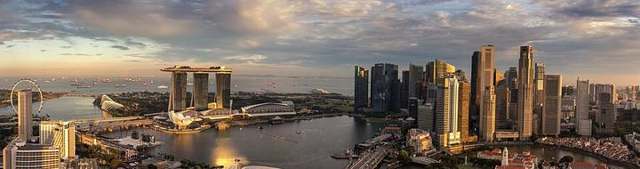
- Marina Bay Sands
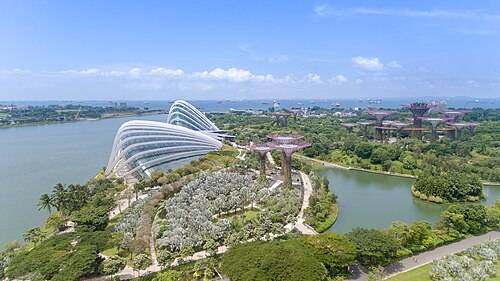
- Gardens by the Bay
- Merlion
- Sentosa
- Chinatown
- Singapore Zoo
Food and drink
Chicken rice · chilli crab · laksa · hawker centres (UNESCO)
Culture and famous for
Spotless city; multicultural festivals
Popular sports
Football, badminton, table tennis
Geography and climate
- Highest point
- Bukit Timah Hill, 164 m
- Rivers, lakes and seas
- Singapore River
- Climate
- Tropical
- Coastline
- Has a sea coast
- Population density
- 8,451 people per km²
Wars and conflicts
- Japanese occupation 1942–45
Alliances and memberships
Political unions and regional organisations
Economy and trade
Singapore in depth
Detailed facts from the CIA World Factbook (public domain, latest edition).
Overview
- History in brief
- A Malay trading port known as Temasek existed on the island of Singapore by the 14th century. The settlement changed hands several times in the ensuing centuries and was eventually burned in the 17th century, falling into obscurity. In 1819, the British founded modern Singapore as a trading colony on the same site and granted it full internal self-government for all matters except defense and foreign affairs in 1959. Singapore joined the Malaysian Federation in 1963 but was ousted two years later and became independent. Singapore subsequently became one of the world's most prosperous countries, with strong international trading links and per capita GDP among the highest globally. The People’s Action Party has won every general election in Singapore since the end of the British colonial era, aided by its success in delivering consistent economic growth, as well as the city-state's fragmented opposition and electoral procedures that strongly favor the ruling party.
Geography
- Location
- Southeastern Asia, islands between Malaysia and Indonesia
- Size compared
- slightly more than 3.5 times the size of Washington, D.C.
- Land borders
- Total: 0 km
- Coastline
- 193 km
- Climate
- tropical; hot, humid, rainy; two distinct monsoon seasons - northeastern monsoon (December to March) and southwestern monsoon (June to September); inter-monsoon - frequent afternoon and early evening thunderstorms
- Terrain
- lowlying, gently undulating central plateau
- Elevation
- Highest point: Bukit Timah 166 mLowest point: Singapore Strait 0 m
- Natural resources
- fish, deepwater ports
- Natural hazards
- flash floods
- Notes
- focal point for Southeast Asian sea routes; consists of about 60 islands, the largest of which by far is Pulau Ujong; land reclamation has removed many former islands and created a number of new ones
- Environmental issues
- water pollution; industrial pollution; limited freshwater resources; waste disposal problems from limited land availability; air pollution; deforestation; seasonal smoke/haze from forest fires in Indonesia
People and society
- Population
- Total: 6,080,545 (2025 est.)Male: 3,040,862Female: 3,039,683
- Nationality
- Noun: Singaporean(s)Adjective: Singapore
- Ethnic groups
- Chinese 74.2%, Malay 13.7%, Indian 8.9%, other 3.2% (2021 est.)
- Languages
- English (official) 48.3%, Mandarin (official) 29.9%, other Chinese dialects (includes Hokkien, Cantonese, Teochew, Hakka) 8.7%, Malay (official) 9.2%, Tamil (official) 2.5%, other 1.4% (2020 est.)Major-language sample(s): The World Factbook, the indispensable source for basic information. (English)世界概況 – 不可缺少的基本消息來源 (Mandarin)
- Religions
- Buddhist 31.1%, Christian 18.9%, Muslim 15.6%, Taoist 8.8%, Hindu 5%, other 0.6%, none 20% (2020 est.)
- Median age
- Total: 39.8 years (2025 est.)Male: 38 yearsFemale: 40.6 years
- Population growth
- 0.85% (2025 est.)
- Life expectancy
- Total population: 86.7 years (2024 est.)Male: 84 yearsFemale: 89.5 years
- Children per woman
- 1.18 children born/woman (2025 est.)
- Urbanization
- Urban population: 100% of total population (2023)Rate of urbanization: 0.74% annual rate of change (2020-25 est.)
- Largest cities
- 6.081 million SINGAPORE (capital) (2023)
- Literacy
- Total population: 97.7% (2021 est.)Male: 98.9% (2021 est.)Female: 96.4% (2021 est.)
- Years in school
- Total: 17 years (2022 est.)Male: 17 years (2022 est.)Female: 17 years (2022 est.)
Government
- Official names
- Conventional long form: Republic of SingaporeConventional short form: SingaporeLocal long form: Republic of SingaporeLocal short form: SingaporeEtymology: name derives from the Sanskrit words simha (lion) and pur (city); according to Malayan folklore, an Indian prince visited Singapore in the 7th century and mistook the first animal he saw for a lion, which is not native to the country
- Government type
- parliamentary republic
- Capital
- Name: SingaporeGeographic coordinates: 1 17 N, 103 51 ETime difference: UTC+8 (13 hours ahead of Washington, DC, during Standard Time)Etymology: name derives from the Sanskrit words simha (lion) and pur (city); according to Malayan folklore, an Indian prince visited Singapore in the 7th century and mistook the first animal he saw for a lion, which is not native to the country
- Regions
- no first-order administrative divisions; five community development councils: Central Singapore Development Council, North East Development Council, North West Development Council, South East Development Council, South West Development Council (2019)
- Independence
- 9 August 1965 (from Malaysian Federation)
- National holiday
- National Day, 9 August (1965)
- Constitution
- History: several previous; latest adopted 22 December 1965Amendment process: proposed by Parliament; passage requires two-thirds majority vote in the second and third readings by the elected Parliament membership and assent of the president of the republic; passage of amendments affecting sovereignty or control of the Police Force or the Armed Forces requires at least two-thirds majority vote in a referendum
- Legal system
- English common law
- Voting age
- 21 years of age; universal and compulsory
- Flag meaning
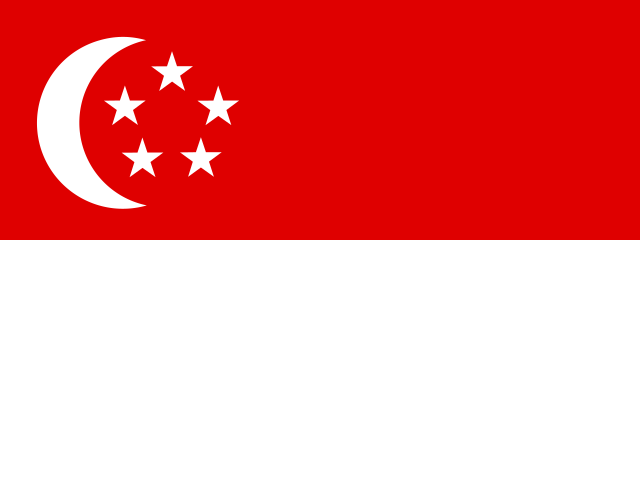
- Description: two equal horizontal bands of red (top) and white; a vertical white crescent is on the left side of the red band, with a circle of five five-pointed white stars to the right of the crescentMeaning: red stands for brotherhood and equality, and white for purity and virtue; the waxing crescent moon symbolizes a young nation on the ascendancy; the stars represent the national ideals of democracy, peace, progress, justice, and equality
- National symbols
- lion, merlion (mythical half-lion, half-fish creature), orchid
- National colours
- red, white
- National anthem
- Title: "Majulah Singapura" (Onward, Singapore)Lyrics/music: Zubir SAIDHistory: adopted 1959; the anthem is sung only in Malay; first four lines of the melody are used as a presidential salute
- UNESCO World Heritage Sites
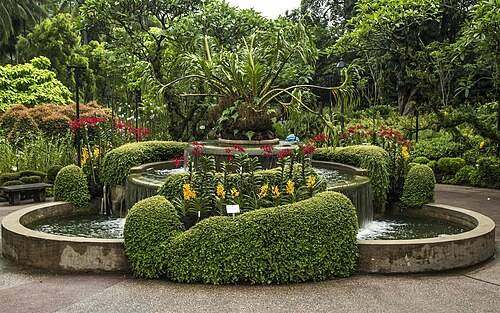
- Total World Heritage Sites: 1 (cultural)Selected World Heritage Site locales: Singapore Botanic Gardens
Economy
- Overview
- high-income, service-based economy; global financial hub; business-friendly policies and open to investment and trade; inflation easing but persistent in services; public investments in education, healthcare, and infrastructure; strong human capital development challenged by aging population
- GDP (PPP)
- $800.304 billion (2024 est.)
- GDP per person (PPP)
- $132,600 (2024 est.)
- GDP growth
- 4.4% (2024 est.)
- Inflation
- 2.4% (2024 est.)
- Unemployment
- 3.2% (2024 est.)
- Farm products
- chicken, eggs, vegetables, pork, duck, spinach, lettuce, pork offal, cabbages, pork fat (2023)
- Industries
- electronics, chemicals, financial services, oil drilling equipment, petroleum refining, biomedical products, scientific instruments, telecommunication equipment, processed food and beverages, ship repair, offshore platform construction, entrepot trade
- Exports
- $978.597 billion (2024 est.)
- Main exports
- integrated circuits, refined petroleum, machinery, vaccines, gold (2023)
- Export partners
- Hong Kong 13%, China 11%, USA 10%, Malaysia 9%, S. Korea 6% (2023)
- Main imports
- integrated circuits, refined petroleum, crude petroleum, gold, gas turbines (2023)
- Import partners
- China 15%, Malaysia 11%, Taiwan 11%, USA 10%, S. Korea 6% (2023)
- Money sent home from abroad
- 0% of GDP (2023 est.)
Energy, internet and transport
- Electricity access
- Electrification - total population: 100% (2022 est.)
- Electricity sources
- Fossil fuels: 94.8% of total installed capacity (2023 est.)Solar: 2% of total installed capacity (2023 est.)Biomass and waste: 3.1% of total installed capacity (2023 est.)
- Internet users
- Percent of population: 94% (2023 est.)
- Mobile phones
- Total subscriptions: 9.96 million (2024 est.)Subscriptions per 100 inhabitants: 171 (2024 est.)
- TV and radio
- state-controlled broadcast media; 6 domestic TV stations operated by state-owned MediaCorp; broadcasts from Malaysian and Indonesian stations available; satellite dishes banned; multi-channel cable TV services available; 19 domestic radio stations, including 11 for MediaCorp, 5 for state-linked Singapore Press Holdings, 2 for Singapore Armed Forces Reservists Association, and 1 for BBC Radio; Malaysian and Indonesian radio stations available (2019)
- Airports
- 9 (2025)
- Merchant ships
- Total: 3,202 (2023)By type: bulk carrier 591, container ship 604, general cargo 107, oil tanker 600, other 1,300
Military and space
- Armed forces
- Singapore Armed Forces (SAF; aka Singapore Defense Force): Singapore Army, Republic of Singapore Navy, Republic of Singapore Air Force (includes air defense), Digital and Intelligence ServiceMinistry of Home Affairs: Singapore Police Force (SPF; includes Police Coast Guard and the Gurkha Contingent) (2025)
- Military spending
- 3% of GDP (2024 est.)
- Military service
- 18 years of age for voluntary enlistment for men and women (16.5 for early enlistment program with parental consent); 18-21 years of age for compulsory military service for men; 24-month conscript service obligation (2026)
Global issues
- Refugees and displaced people
- Stateless persons: 1,109 (2024 est.)
- Phone code
- +65
- Internet domain
- .sg