Taiwan
Republic of China (Taiwan) · 台灣
Home to Austronesian peoples, then ruled by the Dutch, Qing China and Japan (1895–1945). The Nationalist government fled here in 1949; martial law ended in 1987 and it is now a democracy.
See Taiwan on the 3D globeTake a quiz
Population23.4 million
Area36,193 km²
CapitalTaipei
RegionEastern Asia
Did you know?
- Bubble tea was invented here in the 1980s
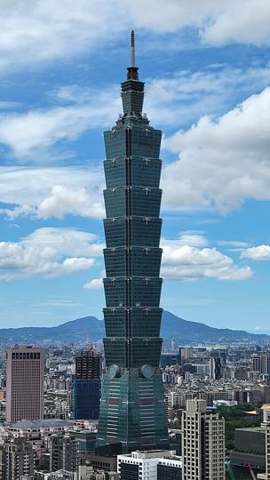
- Taipei 101 was the world's tallest building 2004–2010
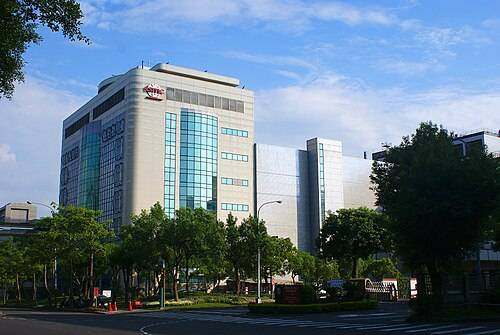
- Makes most of the world's most advanced computer chips
Key facts about Taiwan
- Government
- Semi-presidential republic (de facto independent; claimed by China)
- Religion
- Buddhism and Taoism ~70%, Christian ~5%
- Founded / independence
- 1949 (Republic of China government relocated)
- Rich in
- Semiconductors (TSMC makes most advanced chips), electronics
- Languages
- Chinese
Mandarin; Taiwanese Hokkien, Hakka, Indigenous Formosan languages - Currency
- New Taiwan dollar ($)
- People are called
- Taiwanese
- Main cities
- Taipei, New Taipei, Kaohsiung, Taichung, Tainan
Timeline of Taiwan
- 1624Dutch colony
- 1683Qing rule
- 1895Japanese rule
- 1949Nationalist government arrives
- 1987Martial law ends
- 1996First direct presidential election
Places to see in Taiwan
- Taipei 101
- Taroko Gorge
- Sun Moon Lake
- National Palace Museum
- Jiufen
- Alishan
Food and drink
Bubble tea (invented here) · beef noodle soup · xiaolongbao · night markets
Culture and famous for
Semiconductors (TSMC); night markets; temple festivals
Popular sports
Baseball, basketball
Geography and climate
- Highest point
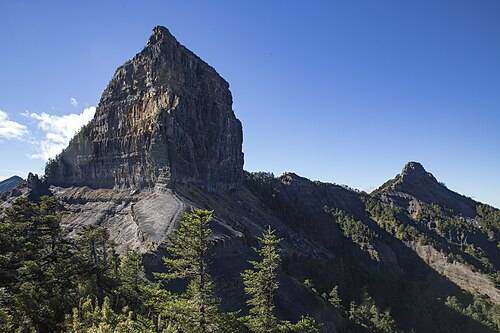
- Yushan (Jade Mountain), 3,952 m
- Rivers, lakes and seas
- Zhuoshui River
- Climate
- Subtropical; typhoons
- Coastline
- Has a sea coast
- Population density
- 647 people per km²
Wars and conflicts
- Chinese Civil War
- Taiwan Strait crises
Alliances and memberships
Economy and trade
Defence treaties
- US–Taiwan Relations Act (1979): US law (not a treaty) to supply Taiwan with defensive arms.
Taiwan in depth
Detailed facts from the CIA World Factbook (public domain, latest edition).
Overview
- History in brief
- First inhabited by Austronesian people, Taiwan became home to Han immigrants beginning in the late Ming Dynasty (17th century). In 1895, military defeat forced China's Qing Dynasty to cede Taiwan to Japan, which then governed Taiwan for 50 years. Taiwan came under Chinese Nationalist (Kuomintang, KMT) control after World War II. With the communist victory in the Chinese civil war in 1949, the Nationalist-controlled Republic of China government and 2 million Nationalists fled to Taiwan and continued to claim to be the legitimate government for mainland China and Taiwan, based on a 1947 constitution drawn up for all of China. Until 1987, however, the Nationalist Government ruled Taiwan under a civil war martial law declaration dating to 1948. Beginning in the 1970s, Nationalist authorities gradually began to incorporate the native population into the governing structure beyond the local level.The democratization process expanded rapidly in the 1980s, leading to the then-illegal founding of the Democratic Progressive Party (DPP), Taiwan’s first opposition party, in 1986 and the lifting of martial law the following year. Taiwan held legislative elections in 1992, the first in over 40 years, and its first direct presidential election in 1996. In the 2000 presidential elections, Taiwan underwent its first peaceful transfer of power with the KMT loss to the DPP and afterwards experienced two additional democratic transfers of power in 2008 and 2016. Throughout this period, the island prospered and turned into one of East Asia's economic "Tigers," becoming a major investor in mainland China after 2000 as cross-Strait ties matured. The dominant political issues continue to be economic reform and growth, as well as management of sensitive relations between Taiwan and China.
Geography
- Location
- Eastern Asia, islands bordering the East China Sea, Philippine Sea, South China Sea, and Taiwan Strait, north of the Philippines, off the southeastern coast of China
- Size compared
- slightly smaller than Maryland and Delaware combined
- Land borders
- Total: 0 km
- Coastline
- 1,566.3 km
- Climate
- tropical; marine; rainy season during southwest monsoon (June to August); persistent and extensive cloudiness all year
- Terrain
- eastern two-thirds mostly rugged mountains; flat to gently rolling plains in west
- Elevation
- Highest point: Yu Shan 3,952 mLowest point: South China Sea 0 mMean elevation: 1,150 m
- Natural resources
- small deposits of coal, natural gas, limestone, marble, asbestos, arable land
- Natural hazards
- earthquakes; typhoonsVolcanism: Kueishantao Island (401 m), east of Taiwan, is the only historically active volcano, but it has not erupted in centuries
- Notes
- strategic location adjacent to both the Taiwan Strait and the Luzon Strait
- Environmental issues
- air pollution; water pollution from industrial emissions, raw sewage; contamination of drinking water supplies; trade in endangered species; low-level radioactive waste disposal
People and society
- Population
- Total: 23,600,776 (2025 est.)Male: 11,596,835Female: 12,003,941
- Nationality
- Noun: Taiwan (singular and plural)Adjective: Taiwan (or Taiwanese)
- Ethnic groups
- Han Chinese (including Holo, who compose approximately 70% of Taiwan's population, Hakka, and other groups originating in mainland China) more than 95%, indigenous Malayo-Polynesian peoples 2.3%
- Languages
- Mandarin (official), Min Nan, Hakka dialects, approximately 16 indigenous languagesMajor-language sample(s): 世界概況 – 不可缺少的基本消息來源 (Mandarin)The World Factbook, the indispensable source for basic information.
- Religions
- Buddhist 35.3%, Taoist 33.2%, Christian 3.9%, folk religion (includes Confucian) approximately 10%, none or unspecified 18.2% (2005 est.)
- Median age
- Total: 45.1 years (2025 est.)Male: 43.6 yearsFemale: 45.5 years
- Population growth
- 0.02% (2025 est.)
- Life expectancy
- Total population: 81.6 years (2024 est.)Male: 78.6 yearsFemale: 84.7 years
- Children per woman
- 1.12 children born/woman (2025 est.)
- Urbanization
- Urban population: 80.1% of total population (2023)Rate of urbanization: 0.65% annual rate of change (2020-25 est.)
- Largest cities
- 4.504 million New Taipei City, 2.754 million TAIPEI (capital), 2.319 million Taoyuan, 1.553 million Kaohsiung, 1.369 million Taichung, 863,000 Tainan (2023)
Government
- Official names
- Conventional long form: noneConventional short form: TaiwanLocal long form: noneLocal short form: TaiwanFormer: FormosaEtymology: the name may derive from the Chinese words tai (terrace) and wan (bay), referring to the island's terrain; in 1590, the Portuguese named it Formosa, meaning "beautiful"
- Government type
- semi-presidential republic
- Capital
- Name: TaipeiGeographic coordinates: 25 02 N, 121 31 ETime difference: UTC+8 (13 hours ahead of Washington, DC, during Standard Time)Etymology: the name means "Northern Taiwan," from the Chinese words tai (a short form of Taiwan) and bei (north), reflecting the city's position in the far north of the island
- Regions
- includes main island of Taiwan, plus smaller islands nearby and off coast of China's Fujian Province; Taiwan is divided into 13 counties (xian, singular and plural), 3 cities (shi, singular and plural), and 6 special municipalities directly under the jurisdiction of the Executive YuanCounties: Changhua, Chiayi, Hsinchu, Hualien, Kinmen, Lienchiang, Miaoli, Nantou, Penghu, Pingtung, Taitung, Yilan, YunlinCities: Chiayi, Hsinchu, KeelungSpecial municipalities: Kaohsiung (city), New Taipei (city), Taichung (city), Tainan (city), Taipei (city), Taoyuan (city)
- National holiday
- Republic Day (National Day), 10 October (1911)
- Constitution
- History: previous 1912, 1931; latest adopted 25 December 1946, promulgated 1 January 1947, effective 25 December 1947Amendment process: proposed by at least one fourth of the Legislative Yuan membership; passage requires approval by at least three-fourths majority vote of at least three fourths of the Legislative Yuan membership and approval in a referendum by more than half of eligible voters
- Legal system
- civil law system
- Voting age
- 20 years of age; universal
- Flag meaning
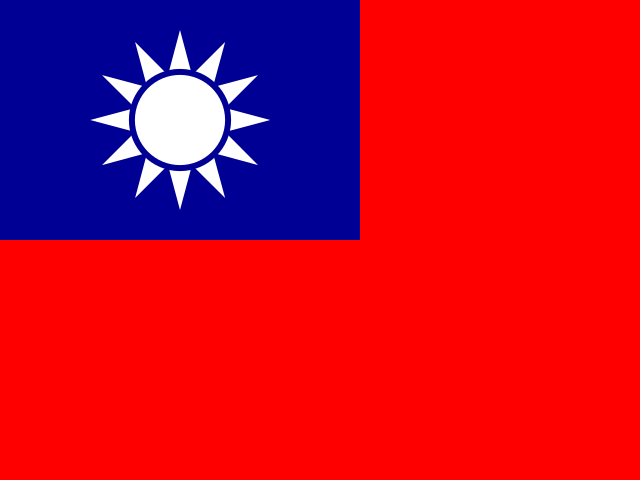
- Description: red field with a dark blue rectangle in the upper-left corner, bearing a white sun with 12 triangular raysMeaning: blue stands for liberty, justice, and democracy; red for fraternity, sacrifice, and nationalism; white for equality, frankness, and the people's livelihood; the 12 rays represent the months of the year and the traditional Chinese hours (each ray equals two hours)History: the blue-and-white design of the canton (symbolizing the sun of progress) dates to 1895
- National symbols
- white sun with 12 rays on a blue field
- National colours
- blue, white, red
- National anthem
- Title: "Zhonghua Minguo guoge" (National Anthem of the Republic of China)Lyrics/music: HU Han-min, TAI Chi-t'ao, and LIAO Chung-k'ai/CHENG Mao-yunHistory: adopted 1937; also the song of the Kuomintang Party; informally known as "San Min Chu I" or "San Min Zhu Yi" (Three Principles of the People); the anthem is banned from performance in mainland China, Hong Kong, and Macau
Economy
- Overview
- high-income East Asian economy; most technologically advanced computer microchip manufacturing; increasing Chinese interference threatens market capabilities; minimum wages rising; longstanding regional socioeconomic inequality
- GDP (PPP)
- $1.743 trillion (2023 est.)
- GDP per person (PPP)
- $32,300 (2023 est.)
- GDP growth
- 1.28% (2023 est.)
- Inflation
- 2.2% (2024 est.)
- Unemployment
- 3.4% (2024 est.)
- Farm products
- rice, vegetables, pork, chicken, cabbages, milk, sugarcane, tropical fruits, pineapples, eggs (2023)
- Industries
- electronics, communications and information technology products, petroleum refining, chemicals, textiles, iron and steel, machinery, cement, food processing, vehicles, consumer products, pharmaceuticals
- Exports
- $432.432 billion (2023 est.)
- Main exports
- integrated circuits, machine parts, broadcasting equipment, computers, plastics (2023)
- Export partners
- China 20%, USA 17%, Hong Kong 13%, Singapore 9%, Japan 7% (2023)
- Main imports
- integrated circuits, crude petroleum, machinery, natural gas, coal (2023)
- Import partners
- China 21%, Japan 13%, USA 11%, S. Korea 9%, Australia 5% (2023)
Energy, internet and transport
- Electricity sources
- Fossil fuels: 84.2% of total installed capacity (2023 est.)Nuclear: 6.4% of total installed capacity (2023 est.)Solar: 4.6% of total installed capacity (2023 est.)Wind: 2.2% of total installed capacity (2023 est.)Hydroelectricity: 1.2% of total installed capacity (2023 est.)Biomass and waste: 1.3% of total installed capacity (2023 est.)
- Internet users
- Percent of population: 90% (2021 est.)
- Mobile phones
- Total subscriptions: 29.8 million (2024 est.)Subscriptions per 100 inhabitants: 128 (2024 est.)
- TV and radio
- 5 national TV networks with about 22 stations; over 300 satellite TV channels available; about half of households use multi-channel cable TV; almost all subscribe to digital cable TV; national and regional radio networks with about 171 radio stations (2023)
- Airports
- 57 (2025)
- Railways
- Total: 1,613.1 km (2018)Standard gauge: 345 km (2018) 1.435-m gauge (345 km electrified)Narrow gauge: 1,118.1 km (2018) 1.067-m gauge (793.9 km electrified)
- Merchant ships
- Total: 465 (2023)By type: bulk carrier 29, container ship 53, general cargo 58, oil tanker 35, other 290
Military and space
- Armed forces
- Taiwan Armed Forces: Army, Navy (includes Marine Corps), Air Force, Information Communication and Electronic Force (ICEF)Ocean Affairs Council: Coast Guard Administration (CGA)Ministry of Interior: National Police (2025)
- Military spending
- 2.4% of GDP (2024 est.)
- Military service
- men 18-36 years of age may volunteer or must complete 12 months of compulsory military service; civil service can be substituted for military service in some cases; women can volunteer (2025)
- Space programme
- has had a national space program since the early 1990s, with a focus on acquiring satellites and developing independent space capabilities, such as rocket manufacturing and satellite launch services; manufactures and operates satellites and sounding rockets; researching and developing other space technologies, including remote sensing, telecommunications, small satellites, satellite payloads and ground station components, spacecraft components, navigational control, and rocket propulsion systems; has bilateral relations with the space programs of France, India, Japan, Paraguay, Poland, the UK, and the US; has a commercial space industry that provides components and expertise for the Taiwan Space Agency and is independently developing satellites and a small satellite launch vehicle; the government passed a space promotion act in 2021 to encourage private investment in the space industry (2025)
- Space milestones
- 1997 - launched first sounding rocket1999 - first scientific satellite (FORMOSAT-1) built and launched by the US2004 - first remote sensing (RS) satellite (FORMOSAT-2) built by France and launched by US2017 - first domestically built RS satellite (FORMOSAT-5) launched by US2021 - initiated development of a commercial 3-stage, hybrid-engine rocket (Hapith-5)2023 - first domestically made RS/meteorological satellite (FormoSat-7R/Triton) launched on European rocket
Global issues
- Refugees and displaced people
- IDPs: 380 (2024 est.)
- Drug trade
- USG identification: major precursor-chemical producer (2025)
- Phone code
- +886
- Internet domain
- .tw