Trinidad and Tobago
Republic of Trinidad and Tobago
Spanish then British; indentured Indian workers came after slavery ended. Invented the steelpan.
See Trinidad and Tobago on the 3D globeTake a quiz

Population1.5 million
Area5,130 km²
CapitalPort of Spain
RegionCaribbean
Did you know?
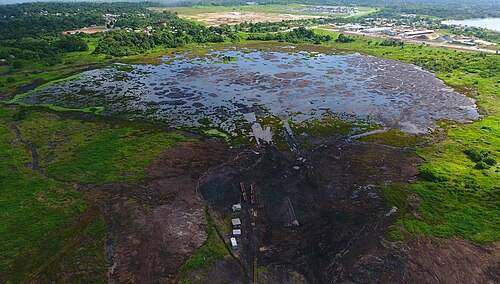
- Pitch Lake is the world's largest natural asphalt lake
- The steelpan was invented here
- Has one of the Caribbean's biggest carnivals
Key facts about Trinidad and Tobago
- Government
- Parliamentary republic
- Religion
- Christian ~55%, Hindu ~18%, Islam ~5%
- Founded / independence
- 1962 (from UK)
- Rich in
- Oil, natural gas (LNG), petrochemicals, steelpan and Carnival
- Languages
- English
English; Trinidadian Creole - Currency
- Trinidad and Tobago dollar ($)
- People are called
- Trinidadian
- Main cities
- Port of Spain, Chaguanas, San Fernando
Timeline of Trinidad and Tobago
- 1498Columbus arrives
- 1797British capture
- 1845Indian indentured workers arrive
- 1962Independence
- 1976Republic
Places to see in Trinidad and Tobago
- Pitch Lake
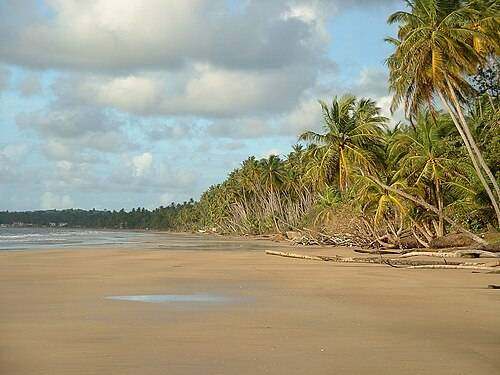
- Maracas Bay
- Asa Wright Nature Centre
- Tobago's Buccoo Reef
Food and drink
Doubles · roti · pelau · callaloo
Culture and famous for
Carnival; steelpan (invented here); calypso and soca
Popular sports
Cricket, football, athletics
Geography and climate
- Highest point
- El Cerro del Aripo, 940 m
- Rivers, lakes and seas
- Caroni River
- Climate
- Tropical
- Coastline
- Has a sea coast
- Population density
- 292 people per km²
Wars and conflicts
- 1990 coup attempt
Alliances and memberships
Military and security
Political unions and regional organisations
CARICOMCELACOrganization of American StatesCommonwealth of Nations
Trinidad and Tobago in depth
Detailed facts from the CIA World Factbook (public domain, latest edition).
Overview
- History in brief
- First colonized by the Spanish, Trinidad and Tobago came under British control in the early 19th century. The emancipation of enslaved people in 1834 disrupted the twin islands' sugar industry. Contract workers arriving from India between 1845 and 1917 augmented the labor force, which boosted sugar production as well as the cocoa industry. The discovery of oil on Trinidad in 1910 added another important export that remains the country's dominant industry. Trinidad and Tobago attained independence in 1962. The country is one of the most prosperous in the Caribbean, thanks largely to petroleum and natural gas production and processing. The government is struggling to reverse a surge in violent crime.
Geography
- Location
- Caribbean, islands between the Caribbean Sea and the North Atlantic Ocean, northeast of Venezuela
- Size compared
- slightly smaller than Delaware
- Land borders
- Total: 0 km
- Coastline
- 362 km
- Climate
- tropical; rainy season (June to December)
- Terrain
- mostly plains with some hills and low mountains
- Elevation
- Highest point: El Cerro del Aripo 940 mLowest point: Caribbean Sea 0 mMean elevation: 83 m
- Natural resources
- petroleum, natural gas, asphalt
- Natural hazards
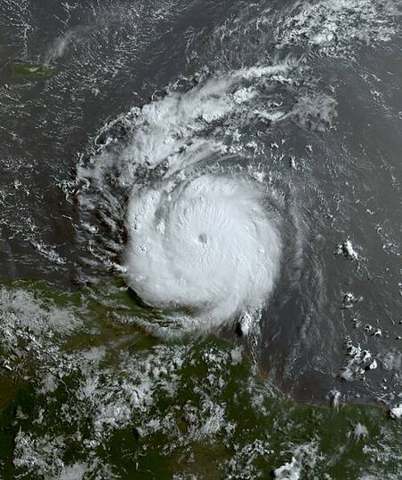
- outside usual path of hurricanes and other tropical storms
- Notes
- Pitch Lake, on Trinidad's southwestern coast, is the world's largest natural reservoir of asphalt
- Environmental issues
- water pollution from agricultural chemicals, industrial wastes, and raw sewage; widespread pollution of waterways and coastal areas; illegal dumping; deforestation; soil erosion; fisheries and wildlife depletion
People and society
- Population
- Total: 1,410,170 (2025 est.)Male: 708,677Female: 701,493
- Nationality
- Noun: Trinidadian(s), Tobagonian(s)Adjective: Trinidadian, Tobagonian
- Ethnic groups
- East Indian 35.4%, African descent 34.2%, mixed - other 15.3%, mixed - African/East Indian 7.7%, other 1.3%, unspecified 6.2% (2011 est.)
- Languages
- English (official), Trinidadian Creole English, Tobagonian Creole English, Caribbean Hindustani (a dialect of Hindi), Trinidadian Creole French, Spanish, Chinese
- Religions
- Protestant 32.1% (Pentecostal/Evangelical/Full Gospel 12%, Baptist 6.9%, Anglican 5.7%, Seventh Day Adventist 4.1%, Presbyterian/Congregational 2.5%, other Protestant 0.9%), Roman Catholic 21.6%, Hindu 18.2%, Muslim 5%, Jehovah's Witness 1.5%, other 8.4%, none 2.2%, unspecified 11.1% (2011 est.)
- Median age
- Total: 39.1 years (2025 est.)Male: 38 yearsFemale: 39 years
- Population growth
- 0.08% (2025 est.)
- Life expectancy
- Total population: 76.5 years (2024 est.)Male: 74.6 yearsFemale: 78.4 years
- Children per woman
- 1.63 children born/woman (2025 est.)
- Urbanization
- Urban population: 53.4% of total population (2023)Rate of urbanization: 0.23% annual rate of change (2020-25 est.)
- Largest cities
- 545,000 PORT-OF-SPAIN (capital) (2023)
- Literacy
- Female: 93.8% (2022 est.)
Government
- Official names
- Conventional long form: Republic of Trinidad and TobagoConventional short form: Trinidad and TobagoEtymology: explorer Christopher COLUMBUS named the larger island "La Isla de la Trinidad" (The Island of the Trinity) in 1498, possibly because of the three mountain peaks on the island; COLUMBUS may have gotten the name Tobago, spelled "tobaco" in Spanish, from the tobacco grown and smoked locally, or from its elongated cigar shape
- Government type
- parliamentary republic
- Capital
- Name: Port of SpainGeographic coordinates: 10 39 N, 61 31 WTime difference: UTC-4 (1 hour ahead of Washington, DC, during Standard Time)Etymology: translation of the name the Spanish gave the town in 1595, Puerto de España; the name was anglicized after the British captured Trinidad in 1797
- Regions
- 9 regions, 3 boroughs, 2 cities, 1 wardRegions: Couva/Tabaquite/Talparo, Diego Martin, Mayaro/Rio Claro, Penal/Debe, Princes Town, Sangre Grande, San Juan/Laventille, Siparia, Tunapuna/PiarcoBorough: Arima, Chaguanas, Point FortinCities: Port of Spain, San FernandoWard: Tobago
- Independence
- 31 August 1962 (from the UK)
- National holiday
- Independence Day, 31 August (1962)
- Constitution
- History: previous 1962; latest 1976Amendment process: proposed by Parliament; passage of amendments affecting constitutional provisions, such as human rights and freedoms or citizenship, requires at least two-thirds majority vote by the membership of both houses and assent of the president; passage of amendments, such as the powers and authorities of the executive, legislative, and judicial branches of government, and the procedure for amending the constitution, requires at least three-quarters majority vote by the House membership, two-thirds majority vote by the Senate membership, and assent of the president
- Legal system
- English common law; Supreme Court reviews legislative acts
- Voting age
- 18 years of age; universal
- Flag meaning
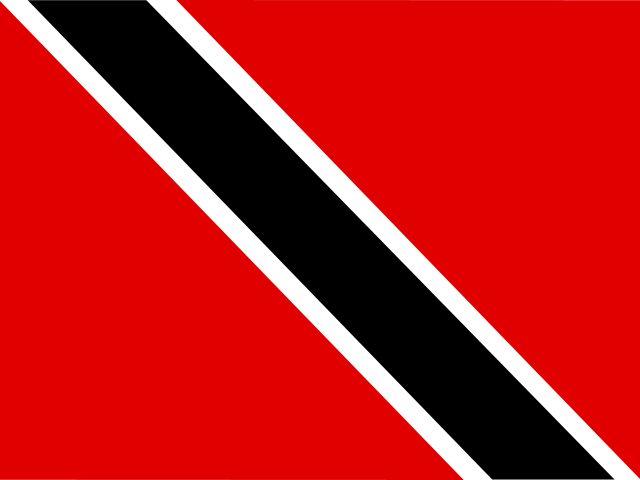
- Description: red with a white-edged black diagonal band from the upper left to the lower rightMeaning: the colors represent the elements of earth, water, and fire; black also stands for the wealth of the land and the dedication of the people; white for the sea, the purity of the country's aspirations, and equality; red for the sun, the vitality of the land, and the people's courage and friendliness
- National symbols
- scarlet ibis (bird of Trinidad), cocrico (bird of Tobago), chaconia flower
- National colours
- red, white, black
- National anthem
- Title: "Forged From the Love of Liberty"Lyrics/music: Patrick Stanislaus CASTAGNEHistory: adopted 1962; song originally written as an anthem for the West Indies Federation; Trinidad and Tobago adopted it when the Federation dissolved
Economy
- Overview
- high-income Caribbean economy; major hydrocarbon exporter; key tourism and finance sectors; high inflation and growing public debt; long foreign currency access delays; large foreign reserves and sovereign wealth fund
- GDP (PPP)
- $43.362 billion (2024 est.)
- GDP per person (PPP)
- $31,700 (2024 est.)
- GDP growth
- 1.7% (2024 est.)
- Inflation
- 0.5% (2024 est.)
- Unemployment
- 4.6% (2024 est.)
- Farm products
- chicken, fruits, coconuts, citrus fruits, maize, oranges, plantains, eggs, taro, mangoes/guavas (2023)
- Industries
- petroleum and petroleum products, liquefied natural gas, methanol, ammonia, urea, steel products, beverages, food processing, cement, cotton textiles
- Exports
- $11.087 billion (2024 est.)
- Main exports
- natural gas, alcohols, ammonia, crude petroleum, iron reductions (2023)
- Export partners
- USA 28%, China 7%, Guyana 5%, Chile 5%, Netherlands 5% (2023)
- Main imports
- railway cargo containers, refined petroleum, cars, iron ore, excavation machinery (2023)
- Import partners
- USA 29%, Guyana 27%, China 8%, Brazil 4%, Canada 3% (2023)
- Money sent home from abroad
- 0.8% of GDP (2024 est.)
Energy, internet and transport
- Electricity access
- Electrification - total population: 100% (2022 est.)
- Electricity sources
- Fossil fuels: 99.9% of total installed capacity (2023 est.)Solar: 0.1% of total installed capacity (2023 est.)
- Internet users
- Percent of population: 85% (2023 est.)
- Mobile phones
- Total subscriptions: 1.79 million (2024 est.)Subscriptions per 100 inhabitants: 119 (2024 est.)
- TV and radio
- 6 free-to-air TV networks, 2 of which are state-owned; 24 subscription providers (cable and satellite); over 36 radio frequencies (2019)
- Airports
- 3 (2025)
- Merchant ships
- Total: 102 (2023)By type: general cargo 1, other 101
Military and space
- Armed forces
- Trinidad and Tobago Defense Force (TTDF): Trinidad and Tobago Regiment (Army/Land Forces), Trinidad and Tobago Coast Guard, Trinidad and Tobago Air Guard, Defense Force Reserves (2026)
- Military spending
- 0.9% of GDP (2024 est.)
- Military service
- generally 18-24 years of age for voluntary military service for men and women; no conscription (2025)
Global issues
- Refugees and displaced people
- Refugees: 24,134 (2024 est.)
- Phone code
- +1868
- Internet domain
- .tt