Canada
Canada
First Nations, Inuit and Métis lived here for millennia. French New France fell to Britain in 1763; Confederation came in 1867. The world's second-largest country, with the longest coastline.
See Canada on the 3D globeTake a quiz
Population41 million
Area9,984,670 km²
CapitalOttawa
RegionNorth America
Did you know?
- Has the longest coastline in the world
- Has more lakes than the rest of the world combined
- Produces about 70% of the world's maple syrup
Key facts about Canada
- Government
- Federal parliamentary constitutional monarchy (Commonwealth realm)
- Religion
- Christian ~53%, unaffiliated ~35%, Islam ~5%
- Founded / independence
- 1867 Confederation; 1982 full sovereignty
- Rich in
- Oil sands, potash, uranium, timber, nickel, wheat, fresh water — vast resources
- Languages
- English, French
English and French (Québécois, Acadian); Indigenous languages: Cree, Inuktitut, Ojibwe - Currency
- Canadian dollar ($)
- People are called
- Canadian
- Main cities
- Toronto, Montreal, Vancouver, Calgary, Edmonton, Ottawa
Timeline of Canada
- 1534Cartier claims for France
- 1763British rule
- 1867Confederation
- 1885Railway to the Pacific
- 1931Statute of Westminster
- 1982Constitution patriated
- 1999Nunavut created
Places to see in Canada
- Niagara Falls
- Banff and Lake Louise
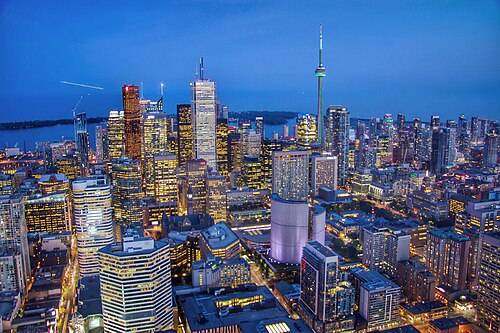
- CN Tower
- Old Quebec
- Bay of Fundy
- Northern lights in Yukon
- Stanley Park
Food and drink
Poutine · maple syrup · butter tarts · Nanaimo bars · smoked salmon
Culture and famous for
Inventions: insulin, the telephone (partly), basketball; Cirque du Soleil
Popular sports
Ice hockey, lacrosse, curling, basketball (invented by a Canadian)
Geography and climate
- Highest point
- Mount Logan, 5,959 m
- Rivers, lakes and seas
- St Lawrence, Mackenzie, Fraser; about 20% of world's fresh water
- Climate
- Temperate to Arctic
- Coastline
- Has a sea coast
- Population density
- 4 people per km²
Wars and conflicts
- Seven Years' War
- War of 1812
- WWI
- WWII
- Korea
- Afghanistan
Alliances and memberships
Military and security
Political unions and regional organisations
G7Organization of American StatesCommonwealth of Nations
Economy and trade
Culture, religion and history
Canada in depth
Detailed facts from the CIA World Factbook (public domain, latest edition).
Overview
- History in brief
- A land of vast distances and rich natural resources, Canada became a self-governing dominion in 1867, while retaining ties to the British crown. Canada gained legislative independence from Britain in 1931 and formalized its constitutional independence from the UK when it passed the Canada Act in 1982. Economically and technologically, the nation has developed in parallel with the US, its neighbor to the south across the world's longest international border. Canada faces the political challenges of meeting public demands for quality improvements in health care, education, social services, and economic competitiveness, as well as responding to the particular concerns of predominantly francophone Quebec. Canada also aims to develop its diverse energy resources while maintaining its commitment to the environment.
Geography
- Location
- Northern North America, bordering the North Atlantic Ocean on the east, North Pacific Ocean on the west, and the Arctic Ocean on the north, north of the conterminous US
- Size compared
- slightly larger than the US
- Land borders
- Total: 8,892 kmBorder countries: US 8,891 km (includes 2,475 km with Alaska); Denmark (Greenland) 1.3 km
- Coastline
- 202,080 km
- Climate
- varies from temperate in south to subarctic and arctic in north
- Terrain
- mostly plains with mountains in west, lowlands in southeast
- Elevation
- Highest point: Mount Logan 5,959 mLowest point: Atlantic/Pacific/Arctic Oceans 0 mMean elevation: 487 m
- Natural resources
- bauxite, iron ore, nickel, zinc, copper, gold, lead, uranium, rare earth elements, molybdenum, potash, diamonds, silver, fish, timber, wildlife, coal, petroleum, natural gas, hydropower
- Major rivers
- Mackenzie - 4,241 km; Yukon river source (shared with the US [m]) - 3,185 km; Saint Lawrence river mouth (shared with US) - 3,058 km; Nelson - 2,570 km; Columbia river source (shared with the US [m]) - 1,953 km; Churchill - 1,600 km; Fraser - 1,368 km; Ottawa - 1,271 km; Athabasca - 1,231 km; North Saskatchewan - 1,220 km; Liard - 1,115 kmNote: [s] after country name indicates river source; [m] after country name indicates river mouth
- Major lakes
- Fresh water lake(s): Huron* - 35,972 sq km; Great Bear Lake - 31,328 sq km; Superior* - 28,754 sq km; Great Slave Lake - 28,568 sq km; Lake Winnipeg - 24,387 sq km; Erie* - 12,776 sq km; Ontario* - 9,790 sq km; Lake Athabasca - 7,935 sq km; Reindeer Lake - 6,650 sq km; Nettilling Lake - 5,542 sq kmnote - Great Lakes* area shown as Canadian waters
- Natural hazards
- continuous permafrost in north is a serious obstacle to development; cyclonic storms form east of the Rocky Mountains, a result of the mixing of air masses from the Arctic, Pacific, and North American interior, and produce most of the country's rain and snow east of the mountainsVolcanism: the vast majority of volcanoes in Western Canada's Coast Mountains remain dormant
- Notes
- Note 1: second-largest country in the world (after Russia) and largest in the Americas; strategic location between Russia and US via north polar route; approximately 90% of the population is concentrated within 160 km (100 mi) of the US borderNote 2: Canada has more fresh water than any other country, and almost 9% of Canadian territory is water; Canada has at least 2 million and possibly over 3 million lakes, more than all other countries combined
- Environmental issues
- air pollution and acid rain from vehicle emissions, coal-burning, and metal smelting severely affecting lakes and forests; seawater pollution from agriculture, industry, mining, and forestry
People and society
- Population
- Total: 39,187,155 (2025 est.)Male: 19,515,416Female: 19,671,739
- Nationality
- Noun: Canadian(s)Adjective: Canadian
- Ethnic groups
- Canadian 15.6%, English 14.7%, Scottish 12.1%, French 11%, Irish 12.1%, German 8.1%, Chinese 4.7%, Italian 4.3%, First Nations 1.7%, Indian 3.7%, Ukrainian 3.5%, Metis 1.5% (2021 est.)
- Languages
- English (official) 87.1%, French (official) 29.1%, Chinese languages 4.2%, Spanish 3.2%, Punjabi 2.6%, Arabic 2.4%, Tagalog 2.3%, Italian 1.5% (2022 est.)Major-language sample(s): The World Factbook, the indispensable source for basic information. (English)The World Factbook, une source indispensable d'informations de base. (French)
- Religions
- Christian 53.3%, Muslim 4.9%, Hindu 2.3%, Sikh 2.1%, Buddhist 1%, Jewish 0.9%, Traditional (North American Indigenous) 0.2%, other religions and traditional spirituality 0.6%, none 34.6% (2021 est.)
- Median age
- Total: 42.8 years (2025 est.)Male: 41.4 yearsFemale: 43.8 years
- Population growth
- 0.73% (2025 est.)
- Life expectancy
- Total population: 84.2 years (2024 est.)Male: 81.9 yearsFemale: 86.6 years
- Children per woman
- 1.43 children born/woman (2025 est.)
- Urbanization
- Urban population: 81.9% of total population (2023)Rate of urbanization: 0.95% annual rate of change (2020-25 est.)
- Largest cities
- 6.372 million Toronto, 4.308 million Montreal, 2.657 million Vancouver, 1.640 million Calgary, 1.544 million Edmonton, 1.437 million OTTAWA (capital) (2023)
- Years in school
- Total: 16 years (2022 est.)Male: 15 years (2022 est.)Female: 17 years (2022 est.)
Government
- Official names
- Conventional long form: noneConventional short form: CanadaEtymology: the name is probably derived from the Huron or Iroquois word kanata, meaning village or camp
- Government type
- federal parliamentary democracy (Parliament of Canada) under a constitutional monarchy; a Commonwealth realm; federal and state authorities and responsibilities regulated in constitution
- Capital
- Name: OttawaGeographic coordinates: 45 25 N, 75 42 WTime difference: UTC-5 (same time as Washington, DC, during Standard Time)Daylight saving time: +1hr, begins second Sunday in March; ends first Sunday in NovemberTime zone note: Canada has six time zonesEtymology: the city lies on the south bank of the Ottawa River, from which it derives its name; the river name comes from the Algonquin word adawe, meaning "to trade"
- Regions
- 10 provinces and 3 territories*; Alberta, British Columbia, Manitoba, New Brunswick, Newfoundland and Labrador, Northwest Territories*, Nova Scotia, Nunavut*, Ontario, Prince Edward Island, Québec, Saskatchewan, Yukon*
- Independence
- 1 July 1867 (union of British North American colonies); 11 December 1931 (recognized by UK per Statute of Westminster)
- National holiday
- Canada Day, 1 July (1867)
- Constitution
- History: consists of unwritten and written acts, customs, judicial decisions, and traditions dating from 1763; the written part of the constitution consists of the Constitution Act of 29 March 1867, which created a federation of four provinces, and the Constitution Act of 17 April 1982Amendment process: proposed by either house of Parliament or by the provincial legislative assemblies; there are 5 methods for passage though most require approval by both houses of Parliament, approval of at least two thirds of the provincial legislative assemblies and assent and formalization as a proclamation by the governor general in council; the most restrictive method is reserved for amendments affecting fundamental sections of the constitution, such as the office of the monarch or the governor general, and the constitutional amendment procedures, which require unanimous approval by both houses and by all the provincial assemblies, and assent of the governor general in council
- Legal system
- common law system except in Quebec, where civil law based on the French civil code prevails
- Voting age
- 18 years of age; universal
- Flag meaning
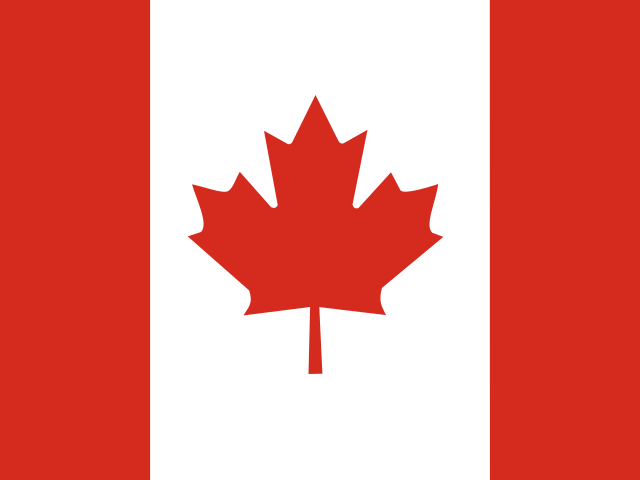
- Description: two vertical bands of red on each side, with a white square between them; a large 11-pointed red maple leaf is centered in the white squareMeaning: the maple leaf is a national symbol
- National symbols
- maple leaf, beaver
- National colours
- red, white
- National anthem
- Title: "God Save the King"Lyrics/music: unknownHistory: royal anthem, as a Commonwealth country
- UNESCO World Heritage Sites
- Total World Heritage Sites: 22 (10 cultural, 11 natural, 1 mixed) (2021)Selected World Heritage Site locales: L'Anse aux Meadows (c); Canadian Rocky Mountain Parks (n); Dinosaur Provincial Park (n); Historic District of Old Quebec (c); Old Town Lunenburg (c); Wood Buffalo National Park (n); Head-Smashed-In Buffalo Jump (c); Gros Morne National Park (n); Pimachiowin Aki (m)
Economy
- Overview
- high-income economy and second-largest US trading partner; key timber, oil, and gas industries; trade uncertainties and weak business investments contributing to economic slowdown; high and growing public debt; inflation moderating but remains above target range
- GDP (PPP)
- $2.341 trillion (2024 est.)
- GDP per person (PPP)
- $56,700 (2024 est.)
- GDP growth
- 1.5% (2024 est.)
- Inflation
- 2.4% (2024 est.)
- Unemployment
- 6.5% (2024 est.)
- Farm products
- wheat, rapeseed, maize, milk, barley, soybeans, potatoes, peas, oats, pork (2023)
- Industries
- transportation equipment, chemicals, processed and unprocessed minerals, food products, wood and paper products, fish products, petroleum, natural gas
- Exports
- $727.831 billion (2024 est.)
- Main exports
- crude petroleum, cars, gold, natural gas, refined petroleum (2023)
- Export partners
- USA 71%, China 5%, UK 3%, Japan 2%, Mexico 2% (2023)
- Main imports
- cars, trucks, vehicle parts/accessories, refined petroleum, crude petroleum (2023)
- Import partners
- USA 51%, China 11%, Mexico 6%, Germany 3%, Japan 3% (2023)
- Money sent home from abroad
- 0% of GDP (2024 est.)
Energy, internet and transport
- Electricity access
- Electrification - total population: 100% (2022 est.)
- Electricity sources
- Fossil fuels: 18.9% of total installed capacity (2023 est.)Nuclear: 13.7% of total installed capacity (2023 est.)Solar: 1.4% of total installed capacity (2023 est.)Wind: 6% of total installed capacity (2023 est.)Hydroelectricity: 58.6% of total installed capacity (2023 est.)Biomass and waste: 1.4% of total installed capacity (2023 est.)
- Internet users
- Percent of population: 94% (2023 est.)
- Mobile phones
- Total subscriptions: 37.4 million (2024 est.)Subscriptions per 100 inhabitants: 94 (2024 est.)
- TV and radio
- 2 public TV broadcasting networks, 1 in English and 1 in French, each with a large number of network affiliates; several private commercial networks, also with multiple network affiliates; a total of about 150 TV stations, accessible via multi-channel satellite and cable systems; mix of public and commercial radio, with over 1,000 licensed stations; public broadcaster Canadian Broadcasting Corporation (CBC) provides 4 radio networks, Radio Canada International, and radio services to ethnic populations in the north (2016)
- Airports
- 1,459 (2025)
- Railways
- Total: 49,422 km (2021) note: 129 km electrified (2021)Standard gauge: 49,422 km (2021) 1.435-m gauge
- Merchant ships
- Total: 716 (2023)By type: bulk carrier 22, container ship 1, general cargo 78, oil tanker 15, other 600
Military and space
- Armed forces
- Canadian Forces: Canadian Army, Royal Canadian Navy, Royal Canadian Air Force (2025)
- Military spending
- 2% of GDP (2025 est.)
- Military service
- 17 years of age for men and women for voluntary military service (with parental consent); 16 years of age for Reserve and Military College applicants; Canadian citizenship or permanent residence status required; service obligation 3-9 years depending on the position (2025)
- Space programme
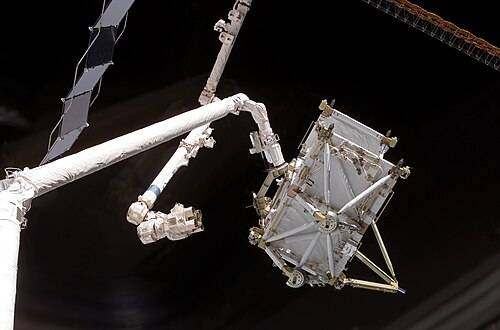
- has a national space strategy and a long history of developing space-related technologies; designs, builds, operates, and tracks communications, remote sensing (RS), multi-mission, and scientific/testing satellites; has an astronaut program; involved in the development and production of advanced communications systems, lunar rovers, planetary probes, robotics, sensors, and space telescopes; participates in international space programs, including the International Space Station, the Hubble Space Telescope, the Square Kilometer Array radio telescope, and the James Webb Space Telescope; Cooperating State of the ESA since 1979 and participates in a variety of ESA programs, such as the Copernicus Earth observation project; works with numerous foreign space agencies and commercial entities, including those of Argentina, Brazil, individual ESA and EU member states, Japan, India, and particularly the US; has an active commercial space sector (2025)
- Space milestones
- 1959-1962 - launched first domestically built sounding rocket (Black Brant 1); first domestically designed and built satellite (Alouette) launched by US1972-1973 - first domestic communications satellites (Anik A-1 and Anik A-2) launched by US, making Canada first country to employ satellites for domestic communications1970s - began participating in US Space Shuttle (first Canadian in space on Shuttle in 1984) and US Mars probe/exploration programs1995 - first Canadian-built, radar-capable remote sensing satellite (Radarsat-1) launched by US2019 - began participating in US/NASA Lunar Gateway orbital station program; launched constellation of remote sensing satellites (RADARSAT Constellation Mission)2020 - signed the US-led Artemis Accords for space exploration (active participant in planned Moon missions under the Artemis program)
Global issues
- Refugees and displaced people
- Refugees: 561,551 (2024 est.)IDPs: 1,981 (2024 est.)Stateless persons: 8,166 (2024 est.)
- Drug trade
- USG identification: major precursor-chemical producer (2025)
Neighbouring countries
- Phone code
- +1
- Internet domain
- .ca