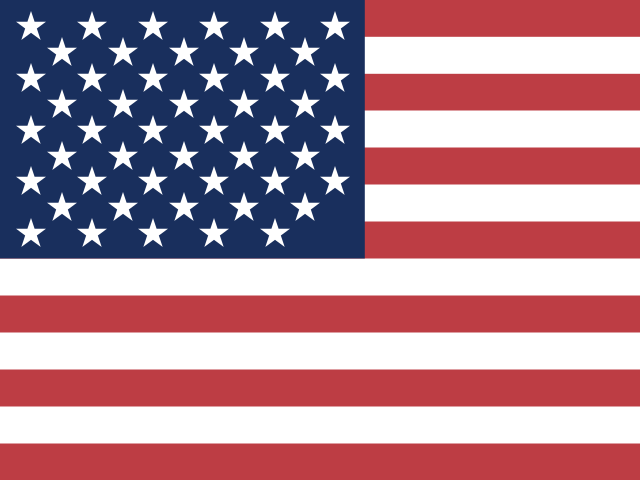
United States
United States of America
Indigenous nations lived here for over 15,000 years before European colonisation. Thirteen colonies declared independence in 1776; the Civil War ended slavery in 1865. A superpower since WWII; in January 2026 US forces seized Venezuela's president.
See United States on the 3D globeTake a quiz
Did you know?
- English was named the official language by a 2025 executive order
- Yellowstone was the world's first national park (1872)
- Has the world's largest economy
Key facts about United States
- Government
- Federal presidential republic
- Religion
- Protestant ~40%, Catholic ~19%, unaffiliated ~29%, Jewish ~2%, Islam ~1%
- Founded / independence
- 1776 (from UK)
- Rich in
- World's largest economy: tech, finance, oil and gas, agriculture, film, military
- Languages
- English
English (Southern, New England, AAVE, General American); Spanish; Navajo, Hawaiian and other Native languages - Currency
- United States dollar ($)
- People are called
- American
- Main cities
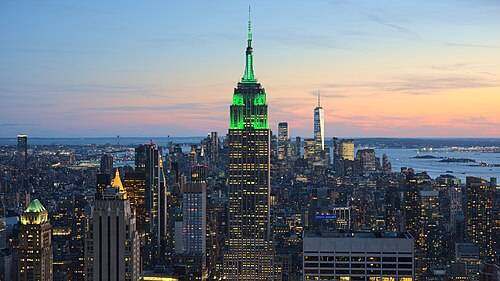
- New York, Los Angeles, Chicago, Houston, Phoenix, Washington D.C.
Timeline of United States
- 1776Independence
- 1787Constitution
- 1865Civil War ends; slavery abolished
- 1920Women's vote
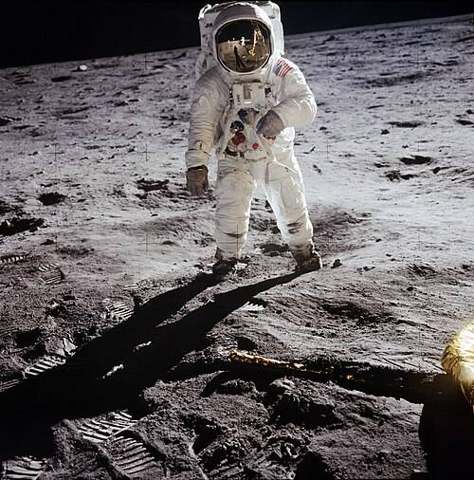
- 1969Moon landing
- 20019/11 attacks
- 2026Iran war; Maduro captured
Places to see in United States
- Statue of Liberty
- Grand Canyon
- Yellowstone
- Golden Gate Bridge
- Times Square
- Niagara Falls
- Mount Rushmore
- Hawaii volcanoes
Food and drink
Hamburgers · barbecue · apple pie · mac and cheese · Thanksgiving turkey
Culture and famous for
Hollywood; jazz, blues, rock and hip-hop; NASA Moon landings; Silicon Valley
Popular sports
American football, basketball, baseball, ice hockey
Geography and climate
- Highest point
- Denali, 6,190 m
- Rivers, lakes and seas
- Mississippi–Missouri; Great Lakes
- Climate
- Every climate from Arctic to tropical
- Coastline
- Has a sea coast
- Population density
- 36 people per km²
Wars and conflicts
- Revolutionary War
- Civil War 1861–65
- WWI
- WWII
- Korea
- Vietnam
- Iraq
- Afghanistan
- Iran war 2026
Empires and states that once stood here
Kingdom of Hawaii 1795–1893Republic of Texas 1836–1845Confederate States of America 1861–1865
Alliances and memberships
Military and security
NATOANZUS TreatyAUKUSRio TreatyFive EyesQuad
Political unions and regional organisations
G7Organization of American States
Economy and trade
Defence treaties
- US–Japan Security Treaty (1960): The US defends Japan; about 50,000 US troops are based there.
- US–South Korea Mutual Defense Treaty (1953): Signed after the Korean War; about 28,000 US troops are in South Korea.
- US–Philippines Mutual Defense Treaty (1951): The oldest US bilateral defence treaty in Asia.
- US–Taiwan Relations Act (1979): US law (not a treaty) to supply Taiwan with defensive arms.
- Compact of Free Association (1986–94): The US is responsible for the defence of these three Pacific nations.
United States in depth
Detailed facts from the CIA World Factbook (public domain, latest edition).
Overview
- History in brief
- Thirteen of Britain's American colonies broke with the mother country in 1776 and were recognized as the new nation of the United States of America following the Treaty of Paris in 1783. During the 19th and 20th centuries, 37 new states were added as the nation expanded across the North American continent and acquired a number of overseas possessions. Two of the most traumatic experiences in the nation's history were the Civil War (1861-65), in which a northern Union of states defeated a secessionist Confederacy of 11 southern slave states, and the Great Depression of the 1930s, an economic downturn during which about a quarter of the labor force lost its jobs. Buoyed by victories in World Wars I and II and the end of the Cold War in 1991, the US remains the world's most powerful nation state. Since the end of World War II, the economy has achieved relatively steady growth, low unemployment, and rapid advances in technology.
Geography
- Location
- North America, bordering both the North Atlantic Ocean and the North Pacific Ocean, between Canada and Mexico
- Size compared
- about half the size of Russia; about three-tenths the size of Africa; about half the size of South America (or slightly larger than Brazil); slightly larger than China; more than twice the size of the European Union
- Land borders
- Total: 12,002 kmBorder countries: Canada 8,891 km (including 2,475 km with Alaska); Mexico 3,111 km
- Coastline
- 19,924 km
- Climate
- mostly temperate, but tropical in Hawaii and Florida, arctic in Alaska, semiarid in the great plains west of the Mississippi River, and arid in the Great Basin of the southwest; low winter temperatures in the northwest are ameliorated occasionally in January and February by warm chinook winds from the eastern slopes of the Rocky Mountains
- Terrain
- vast central plain, mountains in west, hills and low mountains in east; rugged mountains and broad river valleys in Alaska; rugged, volcanic topography in Hawaii
- Elevation
- Highest point: Mount McKinley 6,190 m (highest point in North America)Lowest point: Death Valley (lowest point in North America) -86 mMean elevation: 760 m
- Natural resources
- coal, copper, lead, molybdenum, phosphates, rare earth elements, uranium, bauxite, gold, iron, mercury, nickel, potash, silver, tungsten, zinc, petroleum, natural gas, timber, arable land
- Major rivers
- Missouri - 3,768 km; Mississippi - 3,544 km; Yukon river mouth (shared with Canada [s]) - 3,190 km; Saint Lawrence (shared with Canada) - 3,058 km; Rio Grande river source (mouth shared with Mexico) - 3,057 km; Colorado river source (shared with Mexico [m]) - 2,333 km; Arkansas - 2,348 km; Columbia river mouth (shared with Canada [s]) - 2,250 km; Red - 2,188 km; Ohio - 2,102 km); Snake - 1,670 kmNote: [s] after country name indicates river source; [m] after country name indicates river mouth
- Major lakes
- Fresh water lake(s): Michigan – 57,750 sq km; Superior* – 53,348 sq km; Huron* – 23,597 sq km; Erie* – 12,890 sq km; Ontario* – 9,220 sq km; Lake of the Woods – 4,350 sq km; Iliamna – 2,590 sq km; Okeechobee – 1,810 sq km; Belcharof – 1,190 sq km; Red – 1,170 sq km; Saint Clair – 1,113 sq km; Champlain – 1,100 sq kmnote - Great Lakes* area shown as US watersSalt water lake(s): Great Salt – 4,360 sq km; Pontchartrain – 1,620 sq km; Selawik – 1,400 sq km; Salton Sea – 950 sq km
- Natural hazards
- tsunamis; volcanoes; earthquake activity around Pacific Basin; hurricanes along the Atlantic and Gulf of America coasts; tornadoes in the Midwest and Southeast; mud slides in California; forest fires in the west; flooding; permafrost in northern Alaska is a major impediment to developmentVolcanism: volcanic activity in the Hawaiian Islands, Western Alaska, the Pacific Northwest, and in the Northern Mariana Islands; Mauna Loa (4,170 m) in Hawaii and Mount Rainier (4,392 m) in Washington have been deemed Decade Volcanoes by the International Association of Volcanology and Chemistry of the Earth's Interior, worthy of study due to their explosive history and close proximity to human populations; Pavlof (2,519 m) is the most active volcano in Alaska's Aleutian Arc and poses a significant threat to intercontinental air travel; St. Helens (2,549 m), famous for the devastating 1980 eruption, remains active today; other historically active volcanoes are mostly concentrated in the Aleutian arc and Hawaii, including (in Alaska) Aniakchak, Augustine, Chiginagak, Fourpeaked, Iliamna, Katmai, Kupreanof, Martin, Novarupta, Redoubt, Spurr, Wrangell, Trident, Ugashik-Peulik, Ukinrek Maars, Veniaminof, (in Hawaii) Haleakala, Kilauea, Loihi, (in the Northern Mariana Islands) Anatahan, (in the Pacific Northwest) Mount Baker, and Mount Hood; see note 2 under "Geography - note"
- Notes
- Note 1: world's third-largest country by size (after Russia and Canada) and by population (after China and India); Mt. McKinley is the highest point (6,190 m; 20,308 ft) in North America, and Death Valley is the lowest point (-86 m; -282 ft)Note 2: the western US coast and the southern coast of Alaska lie along the Ring of Fire, which is a belt bordering the Pacific Ocean that contains about 75% of the world's volcanoes and up to 90% of the world's earthquakesNote 3: the Aleutian Islands are a chain of volcanic islands that divide the Bering Sea (north) from the main Pacific Ocean (south); they extend about 1,800 km (1,118 mi) westward from the Alaskan Peninsula; the archipelago consists of 14 larger islands, 55 smaller islands, and hundreds of islets; there are 41 active volcanoes on the islands, which together form a large northern section of the Ring of FireNote 4: Mammoth Cave, in west-central Kentucky, is the world's longest known cave system with more than 650 km (405 miles) of surveyed passageways, which is nearly twice as long as the second-longest cave system, the Sac Actun underwater cave in Mexico (see "Geography - note" under Mexico)Note 5: Kazumura Cave on the island of Hawaii is the world's longest and deepest lava-tube cave; it has been surveyed at 66 km (41 mi) long and 1,102 m (3,614 ft) deepNote 6: Bracken Cave outside San Antonio, Texas is the world's largest bat cave and the summer home to the largest colony of bats in the world; an estimated 20 million Mexican free-tailed bats roost in the cave from March to October, making it the world's largest known concentration of mammals
- Environmental issues
- air pollution; water pollution from runoff of pesticides and fertilizers; declining natural freshwater resources in the west; deforestation; mining; desertification; species conservation; invasive species
People and society
- Population
- Total: 338,016,259 (2025 est.)Male: 167,543,554Female: 170,472,705
- Nationality
- Noun: American(s)Adjective: American
- Ethnic groups
- White 61.6%, Black or African American 12.4%, Asian 6%, Indigenous and Alaska native 1.1%, Native Hawaiian and Other Pacific Islander 0.2%, other 8.4%, two or more races 10.2% (2020 est.)
- Languages
- English only (official) 78.2%, Spanish 13.4%, Chinese 1.1%, other 7.3% (2017 est.)
- Religions
- Protestant 46.5%, Roman Catholic 20.8%, Jewish 1.9%, Church of Jesus Christ 1.6%, other Christian 0.9%, Muslim 0.9%, Jehovah's Witness 0.8%, Buddhist 0.7%, Hindu 0.7%, other 1.8%, unaffiliated 22.8%, don't know/refused 0.6% (2014 est.)
- Median age
- Total: 39.5 years (2025 est.)Male: 37.8 yearsFemale: 40 years
- Population growth
- 0.45% (2025 est.)
- Life expectancy
- Total population: 80.9 years (2024 est.)Male: 78.7 yearsFemale: 83.1 years
- Children per woman
- 1.63 children born/woman (2025 est.)
- Urbanization
- Urban population: 83.3% of total population (2023)Rate of urbanization: 0.96% annual rate of change (2020-25 est.)
- Largest cities
- 18.937 million New York-Newark, 12.534 million Los Angeles-Long Beach-Santa Ana, 8.937 million Chicago, 6.707 million Houston, 6.574 million Dallas-Fort Worth, 5.490 million WASHINGTON, D.C. (capital) (2023)
- Years in school
- Total: 16 years (2022 est.)Male: 15 years (2022 est.)Female: 17 years (2022 est.)
Government
- Official names
- Conventional long form: United States of AmericaConventional short form: United StatesAbbreviation: US or USAEtymology: the name America was first used in 1507 and is derived from the first name of Amerigo VESPUCCI (1454-1512), an Italian explorer, navigator, and cartographer; the name United States first appeared in a document subtitle during the discussions that led to the Declaration of Independence in 1776
- Government type
- constitutional federal republic
- Capital
- Name: Washington, D.C.Geographic coordinates: 38 53 N, 77 02 WTime difference: UTC-5 (during Standard Time)Daylight saving time: +1hr, begins second Sunday in March; ends first Sunday in November; note - no DST for Hawaii and most of ArizonaTime zone note: the 50 United States cover six time zonesEtymology: named after George WASHINGTON (1732-1799), the first president of the United States
- Regions
- 50 states and 1 district*; Alabama, Alaska, Arizona, Arkansas, California, Colorado, Connecticut, Delaware, District of Columbia*, Florida, Georgia, Hawaii, Idaho, Illinois, Indiana, Iowa, Kansas, Kentucky, Louisiana, Maine, Maryland, Massachusetts, Michigan, Minnesota, Mississippi, Missouri, Montana, Nebraska, Nevada, New Hampshire, New Jersey, New Mexico, New York, North Carolina, North Dakota, Ohio, Oklahoma, Oregon, Pennsylvania, Rhode Island, South Carolina, South Dakota, Tennessee, Texas, Utah, Vermont, Virginia, Washington, West Virginia, Wisconsin, Wyoming
- Independence
- 4 July 1776 (declared independence from Great Britain); 3 September 1783 (recognized by Great Britain)
- National holiday
- Independence Day, 4 July (1776)
- Constitution
- History: previous 1781 (Articles of Confederation and Perpetual Union); latest drafted July - September 1787, submitted to the Congress of the Confederation 20 September 1787, submitted for states' ratification 28 September 1787, ratification completed by nine of the 13 states 21 June 1788, effective 4 March 1789Amendment process: proposed as a "joint resolution" by Congress, which requires a two-thirds majority vote in both the House of Representatives and the Senate or by a constitutional convention called for by at least two thirds of the state legislatures; passage requires ratification by three fourths of the state legislatures or passage in state-held constitutional conventions as specified by Congress; the US president has no role in the constitutional amendment process
- Legal system
- common law system based on English common law at the federal level; state legal systems based on common law, except Louisiana, where state law is based on Napoleonic civil code; judicial review of legislative acts
- Voting age
- 18 years of age; universal
- Flag meaning
- Description: 13 equal horizontal stripes of red (top and bottom) alternating with white; a blue rectangle in the upper-left corner has 50 five-pointed white stars, arranged in nine offset horizontal rows of six stars (top and bottom) alternating with rows of five starsMeaning: the stars represent the 50 states, and the stripes represent the 13 original colonies; blue stands for loyalty, devotion, truth, justice, and friendship; red for courage, zeal, and fervency; white for purity and rectitude of conduct
- National symbols
- bald eagle
- National colours
- red, white, blue
- National anthem
- Title: "The Star-Spangled Banner"Lyrics/music: Francis Scott KEY/John Stafford SMITHHistory: adopted 1931; during the War of 1812, Francis Scott KEY witnessed the successful American defense of Baltimore's Fort McHenry against a British naval bombardment, later writing a poem about it that would become the US national anthem; the lyrics were set to the tune of "The Anacreontic Song;" there are four verses, but only the first verse is sung
- UNESCO World Heritage Sites
- Total World Heritage Sites: 26 (13 cultural, 12 natural, 1 mixed); note - includes one site in Puerto RicoSelected World Heritage Site locales: Yellowstone National Park (n); Grand Canyon National Park (n); Cahokia Mounds State Historic Site (c); Independence Hall (c); Statue of Liberty (c); Yosemite National Park (n); Papahānaumokuākea (m); Monumental Earthworks of Poverty Point (c); The 20th-Century Architecture of Frank Lloyd Wright (c); Mesa Verde National Park (c); Mammoth Cave National Park (n); Monticello and the University of Virginia in Charlottesville (c); Olympic National Park (n); Everglades National Park (n); Kluane / Wrangell-St. Elias / Glacier Bay / Tatshenshini-Alsek (n); Redwood National and State Parks (n); Great Smoky Mountains National Park (n); La Fortaleza and San Juan National Historic Site in Puerto Rico (c); Chaco Culture (c); Hawaii Volcanoes National Park (n); Taos Pueblo (c); Carlsbad Caverns National Park (n); Waterton Glacier International Peace Park (n); Moravian Church Settlements (c); San Antonio Missions (c); Hopewell Ceremonial Earthworks (c)
Economy
- Overview
- world’s largest economy by nominal GDP; largest importer and second-largest exporter; home to leading financial exchanges and global reserve currency; high and growing public debt; inflation moderating but remains above pre-pandemic levels
- GDP (PPP)
- $25.676 trillion (2024 est.)
- GDP per person (PPP)
- $75,500 (2024 est.)
- GDP growth
- 2.8% (2024 est.)
- Inflation
- 2.9% (2024 est.)
- Unemployment
- 4.2% (2024 est.)
- Farm products
- maize, soybeans, milk, wheat, sugar beets, sugarcane, potatoes, chicken, pork, tomatoes (2023)
- Industries
- highly diversified, world leading, high-technology innovator, second-largest industrial output in the world; petroleum, steel, motor vehicles, aerospace, telecommunications, chemicals, electronics, food processing, consumer goods, lumber, mining
- Exports
- $3.191 trillion (2024 est.)
- Main exports
- crude petroleum, refined petroleum, natural gas, gas turbines, cars (2023)
- Export partners
- Canada 14%, Mexico 13%, China 8%, Germany 5%, Japan 4% (2023)
- Main imports
- cars, crude petroleum, broadcasting equipment, computers, garments (2023)
- Import partners
- Mexico 15%, China 15%, Canada 14%, Germany 5%, Japan 5% (2023)
- Money sent home from abroad
- 0% of GDP (2024 est.)
Energy, internet and transport
- Electricity access
- Electrification - total population: 100% (2022 est.)
- Electricity sources
- Fossil fuels: 58.9% of total installed capacity (2023 est.)Nuclear: 18.2% of total installed capacity (2023 est.)Solar: 5.6% of total installed capacity (2023 est.)Wind: 9.9% of total installed capacity (2023 est.)Hydroelectricity: 5.6% of total installed capacity (2023 est.)Geothermal: 0.4% of total installed capacity (2023 est.)Biomass and waste: 1.3% of total installed capacity (2023 est.)
- Internet users
- Percent of population: 93% (2023 est.)
- Mobile phones
- Total subscriptions: 391 million (2024 est.)Subscriptions per 100 inhabitants: 113 (2024 est.)
- TV and radio
- 4 major terrestrial TV networks with affiliate stations, plus cable and satellite networks, independent stations, and a limited public broadcasting sector; thousands of TV stations broadcasting; multiple national radio networks with many affiliate stations; over 15,000 radio stations, most commercial; National Public Radio (NPR) has a network of about 900 member stations; satellite radio available (2018)
- Airports
- 16,116 (2025)
- Railways
- Total: 293,564.2 km (2014)Standard gauge: 293,564.2 km (2014) 1.435-m gauge
- Merchant ships
- Total: 3,533 (2023)By type: bulk carrier 4, container ship 60, general cargo 96, oil tanker 68, other 3,305
Military and space
- Armed forces
- United States Armed Forces (aka US Military): US Army (USA), US Navy (USN; includes US Marine Corps or USMC), US Air Force (USAF), US Space Force (USSF); US Coast Guard (USCG); National Guard (Army National Guard and Air National Guard) (2025)
- Military spending
- 3.2% of GDP (2025 est.)
- Military service
- 17 years of age (under 18 with parental consent) for voluntary service for men and women; maximum enlistment age varies by service; 8-year initial service obligation, including 2-5 years active duty depending on the particular military service (2025)
- Space programme
- has a large, comprehensive space program and is one of the world’s top space powers; builds, launches, and operates space launch vehicles (SLVs)/rockets and the full spectrum of spacecraft, including interplanetary probes, manned craft, reusable rockets, satellites, space stations, and space planes/shuttles; has an astronaut program and a corps of astronauts; researching and developing a broad range of other space-related technologies, including advanced telecommunications and optics, navigational aids, propulsion, and robotics; has launched orbital or lander probes to the Sun and all the planets in the solar system, as well as to asteroids and beyond the solar system; has dozens of international missions and projects, including with Canada, Japan, Russia, South Korea, and the ESA; as of January 2026, 60 countries had signed onto the US-led Artemis Accords to enhance the governance of civil exploration and use of outer space; the US commercial space industry is one of the world’s largest and is active across the spectrum of US government space programs; US commercial companies conduct the majority of NASA and US military space launches (2026)
- Space milestones
- 1958-1963 - Project Mercury first manned space flights1961-1963 - Project Gemini (longer-duration manned flights in preparation for Moon landings)1963-1971 - Project Apollo Moon landings (world's first manned landing on the Moon, 1969)1964 - launched first successful Mars probe (Mariner)1965-1979 - operated Skylab space station1977 - began launching Voyager probes to Jupiter, Saturn, and beyond the solar system1980s-2011 - operated Space Shuttle program (world’s first re-usable space orbiters)1990 - launched Hubble Space Telescope1993 - began participating in International Space Station project2003 - launched surface rover vehicles (Spirit and Opportunity) to Mars2011 - launched orbital probe (Juno) to Jupiter2016 - launched OSIRIS-REx mission to retrieve asteroid sample (landed on asteroid Bennu in 2020 and returned with sample in 2023)2017 - initiated Artemis lunar landing project2019 - initiated Gateway lunar orbital station project2021 - launched James Webb Space Telescope (ESA contributed launch vehicle and launch site); surface rover vehicle (Perseverance) with robot helicopter (Ingenuity) successfully landed on surface of Mars2024 - successfully placed a commercial lander on the Moon and launched probe (Europa Clipper) to study Jupiter's Europa moon
Global issues
- Refugees and displaced people
- Refugees: 3,619,495 (2024 est.)IDPs: 21,737 (2024 est.)
Neighbouring countries
- Phone code
- +1
- Internet domain
- .us