Portugal
Portuguese Republic
One of Europe's oldest nations with stable borders, it launched the Age of Discovery and built a global empire. The 1974 Carnation Revolution ended dictatorship and led to the independence of its African colonies.
See Portugal on the 3D globeTake a quiz
Population10.6 million
Area92,090 km²
CapitalLisbon
RegionSouthern Europe
Did you know?
- Its 1386 alliance with England is the oldest still in force
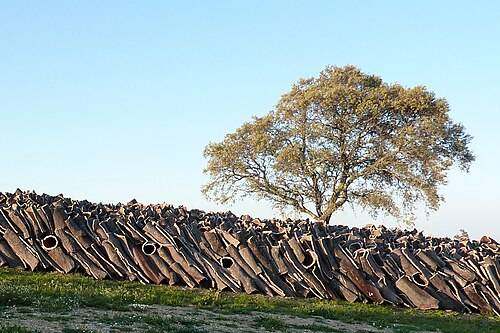
- Produces about half the world's cork
- Nazaré has some of the biggest surfed waves ever
Key facts about Portugal
- Government
- Semi-presidential republic
- Religion
- Catholic ~80%
- Founded / independence
- 1139/1143 kingdom
- Rich in
- Tourism, cork, wine, renewable energy
- Languages
- Portuguese
Portuguese; Mirandese in the northeast - Currency
- Euro (€)
- People are called
- Portuguese
- Main cities
- Lisbon, Porto, Braga, Coimbra, Funchal
Timeline of Portugal
- 1139Kingdom founded
- 1498Sea route to India
- 1500Reaches Brazil
- 1755Lisbon earthquake
- 1910Republic
- 1974Carnation Revolution
- 1986Joins EEC
Places to see in Portugal
- Belém Tower
- Jerónimos Monastery
- Sintra palaces
- Porto's Ribeira
- Algarve cliffs
- Douro Valley
Food and drink
Pastel de nata · bacalhau (salt cod) · sardines · port wine
Culture and famous for
Fado music; azulejo tiles; explorers Vasco da Gama and Magellan
Popular sports
Football (Cristiano Ronaldo), surfing
Geography and climate
- Highest point
- Mount Pico (Azores), 2,351 m
- Rivers, lakes and seas
- Tagus, Douro
- Climate
- Mediterranean
- Coastline
- Has a sea coast
- Population density
- 115 people per km²
Wars and conflicts
- Reconquista
- Age of Discovery conquests
- Peninsular War
- colonial wars 1961–74
Alliances and memberships
Military and security
Political unions and regional organisations
European UnionEurozoneCouncil of Europe
Economy and trade
Portugal in depth
Detailed facts from the CIA World Factbook (public domain, latest edition).
Overview
- History in brief
- A global maritime power during the 15th and 16th centuries, Portugal lost much of its wealth and status with the destruction of Lisbon in a 1755 earthquake, occupation during the Napoleonic Wars, and the independence of Brazil, its wealthiest colony, in 1822. A revolution deposed the monarchy in 1910, and for most of the next six decades, repressive governments ran the country. In 1974, a left-wing military coup ushered in broad democratic reforms. The following year, Portugal granted independence to all its African colonies. Portugal is a founding member of NATO and entered the EC (now the EU) in 1986.
Geography
- Location
- Southwestern Europe, bordering the North Atlantic Ocean, west of Spain
- Size compared
- slightly smaller than Virginia
- Land borders
- Total: 1,224 kmBorder countries: Spain 1,224 km
- Coastline
- 1,793 km
- Climate
- maritime temperate; cool and rainy in north, warmer and drier in south
- Terrain
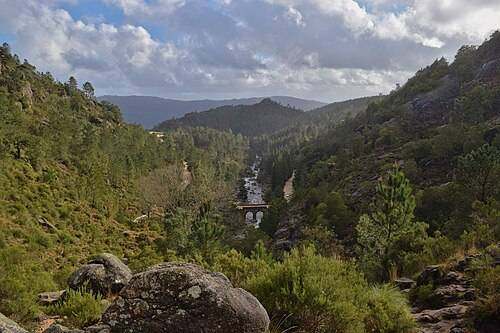
- The west-flowing Tagus River divides the country: the north is mountainous toward the interior, while the south is characterized by rolling plains
- Elevation
- Highest point: Ponta do Pico (Pico or Pico Alto) on Ilha do Pico in the Azores 2,351 mLowest point: Atlantic Ocean 0 mMean elevation: 372 m
- Natural resources
- fish, forests (cork), iron ore, copper, zinc, tin, tungsten, silver, gold, uranium, marble, clay, gypsum, salt, arable land, hydropower
- Natural hazards
- Azores subject to severe earthquakesVolcanism: limited volcanic activity in the Azores Islands; Fayal or Faial (1,043 m) last erupted in 1958; most volcanoes have not erupted in centuries; historically active volcanoes include Agua de Pau, Furnas, Pico, Picos Volcanic System, San Jorge, Sete Cidades, and Terceira
- Notes
- Azores and Madeira Islands occupy strategic locations along western sea approaches to Strait of Gibraltar; they are two of the four North Atlantic archipelagos that make up Macaronesia; the others are the Canary Islands (Spain) and Cabo Verde
- Environmental issues
- soil erosion; air pollution from industrial and vehicle emissions; water pollution, especially in urban centers and coastal areas
People and society
- Population
- Total: 10,194,277 (2025 est.)Male: 4,831,166Female: 5,363,111
- Nationality
- Noun: Portuguese (singular and plural)Adjective: Portuguese
- Ethnic groups
- Portuguese 95%; citizens from Portugal’s former colonies in Africa, Asia (Han Chinese), and South America (Brazilian) and other foreign born 5%
- Languages
- Portuguese (official), Mirandese (official, but locally used)
- Religions
- Catholic 68.1%, not applicable 12.9%, no religion 12.0%, no response 2.2%, Protestant 1.8%, other 1.0%; less than 1%: other Christians, Orthodox, Muslim (2021 est.)
- Median age
- Total: 46.8 years (2025 est.)Male: 44.3 yearsFemale: 48.3 years
- Population growth
- -0.11% (2025 est.)
- Life expectancy
- Total population: 81.9 years (2024 est.)Male: 78.8 yearsFemale: 85.2 years
- Children per woman
- 1.46 children born/woman (2025 est.)
- Urbanization
- Urban population: 67.9% of total population (2023)Rate of urbanization: 0.44% annual rate of change (2020-25 est.)
- Largest cities
- 3.001 million LISBON (capital), 1.325 million Porto (2023)
- Years in school
- Total: 18 years (2022 est.)Male: 17 years (2022 est.)Female: 18 years (2022 est.)
Government
- Official names
- Conventional long form: Portuguese RepublicConventional short form: PortugalLocal long form: Republica PortuguesaLocal short form: PortugalEtymology: name derives from the Roman designation "Portus Cale," meaning "Port of Cale;" Cale was located in present-day northern Portugal, and its name is said to come from the Latin word calere (to be warm) because the harbor never iced over
- Government type
- semi-presidential republic
- Capital
- Name: LisbonGeographic coordinates: 38 43 N, 9 08 WTime difference: UTC 0 (5 hours ahead of Washington, DC, during Standard Time)Daylight saving time: +1hr, begins last Sunday in March; ends last Sunday in OctoberTime zone note: Portugal has two time zones, including the Azores (UTC-1)Etymology: the origin of the name is unclear; some trace it back to the legendary Greek hero Ulysses; others claim a derivation from the Phoenician alis-ubbo, or "joyful bay"
- Regions
- 18 districts (distritos, singular - distrito) and 2 autonomous regions* (regioes autonomas, singular - regiao autonoma); Aveiro, Acores (Azores)*, Beja, Braga, Braganca, Castelo Branco, Coimbra, Evora, Faro, Guarda, Leiria, Lisboa (Lisbon), Madeira*, Portalegre, Porto, Santarem, Setubal, Viana do Castelo, Vila Real, Viseu
- Independence
- 1143 (Kingdom of Portugal recognized); 1 December 1640 (independence reestablished after 60 years of Spanish rule); 5 October 1910 (republic proclaimed)
- National holiday
- Portugal Day (Dia de Portugal), 10 June (1580)
- Constitution
- History: several previous; latest adopted 2 April 1976, effective 25 April 1976Amendment process: proposed by the Assembly of the Republic; adoption requires two-thirds majority vote of Assembly members
- Legal system
- civil law system; Constitutional Court reviews legislative acts
- Voting age
- 18 years of age; universal
- Flag meaning
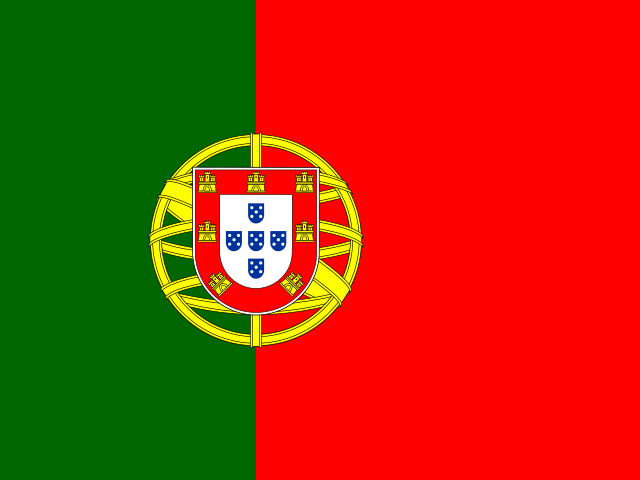
- Description: two vertical bands of green (left side, two-fifths) and red (three-fifths), with the national coat of arms (armillary sphere and national shield) centered on the dividing lineMeaning: explanations for the color meanings are ambiguous, but a popular interpretation says that green symbolizes hope and red the blood of those defending the nation
- National symbols
- armillary sphere (a spherical astrolabe for modeling objects in the sky)
- National colours
- red, green
- National anthem
- Title: "A Portugesa" (The Song of the Portuguese)Lyrics/music: Henrique LOPES DE MENDOCA/Alfredo KEILHistory: adopted 1911; originally written to protest the Portuguese monarchy's acquiescence to the 1890 British ultimatum forcing Portugal to give up areas of Africa
- UNESCO World Heritage Sites
- Total World Heritage Sites: 17 (16 cultural, 1 natural)Selected World Heritage Site locales: Historic Évora (c); Central Zone of the Town of Angra do Heroismo in the Azores (c); Cultural Landscape of Sintra (c); Laurisilva of Madeira (n); Historic Guimarães (c); Monastery of the Hieronymites and Tower of Belém in Lisbon (c); Convent of Christ in Tomar (c); Prehistoric Rock Art Sites in the Côa Valley and Siega Verde (c); University of Coimbra – Alta and Sofia (c); Sanctuary of Bom Jesus do Monte in Braga (c)
Economy
- Overview
- high-income EU and eurozone economy; strong services sector led by tourism and banking; tight labor market; growth driven by private consumption, trade surplus, and public investment from EU funds; declining public debt
- GDP (PPP)
- $448.226 billion (2024 est.)
- GDP per person (PPP)
- $41,900 (2024 est.)
- GDP growth
- 1.9% (2024 est.)
- Inflation
- 2.4% (2024 est.)
- Unemployment
- 6.4% (2024 est.)
- Below poverty line
- 16.4% (2021 est.)
- Farm products
- milk, tomatoes, olives, grapes, maize, pork, potatoes, chicken, apples, oranges (2023)
- Industries
- textiles, clothing, footwear, wood and cork, paper and pulp, chemicals, fuels and lubricants, automobiles and auto parts, base metals, minerals, porcelain and ceramics, glassware, technology, telecommunications; dairy products, wine, other foodstuffs; ship construction and refurbishment; tourism, plastics, financial services, optics
- Exports
- $144.237 billion (2024 est.)
- Main exports
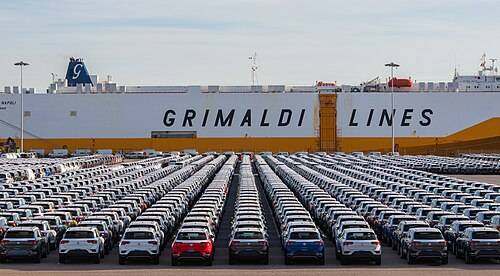
- cars, garments, vehicle parts/accessories, unpackaged medicine, refined petroleum (2023)
- Export partners
- Spain 21%, France 11%, Germany 10%, USA 8%, UK 5% (2023)
- Main imports
- cars, crude petroleum, vehicle parts/accessories, refined petroleum, garments (2023)
- Import partners
- Spain 33%, Germany 11%, France 7%, Netherlands 5%, China 5% (2023)
- Money sent home from abroad
- 0.6% of GDP (2024 est.)
Energy, internet and transport
- Electricity access
- Electrification - total population: 100% (2022 est.)
- Electricity sources
- Fossil fuels: 25.7% of total installed capacity (2023 est.)Solar: 12.6% of total installed capacity (2023 est.)Wind: 29% of total installed capacity (2023 est.)Hydroelectricity: 24.7% of total installed capacity (2023 est.)Geothermal: 0.4% of total installed capacity (2023 est.)Biomass and waste: 7.6% of total installed capacity (2023 est.)
- Internet users
- Percent of population: 86% (2023 est.)
- Mobile phones
- Total subscriptions: 12.9 million (2024 est.)Subscriptions per 100 inhabitants: 124 (2024 est.)
- TV and radio
- Radio e Televisao de Portugal, the publicly owned TV broadcaster, operates 4 domestic channels and external service channels to Africa; roughly 40 domestic TV stations; widespread access to international broadcasters, with more than half of households connected to multi-channel cable or satellite TV systems; publicly owned radio operates 3 national networks and provides regional and external services; several privately owned national radio stations and about 300 regional and local commercial radio stations
- Airports
- 128 (2025)
- Railways
- Total: 2,526 km (2020) 1,696 km electrified
- Merchant ships
- Total: 888 (2023)By type: bulk carrier 110, container ship 299, general cargo 191, oil tanker 29, other 259
Military and space
- Armed forces
- Portuguese Armed Forces (Forças Armadas Portuguesa): Portuguese Army (Exercito Portuguesa), Portuguese Navy (Marinha Portuguesa; includes Marine Corps, aka Corpo de Fuzileiros or Corps of Fusiliers), Portuguese Air Force (Forca Aerea Portuguesa, FAP)Ministry of Internal Administration: Public Security Police (Polícia de Segurança Pública, PSP) , National Republican Guard (Guarda Nacional Republicana, GNR) (2025)
- Military spending
- 2% of GDP (2025 est.)
- Military service
- 18-30 years of age for voluntary or contract military service for men and women (upper age limit varies by military branch, position, role); no compulsory military service (abolished 2004) but conscription possible if insufficient volunteers available; contract service lasts for an initial period of 2-6 years, and can be extended to a maximum of 20 years of service; initial voluntary military service lasts 12 months; reserve obligation to age 35 (2025)
- Space programme
- largely focuses on the acquisition and operation of satellites; researches and develops a range of space-related technologies with an emphasis on small satellites for remote sensing (RS), navigational, science/technology, and telecommunications, as well as satellite launch services; space program is integrated with the ESA and involved in a variety of ESA and EU space programs; works with the space agencies and industries of a range of countries, including Algeria, Angola, Brazil, China, India, Japan, Morocco, South Korea, and the US; also cooperates with international organizations and projects such as the Europe South Observatory and the Square Kilometer Array; one of the objectives of the country's national space strategy is to expand its commercial space sector (2025)
- Space milestones
- 1993 - first technology demonstrator microsatellite (PoSat-1) launched on a European rocket2000 - joined the ESA2020 - launched strategic plan for space development (Portugal Space 2030), which included building a spaceport, developing a reusable rocket/satellite launch vehicle, growing the country's domestic commercial space sector, and establishing an Earth observation/remote sensing satellite constellation2024 - first Portuguese communications satellite (PoSat-2) launched by US as part of a planned constellation of 12 ocean-monitoring/maritime communication satellites2026 - signed US-led Artemis Accords outlining best practices for responsible space exploration
Global issues
- Refugees and displaced people
- Refugees: 71,166 (2024 est.)IDPs: 21 (2024 est.)Stateless persons: 31 (2024 est.)
Neighbouring countries
- Phone code
- +351
- Internet domain
- .pt