Sri Lanka
Democratic Socialist Republic of Sri Lanka · ශ්රී ලංකාව · இலங்கை
Ancient Buddhist kingdoms of Anuradhapura. Colonised by Portugal, the Dutch and Britain as Ceylon. A 2022 economic collapse ousted the government.
See Sri Lanka on the 3D globeTake a quiz
Population22 million
Area65,610 km²
CapitalColombo
RegionSouthern Asia
Did you know?
- Elected the world's first female prime minister (1960)
- One of the world's largest tea exporters
- Has eight UNESCO World Heritage Sites
Key facts about Sri Lanka
- Government
- Presidential republic
- Religion
- Theravada Buddhism ~70%, Hindu ~13%, Islam ~10%, Christian ~7%
- Founded / independence
- 1948 (from UK)
- Rich in
- Tea, rubber, gems (sapphires), garments, tourism
- Languages
- Sinhala, Tamil
Sinhala and Tamil; English - Currency
- Sri Lankan rupee (Rs රු)
- People are called
- Sri Lankan
- Main cities
- Colombo, Sri Jayawardenepura Kotte, Kandy, Jaffna, Galle
Timeline of Sri Lanka
- 250 BCBuddhism arrives
- 1505Portuguese arrive
- 1815British control
- 1948Independence
- 1972Renamed Sri Lanka
- 2009Civil war ends
- 2022Economic collapse
Places to see in Sri Lanka
- Sigiriya rock fortress
- Temple of the Tooth, Kandy
- Galle Fort
- Ella and tea country
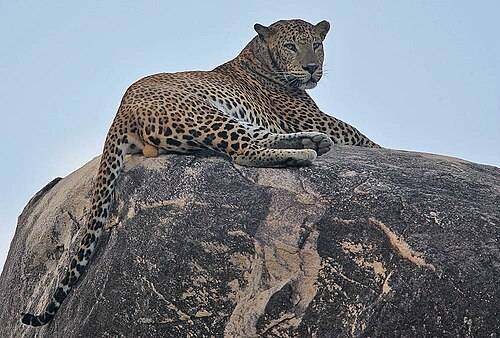
- Yala National Park
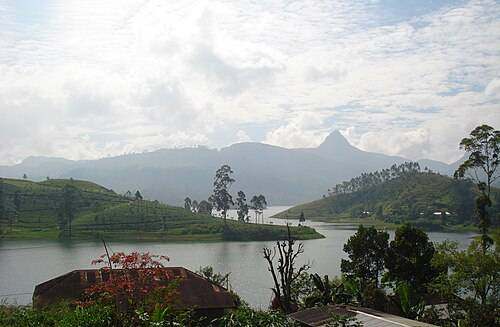
- Adam's Peak
Food and drink
Rice and curry · hoppers · kottu roti · Ceylon tea
Culture and famous for
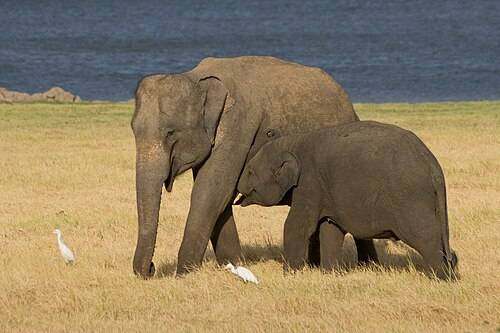
Ceylon tea; elephants; Buddhist heritage since 250 BC
Popular sports
Cricket, volleyball
Geography and climate
- Highest point
- Pidurutalagala, 2,524 m
- Rivers, lakes and seas
- Mahaweli
- Climate
- Tropical monsoon
- Coastline
- Has a sea coast
- Population density
- 335 people per km²
Wars and conflicts
- Civil War with Tamil Tigers 1983–2009
Alliances and memberships
Political unions and regional organisations
Sri Lanka in depth
Detailed facts from the CIA World Factbook (public domain, latest edition).
Overview
- History in brief
- The first Sinhalese arrived in Sri Lanka late in the 6th century B.C., probably from northern India. Buddhism was introduced circa 250 B.C., and the first kingdoms developed at the cities of Anuradhapura (from about 200 B.C. to about A.D. 1000) and Polonnaruwa (from about A.D. 1070 to 1200). In the 14th century, a South Indian dynasty established a Tamil kingdom in northern Sri Lanka. The Portuguese controlled the coastal areas of the island in the 16th century, followed by the Dutch in the 17th century. The island was ceded to the British in 1796, became a crown colony in 1802, and was formally united under British rule by 1815. As Ceylon, it became independent in 1948; the name was changed to Sri Lanka in 1972. Prevailing tensions between the Sinhalese majority and Tamil separatists erupted into war in 1983. Fighting between the government and Liberation Tigers of Tamil Eelam (LTTE) continued for over a quarter-century. Although Norway brokered peace negotiations that led to a cease-fire in 2002, the fighting slowly resumed and was again in full force by 2006. The government defeated the LTTE in 2009. During the post-conflict years under then-President Mahinda RAJAPAKSA, the government initiated infrastructure development projects, many of which were financed by loans from China. His regime faced allegations of human rights violations and a shrinking democratic space for civil society. In 2015, a new coalition government headed by President Maithripala SIRISENA of the Sri Lanka Freedom Party and Prime Minister Ranil WICKREMESINGHE of the United National Party came to power with pledges to advance economic, political, and judicial reforms. However, implementation of these reforms was uneven. In 2019, Gotabaya RAJAPAKSA won the presidential election and appointed his brother Mahinda prime minister. Civil society raised concerns about the RAJAPAKSA administration’s commitment to pursuing justice, human rights, and accountability reforms, as well as the risks to foreign creditors that Sri Lanka faced given its ongoing economic crisis. A combination of factors including the COVID-19 pandemic; severe shortages of food, medicine, and fuel; and power outages triggered increasingly violent protests in Columbo beginning in 2022. In response, WICKREMESINGHE -- who had already served as prime minister five times -- was named to replace the prime minister, but he became president within a few months when Gotabaya RAJAPAKSA fled the country.
Geography
- Location
- Southern Asia, island in the Indian Ocean, south of India
- Size compared
- slightly larger than West Virginia
- Land borders
- Total: 0 km
- Coastline
- 1,340 km
- Climate
- tropical monsoon; northeast monsoon (December to March); southwest monsoon (June to October)
- Terrain
- mostly low, flat to rolling plain; mountains in south-central interior
- Elevation
- Highest point: Pidurutalagala 2,524 mLowest point: Indian Ocean 0 mMean elevation: 228 m
- Natural resources
- limestone, graphite, mineral sands, gems, phosphates, clay, hydropower, arable land
- Natural hazards
- occasional cyclones and tornadoes
- Notes
- strategic location near major Indian Ocean sea lanes; Adam's Bridge is a chain of limestone shoals between the southeastern coast of India and the northwestern coast of Sri Lanka; geological evidence suggests that this 50-km (31-mi) bridge once connected India and Sri Lanka; ancient records seem to indicate that a foot passage was possible between the two land masses until the 15th century, when the land bridge broke up in a cyclone
- Environmental issues
- deforestation; soil erosion; poaching; effects of urbanization; coastal degradation from mining activities and pollution; coral reef destruction; freshwater resources polluted by industrial wastes and sewage runoff; waste disposal; air pollution in Colombo
People and society
- Population
- Total: 22,050,561 (2025 est.)Male: 10,668,528Female: 11,382,033
- Nationality
- Noun: Sri Lankan(s)Adjective: Sri Lankan
- Ethnic groups
- Sinhalese 74.9%, Sri Lankan Tamil 11.2%, Sri Lankan Moors 9.2%, Indian Tamil 4.2%, other 0.5% (2012 est.)
- Languages
- Sinhala (official) 87%, Tamil (official) 28.5%, English 23.8% (2012 est.)
- Religions
- Buddhist (official) 70.2%, Hindu 12.6%, Muslim 9.7%, Roman Catholic 6.1%, other Christian 1.3%, other 0.05% (2012 est.)
- Median age
- Total: 34.2 years (2025 est.)Male: 32.2 yearsFemale: 35.8 years
- Population growth
- 0.22% (2025 est.)
- Life expectancy
- Total population: 76.8 years (2024 est.)Male: 73.7 yearsFemale: 79.9 years
- Children per woman
- 2.12 children born/woman (2025 est.)
- Urbanization
- Urban population: 19.2% of total population (2023)Rate of urbanization: 1.22% annual rate of change (2020-25 est.)
- Largest cities
- 103,000 Sri Jayewardenepura Kotte (legislative capital) (2018), 633,000 COLOMBO (capital) (2023)
- Literacy
- Total population: 92.7% (2023 est.)Male: 93.4% (2023 est.)Female: 92% (2023 est.)
- Years in school
- Total: 13 years (2023 est.)Male: 12 years (2023 est.)Female: 14 years (2023 est.)
Government
- Official names
- Conventional long form: Democratic Socialist Republic of Sri LankaConventional short form: Sri LankaLocal long form: Shri Lanka Prajatantrika Samajavadi Janarajaya (Sinhala)/ Ilankai Jananayaka Choshalichak Kutiyarachu (Tamil)Local short form: Shri Lanka (Sinhala)/ Ilankai (Tamil)Former: Serendib, CeylonEtymology: the name is composed of the Sanskrit words shri (happiness or holiness) and lanka (island); the former name Serendib was an Arabic derivation of the Sanskrit word simhaladvipa, or "island of the place of lions;" the former name Ceylon came from the Sanskrit simha, or "lion"
- Government type
- presidential republic
- Capital
- Name: Colombo (commercial capital); Sri Jayewardenepura Kotte (legislative capital)Geographic coordinates: 6 55 N, 79 50 ETime difference: UTC+5.5 (10.5 hours ahead of Washington, DC, during Standard Time)Etymology: the origin of Colombo's name is unclear; it may derive from the Sinhalese words kola (leaves) and amba (mango), referring to local mango trees, or from the name Kelantotta, referring to a ferry that crossed the Kelani River; the name was corrupted to Kolambu by Arab traders, and 16th-century Portuguese settlers then called it Colombo, possibly referring to explorer Christopher COLUMBUS; the legislative capital's name, Sri Jayewardenepura Kotte, is composed of the Sanskrit honorific sri, the name of Sri Lankan President J.R. JAYEWARDENE, and the Hindi word pura (town)
- Regions
- 9 provinces; Central, Eastern, North Central, Northern, North Western, Sabaragamuwa, Southern, Uva, Western
- Independence
- 4 February 1948 (from the UK)
- National holiday
- Independence Day (National Day), 4 February (1948)
- Constitution
- History: several previous; latest adopted 16 August 1978, certified 31 August 1978Amendment process: proposed by Parliament; passage requires at least two-thirds majority vote of its total membership, certification by the president of the republic or the Parliament speaker, and in some cases approval in a referendum by absolute majority of valid votes
- Legal system
- mixed system of Roman-Dutch civil law, English common law, Jaffna Tamil customary law, and Muslim personal law
- Voting age
- 18 years of age; universal
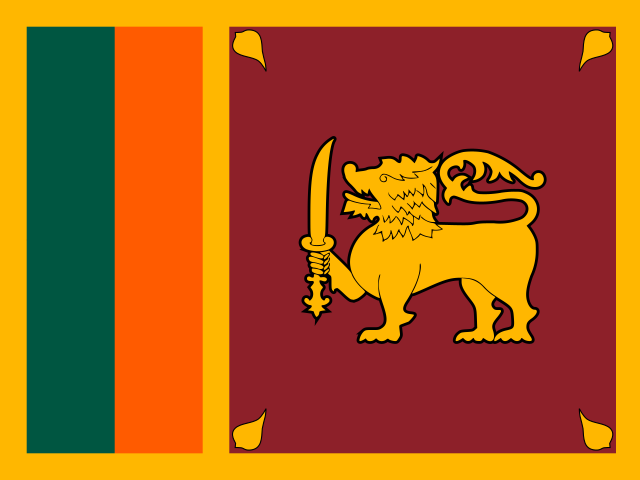
- Flag meaning
- Description: yellow with two panels; the smaller panel on the left has two equal vertical bands of green (left side) and orange; the larger panel has a yellow lion holding a sword on a maroon field, with a yellow bo leaf in each cornerMeaning: the sword stands for national sovereignty; the lion for Sinhalese ethnicity, the strength of the nation, and bravery; the four bo leaves for Buddhism and the four virtues of kindness, friendliness, happiness, and equanimity; orange stands for Tamils, green for Moors, and maroon for the Sinhalese majority; yellow represents other ethnic groups
- National symbols
- lion, water lily
- National colours
- maroon, yellow
- National anthem
- Title: "Sri Lanka Matha" (Mother Sri Lanka)Lyrics/music: Ananda SAMARKONE (Sinhala),M. NALLATHAMBY (Tamil)/Ananda SAMARKONEHistory: adopted 1951
- UNESCO World Heritage Sites
- Total World Heritage Sites: 8 (6 cultural, 2 natural)Selected World Heritage Site locales: Ancient City of Polonnaruwa (c); Ancient City of Sigiriya (c); Sacred City of Anuradhapura (c); Old Town of Galle and its Fortifications (c); Sacred City of Kandy (c); Sinharaja Forest Reserve (n); Rangiri Dambulla Cave Temple (c); Central Highlands of Sri Lanka (n)
Economy
- Overview
- economic contraction in 2022-23 marked by increased poverty and significant inflation; IMF two-year debt relief program following 2022 sovereign default; structural challenges from non-diversified economy and rigid labor laws; heavy dependence on tourism receipts and remittances
- GDP (PPP)
- $301.407 billion (2024 est.)
- GDP per person (PPP)
- $13,800 (2024 est.)
- GDP growth
- 5% (2024 est.)
- Inflation
- -0.4% (2024 est.)
- Unemployment
- 5% (2024 est.)
- Below poverty line
- 14.3% (2019 est.)
- Farm products
- rice, coconuts, tea, sugarcane, plantains, milk, fiber crops, cassava, chicken, pumpkins/squash (2023)
- Industries
- processing of rubber, tea, coconuts, tobacco and other agricultural commodities; tourism; clothing and textiles; mining
- Exports
- $17.327 billion (2023 est.)
- Main exports
- garments, tea, precious stones, used rubber tires, rubber products (2023)
- Export partners
- USA 22%, India 7%, Germany 7%, UK 7%, Italy 5% (2023)
- Main imports
- refined petroleum, fabric, crude petroleum, packaged medicine, cotton fabric (2023)
- Import partners
- India 21%, China 19%, UAE 10%, Singapore 5%, Malaysia 4% (2023)
- Money sent home from abroad
- 7.2% of GDP (2023 est.)
Energy, internet and transport
- Electricity access
- Electrification - total population: 100% (2022 est.)
- Electricity sources
- Fossil fuels: 49.4% of total installed capacity (2023 est.)Solar: 4.6% of total installed capacity (2023 est.)Wind: 4.6% of total installed capacity (2023 est.)Hydroelectricity: 40.7% of total installed capacity (2023 est.)Biomass and waste: 0.7% of total installed capacity (2023 est.)
- Internet users
- Percent of population: 51% (2023 est.)
- Mobile phones
- Total subscriptions: 30.6 million (2024 est.)Subscriptions per 100 inhabitants: 133 (2024 est.)
- TV and radio
- government operates 5 TV channels and 19 radio channels; multi-channel satellite and cable TV subscription services available; 25 private TV stations and about 43 radio stations; 6 non-profit TV stations and 4 radio stations
- Airports
- 18 (2025)
- Railways
- Total: 1,562 km (2016)Broad gauge: 1,562 km (2016) 1.676-m gauge
- Merchant ships
- Total: 96 (2023)By type: bulk carrier 5, general cargo 15, oil tanker 11, other 65
Military and space
- Armed forces
- Sri Lanka Armed Forces: Sri Lanka Army (includes National Guard and the Volunteer Force), Sri Lanka Navy (includes Marine Corps), Sri Lanka Air Force, Sri Lanka Coast Guard; Civil Security Department (Home Guard)Ministry of Public Security: Sri Lanka Police (2025)
- Military spending
- 1.5% of GDP (2024 est.)
- Military service
- generally 18-24 years of age for voluntary military service for men and women, although upper age limits may vary by branch of service, roles, specialties, etc; no conscription (2026)
Global issues
- Refugees and displaced people
- Refugees: 500 (2024 est.)IDPs: 5,549 (2024 est.)Stateless persons: 229 (2024 est.)
Neighbouring countries
- Phone code
- +94
- Internet domain
- .lk