United Arab Emirates
United Arab Emirates · الإمارات
The Trucial States were British protectorates. United in 1971 and transformed by oil into a business hub; about 90% of residents are foreigners.
See United Arab Emirates on the 3D globeTake a quiz
Population11 million
Area83,600 km²
CapitalAbu Dhabi
RegionWestern Asia
Did you know?
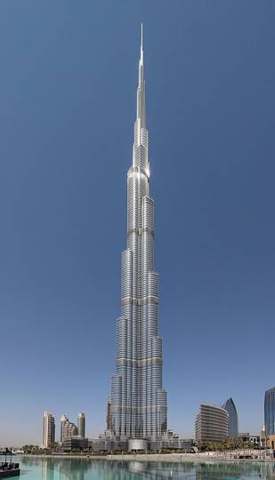
- Burj Khalifa (828 m) is the world's tallest building
- Sent a probe to Mars in 2021
- Around 90% of residents are foreigners
Key facts about United Arab Emirates
- Government
- Federation of seven absolute monarchies
- Religion
- Islam ~75% (citizens nearly all Muslim); large migrant population
- Founded / independence
- 1971 (from UK)
- Rich in
- Oil, finance, aviation, tourism, trade
- Languages
- Arabic
Arabic (Emirati dialect), English, Hindi, Urdu - Currency
- United Arab Emirates dirham (د.إ)
- People are called
- Emirati
- Main cities
- Dubai, Abu Dhabi, Sharjah, Al Ain
Timeline of United Arab Emirates
- 1820Trucial agreements with Britain
- 1958Oil discovered
- 1971Federation formed
- 2010Burj Khalifa opens
- 2021Mars probe
Places to see in United Arab Emirates
- Burj Khalifa
- Sheikh Zayed Grand Mosque
- Louvre Abu Dhabi
- Palm Jumeirah
- Dubai Mall
- Liwa Oasis
Food and drink
Al harees · machboos · luqaimat · dates
Culture and famous for
Skyscrapers; Emirates airline; Expo 2020
Popular sports
Football, horse and camel racing, cricket
Geography and climate
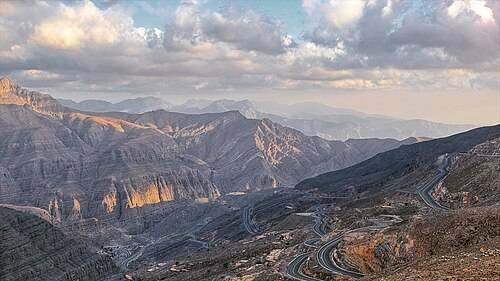
- Highest point
- Jebel Jais, 1,934 m
- Rivers, lakes and seas
- No rivers
- Climate
- Hot desert
- Coastline
- Has a sea coast
- Population density
- 132 people per km²
Wars and conflicts
- Yemen intervention
- Iranian strikes 2026
Alliances and memberships
Political unions and regional organisations
BRICSArab LeagueGulf Cooperation CouncilOrganisation of Islamic Cooperation
United Arab Emirates in depth
Detailed facts from the CIA World Factbook (public domain, latest edition).
Overview
- History in brief
- The Trucial States of the Persian Gulf coast granted the UK control of their defense and foreign affairs in 19th-century treaties. In 1971, six of these states -- Abu Dhabi, 'Ajman, Al Fujayrah, Ash Shariqah, Dubayy, and Umm al Qaywayn -- merged to form the United Arab Emirates (UAE). Ra's al Khaymah joined in 1972.The UAE's per-capita GDP is on par with those of leading West European nations. For more than three decades, oil and global finance drove the UAE's economy. In 2008-09, the confluence of falling oil prices, collapsing real estate prices, and the international banking crisis hit the UAE especially hard. The UAE did not experience the "Arab Spring" unrest seen elsewhere in the Middle East in 2010-11, partly because of the government's multi-year, $1.6-billion infrastructure investment plan for the poorer northern emirates, and its aggressive pursuit of advocates for political reform.The UAE in recent years has played a growing role in regional affairs. In addition to donating billions of dollars in economic aid to help stabilize Egypt, the UAE was one of the first countries to join the Defeat ISIS coalition, and to participate as a key partner in a Saudi-led military campaign in Yemen. In 2020, the UAE and Bahrain signed a peace agreement (the Abraham Accords) with Israel -- brokered by the US -- in Washington, D.C. The UAE and Bahrain thus became the third and fourth Middle Eastern countries, along with Egypt and Jordan, to recognize Israel.
Geography
- Location
- Middle East, bordering the Gulf of Oman and the Persian Gulf, between Oman and Saudi Arabia
- Size compared
- slightly larger than South Carolina; slightly smaller than Maine
- Land borders
- Total: 1,066 kmBorder countries: Oman 609 km; Saudi Arabia 457 km
- Coastline
- 1,318 km
- Climate
- desert; cooler in eastern mountains
- Terrain
- flat, barren coastal plain merging into rolling sand dunes of vast desert; mountains in east
- Elevation
- Highest point: Jabal Bil 'Ays 1,905 mLowest point: Persian Gulf 0 mMean elevation: 149 m
- Natural resources
- petroleum, natural gas
- Natural hazards
- frequent sand and dust storms
- Notes
- strategic location along southern approaches to Strait of Hormuz, a transit point for crude oil; Abu Zaby (Abu Dhabi) and Dubayy (Dubai) together account for over 90% of UAE's area and two-thirds of the population
- Environmental issues
- air pollution; water scarcity; lack of natural freshwater resources; land degradation and desertification; waste generation, beach pollution from oil spills
People and society
- Population
- Total: 10,093,593 (2025 est.)Male: 6,831,802Female: 3,261,791
- Nationality
- Noun: Emirati(s)Adjective: Emirati
- Ethnic groups
- Emirati 11.6%, South Asian 59.4% (includes Indian 38.2%, Bangladeshi 9.5%, Pakistani 9.4%, other 2.3%), Egyptian 10.2%, Filipino 6.1%, other 12.8% (2015 est.)
- Languages
- Arabic (official), English, Hindi, Malayalam, Urdu, Pashto, Tagalog, PersianMajor-language sample(s): كتاب حقائق العالم، المصدر الذي لا يمكن الاستغناء عنه للمعلومات الأساسية (Arabic)The World Factbook, the indispensable source for basic information.
- Religions
- Muslim 74.5% (official) (Sunni 63.3%, Shia 6.7%, other 4.4%), Christian 12.9%, Hindu 6.2%, Buddhist 3.2%, agnostic 1.3%, other 1.9% (2020 est.)
- Median age
- Total: 35.8 years (2025 est.)Male: 38.1 yearsFemale: 29.8 years
- Population growth
- 0.62% (2025 est.)
- Life expectancy
- Total population: 79.9 years (2024 est.)Male: 78.6 yearsFemale: 81.4 years
- Children per woman
- 1.6 children born/woman (2025 est.)
- Urbanization
- Urban population: 87.8% of total population (2023)Rate of urbanization: 1.5% annual rate of change (2020-25 est.)
- Largest cities
- 3.008 million Dubai, 1.831 million Sharjah, 1.567 million ABU DHABI (capital) (2023)
- Literacy
- Total population: 98.8% (2024 est.)Male: 99% (2024 est.)Female: 98.4% (2024 est.)
- Years in school
- Total: 16 years (2023 est.)Male: 15 years (2023 est.)Female: 16 years (2023 est.)
Government
- Official names
- Conventional long form: United Arab EmiratesConventional short form: noneLocal long form: Al Imarat al Arabiyah al MuttahidahLocal short form: noneFormer: Trucial Oman, Trucial StatesAbbreviation: UAEEtymology: self-descriptive country name; the name Arabia can be traced back at least as far as the ancient Egyptians, who referred to the region as "Ar Rabi;" "emirates" derives from amir, the Arabic word for "commander," "lord," or "prince;" the former name, Trucial States, refers to a maritime truce from 1820 between the British and the Arab sheikhdoms
- Government type
- federation of monarchies
- Capital
- Name: Abu DhabiGeographic coordinates: 24 28 N, 54 22 ETime difference: UTC+4 (9 hours ahead of Washington, DC, during Standard Time)Etymology: in Arabic, abu means "father," and dhabi refers to a personal name, Dhabi or Zabi, that comes from the word zab, or "gazelle"
- Regions
- 7 emirates (imarat, singular - imarah); Abu Zaby (Abu Dhabi), 'Ajman, Al Fujayrah, Ash Shariqah (Sharjah), Dubayy (Dubai), Ra's al Khaymah, Umm al Qaywayn
- Independence
- 2 December 1971 (from the UK)
- National holiday
- Independence Day (National Day), 2 December (1971)
- Constitution
- History: previous 1971 (provisional); latest drafted in 1979, became permanent May 1996Amendment process: proposed by the Supreme Council and submitted to the Federal National Council; passage requires at least a two-thirds majority vote of Federal National Council members present and approval of the Supreme Council president
- Legal system
- mixed system of Islamic (sharia) law and civil law
- Voting age
- limited
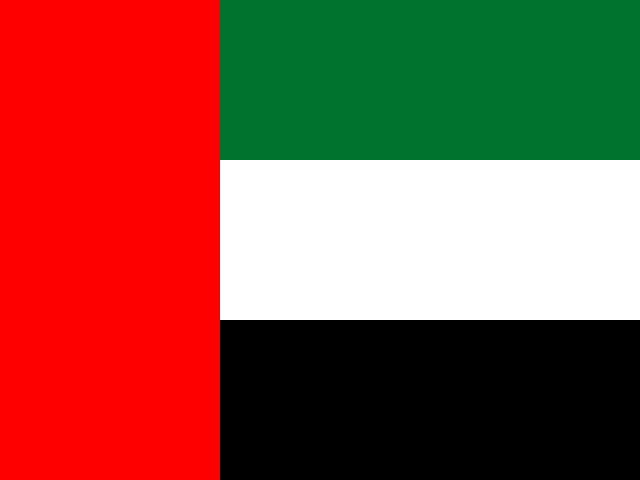
- Flag meaning
- Description: three equal horizontal bands of green (top), white, and black, with a wider vertical red band on the left sideMeaning: the flag incorporates all four pan-Arab colors, which in this case represent fertility (green), neutrality (white), oil (black), and unity (red); red is a traditional color that was part of all the emirates' flags before their unification
- National symbols
- golden falcon
- National colours
- green, white, black, red
- National anthem
- Title: "Nashid al-watani al-imarati" (National Anthem of the UAE)Lyrics/music: AREF Al Sheikh Abdullah Al Hassan/Mohamad Abdel WAHABHistory: music adopted 1971, lyrics adopted 1986; Mohamad Abdel WAHAB also composed the music for Tunisia's and Libya's anthem
- UNESCO World Heritage Sites
- Total World Heritage Sites: 2 ( both cultural)Selected World Heritage Site locales: Cultural Sites of Al Ain (Hafit, Hili, Bidaa Bint Saud, and Oases Areas); Faya Palaeolandscape (c)
Economy
- Overview
- high-income, oil-driven Middle Eastern economy; fastest GDP growth of Gulf states; diversification through tourism, construction, and services; strong foreign direct investment orientation; continued government investment and business-friendly reforms
- GDP (PPP)
- $745.994 billion (2024 est.)
- GDP per person (PPP)
- $68,600 (2024 est.)
- GDP growth
- 3.8% (2024 est.)
- Inflation
- 1.7% (2024 est.)
- Unemployment
- 2.2% (2024 est.)
- Farm products
- dates, cucumbers/gherkins, camel milk, goat milk, tomatoes, chicken, goat meat, eggs, milk, camel meat (2023)
- Industries
- petroleum and petrochemicals; fishing, aluminum, cement, fertilizer, commercial ship repair, construction materials, handicrafts, textiles
- Exports
- $558.402 billion (2023 est.)
- Main exports
- crude petroleum, refined petroleum, gold, broadcasting equipment, natural gas (2023)
- Export partners
- China 11%, India 11%, Japan 10%, Iraq 6%, Thailand 4% (2023)
- Main imports
- gold, broadcasting equipment, cars, refined petroleum, diamonds (2023)
- Import partners
- China 19%, India 7%, USA 6%, Turkey 4%, Japan 4% (2023)
Energy, internet and transport
- Electricity access
- Electrification - total population: 100% (2022 est.)
- Electricity sources
- Fossil fuels: 75.3% of total installed capacity (2023 est.)Nuclear: 19.9% of total installed capacity (2023 est.)Solar: 4.8% of total installed capacity (2023 est.)
- Internet users
- Percent of population: 100% (2023 est.)
- Mobile phones
- Total subscriptions: 22.4 million (2024 est.)Subscriptions per 100 inhabitants: 203 (2024 est.)
- TV and radio
- most TV and radio stations state-owned, but many private organizations now operating in media free zones in Abu Dhabi and Dubai; widespread use of satellite dishes to access pan-Arab and other international broadcasts (2022)
- Airports
- 42 (2025)
- Merchant ships
- Total: 655 (2023)By type: bulk carrier 2, container ship 3, general cargo 122, oil tanker 16, other 512
Military and space
- Armed forces
- United Arab Emirates Armed Forces: Land Forces (Army), Navy, Air Force, Presidential Guard (includes special operations forces), National Guard (includes Coast Guard) (2025)
- Military spending
- 4% of GDP (2024 est.)
- Military service
- 18-40 for voluntary service; 18-30 years of age for compulsory national service for men with a 36-month service obligation for those without a secondary education and 11 months for secondary school graduates; women may volunteer for national service (11-month service obligation regardless of education) (2025)
- Space programme
- has an ambitious and growing national space program; focused on satellite development, including communications, remote sensing, and navigation, as well as deep space exploration; is building expertise, infrastructure, technology, and research and development capabilities; has elected to use foreign partners to launch payloads from spaceports abroad; has looked to invest in foreign commercial space companies and develop global partnerships; has a foreign-assisted astronaut training program; seeking to establish UAE as an international hub for space education; founding member of the Arab Space Cooperation Group; works with major global and regional players, including China, Egypt, the ESA, France, Germany, India, Japan, Russia, South Korea, Turkey, the UK, and the US; sees its commercial space industry as a key to diversifying and developing the country’s non-oil economy; dozens of space companies operate in the UAE, including international and start-ups, plus several space-science research centers (2025)
- Space milestones
- 1997 - initiated a national space sector2009 - first remote sensing (RS) satellite (DubaiSat-1) developed jointly with South Korea and launched by Russia2017 - announced Mars 2117 project, which included building a “Mars Science City” as the first step to establishing a human settlement on Mars within 100 years2018 - first domestically produced RS satellite (KhalifaSat or DubaiSat-3) launched by Japan2019 - first UAE astronaut (trained by Russia and US) in space on the International Space Station2020 - signed US-led Artemis Accords for space and lunar exploration2021 - became first Arab country to successfully place a probe (al Amal or Hope) in Mars orbit; announced plans to launch a probe in 2028 to land on an asteroid between Mars and Jupiter2025 - domestically produced advanced RS/Earth imaging satellite (MBZ-SAT) launched by US
Global issues
- Refugees and displaced people
- Refugees: 7,634 (2024 est.)
- Drug trade
- USG identification: major precursor-chemical producer (2025)
Neighbouring countries
- Phone code
- +971
- Internet domain
- .ae