Oman
Sultanate of Oman · عمان
A maritime empire once ruling Zanzibar and the Swahili coast. Neutral mediator in the region, including US–Iran talks.
See Oman on the 3D globeTake a quiz
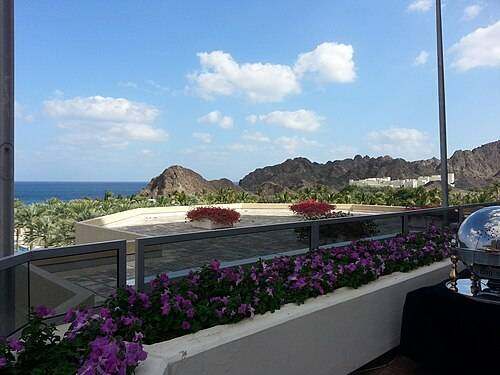
Population5.3 million
Area309,500 km²
CapitalMuscat
RegionWestern Asia
Did you know?
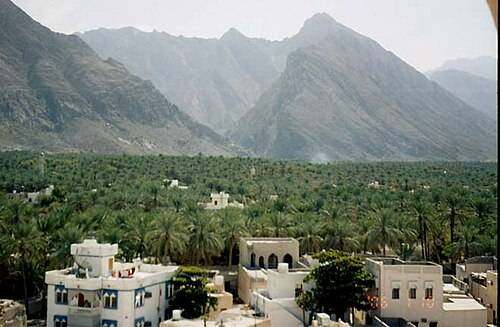
- The southern Dhofar region gets monsoon rains and turns green
- Frankincense from Oman was traded for thousands of years
- Once ruled Zanzibar
Key facts about Oman
- Government
- Absolute monarchy (sultanate)
- Religion
- Ibadi Islam ~45%, Sunni ~45%
- Founded / independence
- 1650 (expelled Portuguese)
- Rich in
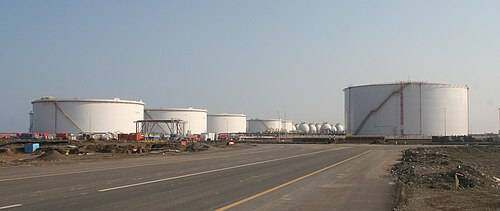
- Oil and gas, frankincense, fishing
- Languages
- Arabic
Arabic (Omani dialect); Balochi, Swahili, Mahri - Currency
- Omani rial (ر.ع.)
- People are called
- Omani
- Main cities
- Muscat, Seeb, Salalah, Sohar
Timeline of Oman
- 1650Expels Portuguese
- 1840Capital moves to Zanzibar
- 1970Qaboos takes power
- 2020Sultan Haitham succeeds
Places to see in Oman
- Sultan Qaboos Grand Mosque
- Nizwa Fort
- Wahiba Sands
- Wadi Shab
- Jebel Akhdar
Food and drink
Shuwa (slow-cooked lamb) · halwa · kahwa coffee
Culture and famous for
Frankincense trade; dhow shipbuilding; Bedouin culture
Popular sports
Football, sailing
Geography and climate
- Highest point
- Jebel Shams, 3,009 m
- Rivers, lakes and seas
- Wadis (seasonal riverbeds)
- Climate
- Hot desert; monsoon in Dhofar
- Coastline
- Has a sea coast
- Population density
- 17 people per km²
Wars and conflicts
- Dhofar Rebellion 1963–76
Alliances and memberships
Political unions and regional organisations
Arab LeagueGulf Cooperation CouncilOrganisation of Islamic Cooperation
Economy and trade
OPEC (OPEC+ partner (not a member))
Oman in depth
Detailed facts from the CIA World Factbook (public domain, latest edition).
Overview
- History in brief
- The inhabitants of the area of present-day Oman have long prospered from Indian Ocean trade. In the late 18th century, the nascent sultanate in Muscat signed the first in a series of friendship treaties with Britain. Over time, Oman's dependence on British political and military advisors increased, although the sultanate never became a British colony. In 1970, QABOOS bin Said Al Said overthrew his father and ruled as sultan for the next five decades. His extensive modernization program opened the country to the outside world. He prioritized strategic ties to the UK and US, and his moderate, independent foreign policy allowed Oman to maintain good relations with its neighbors and avoid external entanglements.In 2011, the popular uprisings that swept the Middle East and North Africa inspired demonstrations in Oman that called for more jobs and economic benefits and an end to corruption. In response, QABOOS implemented economic and political reforms such as granting Oman’s legislative body more power and authorizing direct elections for its lower house. Additionally, the sultan increased unemployment benefits and issued a royal directive mandating a national public- and private-sector job creation plan. As part of the government's efforts to decentralize authority and allow greater citizen participation in local governance, Oman successfully conducted its first municipal council elections in 2012. QABOOS, Oman's longest reigning monarch, died in 2020. His cousin, HAYTHAM bin Tariq Al Said, former Minister of Heritage and Culture, was sworn in as Oman's new sultan the same day.
Geography
- Location
- Middle East, bordering the Arabian Sea, Gulf of Oman, and Persian Gulf, between Yemen and the UAE
- Size compared
- twice the size of Georgia
- Land borders
- Total: 1,561 kmBorder countries: Saudi Arabia 658 km; UAE 609 km; Yemen 294 km
- Coastline
- 2,092 km
- Climate
- dry desert; hot, humid along coast; hot, dry interior; strong southwest summer monsoon (May to September) in far south
- Terrain
- central desert plain, rugged mountains in north and south
- Elevation
- Highest point: Jabal Shams 3,004 mLowest point: Arabian Sea 0 mMean elevation: 310 m
- Natural resources
- petroleum, copper, asbestos, some marble, limestone, chromium, gypsum, natural gas
- Natural hazards
- summer winds often raise large sandstorms and dust storms in interior; periodic droughts
- Notes
- consists of Oman proper and two northern exclaves, Musandam and Al Madhah; the former is a peninsula that occupies a strategic location adjacent to the Strait of Hormuz
- Environmental issues
- limited natural freshwater resources; high levels of soil and water salinity in the coastal plains; beach pollution from oil spills; industrial effluents in the water table and aquifers; desertification due to high winds driving desert sand into arable lands
People and society
- Population
- Total: 3,969,824 (2025 est.)Male: 2,130,080Female: 1,839,744
- Nationality
- Noun: Omani(s)Adjective: Omani
- Ethnic groups
- Arab, Baluchi, South Asian (Indian, Pakistani, Sri Lankan, Bangladeshi), African
- Languages
- Arabic (official), English, Baluchi, Swahili, Urdu, Indian dialectsMajor-language sample(s): كتاب حقائق العالم، المصدر الذي لا يمكن الاستغناء عنه للمعلومات الأساسية (Arabic)The World Factbook, the indispensable source for basic information.
- Religions
- Muslim 85.9%, Christian 6.4%, Hindu 5.7%, other and unaffiliated 2% (2020 est.)
- Median age
- Total: 27.5 years (2025 est.)Male: 28.1 yearsFemale: 26.3 years
- Population growth
- 1.7% (2025 est.)
- Life expectancy
- Total population: 77.4 years (2024 est.)Male: 75.5 yearsFemale: 79.4 years
- Children per woman
- 2.61 children born/woman (2025 est.)
- Urbanization
- Urban population: 88.4% of total population (2023)Rate of urbanization: 2.32% annual rate of change (2020-25 est.)
- Largest cities
- 1.650 million MUSCAT (capital) (2023)
- Literacy
- Total population: 97.3% (2022 est.)Male: 98.6% (2022 est.)Female: 94.9% (2022 est.)
- Years in school
- Total: 13 years (2021 est.)Male: 13 years (2021 est.)Female: 14 years (2021 est.)
Government
- Official names
- Conventional long form: Sultanate of OmanConventional short form: OmanLocal long form: Saltanat UmanLocal short form: UmanFormer: Sultanate of Muscat and OmanEtymology: the origin of the name is uncertain, but it may date back at least 2,000 years, with an "Omana" mentioned by Pliny the Elder (1st century A.D.) and an "Omanon" by Ptolemy (2nd century A.D.); it is said to derive from Oman ben Ibrahim al Khalil (Oman ben Kahtan), who founded the state
- Government type
- absolute monarchy
- Capital
- Name: MuscatGeographic coordinates: 23 37 N, 58 35 ETime difference: UTC+4 (9 hours ahead of Washington, DC, during Standard Time)Etymology: the name derives from the Arabic name for the city, Masqat, which is said to mean "hidden" and refers to the range of hills that isolate the port city from the rest of the country
- Regions
- 11 governorates (muhafazat, singular - muhafaza); Ad Dakhiliyah, Al Buraymi, Al Wusta, Az Zahirah, Janub al Batinah (Al Batinah South), Janub ash Sharqiyah (Ash Sharqiyah South), Masqat (Muscat), Musandam, Shamal al Batinah (Al Batinah North), Shamal ash Sharqiyah (Ash Sharqiyah North), Zufar (Dhofar)
- Independence
- 1650 (expulsion of the Portuguese)
- National holiday
- National Day, 18 November
- Constitution
- History: promulgated by royal decree 6 November 1996 (the Basic Law of the Sultanate of Oman serves as the constitution); amended by royal decree in 2011Amendment process: promulgated by the sultan or proposed by the Council of Oman and drafted by a technical committee as stipulated by royal decree and then promulgated through royal decree
- Legal system
- mixed system of Anglo-Saxon law and Islamic law
- Voting age
- 21 years of age; universal
- Flag meaning
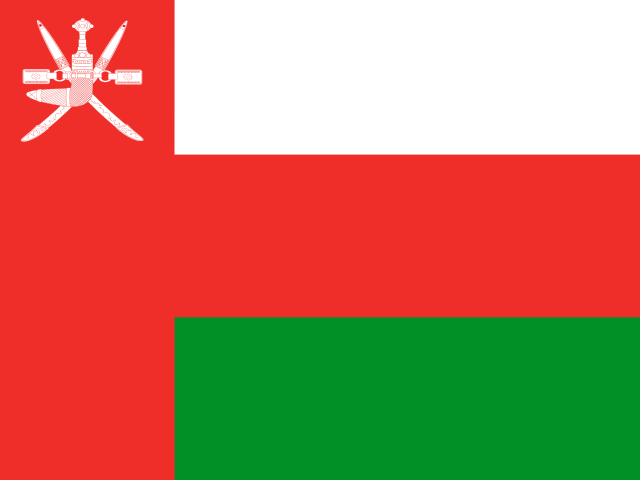
- Description: three equal horizontal bands of white (top), red, and green, with a vertical red band on the left side; the national emblem (a khanjar dagger in its sheath on top of crossed swords in scabbards) in white is centered near the top of the vertical bandMeaning: white stands for peace and prosperity, red for battles against foreign invaders, and green for the Jebel al Akhdar (Green Mountains) and fertility
- National symbols
- khanjar dagger on top of two crossed swords
- National colours
- red, white, green
- National anthem
- Title: "Nashid as-Salaam as-Sultani" (The Sultan's Anthem)Lyrics/music: Rashid bin Uzayyiz al KHUSAIDI/James Frederick MILLS, arranged by Bernard EBBINGHAUSHistory: adopted 1932; new lyrics written after QABOOS bin Said al Said came to power in 1970; first performed by the band of the HMS Hawkins as a salute to the Sultan during a 1932 visit to Muscat; the ship's bandmaster did the arrangement
- UNESCO World Heritage Sites
- Total World Heritage Sites: 5 (all cultural)Selected World Heritage Site locales: Bahla Fort; Archaeological Sites of Bat; Land of Frankincense; Aflaj Irrigation Systems of Oman; Ancient Qalhat
Economy
- Overview
- high-income, oil-based economy; large welfare system; growing government debt; citizenship-based labor force growth policy; US free trade agreement; diversifying portfolio; high female labor force participation
- GDP (PPP)
- $193.591 billion (2024 est.)
- GDP per person (PPP)
- $36,700 (2024 est.)
- GDP growth
- 1.7% (2024 est.)
- Inflation
- 1% (2023 est.)
- Unemployment
- 3.2% (2024 est.)
- Farm products
- vegetables, dates, milk, tomatoes, sorghum, chillies/peppers, goat milk, cucumbers/gherkins, cantaloupes/melons, cabbages (2023)
- Industries
- crude oil production and refining, natural and liquefied natural gas production; construction, cement, copper, steel, chemicals, optic fiber
- Exports
- $64.749 billion (2023 est.)
- Main exports
- crude petroleum, refined petroleum, natural gas, semi-finished iron, fertilizers (2023)
- Export partners
- China 43%, India 6%, Saudi Arabia 5%, UAE 5%, South Africa 4% (2023)
- Main imports
- refined petroleum, cars, crude petroleum, iron ore, iron pipes (2023)
- Import partners
- UAE 25%, Saudi Arabia 12%, India 8%, China 7%, Qatar 5% (2023)
- Money sent home from abroad
- 0% of GDP (2023 est.)
Energy, internet and transport
- Electricity access
- Electrification - total population: 100% (2022 est.)
- Electricity sources
- Fossil fuels: 96% of total installed capacity (2023 est.)Solar: 3.8% of total installed capacity (2023 est.)Wind: 0.3% of total installed capacity (2023 est.)
- Internet users
- Percent of population: 95% (2024 est.)
- Mobile phones
- Total subscriptions: 6.35 million (2024 est.)Subscriptions per 100 inhabitants: 121 (2024 est.)
- TV and radio
- 1 state-run TV broadcaster; TV stations transmitting from Saudi Arabia, the UAE, Iran, and Yemen available via satellite TV; state-run radio operates multiple stations; first private radio station began operating in 2007, and several additional stations now operating (2019)
- Airports
- 37 (2025)
- Merchant ships
- Total: 57 (2023)By type: general cargo 11, other 46
Military and space
- Armed forces
- Sultan's Armed Forces (SAF): Royal Army of Oman (RAO), Royal Navy of Oman (RNO), Royal Air Force of Oman (RAFO), Royal Guard of Oman (RGO), Sultan's Special ForcesRoyal Oman Police (ROP): Civil Defense, Immigration, Infrastructure Security Police, Coast Guard Police, Special Security Police, Special Task Force (2024)
- Military spending
- 6% of GDP (2024 est.)
- Military service
- 18-25 for voluntary military service for men and women; no conscription (2025)
Global issues
- Refugees and displaced people
- Refugees: 714 (2024 est.)
Neighbouring countries
Saudi ArabiaUnited Arab EmiratesYemen
- Phone code
- +968
- Internet domain
- .om