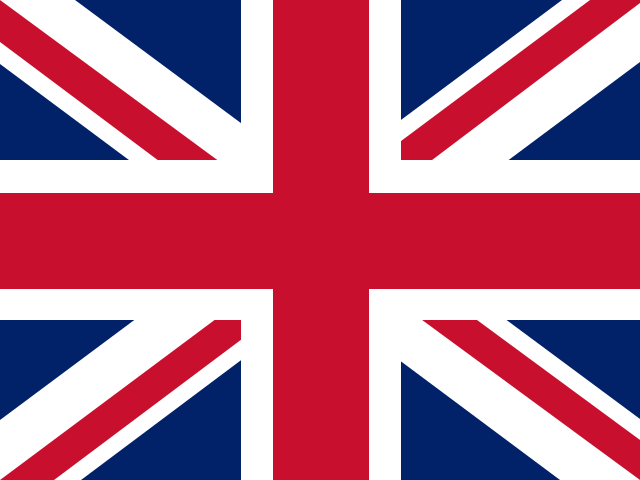
United Kingdom
United Kingdom of Great Britain and Northern Ireland
Formed by unions of England, Wales, Scotland and Ireland. Its empire was the largest in history, covering a quarter of the world by 1920. Birthplace of the Industrial Revolution; left the EU in 2020.
See United Kingdom on the 3D globeTake a quiz
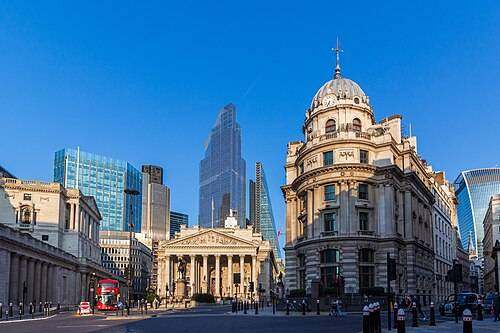
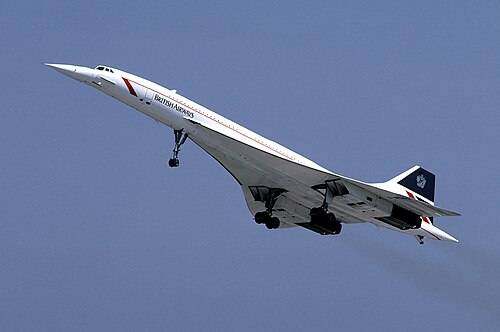
Population69 million
Area242,900 km²
CapitalLondon
RegionNorthern Europe
Did you know?
- The Industrial Revolution began here
- English football and rugby codes were invented here
- Has no single written constitution
Key facts about United Kingdom
- Government
- Parliamentary constitutional monarchy
- Religion
- Christian ~46%, unaffiliated ~37%, Islam ~6.5%
- Founded / independence
- 1707 (England-Scotland union)
- Rich in
- Finance (City of London), services, North Sea oil, pharmaceuticals, culture
- Languages
- English
English (Scouse, Geordie, Cockney and more), Welsh, Scottish Gaelic, Scots, Irish - Currency
- British pound (£)
- People are called
- British
- Main cities
- London, Birmingham, Manchester, Glasgow, Edinburgh, Cardiff, Belfast
Timeline of United Kingdom
- 1066Norman conquest
- 1215Magna Carta
- 1707Union with Scotland
- 1800sIndustrial Revolution
- 1940Battle of Britain
- 1973Joins EEC
- 2020Leaves EU
Places to see in United Kingdom
- Big Ben and Parliament
- Tower of London
- Stonehenge
- Edinburgh Castle
- Buckingham Palace
- Lake District
Food and drink
Fish and chips · full breakfast · roast beef · Scottish haggis · afternoon tea
Culture and famous for
Shakespeare; the Beatles; Harry Potter; the BBC; inventions like the steam engine and the World Wide Web (Berners-Lee)
Popular sports
Football, cricket, rugby, tennis (Wimbledon), golf
Geography and climate
- Highest point
- Ben Nevis, 1,345 m
- Rivers, lakes and seas
- Thames, Severn; Loch Ness
- Climate
- Mild and rainy maritime
- Coastline
- Has a sea coast
- Population density
- 284 people per km²
Wars and conflicts
- Hundred Years' War
- English Civil War
- Napoleonic Wars
- WWI
- WWII
- Falklands War
- Iraq and Afghanistan
Empires and states that once stood here
Boer republics (Transvaal and Orange Free State) 1852–1902
Alliances and memberships
Military and security
Political unions and regional organisations
Council of EuropeG7Commonwealth of Nations
Economy and trade
Culture, religion and history
United Kingdom in depth
Detailed facts from the CIA World Factbook (public domain, latest edition).
Overview
- History in brief
- The United Kingdom of Great Britain and Northern Ireland was created when the Kingdoms of England and Scotland -- which previously had been distinct states under a single monarchy -- were joined under the 1707 Acts of Union. The island of Ireland was incorporated under the 1800 Acts of Union, while Wales had been part of the Kingdom of England since the 16th century. The United Kingdom has historically played a leading role in developing parliamentary democracy and in advancing literature and science. The 18th and 19th centuries saw the rapid expansion of the British Empire despite the loss of the Thirteen Colonies, and at its zenith in the early 20th century, the British Empire stretched over one fourth of the earth's surface. The first half of the 20th century saw two World Wars seriously deplete the UK's strength and the Irish Republic withdraw from the union. The second half witnessed the dismantling of the Empire and the UK rebuilding itself into a modern and prosperous European nation. As one of five permanent members of the UN Security Council and a founding member of NATO and the Commonwealth of Nations, the UK pursues a global approach to foreign policy. The devolved Scottish Parliament, the National Assembly for Wales, and the Northern Ireland Assembly were established in 1998. The UK was an active member of the EU after its accession in 1973, although it chose to remain outside the Economic and Monetary Union. However, motivated in part by frustration at a remote bureaucracy in Brussels and massive migration into the country, UK citizens in 2016 voted by 52 to 48 percent to leave the EU. On 31 January 2020, the UK became the only country to depart the EU -- a move known as "Brexit" -- after prolonged negotiations on EU-UK economic and security relationships.
Geography
- Location
- Western Europe, islands - including the northern one-sixth of the island of Ireland - between the North Atlantic Ocean and the North Sea; northwest of France
- Size compared
- twice the size of Pennsylvania; slightly smaller than Oregon
- Land borders
- Total: 499 kmBorder countries: Ireland 499 km
- Coastline
- 12,429 km
- Climate
- temperate; moderated by prevailing southwest winds over the North Atlantic Current; more than one-half of the days are overcast
- Terrain
- mostly rugged hills and low mountains; level to rolling plains in east and southeast
- Elevation
- Highest point: Ben Nevis 1,345 mLowest point: The Fens -4 mMean elevation: 162 m
- Natural resources
- coal, petroleum, natural gas, iron ore, lead, zinc, gold, tin, limestone, salt, clay, chalk, gypsum, potash, silica sand, slate, arable land
- Natural hazards
- winter windstorms; floods
- Notes
- lies near vital North Atlantic sea lanes; only 35 km (22 mi) from France and linked by tunnel under the English Channel (the Channel Tunnel or Chunnel); because of heavily indented coastline, no location is more than 125 km (78 mi) from tidal waters
- Environmental issues
- air pollution in the London region; soil pollution from pesticides and heavy metals; decline in marine and coastal habitats from housing, tourism, and industry
People and society
- Population
- Total: 68,751,311 (2025 est.)Male: 34,145,455Female: 34,605,856
- Nationality
- Noun: Briton(s), British (collective plural)Adjective: British
- Ethnic groups
- White 87.2%, Black/African/Caribbean/black British 3%, Asian/Asian British: Indian 2.3%, Asian/Asian British: Pakistani 1.9%, mixed 2%, other 3.7% (2011 est.)
- Languages
- English
- Religions
- Christian (includes Anglican, Roman Catholic, Presbyterian, Methodist) 59.5%, Muslim 4.4%, Hindu 1.3%, other 2%, unspecified 7.2%, none 25.7% (2011 est.)
- Median age
- Total: 40.9 years (2025 est.)Male: 40.1 yearsFemale: 41.5 years
- Population growth
- 0.4% (2025 est.)
- Life expectancy
- Total population: 82.2 years (2024 est.)Male: 80.1 yearsFemale: 84.4 years
- Children per woman
- 1.64 children born/woman (2025 est.)
- Urbanization
- Urban population: 84.6% of total population (2023)Rate of urbanization: 0.8% annual rate of change (2020-25 est.)
- Largest cities
- 9.648 million LONDON (capital), 2.791 million Manchester, 2.665 million Birmingham, 1.929 million West Yorkshire, 1.698 million Glasgow, 952,000 Southampton/Portsmouth (2023)
- Years in school
- Total: 18 years (2022 est.)Male: 17 years (2022 est.)Female: 18 years (2022 est.)
Government
- Official names
- Conventional long form: United Kingdom of Great Britain and Northern Ireland; note - the island of Great Britain includes England, Scotland, and WalesConventional short form: United KingdomAbbreviation: UKEtymology: the name United Kingdom is self-descriptive; the name Britain probably derives from the Celtic word pretani, meaning "painted people;" the designation of Great Britain for England, Scotland, and Wales dates back to medieval times and was used to distinguish the island from Little Britain, or Brittany, in modern France; the name Ireland evolved from the Gaelic name Eriu, which is possibly derived from the Old Celtic iveriu, meaning "good land"
- Government type
- parliamentary constitutional monarchy; a Commonwealth realm
- Capital
- Name: LondonGeographic coordinates: 51 30 N, 0 05 WTime difference: UTC 0 (5 hours ahead of Washington, DC, during Standard Time)Daylight saving time: +1hr, begins last Sunday in March; ends last Sunday in OctoberTime zone note: the time statements apply to the United Kingdom proper, not to its crown dependencies or overseas territoriesEtymology: the name derives from the Roman settlement of Londinium, established on the current site of London around A.D. 43; the original meaning of the name is uncertain
- Regions
- England: 24 two-tier counties, 32 London boroughs and 1 City of London or Greater London, 36 metropolitan districts, 59 unitary authorities (including 4 single-tier counties*)Two-tier counties: Cambridgeshire, Cumbria, Derbyshire, Devon, East Sussex, Essex, Gloucestershire, Hampshire, Hertfordshire, Kent, Lancashire, Leicestershire, Lincolnshire, Norfolk, North Yorkshire, Nottinghamshire, Oxfordshire, Somerset, Staffordshire, Suffolk, Surrey, Warwickshire, West Sussex, WorcestershireLondon boroughs and City of London or Greater London: Barking and Dagenham, Barnet, Bexley, Brent, Bromley, Camden, Croydon, Ealing, Enfield, Greenwich, Hackney, Hammersmith and Fulham, Haringey, Harrow, Havering, Hillingdon, Hounslow, Islington, Kensington and Chelsea, Kingston upon Thames, Lambeth, Lewisham, City of London, Merton, Newham, Redbridge, Richmond upon Thames, Southwark, Sutton, Tower Hamlets, Waltham Forest, Wandsworth, WestminsterMetropolitan districts: Barnsley, Birmingham, Bolton, Bradford, Bury, Calderdale, Coventry, Doncaster, Dudley, Gateshead, Kirklees, Knowlsey, Leeds, Liverpool, Manchester, Newcastle upon Tyne, North Tyneside, Oldham, Rochdale, Rotherham, Salford, Sandwell, Sefton, Sheffield, Solihull, South Tyneside, St. Helens, Stockport, Sunderland, Tameside, Trafford, Wakefield, Walsall, Wigan, Wirral, WolverhamptonUnitary authorities: Bath and North East Somerset; Bedford; Blackburn with Darwen; Blackpool; Bournemouth, Christchurch and Poole; Bracknell Forest; Brighton and Hove; City of Bristol; Buckinghamshire; Central Bedfordshire; Cheshire East; Cheshire West and Chester; Cornwall; Darlington; Derby; Dorset; Durham County*; East Riding of Yorkshire; Halton; Hartlepool; Herefordshire*; Isle of Wight*; Isles of Scilly; City of Kingston upon Hull; Leicester; Luton; Medway; Middlesbrough; Milton Keynes; North East Lincolnshire; North Lincolnshire; North Northamptonshire; North Somerset; Northumberland*; Nottingham; Peterborough; Plymouth; Portsmouth; Reading; Redcar and Cleveland; Rutland; Shropshire; Slough; South Gloucestershire; Southampton; Southend-on-Sea; Stockton-on-Tees; Stoke-on-Trent; Swindon; Telford and Wrekin; Thurrock; Torbay; Warrington; West Berkshire; West Northamptonshire; Wiltshire; Windsor and Maidenhead; Wokingham; YorkNorthern Ireland: 5 borough councils, 4 district councils, 2 city councilsBorough councils: Antrim and Newtownabbey; Ards and North Down; Armagh City, Banbridge, and Craigavon; Causeway Coast and Glens; Mid a
- Independence
- No official date of independence: 927 (minor English kingdoms unite); 3 March 1284 (enactment of the Statute of Rhuddlan uniting England and Wales); 1536 (Act of Union incorporates England and Wales); 1 May 1707 (Acts of Union unite England, Scotland, and Wales as Great Britain); 1 January 1801 (Acts of Union unite Great Britain and Ireland as the United Kingdom of Great Britain and Ireland); 6 December 1921 (Anglo-Irish Treaty formalizes partition of Ireland; six counties become Northern Ireland and remain part of the UK); 12 April 1927 (Royal and Parliamentary Titles Act establishes current name of the United Kingdom of Great Britain and Northern Ireland)
- National holiday
- the UK does not celebrate one particular national holiday
- Constitution
- History: uncoded; partly statutes, partly common law and practiceAmendment process: proposed as a bill for an Act of Parliament by the government, by the House of Commons, or by the House of Lords; passage requires agreement by both houses and by the monarch (Royal Assent)
- Legal system
- common law system; has nonbinding judicial review of Acts of Parliament under the Human Rights Act of 1998
- Voting age
- 18 years of age; universal
- Flag meaning
- Description: blue field with the red cross of Saint George (patron saint of England) edged in white on top of the diagonal red cross of Saint Patrick (patron saint of Ireland), which is on top of the diagonal white cross of Saint Andrew (patron saint of Scotland)History: the official name is the Union Flag, but commonly called the Union Jack; the design and colors have been the basis for a number of other flags
- National symbols
- lion (all of Britain); lion, Tudor rose, oak (England); lion, unicorn, thistle (Scotland); dragon, daffodil, leek (Wales); shamrock, flax (Northern Ireland)
- National colours
- red, white, blue (all of Britain); red, white (England); blue, white (Scotland); red, white, green (Wales)
- National anthem
- Title: "God Save the King"Lyrics/music: unknownHistory: in use since 1745; by tradition, the song serves as both the national and royal anthem; it is known as either "God Save the Queen" or "God Save the King," depending on the gender of the reigning monarch; it also serves as the royal anthem for many Commonwealth nations
- UNESCO World Heritage Sites
- Total World Heritage Sites: 33 (28 cultural, 4 natural, 1 mixed); note - includes one site in BermudaSelected World Heritage Site locales: Giant's Causeway and Causeway Coast (n); Ironbridge Gorge (c); Stonehenge, Avebury, and Associated Sites (c); Castles and Town Walls of King Edward in Gwynedd (c); Blenheim Palace (c); City of Bath (c); Tower of London (c); St Kilda (m); Maritime Greenwich (c); Old and New Towns of Edinburgh (c); Royal Botanic Gardens, Kew (c); The English Lake District (c)
Economy
- Overview
- high-income, non-EU European economy; global financial center and dominant service sector; sluggish growth from stringent monetary policy, reduced business investment, low productivity and participation rates; fiscal austerity in face of high public debt
- GDP (PPP)
- $3.636 trillion (2024 est.)
- GDP per person (PPP)
- $52,500 (2024 est.)
- GDP growth
- 1.1% (2024 est.)
- Inflation
- 3.3% (2024 est.)
- Unemployment
- 4.2% (2024 est.)
- Below poverty line
- 18.6% (2017 est.)
- Farm products
- milk, wheat, sugar beets, barley, potatoes, chicken, rapeseed, pork, beef, oats (2023)
- Industries
- machine tools, electric power equipment, automation equipment, railroad equipment, shipbuilding, aircraft, motor vehicles and parts, electronics and communications equipment, metals, chemicals, coal, petroleum, paper and paper products, food processing, textiles, clothing, other consumer goods
- Exports
- $1.117 trillion (2024 est.)
- Main exports
- cars, gold, gas turbines, packaged medicine, crude petroleum (2023)
- Export partners
- USA 14%, China 8%, Germany 8%, Netherlands 7%, Ireland 7% (2023)
- Main imports
- cars, gold, crude petroleum, refined petroleum, natural gas (2023)
- Import partners
- China 13%, USA 11%, Germany 10%, France 5%, Norway 4% (2023)
- Money sent home from abroad
- 0.1% of GDP (2024 est.)
Energy, internet and transport
- Electricity access
- Electrification - total population: 100% (2022 est.)Electrification - urban areas: 99.9%Electrification - rural areas: 100%
- Electricity sources
- Fossil fuels: 36.2% of total installed capacity (2023 est.)Nuclear: 13.8% of total installed capacity (2023 est.)Solar: 4.9% of total installed capacity (2023 est.)Wind: 30.7% of total installed capacity (2023 est.)Hydroelectricity: 1.7% of total installed capacity (2023 est.)Biomass and waste: 12.6% of total installed capacity (2023 est.)
- Internet users
- Percent of population: 96% (2023 est.)
- Mobile phones
- Total subscriptions: 84.1 million (2024 est.)Subscriptions per 100 inhabitants: 122 (2024 est.)
- TV and radio
- public-service British Broadcasting Corporation (BBC) is the largest broadcasting company in the world; BBC operates multiple TV networks with regional and local TV; mixed system of public and commercial TV broadcasters along with satellite and cable systems provide access to hundreds of international TV stations; BBC operates multiple national, regional, and local radio networks with multiple transmission sites; large number of commercial and satellite radio stations available (2018)
- Airports
- 1,057 (2025)
- Railways
- Total: 16,390 km (2020) 6,167 km electrified
- Merchant ships
- Total: 868 (2023)By type: bulk carrier 34, container ship 46, general cargo 62, oil tanker 13, other 713
Military and space
- Armed forces
- United Kingdom Armed Forces (aka British Armed Forces, aka His Majesty's Armed Forces): British Army, Royal Navy (includes Royal Marines), Royal Air Force (2025)
- Military spending
- 2.4% of GDP (2025 est.)
- Military service
- 16 years of age for enlisted ranks (with parental consent for under 18) and 18 years of age for officers; maximum age varies by military service; conscription abolished in 1963 (2026)
- Space programme
- has a long-standing, comprehensive national space program; is active across all areas of the space sector except human space flight, including satellite launch vehicles (SLVs)/rockets, probes, satellites, and spaceports; is a founding member of the ESA and is deeply involved in ESA programs; has bilateral relations with many ESA members and is a close partner of the US NASA; since 2016 has forged over 350 relationships with international organizations across nearly 50 countries; participates in international programs such as the International Space Station and the James Webb Space Telescope; has a large commercial space sector; the UK has a space industrial plan, and the UK Space Agency has provided funding for commercial space projects (2025)
- Space milestones
- 1957 - first suborbital sounding rocket (Skylark) launched1960s - first satellite (Ariel) launched by US; development of Black Arrow satellite launch vehicle (SLV); launched first of Skynet family of communications satellites1971 - first successful placement of satellite (Prospero) in orbit on a 3-stage Black Arrow SLV (Black Arrow SLV program ended in early 1970s)1973 - began participating in development of Ariane SLV along with other European states, particularly France and Germany1991 - first British astronaut into space to Russian Mir space station2015 - first British astronaut on International Space Station2019-2020 - began participating in US Gateway lunar orbital station program and signed US-led Artemis Accords for space and lunar exploration2024 - first military remote sensing satellite (Tyche) launched by US
Global issues
- Refugees and displaced people
- Refugees: 640,460 (2024 est.)Stateless persons: 4,672 (2024 est.)
- Drug trade
- USG identification: major precursor-chemical producer (2025)
Neighbouring countries
- Phone code
- +44
- Internet domain
- .uk