Vatican City
Vatican City State · Vaticano · Vaticanæ
Smallest country in the world and headquarters of the Catholic Church. Successor to the Papal States, which ruled central Italy for over a thousand years until 1870. Pope Leo XIV, elected 2025, is the first American pope.
See Vatican City on the 3D globeTake a quiz
Population800
Area0 km²
CapitalVatican City
RegionSouthern Europe
Did you know?
- Smallest country in the world at 0.44 km²
- Guarded by the Swiss Guard since 1506
- Has its own post office, radio and pharmacy
Key facts about Vatican City
- Government
- Absolute elective monarchy (theocracy) led by the Pope
- Religion
- Catholic 100%
- Founded / independence
- 1929 (Lateran Treaty)
- Rich in
- Tourism, museum, donations, stamps
- Languages
- Italian, Latin
Italian, Latin - Currency
- Euro (€)
- People are called
- Vatican
- Main cities
- Vatican City
Timeline of Vatican City
- 1506Swiss Guard founded
- 1626St Peter's Basilica consecrated
- 1870Papal States lost
- 1929Lateran Treaty
- 2025Leo XIV elected
Places to see in Vatican City
- St Peter's Basilica
- Sistine Chapel
- Vatican Museums
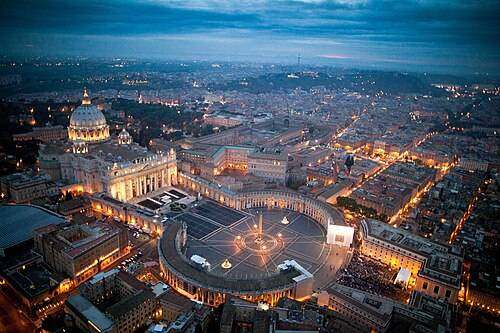
- St Peter's Square
Food and drink
Shares Roman cuisine
Culture and famous for
Michelangelo's Sistine ceiling; Raphael Rooms; Swiss Guard
Popular sports
None
Geography and climate
- Highest point
- Vatican Hill, 75 m
- Rivers, lakes and seas
- None
- Climate
- Mediterranean
- Coastline
- Landlocked
- Population density
- 1,818 people per km²
Wars and conflicts
- Papal States lost in 1870
Alliances and memberships
Political unions and regional organisations
Eurozone (uses the euro without being in the eurozone)
Vatican City in depth
Detailed facts from the CIA World Factbook (public domain, latest edition).
Overview
- History in brief
- Popes in their secular role ruled portions of the Italian peninsula for more than a thousand years until the mid-19th century, when the newly established Kingdom of Italy seized many of the Papal States. In 1870, the pope's holdings were further circumscribed when Rome itself was annexed. Disputes between Italy and a series of "prisoner" popes were resolved in 1929 by three Lateran Treaties, which established the independent state of Vatican City and granted Roman Catholicism special status in Italy. In 1984, a concordat between the Holy See and Italy modified some of the earlier treaty provisions, including the primacy of Roman Catholicism as the Italian state religion.Present concerns of the Holy See include religious freedom, threats against minority Christian communities in Africa and the Middle East, the plight of refugees and migrants, climate change and the environment, conflict and war, nuclear weapons, artificial intelligence, sexual misconduct by clergy, humanitarian issues, interreligious dialogue and reconciliation, and the application of church doctrine in an era of rapid change and globalization. About 1.3 billion people worldwide profess Catholicism, the world's largest Christian faith.
Geography
- Location
- Southern Europe, an enclave of Rome (Italy)
- Size compared
- about 0.7 times the size of the National Mall in Washington, D.C.
- Land borders
- Total: 3.4 kmBorder countries: Italy 3.4 km
- Coastline
- 0 km (landlocked)
- Climate
- temperate; mild, rainy winters (September to May) with hot, dry summers (May to September)
- Terrain
- urban; low hill
- Elevation
- Highest point: Vatican Gardens (Vatican Hill) 78 mLowest point: Saint Peter's Square 19 m
- Natural hazards
- occasional earthquakes
- Notes
- landlocked; an enclave in Rome, Italy; world's smallest state
- Environmental issues
- some air pollution from the surrounding city of Rome
People and society
- Population
- Total: 1,000 (2024)
- Nationality
- Noun: noneAdjective: none
- Ethnic groups
- Italian, Swiss, Argentinian, and other nationalities from around the world (2017)
- Languages
- Italian, Latin, French, various other languagesMajor-language sample(s): L'Almanacco dei fatti del mondo, l'indispensabile fonte per le informazioni di base. (Italian)The World Factbook, the indispensable source for basic information.
- Religions
- Roman Catholic
- Population growth
- 0% (2014 est.)
- Urbanization
- Urban population: 100% of total population (2023)Rate of urbanization: 0% annual rate of change (2020-25 est.)
- Largest cities
- 1,000 VATICAN CITY (capital) (2018)
Government
- Official names
- Conventional long form: The Holy See (Vatican City State)Conventional short form: Holy See (Vatican City)Local long form: La Santa Sede (Stato della Citta del Vaticano)Local short form: Santa Sede (Citta del Vaticano)Etymology: "holy" comes from the Greek word hera, meaning "sacred"; "see" comes from the Latin word sedes, meaning "seat," and refers to the episcopal chair; the name Vatican derives from the hill Mons Vaticanus on which the Vatican is located and which comes from the Latin vates (prophet), referring to the fortune tellers and soothsayers who frequented the area in Roman times
- Government type
- ecclesiastical elective monarchy; self-described as an "absolute monarchy"
- Capital
- Name: Vatican CityGeographic coordinates: 41 54 N, 12 27 ETime difference: UTC+1 (6 hours ahead of Washington, DC, during Standard Time)Daylight saving time: +1hr, begins last Sunday in March; ends last Sunday in OctoberEtymology: the name derives from the hill called Mons Vaticanus, on which the Vatican is located and which comes from the Latin vates (prophet), referring to the fortune tellers and soothsayers who frequented the area in Roman times
- Independence
- 11 February 1929
- Constitution
- History: previous 1929, 2000; latest issued by Pope FRANCIS 13 May 2023, effective 7 June 2023 (Fundamental Law of Vatican City State, the main governing document of the Vatican's civil entities); the Roman Curia is the administrative apparatus – the departments and ministries – used by the pontiff in governing the churchAmendment process: although the Fundamental Law of Vatican City State makes no mention of amendments, Article Four (drafting laws), states that this legislative responsibility resides with the Pontifical Commission for Vatican City State; draft legislation is submitted through the Secretariat of State and considered by the pope
- Legal system
- religious system based on canon (religious) law
- Voting age
- election of the pope is limited to cardinals under 80 years old
- Flag meaning
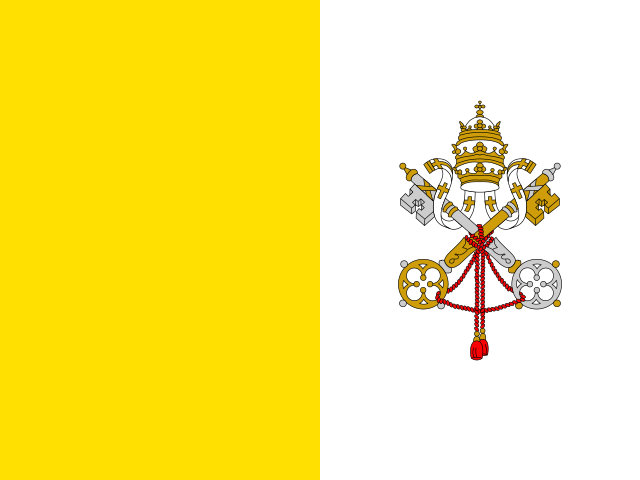
- Description: two vertical bands of yellow (left side) and white, with the arms of the Holy See centered in the white band; the arms show the crossed keys of Saint Peter under the three-tiered papal tiaraMeaning: yellow stands for the pope's spiritual power, and white for his worldly power
- National symbols
- crossed keys under a papal tiara
- National colours
- yellow, white
- National anthem
- Title: “Hymnus Pontificius" (Pontifical Anthem)Lyrics/music: Raffaello LAVAGNA/Charles-Francois GOUNODHistory: adopted 1949
- UNESCO World Heritage Sites
- Total World Heritage Sites: 2 (both cultural)Selected World Heritage Site locales: Historic Center of Rome, the Properties of the Holy See in that City Enjoying Extraterritorial Rights and San Paolo Fuori le Mura; Vatican City
Economy
- Overview
- limited, tourism-based economy; euro user with own minted coins; produces commemorative stamps, coins, and publications to support museums and religious needs; residents pay no direct taxes; “zero deficit” plan to address budget shortfall
- Industries
- printing; production of coins, medals, postage stamps; mosaics, staff uniforms; worldwide banking and financial activities
Energy, internet and transport
- Electricity access
- Electrification - total population: 100% (2021)
- Internet users
- Percent of population: 87% (2023 est.)
- TV and radio
- the Vatican Television Center (CTV) transmits live broadcasts of the Pope's weekly audiences, as well as his public celebrations; CTV also produces documentaries; Vatican Radio is the official broadcasting service via shortwave, AM, and FM frequencies, as well as satellite and web; Vatican News website partners with Vatican Radio and provides Catholic news from the Vatican (2021)
Military and space
- Armed forces
- the Pontifical Swiss Guard Corps (Corpo della Guardia Svizzera Pontificia) serves as the de facto military force of Vatican City; the Gendarmerie Corps of Vatican City (Corpo della Gendarmeriais) is a police force that helps augment the Pontifical Swiss Guard Corps during the Pope’s appearances, as well as providing general security, traffic direction, and investigative duties for the Vatican City State (2025)
- Military service
- Pontifical Swiss Guard Corps: 19-30 years of age for voluntary military service; no conscription; must be a single Roman Catholic male with Swiss citizenship who has completed basic training with the Swiss military and can obtain a certificate of good conduct; qualified candidates must apply to serve; the service contract is between 2 and 25 years (2025)
Neighbouring countries
- Phone code
- +3
- Internet domain
- .va