Italy
Italian Republic · Italia
Centre of the Roman Empire and later the Renaissance. Divided into city-states and kingdoms for centuries until unified in 1861. Mussolini's fascist regime allied with Hitler; it became a republic in 1946 and a founding EU member.
See Italy on the 3D globeTake a quiz
Population59 million
Area301,336 km²
CapitalRome
RegionSouthern Europe
Did you know?
- Has more UNESCO World Heritage Sites than any other country
- Contains two independent countries within it: Vatican City and San Marino
- Europe's only active mainland volcano, Vesuvius, is here
Key facts about Italy
- Government
- Parliamentary republic
- Religion
- Catholic ~80%
- Founded / independence
- 1861 unification; 1946 republic
- Rich in
- Fashion, cars, machinery, food and wine, tourism, art heritage
- Languages
- Italian
Italian, with strong regional languages: Neapolitan, Sicilian, Venetian, Lombard, Piedmontese, Sardinian, Friulian - Currency
- Euro (€)
- People are called
- Italian
- Main cities
- Rome, Milan, Naples, Turin, Palermo, Florence
Timeline of Italy
- 753 BCLegendary founding of Rome
- 79Vesuvius buries Pompeii
- 1400sRenaissance in Florence
- 1861Unification
- 1922Mussolini in power
- 1946Republic
- 1957Founds EEC
Places to see in Italy
- Colosseum
- Vatican Museums
- Venice canals
- Florence Duomo
- Leaning Tower of Pisa
- Pompeii
- Amalfi Coast
Food and drink
Pizza · pasta · risotto · gelato · espresso · tiramisu
Culture and famous for
Renaissance art (Leonardo, Michelangelo, Raphael); opera (Verdi, Puccini); fashion (Milan)
Popular sports
Football, cycling, Formula 1 (Ferrari)
Geography and climate
- Highest point
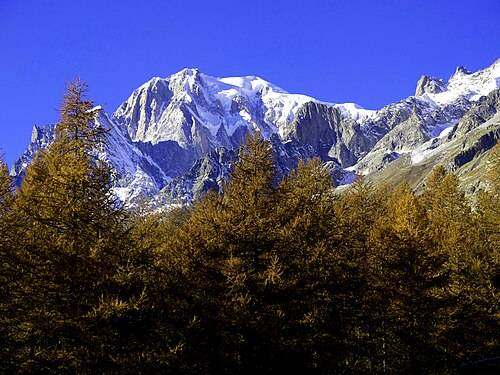
- Mont Blanc / Monte Bianco, 4,806 m
- Rivers, lakes and seas
- Po, Tiber, Arno; Lake Garda, Lake Como
- Climate
- Mediterranean; Alpine in the north
- Coastline
- Has a sea coast
- Population density
- 196 people per km²
Wars and conflicts
- Punic Wars
- Italian Wars
- Risorgimento
- WWI
- WWII
Empires and states that once stood here
Republic of Venice 697–1797Austria-Hungary 1867–1918
Alliances and memberships
Military and security
Political unions and regional organisations
European UnionEurozoneCouncil of EuropeG7
Economy and trade
Italy in depth
Detailed facts from the CIA World Factbook (public domain, latest edition).
Overview
- History in brief
- Italy became a nation-state in 1861 when the regional states of the peninsula, along with Sardinia and Sicily, were united under King Victor EMMANUEL II. An era of parliamentary government came to a close in the early 1920s when Benito MUSSOLINI established a Fascist dictatorship. His alliance with Nazi Germany led to Italy's defeat in World War II. A democratic republic replaced the monarchy in 1946, and economic revival followed. Italy is a charter member of NATO, as well as the European Economic Community (EEC) and its successors, the EC and the EU. It has been at the forefront of European economic and political unification, joining the Economic and Monetary Union in 1999. Persistent problems include sluggish economic growth, high youth and female unemployment, organized crime, corruption, and economic disparities between southern Italy and the more prosperous north.
Geography
- Location
- Southern Europe, a peninsula extending into the central Mediterranean Sea, northeast of Tunisia
- Size compared
- almost twice the size of Georgia; slightly larger than Arizona
- Land borders
- Total: 1,836.4 kmBorder countries: Austria 404 km; France 476 km; Holy See (Vatican City) 3.4 km; San Marino 37 km; Slovenia 218 km; Switzerland 698 km
- Coastline
- 7,600 km
- Climate
- predominantly Mediterranean; alpine in far north; hot, dry in south
- Terrain
- mostly rugged and mountainous; some plains, coastal lowlands
- Elevation
- Highest point: Mont Blanc (Monte Bianco) de Courmayeur (a secondary peak of Mont Blanc) 4,748 mLowest point: Mediterranean Sea 0 mMean elevation: 538 m
- Natural resources
- coal, antimony, mercury, zinc, potash, marble, barite, asbestos, pumice, fluorspar, feldspar, pyrite (sulfur), natural gas and crude oil reserves, fish, arable land
- Natural hazards
- regional risks include landslides, mudflows, avalanches, earthquakes, volcanic eruptions, flooding; land subsidence in VeniceVolcanism: significant volcanic activity; Etna (3,330 m) is Europe's most active volcano, and its flank eruptions pose a threat to nearby Sicilian villages; Etna, along with the famous Vesuvius, have both been deemed Decade Volcanoes by the International Association of Volcanology and Chemistry of the Earth's Interior, worthy of study due to their explosive history and close proximity to human populations; Stromboli, on its namesake island, has also been continuously active with moderate volcanic activity; other historically active volcanoes include Campi Flegrei, Ischia, Larderello, Pantelleria, Vulcano, and Vulsini
- Notes
- strategic location dominating central Mediterranean, as well as southern sea and air approaches to Western Europe
- Environmental issues
- air pollution from industrial emissions; water pollution from industrial and agricultural effluents, as well as acid rain; inadequate industrial waste treatment and disposal facilities
People and society
- Population
- Total: 60,924,851 (2025 est.)Male: 29,383,949Female: 31,540,902
- Nationality
- Noun: Italian(s)Adjective: Italian
- Ethnic groups
- Italian (includes small clusters of German-, French-, and Slovene-Italians in the north, Albanian-Italians, Croat-Italians, and Greek-Italians in the south)
- Languages
- Italian (official), German (parts of Trentino-Alto Adige region are predominantly German-speaking), French (small French-speaking minority in Valle d'Aosta region), Slovene (Slovene-speaking minority in the Trieste-Gorizia area), Croatian (in Molise)Major-language sample(s): L'Almanacco dei fatti del mondo, l'indispensabile fonte per le informazioni di base. (Italian)The World Factbook, the indispensable source for basic information.
- Religions
- Christian 80.8% (overwhelmingly Roman Catholic with very small groups of Jehovah's Witnesses and Protestants), Muslim 4.9%, unaffiliated 13.4%, other 0.9% (2020 est.)
- Median age
- Total: 48.8 years (2025 est.)Male: 47.4 yearsFemale: 49.4 years
- Population growth
- -0.05% (2025 est.)
- Life expectancy
- Total population: 83 years (2024 est.)Male: 80.7 yearsFemale: 85.5 years
- Children per woman
- 1.27 children born/woman (2025 est.)
- Urbanization
- Urban population: 72% of total population (2023)Rate of urbanization: 0.27% annual rate of change (2020-25 est.)
- Largest cities
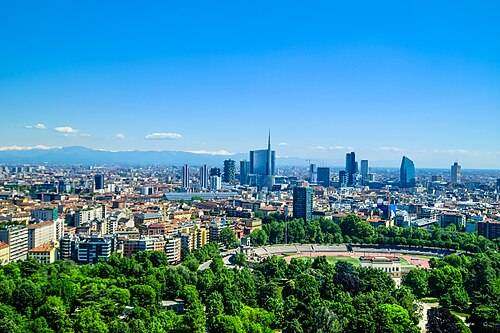
- 4.316 million ROME (capital), 3.155 million Milan, 2.179 million Naples, 1.802 million Turin, 913,000 Bergamo, 850,000 Palermo (2023)
- Literacy
- Total population: 99.3% (2019 est.)Male: 99.5% (2019 est.)Female: 99.2% (2019 est.)
- Years in school
- Total: 17 years (2023 est.)Male: 16 years (2023 est.)Female: 17 years (2023 est.)
Government
- Official names
- Conventional long form: Italian RepublicConventional short form: ItalyLocal long form: Repubblica ItalianaLocal short form: ItaliaFormer: Kingdom of ItalyEtymology: derivation is unclear; traditionally said to come from the Vitali, a tribe that settled in what is now Calabria, and whose name is believed to be linked to the Latin word vitulus, or "calf;" alternatively, the name may derive from a local ruler known to the Romans as Italus
- Government type
- parliamentary republic
- Capital
- Name: RomeGeographic coordinates: 41 54 N, 12 29 ETime difference: UTC+1 (6 hours ahead of Washington, DC, during Standard Time)Daylight saving time: +1hr, begins last Sunday in March; ends last Sunday in OctoberEtymology: by tradition, named after Romulus, one of the legendary founders of the city, but the name Romulus may instead derive from the city's name; the name Rome may come from an Etruscan name for the Tiber River, which was Roma or Ruma
- Regions
- 15 regions (regioni, singular - regione) and 5 autonomous regions (regioni autonome, singular - regione autonoma)Regions: Abruzzo, Basilicata, Calabria, Campania, Emilia-Romagna, Lazio (Latium), Liguria, Lombardia, Marche, Molise, Piemonte (Piedmont), Puglia (Apulia), Toscana (Tuscany), Umbria, VenetoAutonomous regions: Friuli Venezia Giulia, Sardegna (Sardinia), Sicilia (Sicily), Trentino-Alto Adige (Trentino-South Tyrol) or Trentino-Suedtirol (German), Valle d'Aosta (Aosta Valley) or Vallée d'Aoste (French)
- Independence
- 17 March 1861
- National holiday
- Republic Day, 2 June (1946)
- Constitution
- History: previous 1848 (originally for the Kingdom of Sardinia and adopted by the Kingdom of Italy in 1861); latest enacted 22 December 1947, adopted 27 December 1947, entered into force 1 January 1948Amendment process: proposed by both houses of Parliament; passage requires two successive debates and approval by absolute majority of each house on the second vote; a referendum is only required when requested by one fifth of the members of either house, by voter petition, or by 5 Regional Councils (elected legislative assemblies of the 15 first-level administrative regions and 5 autonomous regions of Italy); referendum not required if an amendment has been approved by a two-thirds majority in each house in the second vote
- Legal system
- civil law system; Constitutional Court reviews legislation under certain conditions
- Voting age
- 18 years of age; universal except in senatorial elections, where minimum age is 25
- Flag meaning
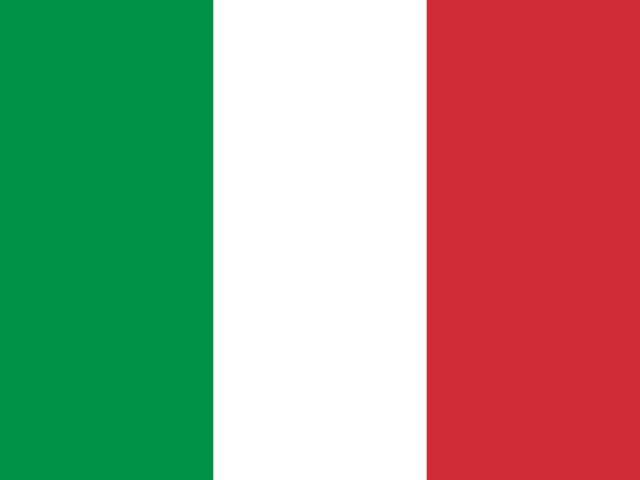
- Description: three equal vertical bands of green (left side), white, and redMeaning: colors are those of Milan (red and white) combined with the green uniform color of the Milanese civic guardHistory: design inspired by the French flag that Napoleon brought to Italy in 1797
- National symbols
- five-pointed white star (Stella d'Italia)
- National colours
- red, white, green
- National anthem
- Title: "Il Canto degli Italiani" (The Song of the Italians)Lyrics/music: Goffredo MAMELI/Michele NOVAROHistory: adopted 2005; the anthem, originally written in 1847, is also known as "L'Inno di Mameli" (Mameli's Hymn), and "Fratelli d'Italia" (Brothers of Italy)
- UNESCO World Heritage Sites
- Total World Heritage Sites: 61 (55 cultural, 6 natural)Selected World Heritage Site locales: Historic Center of Rome (c); Archaeological Areas of Pompeii, Herculaneum, and Torre Annunziata (c); Venice and its Lagoon (c); Historic Center of Florence (c); Piazza del Duomo, Pisa (c); Historic Centre of Naples (c); Portovenere, Cinque Terre, and the Islands (Palmaria, Tino and Tinetto)(c); Mount Etna (n); Cultural landscape of the Benedictine settlements in medieval Italy (c); Church and Dominican Convent of Santa Maria delle Grazie with “The Last Supper” by Leonardo da Vinci (c); City of Vicenza and the Palladian Villas of the Veneto (c); Crespi d'Adda (c); Early Christian Monuments of Ravenna (c); Historic Centre of the City of Pienza (c); Cathedral, Torre Civica and Piazza Grande, Modena (c); Costiera Amalfitana (c); Villa Romana del Casale (c); Archaeological Area and the Patriarchal Basilica of Aquileia (c); Cilento and Vallo di Diano National Park with the Archeological Sites of Paestum and Velia, and the Certosa di Padula (c); Historic Centre of Urbino (c); Villa Adriana (Tivoli) (c); Assisi, the Basilica of San Francesco and Other Franciscan Sites (c); City of Verona (c); Isole Eolie (Aeolian Islands) (n); Etruscan Necropolises of Cerveteri and Tarquinia (c); Val d'Orcia (c); Mantua and Sabbioneta (c); The Dolomites (n); Prehistoric Pile Dwellings around the Alps (c); Medici Villas and Gardens in Tuscany (c); Venetian Works of Defence between the 16th and 17th Centuries: Stato da Terra – Western Stato da Mar (c); Padua’s fourteenth-century fresco cycles (c); The Porticoes of Bologna (c); Evaporitic Karst and Caves of Northern Apennines (n); Via Appia: Regina Viarum (c); Funerary Tradition in the Prehistory of Sardinia – The domus de janas (c)
Economy
- Overview
- high-income, core EU economy; strong services, manufacturing, and tourism sectors; modest growth supported by net exports, low inflation, and public investments via EU funds; tight labor market with aging workforce and shortages in specialized skills; high public debt levels
- GDP (PPP)
- $3.133 trillion (2024 est.)
- GDP per person (PPP)
- $53,100 (2024 est.)
- GDP growth
- 0.7% (2024 est.)
- Inflation
- 1% (2024 est.)
- Unemployment
- 6.8% (2024 est.)
- Below poverty line
- 20.1% (2021 est.)
- Farm products
- milk, wheat, grapes, tomatoes, maize, olives, apples, oranges, sugar beets, rice (2023)
- Industries
- tourism, machinery, iron and steel, chemicals, food processing, textiles, motor vehicles, clothing, footwear, ceramics
- Exports
- $778.898 billion (2024 est.)
- Main exports
- packaged medicine, garments, cars, refined petroleum, vehicle parts/accessories (2023)
- Export partners
- Germany 11%, USA 11%, France 10%, Spain 5%, UK 5% (2023)
- Main imports
- natural gas, crude petroleum, cars, packaged medicine, garments (2023)
- Import partners
- Germany 15%, France 9%, China 8%, Netherlands 6%, Spain 5% (2023)
- Money sent home from abroad
- 0.5% of GDP (2024 est.)
Energy, internet and transport
- Electricity access
- Electrification - total population: 100% (2022 est.)
- Electricity sources
- Fossil fuels: 56% of total installed capacity (2023 est.)Solar: 12% of total installed capacity (2023 est.)Wind: 9.1% of total installed capacity (2023 est.)Hydroelectricity: 14.7% of total installed capacity (2023 est.)Geothermal: 2.1% of total installed capacity (2023 est.)Biomass and waste: 6.2% of total installed capacity (2023 est.)
- Internet users
- Percent of population: 87% (2023 est.)
- Mobile phones
- Total subscriptions: 78.7 million (2024 est.)Subscriptions per 100 inhabitants: 133 (2024 est.)
- TV and radio
- two Italian media giants dominate, with 3 national terrestrial stations; privately owned companies have 3 national terrestrial stations; a large number of private stations, a satellite TV network; 3 AM/FM nationwide radio stations; about 1,300 commercial radio stations
- Airports
- 655 (2025)
- Railways
- Total: 18,475 km (2020) 12,936 km electrified
- Merchant ships
- Total: 1,276 (2023)By type: bulk carrier 17, container ship 6, general cargo 109, oil tanker 95, other 1,049
Military and space
- Armed forces
- Italian Armed Forces (Forze Armate Italiane): Army (Esercito Italiano, EI), Navy (Marina Militare Italiana, MMI; includes aviation, marines), Italian Air Force (Aeronautica Militare Italiana, AMI); Carabinieri Corps (Arma dei Carabinieri, CC) (2025)
- Military spending
- 2% of GDP (2025 est.)
- Military service
- 17 or 18 years of age for voluntary military service for men and women ; voluntary service is a minimum of 12 months with the option to extend in the Armed Forces or compete for positions in other government security organizations; conscription abolished 2004 (2025)
- Space programme
- one of the top contributors to the ESA; designs, builds, launches, and operates communications, remote sensing (RS), and scientific satellites; designs and manufactures probes, rockets, and orbital satellite launch vehicles (SLVs); researches, develops, and builds a range of other space-related technologies and participates in a wide array of international programs; hosts the ESA Center for Earth Observation; has astronaut cadre in the ESA astronaut corps; has cooperated with a variety of foreign space agencies and industries, including those of Argentina, Brazil, Canada, China, Israel, Japan, Kenya, Mexico, Russia, South Korea, Thailand, the UAE, and the US; participates in international projects such as the International Space Station; has considerable commercial space industries encompassing a wide range of capabilities (2025)
- Space milestones
- 1964 - first domestically manufactured science satellite (San Marco-1) launched by the US1977 - first domestically built telecommunications/research satellite (Sirio) launched by the US1990s-2011 - participated in US Space Shuttle program, resulting in first Italian astronaut in space (1992)1998-present - participated in International Space Station, including the first European astronaut on the station (2001), first Italian to command it (2019-2020), and first woman to command the station (2022)2012 - first launch of Italian-designed VEGA 3-stage satellite launch vehicle (SLV) for ESA2020 - signed US-led Artemis Accords for space and lunar exploration2023 - first Italian all-electric satellite (MicroHETSat) built for the ESA and launched by the US; began developing a habitat for the US-led Artemis Lunar Gateway project2025 - passed a national space law to govern Italian space operations
Global issues
- Refugees and displaced people
- Refugees: 520,127 (2024 est.)Stateless persons: 3,000 (2024 est.)
Neighbouring countries
AustriaFranceSan MarinoSloveniaSwitzerlandVatican City
- Phone code
- +39
- Internet domain
- .it