Yemen
Republic of Yemen · اليمن
Ancient Sheba and the incense trade; Mocha gave coffee to the world. North and South united in 1990. Civil war since 2014 created one of the world's worst humanitarian crises.
See Yemen on the 3D globeTake a quiz
Ongoing: Yemen civil war
Population40 million
Area527,968 km²
CapitalSana'a
RegionWestern Asia
Did you know?
- Socotra's dragon's blood trees grow nowhere else
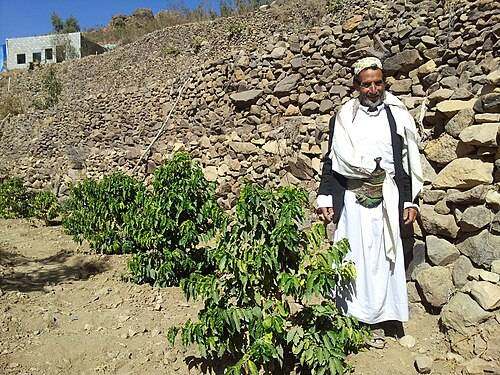
- The coffee trade began at its port of Mocha
- Shibam has 500-year-old mud skyscrapers
Key facts about Yemen
- Government
- Divided: internationally recognised government vs Houthi rebels in the north
- Religion
- Islam ~99% (Sunni ~65%, Zaydi Shia ~35%)
- Founded / independence
- 1990 (unification of North and South)
- Rich in
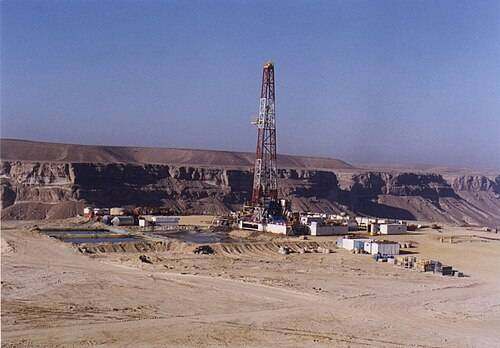
- Oil (small), coffee (Mocha), fishing; very poor
- Languages
- Arabic
Arabic (Yemeni dialects); Mehri, Soqotri - Currency
- Yemeni rial (﷼)
- People are called
- Yemeni
- Main cities
- Sanaa, Aden, Taiz, Hodeidah, Mukalla
Timeline of Yemen
- 1000 BCKingdom of Sheba
- 1839British take Aden
- 1918North independent
- 1967South independent
- 1990Unification
- 2014Civil war
Places to see in Yemen
- Old City of Sanaa
- Shibam "Manhattan of the desert"
- Socotra island
- Zabid
- Aden
Food and drink
Saltah (stew) · mandi · bint al-sahn (honey cake)
Culture and famous for
Coffee (Mocha port); jambiya daggers; mud-brick tower houses
Popular sports
Football
Geography and climate
- Highest point
- Jabal An-Nabi Shu'ayb, 3,666 m
- Rivers, lakes and seas
- No permanent rivers
- Climate
- Hot desert; cooler highlands
- Coastline
- Has a sea coast
- Population density
- 76 people per km²
Wars and conflicts
- North Yemen civil war
- 1994 war
- civil war 2014–present
- Red Sea attacks and US/Israeli strikes
Empires and states that once stood here
North Yemen and South Yemen 1918/1967–1990
Alliances and memberships
Political unions and regional organisations
Arab LeagueOrganisation of Islamic Cooperation
Yemen in depth
Detailed facts from the CIA World Factbook (public domain, latest edition).
Overview
- History in brief
- The Kingdom of Yemen (colloquially known as North Yemen) became independent from the Ottoman Empire in 1918 and in 1962 became the Yemen Arab Republic. The British, who had set up a protectorate area around the southern port of Aden in the 19th century, withdrew in 1967 from what became the People's Republic of Southern Yemen (colloquially known as South Yemen). Three years later, the southern government adopted a Marxist orientation and changed the country's name to the People's Democratic Republic of Yemen. The exodus of hundreds of thousands of Yemenis from the south to the north contributed to two decades of hostility between the states, which were formally unified as the Republic of Yemen in 1990. A southern secessionist movement and brief civil war in 1994 was quickly subdued. In 2000, Saudi Arabia and Yemen agreed to delineate their border. Fighting in the northwest between the government and the Houthis, a Zaydi Shia Muslim minority, continued intermittently from 2004 to 2010, and then again from 2014 to the present. The southern secessionist movement was revitalized in 2007. Public rallies in Sana'a against then President Ali Abdallah SALIH -- inspired by similar Arab Spring demonstrations in Tunisia and Egypt -- slowly gained momentum in 2011, fueled by complaints over high unemployment, poor economic conditions, and corruption. Some protests resulted in violence, and the demonstrations spread to other major cities. The Gulf Cooperation Council (GCC) mediated the crisis with the GCC Initiative, an agreement in which the president would step down in exchange for immunity from prosecution. SALIH eventually agreed to step down and transfer some powers to Vice President Abd Rabuh Mansur HADI. After HADI's uncontested election victory in 2012, SALIH formally transferred all presidential powers. In accordance with the GCC Initiative, Yemen launched a National Dialogue Conference (NDC) in 2013 to discuss key constitutional, political, and social issues. HADI concluded the NDC in 2014 and planned to proceed with constitutional drafting, a constitutional referendum, and national elections. The Houthis, perceiving their grievances were not addressed in the NDC, joined forces with SALIH and expanded their influence in northwestern Yemen, which culminated in a major offensive against military units and rival tribes and enabled their forces to overrun the capital, Sana'a, in 2014. In 2015, the Houthis surrounded key government facilities, prompting HADI and t
Geography
- Location
- Middle East, bordering the Arabian Sea, Gulf of Aden, and Red Sea, between Oman and Saudi Arabia
- Size compared
- almost four times the size of Alabama; slightly larger than twice the size of Wyoming
- Land borders
- Total: 1,601 kmBorder countries: Oman 294 km; Saudi Arabia 1,307 km
- Coastline
- 1,906 km
- Climate
- mostly desert; hot and humid along west coast; temperate in western mountains affected by seasonal monsoon; extraordinarily hot, dry, harsh desert in east
- Terrain
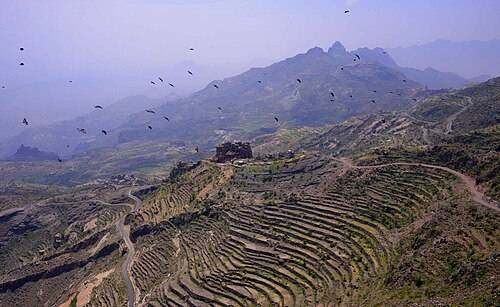
- narrow coastal plain backed by flat-topped hills and rugged mountains; dissected upland desert plains in center slope into the desert interior of the Arabian Peninsula
- Elevation
- Highest point: Jabal an Nabi Shu'ayb 3,666 mLowest point: Arabian Sea 0 mMean elevation: 999 m
- Natural resources
- petroleum, fish, rock salt, marble; small deposits of coal, gold, lead, nickel, and copper; fertile soil in west
- Natural hazards
- sandstorms and dust storms in summerVolcanism: limited volcanic activity; Jebel at Tair (Jabal al-Tair, Jebel Teir, Jabal al-Tayr, Jazirat at-Tair) (244 m), which forms an island in the Red Sea, became active in 2007; other historically active volcanoes include Harra of Arhab, Harras of Dhamar, Harra es-Sawad, and Jebel Zubair, although many of these have not erupted in over a century
- Notes
- strategic location on Bab el Mandeb, the strait linking the Red Sea and the Gulf of Aden and one of world's most active shipping lanes
- Environmental issues
- limited natural freshwater resources; inadequate supplies of potable water; overgrazing; soil erosion; desertification
People and society
- Population
- Total: 34,505,496 (2025 est.)Male: 17,275,539Female: 17,229,957
- Nationality
- Noun: Yemeni(s)Adjective: Yemeni
- Ethnic groups
- predominantly Arab; but also Afro-Arab, South Asian, European
- Languages
- Arabic (official)Major-language sample(s): كتاب حقائق العالم، المصدر الذي لا يمكن الاستغناء عنه للمعلومات الأساسية (Arabic)The World Factbook, the indispensable source for basic information.
- Religions
- Muslim 99.1% (official; virtually all are citizens, an estimated 65% are Sunni and 35% are Shia), other 0.9% (includes Jewish, Baha'i, Hindu, and Christian; many are refugees or temporary foreign residents) (2020 est.)
- Median age
- Total: 20.5 years (2025 est.)Male: 21.9 yearsFemale: 22.2 years
- Population growth
- 2.22% (2025 est.)
- Life expectancy
- Total population: 68.2 years (2024 est.)Male: 65.8 yearsFemale: 70.6 years
- Children per woman
- 3.65 children born/woman (2025 est.)
- Urbanization
- Urban population: 39.8% of total population (2023)Rate of urbanization: 3.71% annual rate of change (2015-20 est.)
- Largest cities
- 3.292 million SANAA (capital), 1.080 million Aden, 941,000 Taiz, 772,000 Ibb (2023)
- Literacy
- Female: 54.1% (2023 est.)
Government
- Official names
- Conventional long form: Republic of YemenConventional short form: YemenLocal long form: Al Jumhuriyah al YamaniyahLocal short form: Al YamanFormer: Yemen Arab Republic [Yemen (Sanaa) or North Yemen] and People's Democratic Republic of Yemen [Yemen (Aden) or South Yemen]Etymology: the name origin is unclear but may come from the Arabic word al-yamin, meaning "the right," as a reference to its geographic position in relation to Mecca
- Government type
- in transition
- Capital
- Name: SanaaGeographic coordinates: 15 21 N, 44 12 ETime difference: UTC+3 (8 hours ahead of Washington, DC, during Standard Time)Etymology: the name is reputed to mean "fortified place" in an ancient language
- Regions
- 22 governorates (muhafazat, singular - muhafazah); Abyan, 'Adan (Aden), Ad Dali', Al Bayda', Al Hudaydah, Al Jawf, Al Mahrah, Al Mahwit, Amanat al 'Asimah (Sanaa City), 'Amran, Arkhabil Suqutra (Socotra Archipelago), Dhamar, Hadramawt, Hajjah, Ibb, Lahij, Ma'rib, Raymah, Sa'dah, San'a' (Sanaa), Shabwah, Ta'izz
- Independence
- 22 May 1990 (Republic of Yemen established with the merger of the Yemen Arab Republic [Yemen (Sanaa) or North Yemen] and the People's Democratic Republic of Yemen [Yemen (Aden) or South Yemen]); notable earlier dates: 1 November 1918 (North Yemen independent from the Ottoman Empire), 27 September 1962 (North Yemen becomes republic), 30 November 1967 (South Yemen independent from the UK)
- National holiday
- Unification Day, 22 May (1990)
- Constitution
- History: adopted by referendum 16 May 1991 (following unification)
- Legal system
- mixed system of Islamic (sharia) law, Napoleonic law, English common law, and customary law
- Voting age
- 18 years of age; universal
- Flag meaning
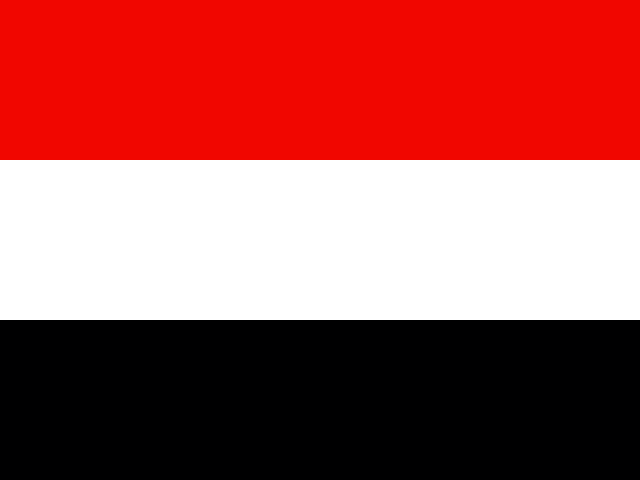
- Description: three equal horizontal bands of red (top), white, and blackMeaning: the band colors come from the Arab Liberation flag and represent oppression (black) overcome through bloody struggle (red), to be replaced by a bright future (white)
- National symbols
- golden eagle
- National colours
- red, white, black
- National anthem
- Title: "Al-qumhuriyatu l-muttahida" (United Republic)Lyrics/music: Abdullah Abdulwahab NOA'MAN/Ayyoab Tarish ABSIHistory: adopted 1990; the music first served as the anthem for South Yemen before unification with North Yemen in 1990
- UNESCO World Heritage Sites
- Total World Heritage Sites: 5 (4 cultural, 1 natural)Selected World Heritage Site locales: Old Walled City of Shibam (c); Old City of Sana'a (c); Historic Town of Zabid (c); Socotra Archipelago (n); Landmarks of the Ancient Kingdom of Saba, Marib (c)
Economy
- Overview
- low-income Middle Eastern economy; infrastructure, trade, and economic institutions devastated by civil war; oil/gas-dependent but decreasing reserves; massive poverty, food insecurity, and unemployment; high inflation
- GDP (PPP)
- $18.719 billion (2024 est.)
- GDP per person (PPP)
- $200 (2024 est.)
- GDP growth
- 0.8% (2018 est.)
- Inflation
- 29.1% (2022 est.)
- Unemployment
- 17.1% (2024 est.)
- Farm products
- mangoes/guavas, potatoes, milk, onions, spices, chicken, sorghum, watermelons, tomatoes, grapes (2023)
- Industries
- crude oil production and petroleum refining; small-scale production of cotton textiles, leather goods; food processing; handicrafts; aluminum products; cement; commercial ship repair; natural gas production
- Exports
- $384.5 million (2017 est.)
- Main exports
- gold, fish, scrap iron, shellfish, industrial acids/oils/alcohols (2023)
- Export partners
- UAE 28%, India 21%, Saudi Arabia 17%, Oman 7%, Malaysia 5% (2023)
- Main imports
- wheat, raw sugar, rice, iron bars, plastic products (2023)
- Import partners
- China 23%, UAE 15%, Saudi Arabia 11%, Turkey 8%, India 7% (2023)
- Money sent home from abroad
- 20.05% of GDP (2023 est.)
Energy, internet and transport
- Electricity access
- Electrification - total population: 76% (2022 est.)Electrification - urban areas: 96.1%Electrification - rural areas: 65%
- Electricity sources
- Fossil fuels: 83% of total installed capacity (2023 est.)Solar: 17% of total installed capacity (2023 est.)
- Internet users
- Percent of population: 14% (2020 est.)
- Mobile phones
- Total subscriptions: 20 million (2023 est.)Subscriptions per 100 inhabitants: 51 (2023 est.)
- TV and radio
- state-run TV with 2 stations; state-run radio with 2 national radio stations and 5 local stations; stations from Oman and Saudi Arabia can be accessed
- Airports
- 37 (2025)
- Merchant ships
- Total: 30 (2023)By type: general cargo 2, oil tanker 1, other 27
Military and space
- Armed forces
- Yemeni Armed Forces: Yemeni National Army, Air Force and Air Defense, Navy and Coastal Defense Forces, Border Guard, Strategic Reserve Forces (includes Special Forces and Presidential Protection Brigades, which are under the Ministry of Defense but responsible to the president), Popular Committee Forces (aka Popular Resistance Forces; government-backed tribal militia)Ministry of Interior: Security Forces, Emergency Forces, Counterterrorism Units (2025)
- Military service
- limited available information; 18 is the legal minimum age for military service under the Yemeni Government (2025)
Global issues
- Refugees and displaced people
- Refugees: 60,921 (2024 est.)IDPs: 4,795,983 (2024 est.)
Neighbouring countries
- Phone code
- +967
- Internet domain
- .ye