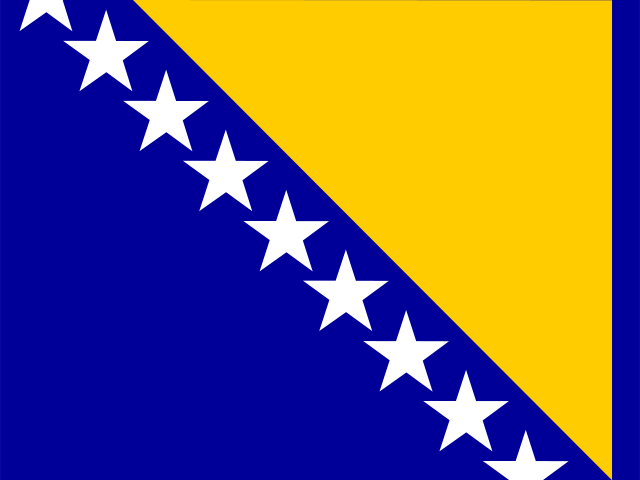
Bosnia and Herzegovina
Bosnia and Herzegovina · Bosna i Hercegovina · Боснa и Херцеговина
Medieval Bosnian kingdom, then Ottoman 1463–1878 and Austro-Hungarian until 1918. Part of Yugoslavia until 1992, when independence triggered a devastating war. The 1995 Dayton Agreement split it into two entities.
See Bosnia and Herzegovina on the 3D globeTake a quiz
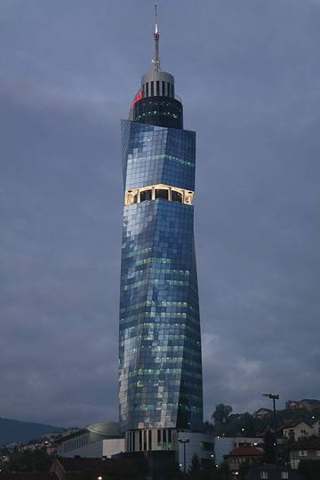
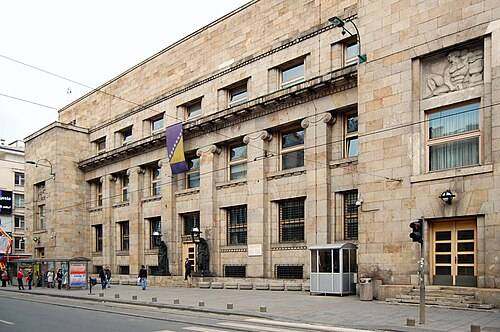
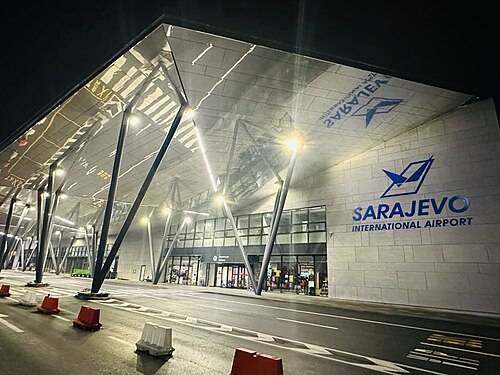
Population3.2 million
Area51,209 km²
CapitalSarajevo
RegionSoutheast Europe
Did you know?
- The 1914 assassination of Franz Ferdinand in Sarajevo triggered WWI
- Sarajevo hosted the 1984 Winter Olympics
- Has a tiny 20 km coastline at Neum
Key facts about Bosnia and Herzegovina
- Government
- Federal parliamentary republic with three-member presidency
- Religion
- Islam ~51%, Serbian Orthodox ~31%, Catholic ~15%
- Founded / independence
- 1992 (from Yugoslavia)
- Rich in
- Hydropower, timber, coal, metals
- Languages
- Bosnian, Croatian, Serbian
Bosnian, Serbian, Croatian — mutually intelligible standards of Shtokavian - Currency
- Bosnia and Herzegovina convertible mark (KM)
- People are called
- Bosnian, Herzegovinian
- Main cities
- Sarajevo, Banja Luka, Tuzla, Zenica, Mostar
Timeline of Bosnia and Herzegovina
- 1463Ottoman conquest
- 1878Austro-Hungarian rule
- 1914Sarajevo assassination
- 1945Republic within Yugoslavia
- 1992Independence and war
- 1995Dayton Agreement
- 2022EU candidate
Places to see in Bosnia and Herzegovina
- Stari Most bridge, Mostar
- Baščaršija bazaar, Sarajevo
- Kravica waterfalls
- Počitelj
- Višegrad bridge
Food and drink
Ćevapi · burek · Bosnian coffee · begova čorba
Culture and famous for
Sevdalinka love songs; mixed Ottoman and Austro-Hungarian architecture
Popular sports
Football, basketball, sitting volleyball
Geography and climate
- Highest point
- Maglić, 2,386 m
- Rivers, lakes and seas
- Neretva, Drina, Bosna, Una
- Climate
- Continental inland, Mediterranean in the south
- Coastline
- Has a sea coast
- Population density
- 62 people per km²
Wars and conflicts
- Bosnian War 1992–95 (about 100,000 killed
- Srebrenica genocide)
Alliances and memberships
Political unions and regional organisations
EU candidate countriesCouncil of Europe
Bosnia and Herzegovina in depth
Detailed facts from the CIA World Factbook (public domain, latest edition).
Overview
- History in brief
- After four centuries of Ottoman rule over Bosnia and Herzegovina, Austria-Hungary took control in 1878 and held the region until 1918, when it was incorporated into the newly created Kingdom of Serbs, Croats, and Slovenes. After World War II, Bosnia and Herzegovina joined the Socialist Federal Republic of Yugoslavia (SFRY).Bosnia and Herzegovina declared sovereignty in October 1991 and independence from the SFRY on 3 March 1992 after a referendum boycotted by ethnic Serbs. Bosnian Serb militias, with the support of Serbia and Croatia, then tried to take control of territories they claimed as their own. From 1992 to 1995, ethnic cleansing campaigns killed thousands and displaced more than two million people. On 21 November 1995, in Dayton, Ohio, the warring parties initialed a peace agreement, and the final agreement was signed in Paris on 14 December 1995.The Dayton Accords retained Bosnia and Herzegovina's international boundaries and created a multiethnic and democratic government composed of two entities roughly equal in size: the predominantly Bosniak-Bosnian Croat Federation of Bosnia and Herzegovina and the predominantly Bosnian Serb-led Republika Srpska (RS). The Dayton Accords also established the Office of the High Representative to oversee the agreement's implementation. In 1996, the NATO-led Stabilization Force (SFOR) took over responsibility for enforcing the peace. In 2004, European Union peacekeeping troops (EUFOR) replaced SFOR. As of 2022, EUFOR deploys around 1,600 troops in Bosnia in a peacekeeping capacity. Bosnia and Herzegovina became an official candidate for EU membership in 2022.
Geography
- Location
- Southeastern Europe, bordering the Adriatic Sea and Croatia
- Size compared
- slightly smaller than West Virginia
- Land borders
- Total: 1,543 kmBorder countries: Croatia 956 km; Montenegro 242 km; Serbia 345 km
- Coastline
- 20 km
- Climate
- hot summers and cold winters; areas of high elevation have short, cool summers and long, severe winters; mild, rainy winters along coast
- Terrain
- mountains and valleys
- Elevation
- Highest point: Maglic 2,386 mLowest point: Adriatic Sea 0 mMean elevation: 500 m
- Natural resources
- coal, iron ore, antimony, bauxite, copper, lead, zinc, chromite, cobalt, manganese, nickel, clay, gypsum, salt, sand, timber, hydropower
- Natural hazards
- destructive earthquakes
- Notes
- within Bosnia and Herzegovina's recognized borders, the country is divided into a joint Bosniak/Croat Federation (about 51% of the territory) and the Bosnian Serb-led Republika Srpska or RS (about 49% of the territory); the region called Herzegovina is contiguous to Croatia and Montenegro
- Environmental issues
- air pollution; deforestation and illegal logging; inadequate wastewater treatment and flood management facilities; urban waste disposal; uncleared land mines from the 1990s
People and society
- Population
- Total: 3,653,499 (2025 est.)Male: 1,778,548Female: 1,874,951
- Nationality
- Noun: Bosnian(s), Herzegovinian(s)Adjective: Bosnian, Herzegovinian
- Ethnic groups
- Bosniak 50.1%, Serb 30.8%, Croat 15.4%, other 2.7%, not declared/no answer 1% (2013 est.)
- Languages
- Bosnian (official) 52.9%, Serbian (official) 30.8%, Croatian (official) 14.6%, other 1.6%, no answer 0.2% (2013 est.)Major-language sample(s): Knjiga svjetskih činjenica, neophodan izvor osnovnih informacija. (Bosnian)Knjiga svetskih činjenica, neophodan izvor osnovnih informacija. (Serbian)Knjiga svjetskih činjenica, nužan izvor osnovnih informacija. (Croatian)The World Factbook, the indispensable source for basic information.
- Religions
- Muslim 50.7%, Orthodox 30.7%, Roman Catholic 15.2%, atheist 0.8%, agnostic 0.3%, other 1.2%, undeclared/no answer 1.1% (2013 est.)
- Median age
- Total: 45.7 years (2025 est.)Male: 43.1 yearsFemale: 46.5 years
- Population growth
- -0.67% (2025 est.)
- Life expectancy
- Total population: 78.5 years (2024 est.)Male: 75.5 yearsFemale: 81.6 years
- Children per woman
- 1.15 children born/woman (2025 est.)
- Urbanization
- Urban population: 50.3% of total population (2023)Rate of urbanization: 0.61% annual rate of change (2020-25 est.)
- Largest cities
- 346,000 SARAJEVO (capital) (2023)
- Years in school
- Total: 14 years (2023 est.)Male: 14 years (2023 est.)Female: 15 years (2023 est.)
Government
- Official names
- Conventional long form: noneConventional short form: Bosnia and HerzegovinaLocal long form: noneLocal short form: Bosna i HercegovinaFormer: People's Republic of Bosnia and Herzegovina, Socialist Republic of Bosnia and HerzegovinaAbbreviation: BiHEtymology: the larger northern territory is named for the Bosna River; the smaller southern section takes its name from the Old Serbian word herceg, meaning "duke," combined with the possessive -ov and the suffix -ina, meaning "country," to denote "dukedom"
- Government type
- parliamentary republic
- Capital
- Name: SarajevoGeographic coordinates: 43 52 N, 18 25 ETime difference: UTC+1 (6 hours ahead of Washington, DC, during Standard Time)Daylight saving time: +1hr, begins last Sunday in March; ends last Sunday in OctoberEtymology: the name derives from the Turkish word saray, meaning "palace" or "mansion"
- Regions
- 3 first-order administrative divisions - Brcko District (Brcko Distrikt) (ethnically mixed), Federation of Bosnia and Herzegovina (Federacija Bosne i Hercegovine) (predominantly Bosniak-Croat), Republika Srpska (predominantly Serb)
- Independence
- 1 March 1992 (from Yugoslavia)
- National holiday
- Independence Day, 1 March (1992) and Statehood Day, 25 November (1943) - both observed in the Federation of Bosnia and Herzegovina entity; Victory Day, 9 May (1945) and Dayton Agreement Day, 21 November (1995) - both observed in the Republika Srpska entity
- Constitution
- History: 14 December 1995 (constitution included as part of the Dayton Peace Accords)Amendment process: decided by the Parliamentary Assembly, including a two-thirds majority vote of members present in the House of Representatives; the constitutional article on human rights and fundamental freedoms cannot be amended
- Legal system
- civil law system; Constitutional Court review of legislative acts
- Voting age
- 18 years of age, 16 if employed; universal
- Flag meaning
- Description: a wide blue vertical band on the right side, with a large yellow isosceles triangle in the middle of the flag, based at the top; the rest of the flag is blue, with seven five-pointed white stars and two half-stars along the triangle's hypotenuseMeaning: the triangle approximates the country's shape, and its three points stand for the Bosniaks, Croats, and Serbs; the stars represent Europe; the colors (white, blue, and yellow) are traditional and are also associated with neutrality and peace
- National symbols
- golden lily
- National colours
- blue, yellow, white
- National anthem
- Title: "Drzavna himna Bosne i Hercegovine" (The National Anthem of Bosnia and Herzegovina)Lyrics/music: none officially/Dusan SESTICHistory: music adopted 1999; lyrics proposed in 2009 were accepted by a parliamentary commission but are still awaiting adoption, so the anthem remains officially wordless
- UNESCO World Heritage Sites
- Total World Heritage Sites: 5 (3 cultural, 2 natural)Selected World Heritage Site locales: Old Bridge Area of Mostar (c); Mehmed Paša Sokolović Bridge in Višegrad (c); Stećci Medieval Tombstones Graveyards (c); Ancient and Primeval Beech Forests of the Carpathians and Other Regions of Europe - Janj Forest (n); Vjetrenica Cave, Ravno (n)
Economy
- Overview
- import-dominated economy; remains consumption-heavy; lack of private sector investments and diversification; jointly addressing structural economic challenges; Chinese energy infrastructure investments; high unemployment; tourism industry impacted by COVID-19
- GDP (PPP)
- $64.641 billion (2024 est.)
- GDP per person (PPP)
- $20,400 (2024 est.)
- GDP growth
- 2.5% (2024 est.)
- Inflation
- 1.7% (2024 est.)
- Unemployment
- 10.8% (2024 est.)
- Below poverty line
- 16.9% (2015 est.)
- Farm products
- maize, milk, vegetables, potatoes, plums, wheat, apples, barley, chicken, tomatoes (2023)
- Industries
- steel, coal, iron ore, lead, zinc, manganese, bauxite, aluminum, motor vehicle assembly, textiles, tobacco products, wooden furniture, ammunition, domestic appliances, oil refining
- Exports
- $12.141 billion (2024 est.)
- Main exports
- footwear, electricity, garments, plastic products, insulated wire (2023)
- Export partners
- Germany 15%, Croatia 14%, Serbia 12%, Austria 10%, Slovenia 9% (2023)
- Main imports
- refined petroleum, cars, garments, plastic products, packaged medicine (2023)
- Import partners
- Italy 13%, Germany 11%, Serbia 11%, China 9%, Croatia 8% (2023)
- Money sent home from abroad
- 11% of GDP (2024 est.)
Energy, internet and transport
- Electricity access
- Electrification - total population: 100% (2022 est.)
- Electricity sources
- Fossil fuels: 64% of total installed capacity (2023 est.)Solar: 0.9% of total installed capacity (2023 est.)Wind: 2.2% of total installed capacity (2023 est.)Hydroelectricity: 31.1% of total installed capacity (2023 est.)Biomass and waste: 1.8% of total installed capacity (2023 est.)
- Internet users
- Percent of population: 83% (2023 est.)
- Mobile phones
- Total subscriptions: 3.84 million (2024 est.)Subscriptions per 100 inhabitants: 121 (2024 est.)
- TV and radio
- 3 public TV broadcasters: Radio and TV of Bosnia and Herzegovina, Federation TV (operating 2 networks), and Republika Srpska Radio-TV; a local commercial network of 5 TV stations; 3 private, near-national TV stations and dozens of small independent TV stations; 3 large public radio broadcasters and many private radio stations (2019)
- Airports
- 20 (2025)
- Railways
- Total: 965 km (2014)Standard gauge: 965 km (2014) 1.435-m gauge (565 km electrified)
Military and space
- Armed forces
- Armed Forces of Bosnia and Herzegovina (AFBiH or Oruzanih Snaga Bosne i Hercegovine, OSBiH): Army, Air, Air Defense forces organized into an Operations Command and a Support CommandMinistry of Security: Border Police (2025)
- Military spending
- 0.8% of GDP (2024 est.)
- Military service
- 18 -27 years of age for voluntary military service; conscription ended in January 2006 (2025)
Global issues
- Refugees and displaced people
- Refugees: 685 (2024 est.)IDPs: 94,796 (2024 est.)Stateless persons: 23 (2024 est.)
Neighbouring countries
- Phone code
- +387
- Internet domain
- .ba