Ecuador
Republic of Ecuador
Part of the Inca Empire. Uses the US dollar. Gang violence surged in the 2020s.
See Ecuador on the 3D globeTake a quiz
Population18 million
Area276,841 km²
CapitalQuito
RegionSouth America
Did you know?
- Chimborazo's summit is the farthest point from Earth's centre
- Panama hats are made here
- First country to give nature legal rights (2008)
Key facts about Ecuador
- Government
- Presidential republic
- Religion
- Catholic ~75%
- Founded / independence
- 1822/1830 (from Spain)
- Rich in
- Oil, bananas (largest exporter), shrimp, Galápagos tourism
- Languages
- Spanish
Spanish; Kichwa, Shuar - Currency
- United States dollar ($)
- People are called
- Ecuadorean
- Main cities
- Guayaquil, Quito, Cuenca, Santo Domingo
Timeline of Ecuador
- 1534Spanish conquest
- 1830Independence
- 1835Darwin visits Galápagos
- 2000Adopts US dollar
- 2008New constitution
Places to see in Ecuador
- Galápagos Islands
- Quito old town
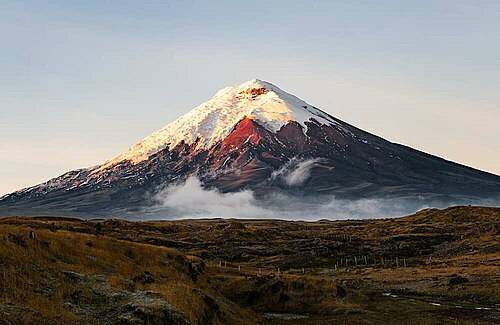
- Cotopaxi
- Baños
- Cuenca
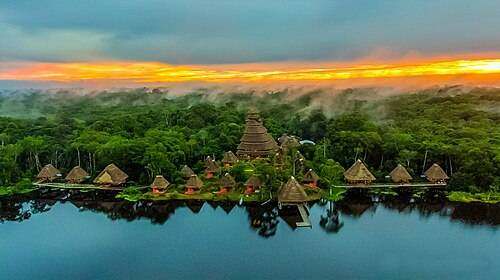
- Amazon lodges
Food and drink
Ceviche · locro de papa · encebollado
Culture and famous for
Panama hats (actually from Ecuador); Indigenous Otavalo market
Popular sports
Football
Geography and climate
- Highest point
- Chimborazo, 6,263 m
- Rivers, lakes and seas
- Guayas, Napo
- Climate
- Tropical; cool highlands
- Coastline
- Has a sea coast
- Population density
- 65 people per km²
Wars and conflicts
- Peru wars 1941, 1995
- internal armed conflict with gangs since 2024
Empires and states that once stood here
Alliances and memberships
Political unions and regional organisations
CELACOrganization of American States
Economy and trade
Ecuador in depth
Detailed facts from the CIA World Factbook (public domain, latest edition).
Overview
- History in brief
- What is now Ecuador formed part of the northern Inca Empire until the Spanish conquest in 1533. Quito -- the traditional name for the area -- became a seat of Spanish colonial government in 1563 and part of the Viceroyalty of New Granada in 1717. The territories of the Viceroyalty -- New Granada (Colombia), Venezuela, and Quito -- gained their independence between 1819 and 1822 and formed a federation known as Gran Colombia. When Quito withdrew to become an independent republic in 1830, the traditional name was changed to the "Republic of the Equator." Between 1904 and 1942, Ecuador lost territories in a series of conflicts with its neighbors. A border war with Peru that flared in 1995 was resolved in 1999. Although Ecuador has had nearly 50 years of civilian governance, the period has been marked by political instability.
Geography
- Location
- Western South America, bordering the Pacific Ocean at the Equator, between Colombia and Peru
- Size compared
- slightly smaller than Nevada
- Land borders
- Total: 2,237 kmBorder countries: Colombia 708 km; Peru 1529 km
- Coastline
- 2,237 km
- Climate
- tropical along coast, becoming cooler inland at higher elevations; tropical in Amazonian jungle lowlands
- Terrain
- coastal plain (costa), inter-Andean central highlands (sierra), and flat to rolling eastern jungle (oriente)
- Elevation
- Highest point: Chimborazo 6,267Lowest point: Pacific Ocean 0 mMean elevation: 1,117 m
- Natural resources
- petroleum, fish, timber, hydropower
- Natural hazards
- frequent earthquakes; landslides; volcanic activity; floods; periodic droughtsVolcanism: volcanic activity concentrated along the Andes Mountains; Sangay (5,230 m) is mainland Ecuador's most active volcano; other historically active volcanoes in the Andes include Antisana, Cayambe, Chacana, Cotopaxi, Guagua Pichincha, Reventador, Sumaco, and Tungurahua; Fernandina (1,476 m), a shield volcano, is the most active of the many Galapagos volcanoes; other historically active Galapagos volcanoes include Wolf, Sierra Negra, Cerro Azul, Pinta, Marchena, and Santiago
- Notes
- Cotopaxi in the Andes is highest active volcano in world
- Environmental issues
- deforestation; soil erosion; desertification; water pollution; pollution from oil production wastes in areas of the Amazon Basin and Galapagos Islands
People and society
- Population
- Total: 18,479,841 (2025 est.)Male: 9,097,614Female: 9,382,227
- Nationality
- Noun: Ecuadorian(s)Adjective: Ecuadorian
- Ethnic groups
- Mestizo (mixed Indigenous and White) 77.5%, Montubio 7.7%, Indigenous 7.7%, White 2.2%, Afroecuadorian 2%, Mulatto 1.4%, Black 1.3%, other 0.1% (2022 est.)
- Languages
- Spanish (Castilian; official) 98.6%, indigenous 3.9% (Quechua 3.2%, other indigenous 0.7%), foreign 2.8%, other 0.6% (includes Ecuadorian sign language) (2022 est.)Major-language sample(s): La Libreta Informativa del Mundo, la fuente indispensable de información básica. (Spanish)The World Factbook, the indispensable source for basic information.
- Religions
- Roman Catholic 68.2%, Protestant 19% (Evangelical 18.3%, Adventist 0.6%, other Protestant 0.2%), Jehovah's Witness 1.4%, other 2.3%, none 8.2% don't know/no response 1% (2023 est.)
- Median age
- Total: 28.2 years (2025 est.)Male: 27 yearsFemale: 28.9 years
- Population growth
- 0.91% (2025 est.)
- Life expectancy
- Total population: 74.9 years (2024 est.)Male: 69.7 yearsFemale: 80.4 years
- Children per woman
- 2.17 children born/woman (2025 est.)
- Urbanization
- Urban population: 64.8% of total population (2023)Rate of urbanization: 1.62% annual rate of change (2020-25 est.)
- Largest cities
- 3.142 million Guayaquil, 1.957 million QUITO (capital) (2023)
- Literacy
- Total population: 96.3% (2022 est.)Male: 96.8% (2022 est.)Female: 95.7% (2022 est.)
- Years in school
- Total: 15 years (2022 est.)Male: 14 years (2022 est.)Female: 15 years (2022 est.)
Government
- Official names
- Conventional long form: Republic of EcuadorConventional short form: EcuadorLocal long form: República del EcuadorLocal short form: EcuadorFormer: QuitoEtymology: the name is the Spanish word for "equator," referring to its geographic position
- Government type
- presidential republic
- Capital
- Name: QuitoGeographic coordinates: 0 13 S, 78 30 WTime difference: UTC-5 (same time as Washington, DC, during Standard Time)Time zone note: Ecuador has two time zones, including the Galapagos Islands (UTC-6)Etymology: named after the Quitu, a Pre-Columbian people who lived in the area; the meaning of their name is unknown
- Regions
- 24 provinces (provincias, singular - provincia); Azuay, Bolivar, Cañar, Carchi, Chimborazo, Cotopaxi, El Oro, Esmeraldas, Galapagos, Guayas, Imbabura, Loja, Los Rios, Manabí, Morona Santiago, Napo, Orellana, Pastaza, Pichincha, Santa Elena, Santo Domingo de los Tsachilas, Sucumbios, Tungurahua, Zamora Chinchipe
- Independence
- 24 May 1822 (from Spain)
- National holiday
- Independence Day (independence of Quito), 10 August (1809)
- Constitution
- History: many previous; latest approved 20 October 2008Amendment process: proposed by the president of the republic through a referendum, by public petition of at least 1% of registered voters, or by agreement of at least one-third membership of the National Assembly; passage requires two separate readings a year apart and approval by at least two-thirds majority vote of the Assembly, and approval by absolute majority in a referendum; amendments such as changes to the structure of the state, constraints on personal rights and guarantees, or constitutional amendment procedures are not allowed
- Legal system
- civil law based on the Chilean civil code with modifications; traditional law in ethnic communities
- Voting age
- 18-65 years of age; universal and compulsory; voluntary for 16-18, over 65, and other eligible voters
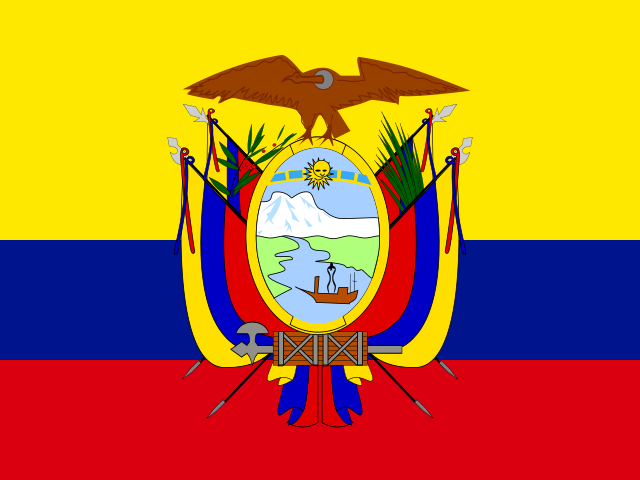
- Flag meaning
- Description: three horizontal bands of yellow (top, double-width), blue, and red, with the coat of arms at the center of the flagMeaning: yellow stands for sunshine, grain, and mineral wealth; blue for the sky, sea, and rivers; red for patriots' blood spilled in the struggle for freedom and justice
- National symbols
- Andean condor
- National colours
- yellow, blue, red
- National anthem
- Title: "Salve, O Patria!" (We Salute You, Our Homeland)Lyrics/music: Juan Leon MERA/Antonio NEUMANEHistory: adopted 1948; MERA wrote the lyrics in 1865; only the chorus and second verse are sung
- UNESCO World Heritage Sites
- Total World Heritage Sites: 5 (3 cultural, 2 natural)Selected World Heritage Site locales: Historic Quito (c); Galápagos Islands (n); Historic Cuenca (c); Qhapaq Ñan/Andean Road System (c); Sangay National Park (n)
Economy
- Overview
- highly informal South American economy; USD currency user; major banana exporter; hard hit by COVID-19; macroeconomic fragility from oil dependency; successful debt restructuring; China funding budget deficits; social unrest hampering economic activity
- GDP (PPP)
- $252.728 billion (2024 est.)
- GDP per person (PPP)
- $13,900 (2024 est.)
- GDP growth
- -2% (2024 est.)
- Inflation
- 1.5% (2024 est.)
- Unemployment
- 4.8% (2024 est.)
- Below poverty line
- 26% (2023 est.)
- Farm products
- bananas, sugarcane, milk, oil palm fruit, maize, rice, plantains, chicken, pineapples, cocoa beans (2023)
- Industries
- petroleum, food processing, textiles, wood products, chemicals
- Exports
- $38.468 billion (2024 est.)
- Main exports
- crude petroleum, shellfish, bananas, fish, gold (2023)
- Export partners
- USA 22%, China 21%, Panama 12%, Japan 3%, Peru 3% (2023)
- Main imports
- refined petroleum, coal tar oil, cars, packaged medicine, plastics (2023)
- Import partners
- USA 27%, China 20%, Colombia 7%, Brazil 4%, Peru 4% (2023)
- Money sent home from abroad
- 5.2% of GDP (2024 est.)
Energy, internet and transport
- Electricity access
- Electrification - total population: 100% (2022 est.)
- Electricity sources
- Fossil fuels: 23.2% of total installed capacity (2023 est.)Solar: 0.1% of total installed capacity (2023 est.)Wind: 0.2% of total installed capacity (2023 est.)Hydroelectricity: 75.4% of total installed capacity (2023 est.)Biomass and waste: 1.1% of total installed capacity (2023 est.)
- Internet users
- Percent of population: 77% (2024 est.)
- Mobile phones
- Total subscriptions: 18.4 million (2024 est.)Subscriptions per 100 inhabitants: 102 (2024 est.)
- TV and radio
- 956 media outlets, of which 89% are private, 5% are public, and 6% belong to small communities; government controls most of the 44 public media stations, including national media and multiple local radio stations; most media outlets are concentrated in Guayas and Pichincha (2022)
- Airports
- 317 (2025)
- Railways
- Total: 965 km (2022)Narrow gauge: 965 km (2022) 1.067-m gauge
- Merchant ships
- Total: 154 (2023)By type: container ship 1, general cargo 8, oil tanker 28, other 117
Military and space
- Armed forces
- Ecuadorian Armed Forces (Fuerzas Armadas del Ecuador): Ground Force (Fuerza Terrestre), Naval Force (Fuerza Naval; includes naval infantry, naval aviation, coast guard), Ecuadorian Air Force (Fuerza Aérea Ecuatoriana) (2025)
- Military spending
- 2.2% of GDP (2024 est.)
- Military service
- 18-22 years of age for voluntary military service for men and women; 12-month service obligation; conscription abolished in 2008 (2025)
- Space programme
- has a small program focused on acquiring and manufacturing satellites; builds scientific satellites; conducts research and develops some space-related technologies; has relationships with China and Russia's space agencies and industries, as well as the Latin American and Caribbean Space Agency and its member states (2025)
- Space milestones
- 2007 - an Ecuadorian completed a suborbital astronaut training program provided by Russia2013 - first two domestically designed and built scientific/technology demonstrator satellites (NEE-01/Pegasus, NEE-02/Krysaor) launched by China and Russia2021 - signed accords for the Latin American and Caribbean Space Agency2023 - signed US-led Artemis Accords for space exploration
Global issues
- Refugees and displaced people
- Refugees: 30,241 (2024 est.)IDPs: 57,402 (2024 est.)
- Drug trade
- USG identification: major illicit drug-producing and/or drug-transit countrymajor precursor-chemical producer (2025)
Neighbouring countries
- Phone code
- +593
- Internet domain
- .ec