Peru
Republic of Peru · Piruw · Perú
Caral is the oldest city in the Americas; the Inca Empire was the largest in the pre-Columbian Americas. Has had seven presidents since 2016.
See Peru on the 3D globeTake a quiz
Population34 million
Area1,285,216 km²
CapitalLima
RegionSouth America
Did you know?
- Has thousands of potato varieties
- Iquitos is the largest city unreachable by road
- The Nazca Lines are best seen from the air
Key facts about Peru
- Government
- Presidential republic (frequent political crises)
- Religion
- Catholic ~66%, Evangelical ~14%
- Founded / independence
- 1821 (from Spain)
- Rich in
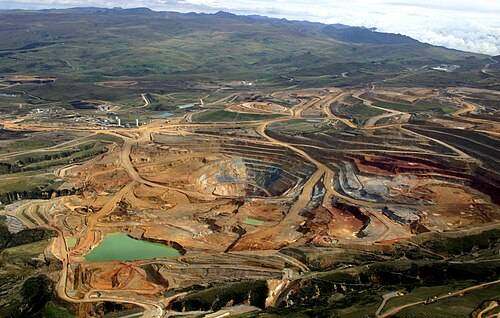
- Copper, gold, silver, zinc, fishmeal, Machu Picchu tourism
- Languages
- Aymara, Quechua, Spanish
Spanish, Quechua, Aymara; dozens of Amazonian languages - Currency
- Peruvian sol (S/.)
- People are called
- Peruvian
- Main cities
- Lima, Arequipa, Trujillo, Chiclayo, Cusco
Timeline of Peru
- 3000 BCCaral
- 1438Inca Empire
- 1532Spanish conquest
- 1821Independence
- 1980Shining Path
- 2000Fujimori falls
Places to see in Peru
- Machu Picchu
- Cusco
- Nazca Lines
- Lake Titicaca
- Colca Canyon
- Rainbow Mountain
- Amazon at Iquitos
Food and drink
Ceviche · lomo saltado · ají de gallina · pisco sour
Culture and famous for
Inca heritage; over 3,000 potato varieties
Popular sports
Football, volleyball, surfing
Geography and climate
- Highest point
- Huascarán, 6,768 m
- Rivers, lakes and seas
- Amazon begins here; Lake Titicaca
- Climate
- Desert coast, Andes, Amazon
- Coastline
- Has a sea coast
- Population density
- 26 people per km²
Wars and conflicts
- Spanish conquest of the Incas
- War of the Pacific
- Shining Path conflict 1980–2000
Empires and states that once stood here
Tiwanaku c. 500–1000Inca Empire 1438–1533
Alliances and memberships
Military and security
Political unions and regional organisations
CELACOrganization of American States
Economy and trade
CPTPPAPECPacific AllianceAndean Community
Peru in depth
Detailed facts from the CIA World Factbook (public domain, latest edition).
Overview
- History in brief
- Ancient Peru was the seat of several prominent Andean civilizations, most notably that of the Incas whose empire was captured by Spanish conquistadors in 1533. Peru declared its independence in 1821, and remaining Spanish forces were defeated in 1824. After a dozen years of military rule, Peru returned to democratic leadership in 1980 but experienced economic problems and the growth of a violent insurgency. President Alberto FUJIMORI's election in 1990 ushered in a decade that saw a dramatic turnaround in the economy and significant progress in curtailing guerrilla activity. Nevertheless, an economic slump and the president's increasing reliance on authoritarian measures in the late 1990s generated mounting dissatisfaction with his regime, which led to his resignation in 2000.A caretaker government oversaw a new election in 2001 that installed Alejandro TOLEDO Manrique as the new head of government - Peru's first democratically elected president of indigenous ethnicity. The presidential election of 2006 saw the return of Alan GARCIA Perez who, after a disappointing presidential term from 1985 to 1990, presided over a robust economic rebound. Former army officer Ollanta HUMALA Tasso was elected president in 2011 and carried on the market-oriented economic policies of the three preceding administrations. Pedro Pablo KUCZYNSKI Godard won a very narrow runoff in the 2016 presidential election. Facing impeachment after evidence surfaced of his involvement in a vote-buying scandal, KUCZYNSKI offered his resignation in 2018, and First Vice President Martin Alberto VIZCARRA Cornejo was sworn in as president. In 2019, VIZCARRA invoked his constitutional authority to dissolve Peru's Congress after months of battling with the body over anticorruption reforms. New congressional elections in 2020 resulted in an opposition-led legislature. The Congress impeached VIZCARRA for a second time and removed him from office after accusations of corruption and mishandling of the COVID-19 pandemic. Because of vacancies in the vice-presidential positions, the President of the Peruvian Congress, Manuel MERINO, became the next president. His ascension to office was not well received, and large protests forced his resignation later in 2020. Francisco SAGASTI assumed the position of President of Peru after being appointed President of the Congress the previous day. Jose Pedro CASTILLO Terrones won presidential election in 2021 but was impeached and ousted the following year; his vice
Geography
- Location
- Western South America, bordering the South Pacific Ocean, between Chile and Ecuador
- Size compared
- almost twice the size of Texas; slightly smaller than Alaska
- Land borders
- Total: 7,062 kmBorder countries: Bolivia 1,212 km; Brazil 2,659 km; Chile 168 km; Colombia 1,494 km; Ecuador 1,529 km
- Coastline
- 2,414 km
- Climate
- varies from tropical in east to dry desert in west; temperate to frigid in Andes
- Terrain
- western coastal plain (costa), high and rugged Andes in center (sierra), eastern lowland jungle of Amazon Basin (selva)
- Elevation
- Highest point: Nevado Huascaran 6,746 mLowest point: Pacific Ocean 0 mMean elevation: 1,555 m
- Natural resources
- copper, silver, gold, petroleum, timber, fish, iron ore, coal, phosphate, potash, hydropower, natural gas
- Major rivers
- Amazon river source (shared with Brazil [m]) - 6,400 kmNote: [s] after country name indicates river source; [m] after country name indicates river mouth
- Major lakes
- Fresh water lake(s): Lago Titicaca (shared with Bolivia) - 8,030 sq km
- Natural hazards
- earthquakes, tsunamis, flooding, landslides, mild volcanic activityVolcanism: volcanic activity in the Andes Mountains; Ubinas (5,672 m) is the country's most active volcano; other historically active volcanoes include El Misti, Huaynaputina, Sabancaya, and Yucamane; see note 2 under "Geography - note"
- Notes
- Note 1: shares control of Lago Titicaca, world's highest navigable lake, with Bolivia; a remote slope of Nevado Mismi, a 5,316-m (17,441-ft) peak, is the ultimate source of the Amazon RiverNote 2: Peru is one of the countries along the Ring of Fire, which is a belt bordering the Pacific Ocean that contains about 75% of the world's volcanoes and up to 90% of the world's earthquakesNote 3: on 19 February 1600, Mount Huaynaputina in the southern Peruvian Andes erupted in the largest volcanic explosion in South America in historical times; intermittent eruptions lasted until 5 March 1600 and pumped an estimated 16 to 32 million metric tons of particulates into the atmosphere, reducing the amount of sunlight reaching the earth's surface and affecting weather worldwide; over the next two-and-a-half years, millions died around the globe in famines from bitterly cold winters, cool summers, and the loss of crops and animals
- Environmental issues
- deforestation (some the result of illegal logging); overgrazing leading to soil erosion; desertification; air pollution in Lima; pollution of rivers and coastal waters from municipal and mining wastes; overfishing
People and society
- Population
- Total: 32,768,614 (2025 est.)Male: 16,016,448Female: 16,752,166
- Nationality
- Noun: Peruvian(s)Adjective: Peruvian
- Ethnic groups
- Mestizo (mixed Indigenous and White) 60.2%, Indigenous 25.8%, White 5.9%, African descent 3.6%, other (includes Chinese and Japanese descent) 1.2%, unspecified 3.3% (2017 est.)
- Languages
- Spanish (official) 82.9%, Quechua (official) 13.6%, Aymara (official) 1.6%, Ashaninka 0.3%, other native languages (includes many minor Amazonian languages) 0.8%, other 0.2%, none 0.1%, unspecified 0.7% (2017 est.)Major-language sample(s): La Libreta Informativa del Mundo, la fuente indispensable de información básica. (Spanish)The World Factbook, the indispensable source for basic information.
- Religions
- Catholic 76%, Evangelical Christian 15.7%, no religion 5.1%, other religions 3.2% (2017 est.)
- Median age
- Total: 30.4 years (2025 est.)Male: 29.1 yearsFemale: 31.3 years
- Population growth
- 0.55% (2025 est.)
- Life expectancy
- Total population: 68.9 years (2024 est.)Male: 65.4 yearsFemale: 72.7 years
- Children per woman
- 2.12 children born/woman (2025 est.)
- Urbanization
- Urban population: 78.9% of total population (2023)Rate of urbanization: 1.33% annual rate of change (2020-25 est.)
- Largest cities
- 11.204 million LIMA (capital), 959,000 Arequipa, 904,000 Trujillo (2023)
- Literacy
- Total population: 93.7% (2024 est.)Male: 97% (2024 est.)Female: 90.7% (2024 est.)
- Years in school
- Total: 15 years (2017 est.)Male: 15 years (2017 est.)Female: 15 years (2017 est.)
Government
- Official names
- Conventional long form: Republic of PeruConventional short form: PeruLocal long form: República del PerúLocal short form: PerúEtymology: the name may derive from the Guarani word biru, meaning "river"
- Government type
- presidential republic
- Capital
- Name: LimaGeographic coordinates: 12 03 S, 77 03 WTime difference: UTC-5 (same time as Washington, DC, during Standard Time)Etymology: the name is an early Spanish mispronunciation of the Quechua name Rimak, referring to a god and deriving from the word rima (to speak); Quechua priests used to speak to worshippers from inside statues of their gods
- Regions
- 24 departments (departamentos, singular - departamento), 1 province* (provincia), and 1 constitutional province** (provincia constitucional); Amazonas, Ancash, Apurimac, Arequipa, Ayacucho, Cajamarca, Callao**, Cusco, Huancavelica, Huánuco, Ica, Junín, La Libertad, Lambayeque, Lima, Lima*, Loreto, Madre de Dios, Moquegua, Pasco, Piura, Puno, San Martin, Tacna, Tumbes, Ucayali
- Independence
- 28 July 1821 (from Spain)
- National holiday
- Independence Day, 28-29 July (1821)
- Constitution
- History: several previous; latest promulgated 29 December 1993, enacted 31 December 1993Amendment process: proposed by Congress, by the president of the republic with the approval of the Council of Ministers or by petition of at least 0.3% of voters; passage requires absolute majority approval by the Congress membership, followed by approval in a referendum; a referendum is not required if Congress approves the amendment by greater than two-thirds majority vote in each of two successive sessions
- Legal system
- civil law system
- Voting age
- 18 years of age; universal and compulsory until the age of 70
- Flag meaning
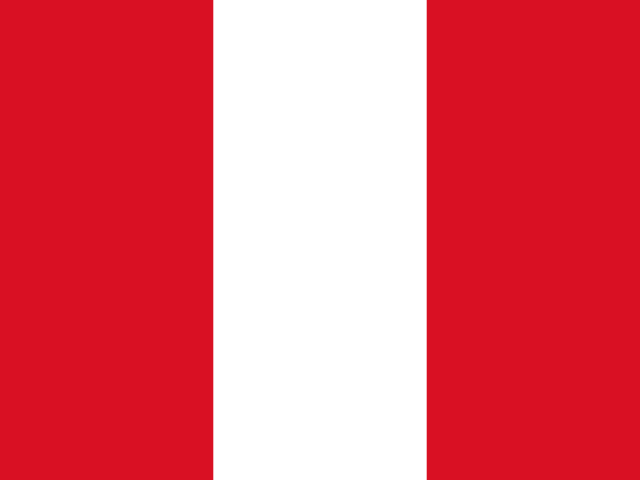
- Description: three equal vertical bands of red (left side), white, and red, with the coat of arms centered on the white band; the coat of arms has a shield with a vicuna, a cinchona tree, and a yellow cornucopia spilling out coinsMeaning: the vicuna represents fauna, the cinchona tree is the source of quinine, and the cornucopia symbolizes mineral wealth; red stands for blood shed for independence, and white for peace
- National symbols
- vicuna (a camelid related to the llama)
- National colours
- red, white
- National anthem
- Title: "Himno Nacional del Peru" (National Anthem of Peru)Lyrics/music: Jose DE LA TORRE Ugarte/Jose Bernardo ALZEDOHistory: adopted 1821
- UNESCO World Heritage Sites
- Total World Heritage Sites: 13 (9 cultural, 2 natural, 2 mixed)Selected World Heritage Site locales: Cuzco (c); Machu Picchu (m); Chavin (c); Historic Lima (c); Huascarán National Park (n); Chan Chan (c); Manú National Park (n); Lines and Geoglyphs of Nazca (c); Rio Abiseo National Park (m); Historic Arequipa (c); Sacred City of Caral-Supe (c); Qhapaq Ñan/Andean Road System (c)
Economy
- Overview
- upper-middle-income South American economy; strong post-COVID rebound tempered by political uncertainty and climate risks; exports driven by mineral extraction and agriculture; large informal sector and uneven access to public services; stable fiscal position and financial sector
- GDP (PPP)
- $535.911 billion (2024 est.)
- GDP per person (PPP)
- $15,700 (2024 est.)
- GDP growth
- 3.3% (2024 est.)
- Inflation
- 2% (2024 est.)
- Unemployment
- 4.9% (2024 est.)
- Below poverty line
- 27.5% (2022 est.)
- Farm products
- sugarcane, potatoes, rice, bananas, milk, maize, chicken, oil palm fruit, cassava, grapes (2023)
- Industries
- mining and refining of minerals; steel, metal fabrication; petroleum extraction and refining, natural gas and natural gas liquefaction; fishing and fish processing, cement, glass, textiles, clothing, food processing, beer, soft drinks, rubber, machinery, electrical machinery, chemicals, furniture
- Exports
- $83.325 billion (2024 est.)
- Main exports
- copper ore, gold, refined copper, refined petroleum, grapes (2023)
- Export partners
- China 34%, USA 14%, Canada 5%, India 4%, Switzerland 4% (2023)
- Main imports
- refined petroleum, crude petroleum, cars, trucks, broadcasting equipment (2023)
- Import partners
- China 26%, USA 21%, Brazil 7%, Argentina 5%, Mexico 3% (2023)
- Money sent home from abroad
- 1.7% of GDP (2023 est.)
Energy, internet and transport
- Electricity access
- Electrification - total population: 96.2% (2022 est.)Electrification - urban areas: 99%Electrification - rural areas: 85.1%
- Electricity sources
- Fossil fuels: 44.8% of total installed capacity (2023 est.)Solar: 1.4% of total installed capacity (2023 est.)Wind: 3.2% of total installed capacity (2023 est.)Hydroelectricity: 49.6% of total installed capacity (2023 est.)Biomass and waste: 1% of total installed capacity (2023 est.)
- Internet users
- Percent of population: 80% (2023 est.)
- Mobile phones
- Total subscriptions: 42.6 million (2024 est.)Subscriptions per 100 inhabitants: 125 (2024 est.)
- TV and radio
- 10 major TV networks of which only one, Television Nacional de Peru, is state owned; multi-channel cable TV services are available; in excess of 5,000 radio stations including a substantial number of local-language stations (2021)
- Airports
- 174 (2025)
- Railways
- Total: 1,854.4 km (2017)Standard gauge: 1,730.4 km (2014) 1.435-m gauge (34 km electrified)Narrow gauge: 124 km (2014) 0.914-m gauge
- Merchant ships
- Total: 111 (2023)By type: general cargo 1, oil tanker 9, other 101
Military and space
- Armed forces
- Armed Forces of Peru (Fuerzas Armadas del Perú or FAP): Peruvian Army (Ejercito del Peru), Peruvian Navy (Marina de Guerra del Peru, MGP, includes naval infantry and General Directorate of Captaincies and Coast Guards, DICAPI), Air Force of Peru (Fuerza Aerea del Peru, FAP)Ministry of the Interior: Peruvian National Police (Policía Nacional del Perú, PNP) (2025)
- Military spending
- 0.8% of GDP (2024 est.)
- Military service
- 18-30 years of age for voluntary military service (12-24 months) (2025)
- Space programme
- focuses on acquiring satellites, applying space applications such as data satellite imagery, and building small rockets; has built a small science/technology satellite; operates satellites and processes satellite imagery data; builds and launches sounding rockets with goal of developing a satellite/space launch vehicle (SLV); researching, developing, and acquiring technologies for manufacturing satellites and satellite payloads, including remote sensing (RS) capabilities; member of Latin American and Caribbean Space Agency (ALCE) since its formation in 2021; cooperates with a variety of foreign space agencies and industries, including those of Brazil, China, the ESA, individual ESA member states (particularly France and Germany), India, Russia, South Korea, Thailand, and the US, as well as other ALCE signatories (2025)
- Space milestones
- 2006 - launched first sounding rocket/space probe (Paulet-1)2013 - first domestically built scientific/research satellite (PUCP-SAT-1) launched by Russia; launched first domestically built rocket (Paulet 1-B) capable of reaching the stratosphere2016 - first remote sensing satellite (PeruSat-1) acquired from France and launched on European rocket2024 - signed US-led Artemis Accords on space and lunar exploration
Global issues
- Refugees and displaced people
- Refugees: 546,699 (2024 est.)IDPs: 83,441 (2024 est.)Stateless persons: 32 (2024 est.)
- Drug trade
- USG identification: major illicit drug-producing and/or drug-transit countrymajor precursor-chemical producer (2025)
Neighbouring countries
BoliviaBrazilChileColombiaEcuador
- Phone code
- +51
- Internet domain
- .pe