El Salvador
Republic of El Salvador
Smallest Central American country. Mass arrests since 2022 cut murders sharply but raised rights concerns.
See El Salvador on the 3D globeTake a quiz
Population6.3 million
Area21,041 km²
CapitalSan Salvador
RegionCentral America
Did you know?
- Smallest country in Central America
- Joya de Cerén village was buried by ash around 600
- Made Bitcoin legal tender in 2021
Key facts about El Salvador
- Government
- Presidential republic (increasingly authoritarian)
- Religion
- Catholic ~45%, Evangelical ~35%
- Founded / independence
- 1821 (from Spain)
- Rich in
- Remittances, textiles, coffee; Bitcoin legal tender 2021–25
- Languages
- Spanish
Spanish; Nahuat - Currency
- United States dollar ($)
- People are called
- Salvadoran
- Main cities
- San Salvador, Santa Ana, San Miguel
Timeline of El Salvador
- 1524Spanish conquest
- 1821Independence
- 1932La Matanza
- 1980Civil war
- 1992Peace accords
Places to see in El Salvador
- Joya de Cerén
- Ruta de las Flores
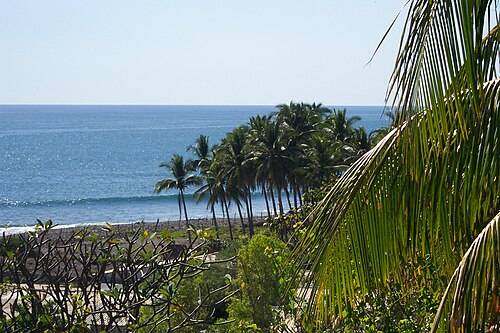
- El Tunco surf beaches
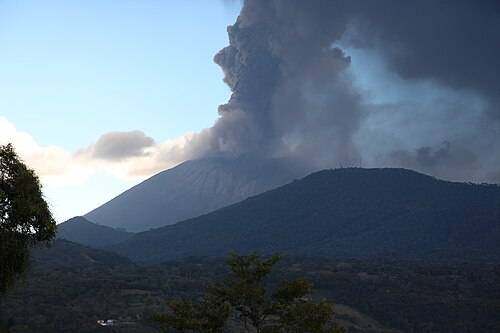
- Santa Ana volcano
Food and drink
Pupusas (national dish) · yuca frita
Culture and famous for
Joya de Cerén, the "Pompeii of the Americas"
Popular sports
Football, surfing
Geography and climate
- Highest point
- Cerro El Pital, 2,730 m
- Rivers, lakes and seas
- Lempa River
- Climate
- Tropical
- Coastline
- Has a sea coast
- Population density
- 299 people per km²
Wars and conflicts
- Football War 1969
- Civil War 1979–92
- gang crackdown since 2022
Empires and states that once stood here
Federal Republic of Central America 1823–1841
Alliances and memberships
Military and security
Political unions and regional organisations
Central American Integration SystemCELACOrganization of American States
El Salvador in depth
Detailed facts from the CIA World Factbook (public domain, latest edition).
Overview
- History in brief
- El Salvador achieved independence from Spain in 1821 and from the Central American Federation in 1839. A 12-year civil war, which cost about 75,000 lives, was brought to a close in 1992 when the government and leftist rebels signed a treaty that provided for military and political reforms. El Salvador is beset by one of the world's highest homicide rates and pervasive criminal gangs.
Geography
- Location
- Central America, bordering the North Pacific Ocean, between Guatemala and Honduras
- Size compared
- about the same size as New Jersey
- Land borders
- Total: 590 kmBorder countries: Guatemala 199 km; Honduras 391 km
- Coastline
- 307 km
- Climate
- tropical; rainy season (May to October); dry season (November to April); tropical on coast; temperate in uplands
- Terrain
- mostly mountains with narrow coastal belt and central plateau
- Elevation
- Highest point: Cerro El Pital 2,730 mLowest point: Pacific Ocean 0 mMean elevation: 442 m
- Natural resources
- hydropower, geothermal power, petroleum, arable land
- Natural hazards
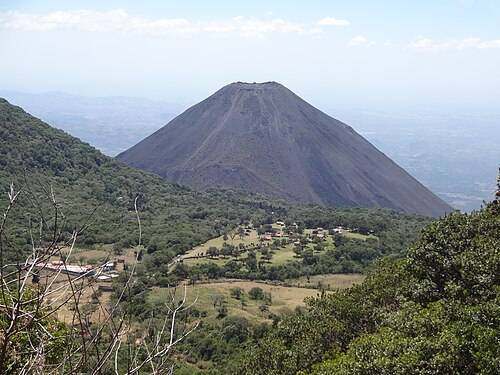
- known as the Land of Volcanoes; frequent and sometimes destructive earthquakes and volcanic activity; extremely susceptible to hurricanesVolcanism: significant volcanic activity; San Salvador (1,893 m), which last erupted in 1917, has the potential to cause major harm to the country's capital, which lies just below the volcano's slopes; San Miguel (2,130 m) is one of the most active volcanoes in the country; other historically active volcanoes include Conchaguita, Ilopango, Izalco, and Santa Ana
- Notes
- smallest Central American country and only one without a coastline on the Caribbean Sea
- Environmental issues
- deforestation; soil erosion; water pollution; contamination of soils from disposal of toxic wastes
People and society
- Population
- Total: 6,334,723 (2025 est.)Male: 3,026,645Female: 3,308,078
- Nationality
- Noun: Salvadoran(s)Adjective: Salvadoran
- Ethnic groups
- Mestizo 86.3%, White 12.7%, Indigenous 0.2% (includes Lenca, Kakawira, Nahua-Pipil), Black 0.1%, other 0.6% (2007 est.)
- Languages
- Spanish (official), Nawat (among some indigenous)Major-language sample(s): La Libreta Informativa del Mundo, la fuente indispensable de información básica. (Spanish)The World Factbook, the indispensable source for basic information.
- Religions
- Roman Catholic 43.9%, Protestant 39.6% (Evangelical - unspecified 38.2%, Evangelical - Methodist 1.3%, Evangelical - Baptist 0.1%), none 16.3%, unspecified 0.2% (2023 est.)
- Median age
- Total: 31.2 years (2025 est.)Male: 28.2 yearsFemale: 31.2 years
- Population growth
- 0.34% (2025 est.)
- Life expectancy
- Total population: 75.9 years (2024 est.)Male: 72.4 yearsFemale: 79.5 years
- Children per woman
- 1.4 children born/woman (2025 est.)
- Urbanization
- Urban population: 75.4% of total population (2023)Rate of urbanization: 1.33% annual rate of change (2020-25 est.)
- Largest cities
- 1.116 million SAN SALVADOR (capital) (2023)
- Literacy
- Total population: 89.8% (2024 est.)Male: 91.6% (2024 est.)Female: 88.2% (2024 est.)
- Years in school
- Total: 11 years (2023 est.)Male: 11 years (2023 est.)Female: 12 years (2023 est.)
Government
- Official names
- Conventional long form: Republic of El SalvadorConventional short form: El SalvadorLocal long form: República de El SalvadorLocal short form: El SalvadorEtymology: means "the Savior" in Spanish and is a shortened form of "the Divine Savior of the World" (el Divino Salvador del Mundo), referring to Jesus Christ; 16th-century Spanish colonists gave the name "San Salvador" to the fort located where the country's capital of San Salvador now stands, and the name was later used for the city and the surrounding region; the country was officially named El Salvador in 1824
- Government type
- presidential republic
- Capital
- Name: San SalvadorGeographic coordinates: 13 42 N, 89 12 WTime difference: UTC-6 (1 hour behind Washington, DC, during Standard Time)Etymology: Spanish colonists founded the city in 1526 on the feast day of the Transfiguration of the Savior (Jesus Christ), and the name means "Holy Savior" in Spanish
- Regions
- 14 departments (departamentos, singular - departamento); Ahuachapán, Cabanas, Chalatenango, Cuscatlán, La Libertad, La Paz, La Union, Morazán, San Miguel, San Salvador, San Vicente, Santa Ana, Sonsonate, Usulután
- Independence
- 15 September 1821 (from Spain)
- National holiday
- Independence Day, 15 September (1821)
- Constitution
- History: many previous; latest drafted 16 December 1983, enacted 23 December 1983Amendment process: proposals require agreement by absolute majority of the Legislative Assembly membership; passage requires at least two-thirds majority vote of the Assembly; constitutional articles on basic principles, and citizen rights and freedoms cannot be amended
- Legal system
- civil law system with minor common law influence; Supreme Court reviews legislative acts
- Voting age
- 18 years of age; universal
- Flag meaning
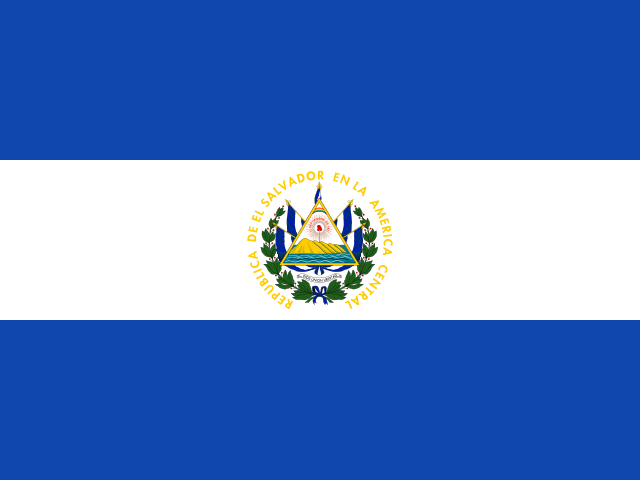
- Description: three equal horizontal bands of cobalt blue (top), white, and cobalt blue, with the national coat of arms centered in the white band; the coat of arms has a round emblem with the words REPUBLICA DE EL SALVADOR EN LA AMERICA CENTRAL around itMeaning: the blue bands stand for the Pacific Ocean and the Caribbean Sea, and the white for the land, as well as peace and prosperityHistory: the banner is based on the former blue-white-blue flag of the Federal Republic of Central America
- National symbols
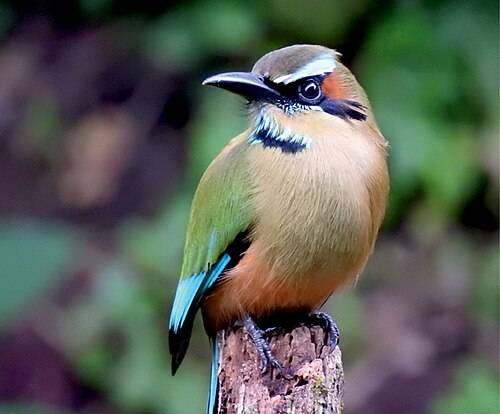
- turquoise-browed motmot (bird)
- National colours
- blue, white
- National anthem
- Title: "Himno Nacional de El Salvador" (National Anthem of El Salvador)Lyrics/music: Juan Jose CANAS/Juan ABERLEHistory: officially adopted 1953, in use since 1879; at four minutes and 20 seconds, the anthem is one of the world's longest
- UNESCO World Heritage Sites
- Total World Heritage Sites: 1 (cultural)Selected World Heritage Site locales: Joya de Cerén Archaeological Site
Economy
- Overview
- upper-middle-income, dollarized Central American economy; reliant on remittances from US; recent growth linked to infrastructure investment, consumption, and crime reduction; $1.3 billion IMF loan to address fiscal imbalances; Bitcoin adopted as legal tender; persistent poverty and large informal sector
- GDP (PPP)
- $73.961 billion (2024 est.)
- GDP per person (PPP)
- $11,700 (2024 est.)
- GDP growth
- 2.6% (2024 est.)
- Inflation
- 0.9% (2024 est.)
- Unemployment
- 2.9% (2024 est.)
- Below poverty line
- 26.6% (2022 est.)
- Farm products
- sugarcane, maize, milk, chicken, sorghum, beans, oranges, coconuts, eggs, mangoes/guavas (2023)
- Industries
- food processing, beverages, petroleum, chemicals, fertilizer, textiles, furniture, light metals
- Exports
- $11.586 billion (2024 est.)
- Main exports
- garments, plastic products, electrical capacitors, raw sugar, toilet paper (2023)
- Export partners
- USA 36%, Guatemala 17%, Honduras 15%, Nicaragua 8%, Costa Rica 5% (2023)
- Main imports
- refined petroleum, natural gas, garments, packaged medicine, plastics (2023)
- Import partners
- USA 28%, China 15%, Guatemala 11%, Mexico 8%, Honduras 5% (2023)
- Money sent home from abroad
- 24% of GDP (2024 est.)
Energy, internet and transport
- Electricity access
- Electrification - total population: 100% (2022 est.)
- Electricity sources
- Fossil fuels: 9.3% of total installed capacity (2023 est.)Solar: 19.1% of total installed capacity (2023 est.)Wind: 2.1% of total installed capacity (2023 est.)Hydroelectricity: 31% of total installed capacity (2023 est.)Geothermal: 24.5% of total installed capacity (2023 est.)Biomass and waste: 14% of total installed capacity (2023 est.)
- Internet users
- Percent of population: 68% (2023 est.)
- Mobile phones
- Total subscriptions: 11.2 million (2024 est.)Subscriptions per 100 inhabitants: 177 (2024 est.)
- TV and radio
- multiple privately owned national terrestrial TV networks, supplemented by cable TV networks that carry international channels; hundreds of commercial radio stations and 2 government-owned radio stations; transition to digital transmission was set to begin in 2018, along with adoption of the Japanese-Brazilian Digital Standard (ISDB-T) (2022)
- Airports
- 27 (2025)
- Railways
- Total: 12.5 km (2014)Narrow gauge: 12.5 km (2014) 0.914-mm gauge
- Merchant ships
- Total: 5 (2023)By type: other 5
Military and space
- Armed forces
- The Armed Forces of El Salvador (La Fuerza Armada de El Salvador, FAES): Army of El Salvador (Ejercito de El Salvador, ES), Naval Force of El Salvador (Fuerza Naval de El Salvador, FNES), Salvadoran Air Force (Fuerza Aérea Salvadoreña, FAS)Ministry of Justice and Public Safety: National Civil Police (Policia Nacional Civil, PNC) (2025)
- Military spending
- 1.2% of GDP (2024 est.)
- Military service
- 18-30 years of age for voluntary military service for men and women (17-22 for military schools); men are subject to selective compulsory military service; service obligation up to 18 months (2025)
Global issues
- Refugees and displaced people
- Refugees: 392 (2024 est.)IDPs: 35,391 (2024 est.)
- Drug trade
- USG identification: major illicit drug-producing and/or drug-transit countrymajor precursor-chemical producer (2025)
Neighbouring countries
- Phone code
- +503
- Internet domain
- .sv