Guatemala
Republic of Guatemala
Heart of Maya civilisation (Tikal). A 36-year civil war killed about 200,000, mostly Maya.
See Guatemala on the 3D globeTake a quiz
Population18.4 million
Area108,889 km²
CapitalGuatemala City
RegionCentral America
Did you know?
- Tikal was one of the largest Maya cities
- Has 37 volcanoes
- More than 20 Mayan languages are spoken
Key facts about Guatemala
- Government
- Presidential republic
- Religion
- Catholic ~45%, Evangelical ~40%
- Founded / independence
- 1821 (from Spain)
- Rich in
- Coffee, bananas, cardamom (largest exporter), sugar
- Languages
- Spanish
Spanish; 21 Mayan languages (K'iche', Q'eqchi', Kaqchikel, Mam) - Currency
- Guatemalan quetzal (Q)
- People are called
- Guatemalan
- Main cities
- Guatemala City, Mixco, Quetzaltenango
Timeline of Guatemala
- 200Maya classic period
- 1524Spanish conquest
- 1821Independence
- 1954CIA coup
- 1996Civil war ends
Places to see in Guatemala
- Tikal
- Lake Atitlán
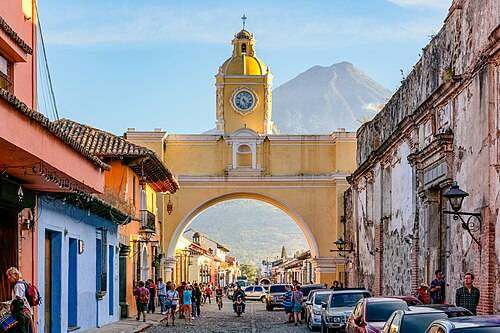
- Antigua Guatemala
- Semuc Champey
- Chichicastenango market
Food and drink
Pepián · tamales · kak'ik
Culture and famous for
Maya textiles; Holy Week carpets in Antigua; Nobel laureate Rigoberta Menchú
Popular sports
Football
Geography and climate
- Highest point
- Volcán Tajumulco, 4,220 m (Central America's highest)
- Rivers, lakes and seas
- Motagua, Usumacinta
- Climate
- Tropical; cooler highlands
- Coastline
- Has a sea coast
- Population density
- 169 people per km²
Wars and conflicts
- 1954 CIA-backed coup
- Civil War 1960–96 (Maya genocide)
Empires and states that once stood here
Maya civilisation c. 2000 BC–1697 ADFederal Republic of Central America 1823–1841
Alliances and memberships
Military and security
Political unions and regional organisations
Central American Integration SystemCELACOrganization of American States
Guatemala in depth
Detailed facts from the CIA World Factbook (public domain, latest edition).
Overview
- History in brief
- The Maya civilization flourished in Guatemala and surrounding regions during the first millennium A.D. After almost three centuries as a Spanish colony, Guatemala won its independence in 1821. During the second half of the 20th century, it experienced a variety of military and civilian governments, as well as a 36-year guerrilla war. In 1996, the government signed a peace agreement formally ending the internal conflict.
Geography
- Location
- Central America, bordering the North Pacific Ocean, between El Salvador and Mexico, and bordering the Gulf of Honduras (Caribbean Sea) between Honduras and Belize
- Size compared
- slightly smaller than Pennsylvania
- Land borders
- Total: 1,667 kmBorder countries: Belize 266 km; El Salvador 199 km; Honduras 244 km; Mexico 958 km
- Coastline
- 400 km
- Climate
- tropical; hot, humid in lowlands; cooler in highlands
- Terrain
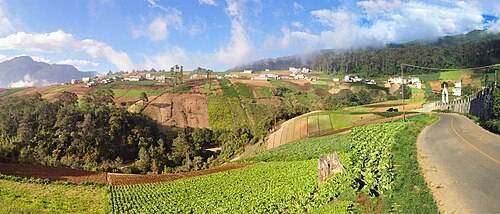
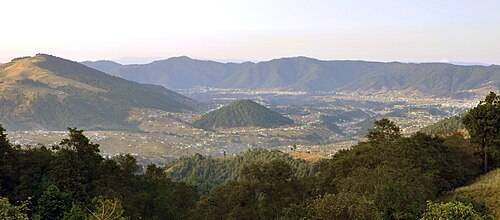
- two east-west trending mountain chains divide the country into three regions: the mountainous highlands, the Pacific coast south of mountains, and the vast northern Peten lowlands
- Elevation
- Highest point: Volcan Tajumulco (highest point in Central America) 4,220 mLowest point: Pacific Ocean 0 mMean elevation: 759 m
- Natural resources
- petroleum, nickel, rare woods, fish, chicle, hydropower
- Major lakes
- Fresh water lake(s): Lago de Izabal - 590 sq km
- Natural hazards
- numerous volcanoes in mountains, with occasional violent earthquakes; Caribbean coast extremely susceptible to hurricanes and other tropical stormsVolcanism: significant volcanic activity in the Sierra Madre range; Santa Maria (3,772 m) has been deemed a Decade Volcano by the International Association of Volcanology and Chemistry of the Earth's Interior, worthy of study due to its explosive history and close proximity to human populations; Pacaya (2,552 m) is one of the country's most active volcanoes, with frequent eruptions since 1965; other historically active volcanoes include Acatenango, Almolonga, Atitlan, Fuego, and Tacana; see note 2 under "Geography - note"
- Notes
- Note 1: despite having both eastern and western coastlines (Caribbean Sea and Pacific Ocean), there are no natural harbors on the west coastNote 2: Guatemala is one of the countries along the Ring of Fire, which is a belt bordering the Pacific Ocean that contains about 75% of the world's volcanoes and up to 90% of the world's earthquakes
- Environmental issues
- deforestation in the Peten rainforest; soil erosion; water pollution
People and society
- Population
- Total: 18,255,216 (2024 est.)Male: 9,050,684Female: 9,204,532
- Nationality
- Noun: Guatemalan(s)Adjective: Guatemalan
- Ethnic groups
- Mestizo (mixed Indigenous-Spanish - in local Spanish called Ladino) 56%, Maya 41.7%, Xinca (Indigenous, non-Maya) 1.8%, African descent 0.2%, Garifuna (mixed West and Central African, Island Carib, and Arawak) 0.1%, foreign 0.2% (2018 est.)
- Languages
- Spanish (official) 69.9%, Maya languages 29.7% (Q'eqchi' 8.3%, K'iche 7.8%, Mam 4.4%, Kaqchikel 3%, Q'anjob'al 1.2%, Poqomchi' 1%, other 4%), other 0.4% (includes Xinca and Garifuna) (2018 est.)Major-language sample(s): La Libreta Informativa del Mundo, la fuente indispensable de información básica. (Spanish)The World Factbook, the indispensable source for basic information.
- Religions
- Evangelical 45.7%, Roman Catholic 42.4%, none 11%, unspecified 0.9% (2023 est.)
- Median age
- Total: 26.7 years (2025 est.)Male: 24.2 yearsFemale: 25.4 years
- Population growth
- 0.99% (2025 est.)
- Life expectancy
- Total population: 73.5 years (2024 est.)Male: 71.5 yearsFemale: 75.6 years
- Children per woman
- 1.97 children born/woman (2025 est.)
- Urbanization
- Urban population: 53.1% of total population (2023)Rate of urbanization: 2.59% annual rate of change (2020-25 est.)
- Largest cities
- 3.095 million GUATEMALA CITY (capital) (2023)
- Literacy
- Total population: 82.1% (2024 est.)Male: 86.9% (2024 est.)Female: 78.5% (2024 est.)
- Years in school
- Total: 11 years (2023 est.)Male: 10 years (2023 est.)Female: 11 years (2023 est.)
Government
- Official names
- Conventional long form: Republic of GuatemalaConventional short form: GuatemalaLocal long form: República de GuatemalaLocal short form: GuatemalaEtymology: the Spanish conquistadors' first capital (established in 1524) was a former Mayan settlement called "Quauhtemallan" by their Nahuatl-speaking Mexican allies, a name that means "land of the eagle" but that the Spanish probably pronounced "Guatemala"
- Government type
- presidential republic
- Capital
- Name: Guatemala CityGeographic coordinates: 14 37 N, 90 31 WTime difference: UTC-6 (1 hour behind Washington, DC, during Standard Time)Etymology: the Spanish conquistadors' first capital (established in 1524) was a former Mayan settlement called "Quauhtemallan" by their Nahuatl-speaking Mexican allies, a name that means "land of the eagle" but that the Spanish probably pronounced "Guatemala"
- Regions
- 22 departments (departamentos, singular - departamento); Alta Verapaz, Baja Verapaz, Chimaltenango, Chiquimula, El Progreso, Escuintla, Guatemala, Huehuetenango, Izabal, Jalapa, Jutiapa, Peten, Quetzaltenango, Quiche, Retalhuleu, Sacatepéquez, San Marcos, Santa Rosa, Sololá, Suchitepéquez, Totonicapán, Zacapa
- Independence
- 15 September 1821 (from Spain)
- National holiday
- Independence Day, 15 September (1821)
- Constitution
- History: several previous; latest adopted 31 May 1985, effective 14 January 1986; suspended and reinstated in 1994Amendment process: proposed by the president of the republic, by agreement of 10 or more deputies of Congress, by the Constitutional Court, or by public petition of at least 5,000 citizens; passage requires at least two-thirds majority vote by the Congress membership and approval by public referendum, referred to as "popular consultation"; constitutional articles such as national sovereignty, the republican form of government, limitations on those seeking the presidency, or presidential tenure cannot be amended
- Legal system
- civil law system; judicial review of legislative acts
- Voting age
- 18 years of age; universal
- Flag meaning
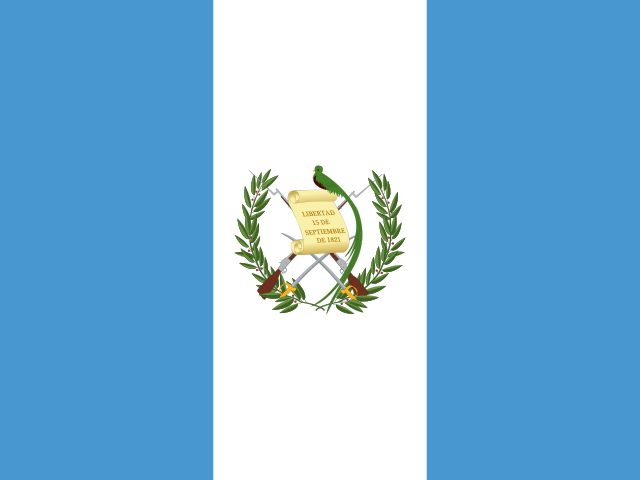
- Description: three equal vertical bands of light blue (left side), white, and light blue, with the coat of arms centered in the white band; the coat of arms includes a green-and-red quetzal (the national bird), a scroll with the inscription LIBERTAD 15 DE SEPTIEMBRE DE 1821 (the original date of independence from Spain), a pair of crossed rifles, and a pair of crossed swords; a laurel wreath frames the objectsMeaning: the rifles stand for Guatemala's willingness to defend itself, the swords for honor, and the laurel wreath for victory; blue stands for the Pacific Ocean and Caribbean Sea, and white for peace and purity
- National symbols
- quetzal (bird)
- National colours
- blue, white
- National anthem
- Title: "Himno Nacional de Guatemala" (National Anthem of Guatemala)Lyrics/music: Jose Joaquin PALMA/Rafael Alvarez OVALLEHistory: adopted 1897, modified lyrics adopted 1934; Cuban poet Jose Joaquin PALMA anonymously submitted lyrics to a public contest calling for a national anthem and it was not discovered until 1911; anthem has four verses with four separate choruses at the end of each verse -- all are official, and the anthem is sung in its entirety when performed in Guatemala
- UNESCO World Heritage Sites
- Total World Heritage Sites: 4 (3 cultural, 1 mixed)Selected World Heritage Site locales: Antigua Guatemala (c); Tikal National Park (m); Archaeological Park and Ruins of Quirigua (c); National Archaeological Park Tak'alik Ab'aj (c)
Economy
- Overview
- developing Central American economy; steady economic growth fueled by remittances; high poverty and income inequality; limited government services, lack of employment opportunities, and frequent natural disasters impede human development efforts and drive emigration
- GDP (PPP)
- $232.673 billion (2024 est.)
- GDP per person (PPP)
- $12,600 (2024 est.)
- GDP growth
- 3.7% (2024 est.)
- Inflation
- 2.9% (2024 est.)
- Unemployment
- 2.3% (2024 est.)
- Below poverty line
- 56% (2023 est.)
- Farm products
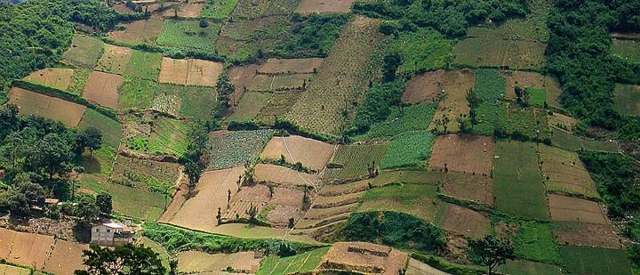
- sugarcane, bananas, oil palm fruit, maize, cantaloupes/melons, potatoes, milk, tomatoes, chicken, pineapples (2023)
- Industries
- sugar, textiles and clothing, furniture, chemicals, petroleum, metals, rubber, tourism
- Exports
- $17.997 billion (2024 est.)
- Main exports
- garments, bananas, coffee, palm oil, raw sugar (2023)
- Export partners
- USA 33%, El Salvador 11%, Honduras 9%, Nicaragua 6%, Mexico 4% (2023)
- Main imports
- refined petroleum, video displays, cars, trucks, packaged medicine (2023)
- Import partners
- USA 30%, China 19%, Mexico 11%, El Salvador 4%, Costa Rica 3% (2023)
- Money sent home from abroad
- 19.1% of GDP (2024 est.)
Energy, internet and transport
- Electricity access
- Electrification - total population: 99.1% (2022 est.)Electrification - urban areas: 97.7%Electrification - rural areas: 98.2%
- Electricity sources
- Fossil fuels: 25.4% of total installed capacity (2023 est.)Solar: 1.8% of total installed capacity (2023 est.)Wind: 2.6% of total installed capacity (2023 est.)Hydroelectricity: 42% of total installed capacity (2023 est.)Geothermal: 2.5% of total installed capacity (2023 est.)Biomass and waste: 25.7% of total installed capacity (2023 est.)
- Internet users
- Percent of population: 56% (2023 est.)
- Mobile phones
- Total subscriptions: 20.6 million (2023 est.)Subscriptions per 100 inhabitants: 115 (2022 est.)
- TV and radio
- 4 privately owned national terrestrial TV channels dominate TV broadcasting; multi-channel satellite and cable services are available; 1 government-owned radio station and hundreds of privately owned radio stations (2019)
- Airports
- 58 (2025)
- Railways
- Total: 800 km (2018)Narrow gauge: 800 km (2018) 0.914-m gauge
- Merchant ships
- Total: 9 (2023)By type: oil tanker 1, other 8
Military and space
- Armed forces
- Army of Guatemala (Ejercito de Guatemala; aka Armed Forces of Guatemala or Fuerzas Armadas de Guatemala): Land Forces (Fuerzas de Tierra), Naval Forces (Fuerzas de Mar), and Air Force (Fuerza de Aire) (2025)
- Military spending
- 0.4% of GDP (2024 est.)
- Military service
- 18-28 for voluntary service for men and women (17-21 for military schools); all Guatemalan men 18-49 are subject to selective compulsory service; service obligation is 12-24 months (2025)
Global issues
- Refugees and displaced people
- Refugees: 4,676 (2024 est.)IDPs: 572,813 (2024 est.)
- Drug trade
- USG identification: major illicit drug-producing and/or drug-transit countrymajor precursor-chemical producer (2025)
Neighbouring countries
BelizeEl SalvadorHondurasMexico
- Phone code
- +502
- Internet domain
- .gt