Estonia
Republic of Estonia · Eesti
Ruled by Danes, Teutonic knights, Sweden and Russia over 700 years. Independent 1918–1940, then annexed by the USSR. Regained independence in 1991 through the Singing Revolution; now a digital-government pioneer in the EU and NATO.
See Estonia on the 3D globeTake a quiz
Population1.4 million
Area45,227 km²
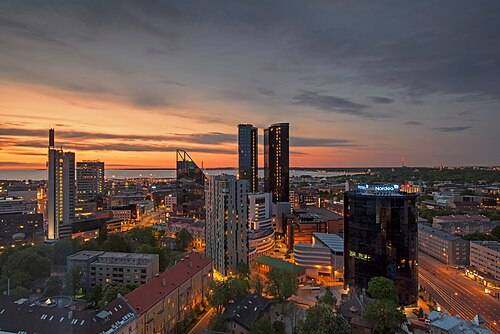
CapitalTallinn
RegionNorthern Europe
Did you know?
- Citizens can vote online
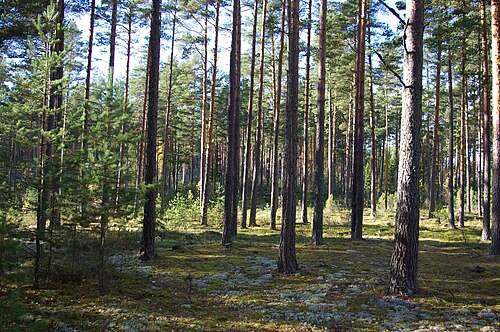
- About half the country is forest
- Has a sauna tradition so important that Võro smoke saunas are UNESCO heritage
Key facts about Estonia
- Government
- Parliamentary republic
- Religion
- Mostly unaffiliated; Orthodox ~16%, Lutheran ~8%
- Founded / independence
- 1918; restored 1991
- Rich in
- E-government and tech (Skype), oil shale, timber
- Languages
- Estonian
Estonian (Finnic): North and South Estonian dialects, Võro and Seto; large Russian-speaking minority - Currency
- Euro (€)
- People are called
- Estonian
- Main cities
- Tallinn, Tartu, Narva, Pärnu
Timeline of Estonia
- 1219Danish conquest of Tallinn
- 1561Swedish rule
- 1721Russian rule
- 1918Independence
- 1940Soviet occupation
- 1991Independence restored
- 2004Joins EU and NATO
Places to see in Estonia
- Tallinn Old Town
- Lahemaa National Park
- Saaremaa island
- Tartu University
- Kadriorg Palace
Food and drink
Black rye bread · verivorst (blood sausage) · kama · marinated sprats
Culture and famous for
Song festivals with 30,000 singers; Skype was created here; e-residency; Arvo Pärt's music
Popular sports
Basketball, skiing, wrestling
Geography and climate
- Highest point
- Suur Munamägi, 318 m
- Rivers, lakes and seas
- Lake Peipus; over 2,000 islands
- Climate
- Cool continental
- Coastline
- Has a sea coast
- Population density
- 31 people per km²
Wars and conflicts
- War of Independence 1918–20
- Soviet occupation 1940
- WWII
Alliances and memberships
Military and security
Political unions and regional organisations
European UnionEurozoneCouncil of Europe
Economy and trade
Estonia in depth
Detailed facts from the CIA World Factbook (public domain, latest edition).
Overview
- History in brief
- After centuries of Danish, Swedish, German, and Russian rule, Estonia attained independence in 1918. Forcibly incorporated into the USSR in 1940 -- an action never recognized by the US and many other countries -- it regained its freedom in 1991 with the collapse of the Soviet Union. Since the last Russian troops left in 1994, Estonia has been free to promote economic and political ties with the West. It joined both NATO and the EU in 2004, formally joined the OECD in 2010, and adopted the euro as its official currency in 2011.
Geography
- Location
- Eastern Europe, bordering the Baltic Sea and Gulf of Finland, between Latvia and Russia
- Size compared
- about twice the size of New Jersey
- Land borders
- Total: 657 kmBorder countries: Latvia 333 km; Russia 324 km
- Coastline
- 3,794 km
- Climate
- maritime; wet, moderate winters, cool summers
- Terrain
- marshy, lowlands; flat in the north, hilly in the south
- Elevation
- Highest point: Suur Munamagi 318 mLowest point: Baltic Sea 0 mMean elevation: 61 m
- Natural resources
- oil shale, peat, rare earth elements, phosphorite, clay, limestone, sand, dolomite, arable land, sea mud
- Major lakes
- Fresh water lake(s): Lake Peipus - 4,300 sq km (shared with Russia); Lake Võrtsjärv - 270 sq km
- Natural hazards
- sometimes flooding occurs in the spring
- Notes
- the mainland terrain is flat, boggy, and partly wooded; over 1,500 islands lie offshore
- Environmental issues
- air pollution from sulfur dioxide from oil-shale-burning power plants; coastal seawater pollution
People and society
- Population
- Total: 1,340,478 (2025 est.)Male: 634,988Female: 705,490
- Nationality
- Noun: Estonian(s)Adjective: Estonian
- Ethnic groups
- Estonian 69.1%, Russian 23.7%, Ukrainian 2.1%, other 4.6%, unspecified 0.5% (2021 est.)
- Languages
- Estonian (official) 67.2%, Russian 28.5%, other 3.7%, unspecified 0.6% (2021est.)
- Religions
- Orthodox 16.5%, Protestant 9.2% (Lutheran 7.7%, other Protestant 1.5%), other 3% (includes Roman Catholic, Muslim, Jehovah's Witness, Pentecostal, Buddhist, and Taara Believer), none 58.4%, unspecified 12.9% (2021 est.)
- Median age
- Total: 42.9 years (2025 est.)Male: 41.9 yearsFemale: 48.2 years
- Population growth
- -0.47% (2025 est.)
- Life expectancy
- Total population: 78.4 years (2024 est.)Male: 73.8 yearsFemale: 83.2 years
- Children per woman
- 1.36 children born/woman (2025 est.)
- Urbanization
- Urban population: 69.8% of total population (2023)Rate of urbanization: -0.03% annual rate of change (2020-25 est.)
- Largest cities
- 454,000 TALLINN (capital) (2023)
- Years in school
- Total: 16 years (2023 est.)Male: 15 years (2023 est.)Female: 16 years (2023 est.)
Government
- Official names
- Conventional long form: Republic of EstoniaConventional short form: EstoniaLocal long form: Eesti VabariikLocal short form: EestiFormer: Estonian Soviet Socialist Republic (while occupied by the USSR)Etymology: derives from the name of the people who lived along the eastern Baltic Sea in the first centuries A.D., which came from the Baltic word aueist, meaning "waterside dwellers"
- Government type
- parliamentary republic
- Capital
- Name: TallinnGeographic coordinates: 59 26 N, 24 43 ETime difference: UTC+2 (7 hours ahead of Washington, DC, during Standard Time)Daylight saving time: +1hr, begins last Sunday in March; ends last Sunday in OctoberEtymology: the name derives from the Old Estonian term tan-linn, meaning "Danish fort," a reference to Danish King VALDEMAR II founding the city in 1219
- Regions
- 15 urban municipalities (linnad, singular - linn), 64 rural municipalities (vallad, singular - vald)Urban municipalities: Haapsalu, Keila, Kohtla-Jarve, Loksa, Maardu, Narva, Narva-Joesuu, Paide, Parnu, Rakvere, Sillamae, Tallinn, Tartu, Viljandi, VoruRural municipalities: Alutaguse, Anija, Antsla, Elva, Haademeeste, Haljala, Harku, Hiiumaa, Jarva, Joelahtme, Jogeva, Johvi, Kadrina, Kambja, Kanepi, Kastre, Kehtna, Kihnu, Kiili, Kohila, Kose, Kuusalu, Laane-Harju, Laane-Nigula, Laaneranna, Luganuse, Luunja, Marjamaa, Muhu, Mulgi, Mustvee, Noo, Otepaa, Peipsiaare, Pohja-Parnumaa, Pohja-Sakala, Poltsamaa, Polva, Raasiku, Rae, Rakvere, Räpina, Rapla, Rouge, Ruhnu, Saarde, Saaremaa, Saku, Saue, Setomaa, Tapa, Tartu, Toila, Tori, Torva, Turi, Vaike-Maarja, Valga, Viimsi, Viljandi, Vinni, Viru-Nigula, Vormsi, Voru
- Independence
- 24 February 1918 (from Soviet Russia); 20 August 1991 (declared from the Soviet Union); 6 September 1991 (recognized by the Soviet Union)
- National holiday
- Independence Day, 24 February (1918)
- Constitution
- History: several previous; latest adopted 28 June 1992, entered into force 3 July 1992Amendment process: proposed by at least one-fifth of Parliament members or by the president of the republic; passage requires three readings of the proposed amendment and a simple majority vote in two successive memberships of Parliament; passage of amendments to the "General Provisions" and "Amendment of the Constitution" chapters requires at least three-fifths majority vote by Parliament to conduct a referendum and majority vote in a referendum
- Legal system
- civil law system
- Voting age
- 18 years of age; universal; age 16 for local elections
- Flag meaning
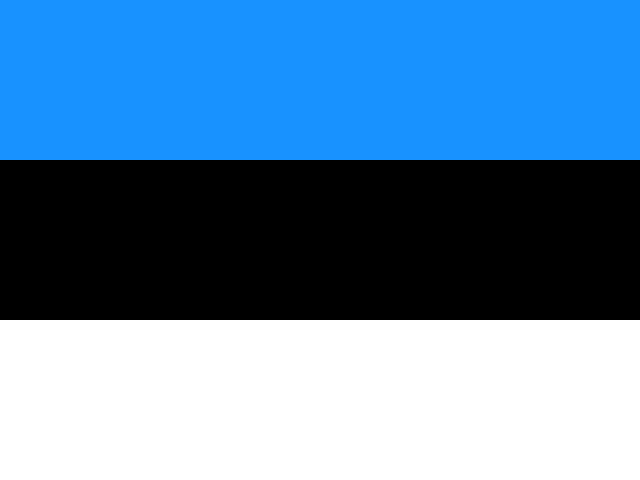
- Description: three equal horizontal bands of blue (top), black, and whiteMeaning: blue stands for faith, loyalty, and devotion, and also the sky, sea, and lakes; black for the country's soil and the Estonian people's past suffering; white for striving for enlightenment and virtue and also for birch bark, snow, and summer nights illuminated by the midnight sun
- National symbols
- barn swallow, cornflower
- National colours
- blue, black, white
- National anthem
- Title: "Mu isamaa, mu onn ja room" (My Native Land, My Pride and Joy)Lyrics/music: Johann Voldemar JANNSEN/Fredrik PACIUSHistory: adopted 1920, but banned between 1940 and 1990 under Soviet occupation; unofficially in use since 1869, it has the same melody as Finland's anthem, but with different lyrics
- UNESCO World Heritage Sites
- Total World Heritage Sites: 2 (both cultural)Selected World Heritage Site locales: Historic Center (Old Town) of Tallinn; Struve Geodetic Arc
Economy
- Overview
- high-income, service-based EU and eurozone economy; rebound in exports playing a role in economic recovery; rising food prices contributing to inflation; decrease in labor force participation and rising unemployment rate; recovery depends on boosting private investment and productivity rates
- GDP (PPP)
- $57.001 billion (2024 est.)
- GDP per person (PPP)
- $41,500 (2024 est.)
- GDP growth
- -0.3% (2024 est.)
- Inflation
- 3.5% (2024 est.)
- Unemployment
- 7.9% (2024 est.)
- Below poverty line
- 22.5% (2022 est.)
- Farm products
- milk, wheat, barley, rapeseed, peas, oats, potatoes, rye, pork, triticale (2023)
- Industries
- food, engineering, electronics, wood and wood products, textiles; information technology, telecommunications
- Exports
- $32.637 billion (2024 est.)
- Main exports
- cars, wood, broadcasting equipment, refined petroleum, prefabricated buildings (2023)
- Export partners
- Finland 14%, Latvia 10%, Lithuania 9%, Sweden 7%, Russia 6% (2023)
- Main imports
- cars, refined petroleum, broadcasting equipment, natural gas, packaged medicine (2023)
- Import partners
- Finland 11%, Germany 11%, China 10%, Lithuania 6%, Poland 6% (2023)
- Money sent home from abroad
- 1.2% of GDP (2024 est.)
Energy, internet and transport
- Electricity access
- Electrification - total population: 100% (2022 est.)
- Electricity sources
- Fossil fuels: 52.2% of total installed capacity (2023 est.)Solar: 9.7% of total installed capacity (2023 est.)Wind: 10.5% of total installed capacity (2023 est.)Hydroelectricity: 0.4% of total installed capacity (2023 est.)Biomass and waste: 27.2% of total installed capacity (2023 est.)
- Internet users
- Percent of population: 93% (2023 est.)
- Mobile phones
- Total subscriptions: 2.06 million (2024 est.)Subscriptions per 100 inhabitants: 151 (2024 est.)
- TV and radio
- the publicly owned broadcaster, Eesti Rahvusringhaaling (ERR), operates 3 TV channels and 5 radio networks; growing number of private commercial radio stations broadcasting nationally, regionally, and locally; fully transitioned to digital television in 2010; national private TV channels expanding service, with a range of channels aimed at Russian-speaking viewers; in 2016, there were 42 on-demand services available in Estonia, including 19 pay TVOD and SVOD services; roughly 85% of households accessed digital television services
- Airports
- 34 (2025)
- Railways
- Total: 1,441 km (2020) 225 km electrified
- Merchant ships
- Total: 72 (2023)By type: general cargo 3, oil tanker 3, other 66
Military and space
- Armed forces
- Estonian Defense Forces: Land Forces, Navy, Air Force; Estonian Defense LeagueMinistry of Interior: Police and Border Guard Board, Internal Security Service (2025)
- Military spending
- 3.4% of GDP (2025 est.)
- Military service
- 18-27 for compulsory military or governmental service for men; conscript service requirement 8-11 months depending on education; non-commissioned officers, reserve officers, and specialists serve 11 months; women can volunteer, and as of 2018 could serve in any military branch (2025)
Global issues
- Refugees and displaced people
- Refugees: 42,439 (2024 est.)Stateless persons: 63,944 (2024 est.)
Neighbouring countries
- Phone code
- +372
- Internet domain
- .ee