Latvia
Republic of Latvia · Latvija
Conquered by German crusaders in the 13th century, then ruled by Poland, Sweden and Russia. Independent 1918–1940, then Soviet. Regained independence in 1991; EU and NATO member since 2004.
See Latvia on the 3D globeTake a quiz
Population1.9 million
Area64,559 km²
CapitalRiga
RegionNorthern Europe
Did you know?
- Riga has the highest concentration of Art Nouveau buildings in the world
- The first decorated Christmas tree is claimed by Riga (1510)
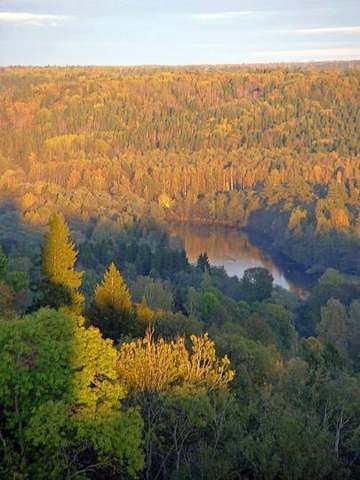
- About half the land is forest
Key facts about Latvia
- Government
- Parliamentary republic
- Religion
- Lutheran ~20%, Catholic ~20%, Orthodox ~15%, many unaffiliated
- Founded / independence
- 1918; restored 1991
- Rich in
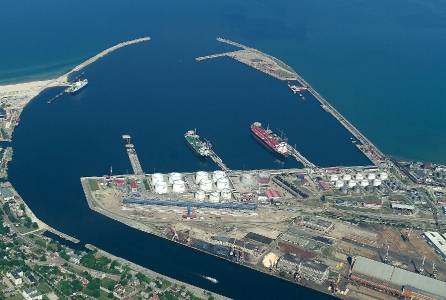
- Timber, transit ports, food processing
- Languages
- Latvian
Latvian (Baltic): Livonian, Middle, High Latvian dialects; Latgalian; Russian minority - Currency
- Euro (€)
- People are called
- Latvian
- Main cities
- Riga, Daugavpils, Liepāja, Jelgava
Timeline of Latvia
- 1201Riga founded
- 1621Swedish rule
- 1710Russian rule
- 1918Independence
- 1940Soviet occupation
- 1991Independence restored
- 2004Joins EU and NATO
Places to see in Latvia
- Riga Old Town
- Rundāle Palace
- Gauja National Park
- Jūrmala beach
- House of the Blackheads
Food and drink
Grey peas with bacon · rye bread · smoked fish · Riga Black Balsam
Culture and famous for
Song and Dance Festival; Riga's Art Nouveau buildings
Popular sports
Ice hockey, basketball
Geography and climate
- Highest point
- Gaiziņkalns, 312 m
- Rivers, lakes and seas
- Daugava; about 2,000 lakes
- Climate
- Cool continental
- Coastline
- Has a sea coast
- Population density
- 29 people per km²
Wars and conflicts
- Latvian War of Independence 1918–20
- Soviet occupation
- WWII
Alliances and memberships
Military and security
Political unions and regional organisations
European UnionEurozoneCouncil of Europe
Economy and trade
Latvia in depth
Detailed facts from the CIA World Factbook (public domain, latest edition).
Overview
- History in brief
- Several eastern Baltic tribes merged in medieval times to form the ethnic core of the Latvian people (ca. 8th-12th centuries A.D.). The region subsequently came under the control of Germans, Poles, Swedes, and finally Russians. A Latvian republic emerged following World War I, but the USSR annexed it in 1940 -- an action never recognized by the US and many other countries. Latvia reestablished its independence in 1991 after the breakup of the Soviet Union. Although the last Russian troops left in 1994, the status of the Russian minority (some 25% of the population) remains of concern to Moscow. Latvia joined both NATO and the EU in 2004; it joined the euro zone in 2014 and the OECD in 2016.
Geography
- Location
- Eastern Europe, bordering the Baltic Sea, between Estonia and Lithuania
- Size compared
- slightly larger than West Virginia
- Land borders
- Total: 1,370 kmBorder countries: Belarus 161 km; Estonia 333 km; Lithuania 544 km; Russia 332 km
- Coastline
- 498 km
- Climate
- maritime; wet, moderate winters
- Terrain
- low plain
- Elevation
- Highest point: Gaizina Kalns 312 mLowest point: Baltic Sea 0 mMean elevation: 87 m
- Natural resources
- peat, limestone, dolomite, amber, hydropower, timber, arable land
- Natural hazards
- large percentage of agricultural fields can become waterlogged and require drainage
- Notes
- most of the country is composed of fertile low-lying plains with some hills in the east
- Environmental issues
- some soil, water, and air pollution
People and society
- Population
- Total: 1,888,439 (2025 est.)Male: 876,654Female: 1,011,785
- Nationality
- Noun: Latvian(s)Adjective: Latvian
- Ethnic groups
- Latvian 62.7%, Russian 24.5%, Belarusian 3.1%, Ukrainian 2.2%, Polish 2%, Lithuanian 1.1%, other 1.8%, unspecified 2.6% (2021 est.)
- Languages
- Latvian (official) 56.3%, Russian 33.8%, other 0.6% (includes Polish, Ukrainian, and Belarusian), unspecified 9.4% (2011 est.)Major-language sample(s): World Factbook, neaizstājams avots pamata informāciju. (Latvian)The World Factbook, the indispensable source for basic information.
- Religions
- Lutheran 36.2%, Roman Catholic 19.5%, Orthodox 19.1%, other Christian 1.6%, other 0.1%, unspecified/none 23.5% (2017 est.)
- Median age
- Total: 43.8 years (2025 est.)Male: 41.6 yearsFemale: 49.2 years
- Population growth
- -1.27% (2025 est.)
- Life expectancy
- Total population: 76.4 years (2024 est.)Male: 72 yearsFemale: 81 years
- Children per woman
- 1.25 children born/woman (2025 est.)
- Urbanization
- Urban population: 68.7% of total population (2023)Rate of urbanization: -0.68% annual rate of change (2020-25 est.)
- Largest cities
- 621,000 RIGA (capital) (2023)
- Years in school
- Total: 16 years (2023 est.)Male: 15 years (2023 est.)Female: 17 years (2023 est.)
Government
- Official names
- Conventional long form: Republic of LatviaConventional short form: LatviaLocal long form: Latvijas RepublikaLocal short form: LatvijaFormer: Latvian Soviet Socialist Republic (while occupied by the USSR)Etymology: the name originates from the Latgalians, one of four eastern Baltic tribes that formed the ethnic core of the Latvian people (ca. 8th-12th centuries A.D.)
- Government type
- parliamentary republic
- Capital
- Name: RigaGeographic coordinates: 56 57 N, 24 06 ETime difference: UTC+2 (7 hours ahead of Washington, DC, during Standard Time)Daylight saving time: +1hr, begins last Sunday in March; ends last Sunday in OctoberEtymology: the name's origin is unclear; it may derive from the Old Lithuanian word ringa, meaning "bend" or "curve" and referring to the city's location on the Western Dvina River; alternatively, it may come from the Latvian word ridzina, meaning "stream"
- Regions
- 36 municipalities (novadi, singular - novads) and 7 state cities (valstpilsetu pasvaldibas, singular - valstspilsetas pasvaldiba)Municipalities: Adazi, Aizkraukle, Aluksne, Augsdaugava, Balvi, Bauska, Cesis, Dienvidkurzeme, Dobele, Gulbene, Jekabpils, Jelgava, Kekava, Kraslava, Kuldiga, Limbazi, Livani, Ludza, Madona, Marupe, Ogre, Olaine, Preili, Rezekne, Ropazi, Salaspils, Saldus, Saulkrasti, Sigulda, Smiltene, Talsi, Tukums, Valka, Valmiera, Varaklani, VentspilsCities: Daugavpils, Jelgava, Jurmala, Liepaja, Rezekne, Riga, Ventspils
- Independence
- 18 November 1918 (from Soviet Russia); 4 May 1990 (declared from the Soviet Union); 6 September 1991 (recognized by the Soviet Union)
- National holiday
- Independence Day (Republic of Latvia Proclamation Day), 18 November (1918)
- Constitution
- History: several previous (pre-1991 independence); after independence was restored in 1991, parts of the 1922 constitution were reintroduced on 4 May 1990 and fully reintroduced on 6 July 1993Amendment process: proposed by two thirds of Parliament members or by petition of one tenth of qualified voters submitted through the president; passage requires at least two-thirds majority vote of Parliament in each of three readings; amendment of constitutional articles, including national sovereignty, language, the parliamentary electoral system, and constitutional amendment procedures, requires passage in a referendum by majority vote of at least one half of the electorate
- Legal system
- civil law system with traces of socialist legal traditions and practices
- Voting age
- 18 years of age; universal
- Flag meaning
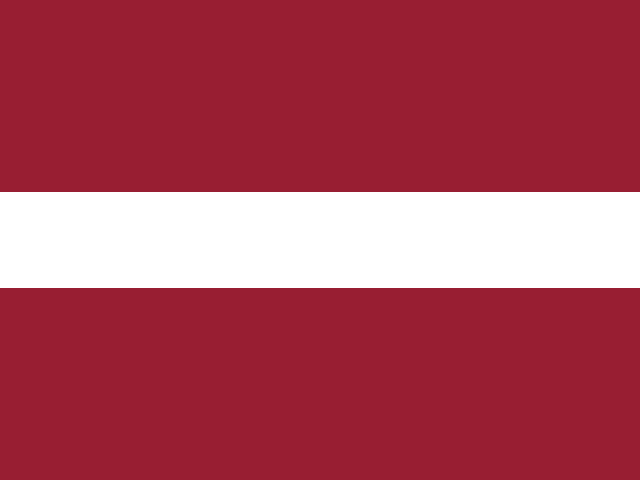
- Description: three horizontal bands of maroon (top), white (half-width), and maroonHistory: the flag is one of the older banners in the world -- a medieval chronicle mentions Latvian tribes using a red standard with a white stripe around 1280
- National symbols
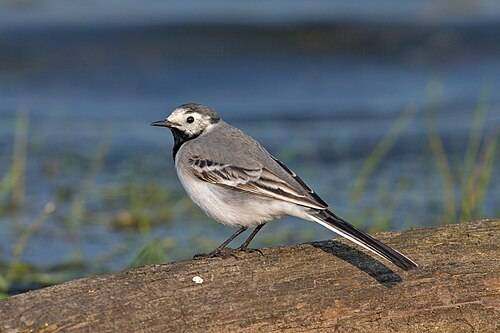
- white wagtail (bird)
- National colours
- maroon, white
- National anthem
- Title: "Dievs, sveti Latviju!" (God Bless Latvia)Lyrics/music: Karlis BAUMANISHistory: adopted 1920, restored 1990; first performed in 1873 when Latvia was part of Russia; banned during the Soviet occupation from 1940 to 1990
- UNESCO World Heritage Sites
- Total World Heritage Sites: 3 (all cultural)Selected World Heritage Site locales: Historic Center of Riga; Struve Geodetic Arc; Old town of Kuldīga
Economy
- Overview
- high-income EU and eurozone member; weak recovery following economic contraction, with slight increase in private consumption and uncertain trade environment; challenges from skilled-labor shortages, capital market access, large informal sector, and green and digital transitions
- GDP (PPP)
- $72.516 billion (2024 est.)
- GDP per person (PPP)
- $38,900 (2024 est.)
- GDP growth
- -0.4% (2024 est.)
- Inflation
- 1.3% (2024 est.)
- Unemployment
- 6.8% (2024 est.)
- Below poverty line
- 22.5% (2022 est.)
- Farm products
- wheat, milk, rapeseed, barley, oats, potatoes, rye, beans, peas, chicken (2023)
- Industries
- processed foods, processed wood products, textiles, processed metals, pharmaceuticals, railroad cars, synthetic fibers, electronics
- Exports
- $28.117 billion (2024 est.)
- Main exports
- wood, wheat, broadcasting equipment, packaged medicine, natural gas (2023)
- Export partners
- Lithuania 19%, Estonia 6%, Russia 6%, Germany 6%, Sweden 5% (2023)
- Main imports
- refined petroleum, cars, packaged medicine, broadcasting equipment, natural gas (2023)
- Import partners
- Lithuania 18%, Germany 11%, Poland 10%, Estonia 8%, Finland 5% (2023)
- Money sent home from abroad
- 3.1% of GDP (2024 est.)
Energy, internet and transport
- Electricity access
- Electrification - total population: 100% (2022 est.)
- Electricity sources
- Fossil fuels: 22.4% of total installed capacity (2023 est.)Solar: 3.8% of total installed capacity (2023 est.)Wind: 4.2% of total installed capacity (2023 est.)Hydroelectricity: 59.3% of total installed capacity (2023 est.)Biomass and waste: 10.4% of total installed capacity (2023 est.)
- Internet users
- Percent of population: 92% (2023 est.)
- Mobile phones
- Total subscriptions: 2.27 million (2024 est.)Subscriptions per 100 inhabitants: 121 (2024 est.)
- TV and radio
- several national and regional commercial TV stations are foreign-owned, 2 national TV stations are publicly owned; system supplemented by privately owned regional and local TV stations; cable and satellite multi-channel TV services with domestic and foreign broadcasts available; publicly owned broadcaster operates 4 radio networks with dozens of stations; dozens of private broadcasters also operate radio stations
- Airports
- 55 (2025)
- Railways
- Total: 2,216 km (2020) 257 km electrified
- Merchant ships
- Total: 83 (2023)By type: container ship 2, general cargo 30, oil tanker 10, other 41
Military and space
- Armed forces
- National Armed Forces (Nacionalie Brunotie Speki or NBS): Land Forces (Latvijas Sauszemes Speki), Naval Force (Latvijas Juras Speki, includes Coast Guard (Latvijas Kara Flote)), Air Force (Latvijas Gaisa Speki), National Guard (aka Land Guard or Zemessardze)Ministry of Interior: State Police, State Border Guards, State Security Service (2025)
- Military spending
- 3.7% of GDP (2025 est.)
- Military service
- mandatory military service for all men 18-24; men and women 18-27 may volunteer for military service; service length 11 months in the Armed Forces or National Guard, or 5 years in the National Guard as a whole, with a minimum of 21 days of individual training and a maximum of 7 days of collective training each year (2026)
Global issues
- Refugees and displaced people
- Refugees: 49,483 (2024 est.)Stateless persons: 173,891 (2024 est.)
Neighbouring countries
- Phone code
- +371
- Internet domain
- .lv