Russia
Russian Federation · Россия
Grew from Kievan Rus and Muscovy into the largest country on Earth. The 1917 revolution created the Soviet Union, which collapsed in 1991. Its full-scale invasion of Ukraine in 2022 is still ongoing in 2026, with peace talks stalled.
See Russia on the 3D globeTake a quiz
Ongoing: Russia–Ukraine war
Did you know?
- Spans 11 time zones
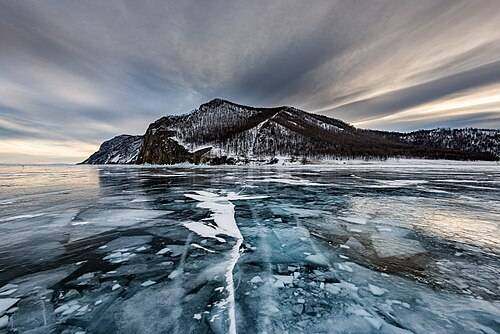
- Lake Baikal holds about 20% of the world's unfrozen fresh water
- Bigger in area than Pluto's surface
Key facts about Russia
- Government
- Federal semi-presidential republic (authoritarian)
- Religion
- Russian Orthodox ~42%, Islam ~10%, many unaffiliated
- Founded / independence
- 862 (Rus); 1991 Russian Federation
- Rich in
- Oil, gas, coal, nickel, palladium, diamonds, wheat, timber — vast natural wealth
- Languages
- Russian
Russian plus over 100 languages: Tatar, Bashkir, Chechen, Chuvash, Yakut and others - Currency
- Russian ruble (₽)
- People are called
- Russian
- Main cities
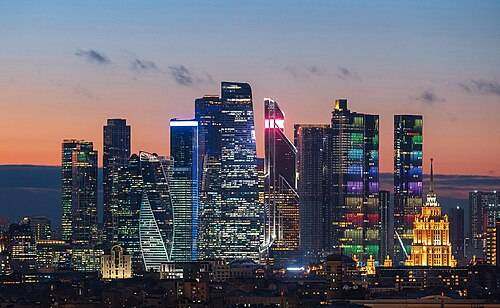
- Moscow, Saint Petersburg, Novosibirsk, Yekaterinburg, Kazan
Timeline of Russia
- 862Rus state founded
- 988Christianisation
- 1547Ivan IV first tsar
- 1812Napoleon invades
- 1917Revolution
- 1961Gagarin in space
- 1991USSR dissolves
- 2022Invades Ukraine
Places to see in Russia
- Red Square and the Kremlin
- St Basil's Cathedral
- Hermitage Museum
- Lake Baikal
- Trans-Siberian Railway
- Peterhof
Food and drink
Borscht · pelmeni · blini · beef stroganoff · caviar
Culture and famous for
Writers Tolstoy, Dostoevsky, Chekhov; composer Tchaikovsky; ballet (Bolshoi); first satellite and first human in space
Popular sports
Ice hockey, football, chess, figure skating
Geography and climate
- Highest point
- Mount Elbrus, 5,642 m (Europe's highest)
- Rivers, lakes and seas
- Volga, Ob, Yenisei, Lena; Lake Baikal
- Climate
- Continental to Arctic
- Coastline
- Has a sea coast
- Population density
- 8 people per km²
Wars and conflicts
- Napoleonic invasion 1812
- Crimean War
- WWI
- Civil War
- WWII (27 million Soviet dead)
- Chechen wars
- invasion of Ukraine 2022–present
Empires and states that once stood here
Scythia c. 700–200 BCKhazar Khaganate c. 650–969Kievan Rus 882–1240Teutonic Order State 1230–1525Tsardom and Russian Empire 1547–1917Polish-Lithuanian Commonwealth 1569–1795Soviet Union (USSR) 1922–1991
Alliances and memberships
Military and security
CSTOShanghai Cooperation Organisation
Political unions and regional organisations
Eurasian Economic UnionCommonwealth of Independent StatesUnion State of Russia and BelarusBRICS
Economy and trade
G20OPEC (OPEC+ partner (not a member))APEC
Defence treaties
- Russia–North Korea Comprehensive Strategic Partnership (2024): Mutual-defence pact; North Korean troops fought for Russia in the Kursk region.
- Russia–Belarus Union State defence (1999): Joint military doctrine; Russian tactical nuclear weapons deployed in Belarus since 2023.
Russia in depth
Detailed facts from the CIA World Factbook (public domain, latest edition).
Overview
- History in brief
- Founded in the 12th century, the Principality of Muscovy emerged from over 200 years of Mongol domination (13th-15th centuries) and gradually conquered and absorbed surrounding principalities. In the early 17th century, a new ROMANOV dynasty continued this policy of expansion across Siberia to the Pacific. Under PETER I (1682-1725), hegemony was extended to the Baltic Sea and the country was renamed the Russian Empire. During the 19th century, more territorial acquisitions were made in Europe and Asia. Defeat in the Russo-Japanese War of 1904-05 contributed to the Revolution of 1905, which resulted in the formation of a parliament and other reforms. Devastating defeats and food shortages in World War I led to widespread rioting in the major cities of the Russian Empire and to the overthrow of the ROMANOV Dynasty in 1917. The communists under Vladimir LENIN seized power soon after and formed the Union of Soviet Socialist Republics (USSR).The brutal rule of Iosif STALIN (1928-53) strengthened communist control and Russian dominance of the Soviet Union at a cost of tens of millions of lives. After defeating Germany in World War II as part of an alliance with the US (1939-1945), the USSR expanded its territory and influence in Eastern Europe and emerged as a global power. The USSR was the principal US adversary during the Cold War (1947-1991). The Soviet economy and society stagnated in the decades following Stalin's rule, until General Secretary Mikhail GORBACHEV (1985-91) introduced glasnost (openness) and perestroika (restructuring) in an attempt to modernize communism. His initiatives inadvertently released political and economic forces that by December 1991 led to the dissolution of the USSR into Russia and 14 other independent states. In response to the ensuing turmoil during President Boris YELTSIN's term (1991-99), Russia shifted toward a centralized authoritarian state under President Vladimir PUTIN (2000-2008, 2012-present) in which the regime seeks to legitimize its rule through managed elections, populist appeals, a foreign policy focused on enhancing the country's geopolitical influence, and commodity-based economic growth.In 2014, Russia purported to annex Ukraine's Crimean Peninsula and occupied large portions of two eastern Ukrainian oblasts. In sporadic fighting over the next eight years, more than 14,000 civilians were killed or wounded as a result of the Russian invasion in eastern Ukraine. On 24 February 2022, Russia escalated its conflic
Geography
- Location
- North Asia bordering the Arctic Ocean, extending from Eastern Europe (the portion west of the Urals) to the North Pacific Ocean
- Size compared
- approximately 1.8 times the size of the US
- Land borders
- Total: 22,407 kmBorder countries: Azerbaijan 338 km; Belarus 1,312 km; China (southeast) 4,133 km and China (south) 46 km; Estonia 324 km; Finland 1,309 km; Georgia 894 km; Kazakhstan 7,644 km; North Korea 18 km; Latvia 332 km; Lithuania (Kaliningrad Oblast) 261 km; Mongolia 3,452 km; Norway 191 km; Poland (Kaliningrad Oblast) 209 km; Ukraine 1,944 km
- Coastline
- 37,653 km
- Climate
- ranges from steppes in the south through humid continental in much of European Russia; subarctic in Siberia to tundra climate in the polar north; winters vary from cool along Black Sea coast to frigid in Siberia; summers vary from warm in the steppes to cool along Arctic coast
- Terrain
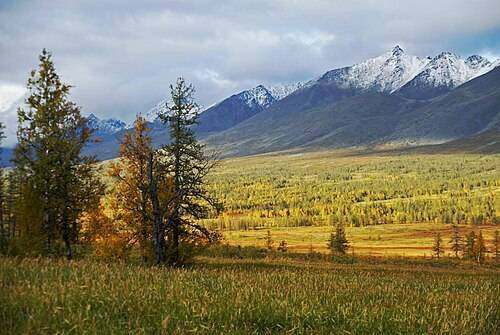
- broad plain with low hills west of Urals; vast coniferous forest and tundra in Siberia; uplands and mountains along southern border regions
- Elevation
- Highest point: Gora El'brus (highest point in Europe) 5,642 mLowest point: Caspian Sea -28 mMean elevation: 600 m
- Natural resources
- wide natural-resource base including major deposits of oil, natural gas, coal, and many strategic minerals, bauxite, reserves of rare earth elements, timber
- Major rivers
- Yenisey-Angara - 5,539 km; Ob-Irtysh - 5,410 km; Amur river mouth (shared with China [s] and Mongolia) - 4,444 km; Lena - 4,400 km; Volga - 3,645 km; Kolyma - 2,513 km; Ural river source (shared with Kazakhstan [m]) - 2,428 km; Dnepr (Dnieper) river source (shared with Belarus and Ukraine [m]) - 2,287 km; Don - 1,870 km; Pechora - 1,809 kmNote: [s] after country name indicates river source; [m] after country name indicates river mouth
- Major lakes
- Fresh water lake(s): Lake Baikal - 31,500 sq km; Lake Ladoga - 18,130 sq km; Lake Onega - 9,720 sq km; Lake Khanka (shared with China) - 5,010 sq km; Lake Peipus - 4,300 sq km (shared with Estonia); Ozero Vygozero - 1,250 sq km; Ozero Beloye - 1,120 sq kmSalt water lake(s): Caspian Sea (shared with Iran, Azerbaijan, Turkmenistan, and Kazakhstan) - 374,000 sq km; Ozero Malyye Chany - 2,500 sq km; Curonian Lagoon (shared with Lithuania) - 1,620 sq kmnote - the Caspian Sea is the World's largest lake
- Natural hazards
- permafrost over much of Siberia is a major impediment to development; volcanic activity in the Kuril Islands; volcanoes and earthquakes on the Kamchatka Peninsula; spring floods and summer/autumn forest fires in Siberia and parts of European RussiaVolcanism: Kamchatka Peninsula is home to 29 historically active volcanoes, with dozens more in the Kuril Islands; Kliuchevskoi (4,835 m) is Kamchatka's most active volcano; Avachinsky and Koryaksky volcanoes, which pose a threat to the city of Petropavlovsk-Kamchatsky, have been deemed Decade Volcanoes by the International Association of Volcanology and Chemistry of the Earth's Interior, worthy of study due to their explosive history and close proximity to human populations; other notable historically active volcanoes include Bezymianny, Chikurachki, Ebeko, Gorely, Grozny, Karymsky, Ketoi, Kronotsky, Ksudach, Medvezhia, Mutnovsky, Sarychev Peak, Shiveluch, Tiatia, Tolbachik, and Zheltovsky; see note 2 under "Geography - note"
- Notes
- Note 1: largest country in the world in terms of area; despite its size, much of the country lacks the soil and climate (either too cold or too dry) for agricultureNote 2: Russia's far east, particularly the Kamchatka Peninsula, lies along the Ring of Fire, which is a belt bordering the Pacific Ocean that contains about 75% of the world's volcanoes and up to 90% of the world's earthquakesNote 3: Mount El'brus is Europe's tallest peak; Lake Baikal, the deepest lake in the world, is estimated to hold one fifth of the world's fresh surface waterNote 4: Kaliningrad oblast is an exclave annexed from Germany after World War II; its capital city of Kaliningrad -- formerly Koenigsberg -- is the only Baltic port in Russia that remains ice-free in the winter
- Environmental issues
- air pollution from heavy industry, coal-fired electric plants, and transportation in major cities; industrial, municipal, and agricultural pollution of inland waterways and seacoasts; deforestation; soil erosion; soil contamination from agricultural chemicals; nuclear waste disposal; scattered areas of radioactive contamination; groundwater contamination from toxic waste; urban solid-waste management; abandoned stocks of pesticides
People and society
- Population
- Total: 140,134,279 (2025 est.)Male: 65,166,555Female: 74,967,724
- Nationality
- Noun: Russian(s)Adjective: Russian
- Ethnic groups
- Russian 77.7%, Tatar 3.7%, Ukrainian 1.4%, Bashkir 1.1%, Chuvash 1%, Chechen 1%, other 10.2%, unspecified 3.9% (2010 est.)
- Languages
- Russian (official) 85.7%, Tatar 3.2%, Chechen 1%, other 10.1% (2010 est.)Major-language sample(s): Книга фактов о мире – незаменимый источник базовой информации. (Russian)The World Factbook, the indispensable source for basic information.
- Religions
- Russian Orthodox 15-20%, Muslim 10-15%, other Christian 2% (2006 est.)
- Median age
- Total: 42.3 years (2025 est.)Male: 39.4 yearsFemale: 44.5 years
- Population growth
- -0.49% (2025 est.)
- Life expectancy
- Total population: 72.3 years (2024 est.)Male: 67.4 yearsFemale: 77.4 years
- Children per woman
- 1.52 children born/woman (2025 est.)
- Urbanization
- Urban population: 75.3% of total population (2023)Rate of urbanization: 0.11% annual rate of change (2020-25 est.)
- Largest cities
- 12.680 million MOSCOW (capital), 5.561 million Saint Petersburg, 1.695 million Novosibirsk, 1.528 million Yekaterinburg, 1.292 million Kazan, 1.251 million Nizhniy Novgorod (2023)
- Literacy
- Total population: 99.9% (2021 est.)Male: 99.9% (2021 est.)Female: 99.9% (2021 est.)
- Years in school
- Total: 15 years (2023 est.)Male: 15 years (2023 est.)Female: 15 years (2023 est.)
Government
- Official names
- Conventional long form: Russian FederationConventional short form: RussiaLocal long form: Rossiyskaya FederatsiyaLocal short form: RossiyaFormer: Russian Empire, Russian Soviet Federative Socialist RepublicEtymology: Russian lands were referred to as Muscovy until PETER I declared the Empire of All Russias in 1721; the new name aimed at identifying the new Russia with European political tradition; "Rus" was the Old Finnish name given to Varangians (eastern Vikings) who entered the area in the 9th century
- Government type
- semi-presidential federation
- Capital
- Name: MoscowGeographic coordinates: 55 45 N, 37 36 ETime difference: UTC+3 (8 hours ahead of Washington, DC, during Standard Time)Daylight saving time: does not observe daylight savings time (DST)Time zone note: Russia has 11 time zones, the largest number of contiguous time zones of any country in the world; in 2014, two time zones were added and DST droppedEtymology: named after the Moskva River; the origin of the river's name is unclear
- Regions
- 46 provinces (oblasti, singular - oblast), 21 republics (respubliki, singular - respublika), 4 autonomous districts (avtonomnyye okrugi, singular - avtonomnyy okrug), 9 federal subjects (kraya, singular - kray), 2 federal cities (goroda, singular - gorod), and 1 autonomous province (avtonomnaya oblast')Oblasts: Amur (Blagoveshchensk), Arkhangelsk, Astrakhan, Belgorod, Bryansk, Chelyabinsk, Irkutsk, Ivanovo, Kaliningrad, Kaluga, Kemerovo, Kirov, Kostroma, Kurgan, Kursk, Leningrad (Gatchina), Lipetsk, Magadan, Moscow, Murmansk, Nizhniy Novgorod, Novgorod, Novosibirsk, Omsk, Orenburg, Orel, Penza, Pskov, Rostov, Ryazan, Sakhalin (Yuzhno-Sakhalinsk), Samara, Saratov, Smolensk, Sverdlovsk (Yekaterinburg), Tambov, Tomsk, Tula, Tver, Tyumen, Ulyanovsk, Vladimir, Volgograd, Vologda, Voronezh, YaroslavlRepublics: Adygeya (Maykop), Altay (Gorno-Altaysk), Bashkortostan (Ufa), Buryatiya (Ulan-Ude), Chechnya (Groznyy), Chuvashiya (Cheboksary), Dagestan (Makhachkala), Ingushetiya (Magas), Kabardino-Balkariya (Nal'chik), Kalmykiya (Elista), Karachayevo-Cherkesiya (Cherkessk), Kareliya (Petrozavodsk), Khakasiya (Abakan), Komi (Syktyvkar), Mariy-El (Yoshkar-Ola), Mordoviya (Saransk), North Ossetia (Vladikavkaz), Sakha [Yakutiya] (Yakutsk), Tatarstan (Kazan), Tyva (Kyzyl), Udmurtiya (Izhevsk)Autonomous districts: Chukotka (Anadyr'), Khanty-Mansi-Yugra (Khanty-Mansiysk), Nenets (Nar'yan-Mar), Yamalo-Nenets (Salekhard)Federal subjects: Altay (Barnaul), Kamchatka (Petropavlovsk-Kamchatskiy), Khabarovsk, Krasnodar, Krasnoyarsk, Perm, Primorskiy [Maritime] (Vladivostok), Stavropol, Zabaykalsk [Transbaikal] (Chita)Federal cities: Moscow [Moskva], Saint Petersburg [Sankt-Peterburg]Autonomous province: Yevreyskaya [Jewish] (Birobidzhan)
- Independence
- 25 December 1991 (from the Soviet Union; Russian SFSR renamed Russian Federation); notable earlier dates: 1157 (Principality of Vladimir-Suzdal created); 16 January 1547 (Tsardom of Muscovy established); 22 October 1721 (Russian Empire proclaimed); 30 December 1922 (Soviet Union established)
- National holiday
- Russia Day, 12 June (1990)
- Constitution
- History: several previous (during Russian Empire and Soviet era); latest drafted 12 July 1993, adopted by referendum 12 December 1993, effective 25 December 1993Amendment process: proposed by the president of the Russian Federation, by either house of the Federal Assembly, by the government of the Russian Federation, or by legislative (representative) bodies of the Federation's constituent entities; proposals to amend the government’s constitutional system, human and civil rights and freedoms, and procedures for amending or drafting a new constitution require formation of a Constitutional Assembly; passage of such amendments requires two-thirds majority vote of its total membership; passage in a referendum requires participation of an absolute majority of eligible voters and an absolute majority of valid votes; approval of proposed amendments to the government structure, authorities, and procedures requires approval by the legislative bodies of at least two thirds of the Russian Federation's constituent entities
- Legal system
- civil law system; judicial review of legislative acts
- Voting age
- 18 years of age; universal
- Flag meaning
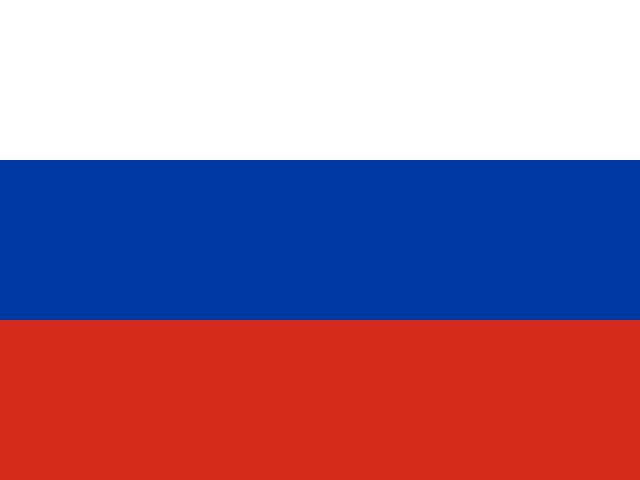
- Description: three equal horizontal bands of white (top), blue, and redMeaning: colors may have been based on the Dutch flag, but no official meaning is assignedHistory: created when Russia built its first naval vessels, and was used mostly as a naval flag until the 19th century
- National symbols
- bear, double-headed eagle
- National colours
- white, blue, red
- National anthem
- Title: “Gosudarstvenny Gimn Rossiyskoy Federatsii” (National Anthem of the Russian Federation)Lyrics/music: Sergey Vladimirovich MIKHALKOV/Aleksandr Vasilyevich ALEKSANDROVHistory: adopted 2000; Russia adopted the tune of the Soviet Union's anthem (composed in 1939), as well as new lyrics; MIKHALKOV, who wrote the new lyrics, also authored the Soviet lyrics in 1943
- UNESCO World Heritage Sites
- Total World Heritage Sites: 33 (22 cultural, 11 natural)Selected World Heritage Site locales: Historic Centre of Saint Petersburg and Related Groups of Monuments (c); Kizhi Pogost (c); Kremlin and Red Square, Moscow (c); Historic Monuments of Novgorod and Surroundings (c); White Monuments of Vladimir and Suzdal (c); Architectural Ensemble of the Trinity Sergius Lavra in Sergiev Posad (c); Church of the Ascension, Kolomenskoye (c); Lake Baikal (n); Volcanoes of Kamchatka (n); Ensemble of the Ferapontov Monastery (c); Historic and Architectural Complex of the Kazan Kremlin (c); Citadel, Ancient City and Fortress Buildings of Derbent (c); Uvs Nuur Basin (n); Ensemble of the Novodevichy Convent (c); Natural System of Wrangel Island Reserve (n); Historical Centre of the City of Yaroslavl (c); Lena Pillars Nature Park (n); Bolgar Historical and Archaeological Complex (c); Assumption Cathedral and Monastery of the town-island of Sviyazhsk (c); Churches of the Pskov School of Architecture (c); Petroglyphs of Lake Onega and the White Sea (c); Rock Paintings of Shulgan-Tash Cave (c)
Economy
- Overview
- natural resource-rich Eurasian economy; leading energy exporter to Europe and Asia; decreased oil export reliance; endemic corruption, Ukrainian invasion, and lack of green infrastructure limit investment and have led to sanctions
- GDP (PPP)
- $6.089 trillion (2024 est.)
- GDP per person (PPP)
- $41,700 (2024 est.)
- GDP growth
- 4.3% (2024 est.)
- Inflation
- 6.7% (2021 est.)
- Unemployment
- 2.6% (2024 est.)
- Below poverty line
- 12.1% (2020 est.)
- Farm products
- wheat, sugar beets, milk, barley, potatoes, sunflower seeds, maize, soybeans, chicken, pork (2023)
- Industries
- complete range of mining and extractive industries producing coal, oil, gas, chemicals, and metals; all forms of machine building from rolling mills to high-performance aircraft and space vehicles; defense industries (including radar, missile production, advanced electronic components), shipbuilding; road and rail transportation equipment; communications equipment; agricultural machinery, tractors, and construction equipment; electric power generating and transmitting equipment; medical and scientific instruments; consumer durables, textiles, foodstuffs, handicrafts
- Exports
- $475.277 billion (2024 est.)
- Main exports
- crude petroleum, refined petroleum, natural gas, coal, fertilizers (2023)
- Export partners
- China 33%, India 17%, Turkey 8%, Kazakhstan 4%, Brazil 3% (2023)
- Main imports
- cars, packaged medicine, broadcasting equipment, garments, plastic products (2023)
- Import partners
- China 53%, Turkey 5%, Germany 5%, Kazakhstan 5%, Italy 2% (2023)
- Money sent home from abroad
- 0.1% of GDP (2024 est.)
Energy, internet and transport
- Electricity access
- Electrification - total population: 100% (2022 est.)Electrification - urban areas: 99.1%Electrification - rural areas: 100%
- Electricity sources
- Fossil fuels: 61.8% of total installed capacity (2023 est.)Nuclear: 19.3% of total installed capacity (2023 est.)Solar: 0.2% of total installed capacity (2023 est.)Wind: 0.7% of total installed capacity (2023 est.)Hydroelectricity: 17.6% of total installed capacity (2023 est.)Biomass and waste: 0.3% of total installed capacity (2023 est.)
- Internet users
- Percent of population: 92% (2023 est.)
- Mobile phones
- Total subscriptions: 270 million (2024 est.)Subscriptions per 100 inhabitants: 186 (2024 est.)
- TV and radio
- 13 national TV stations: the federal government owns 1 and controls a second, state-owned Gazprom controls 2, state-affiliated Bank Rossiya controls 2, Moscow city administration runs 1, the Russian Orthodox Church owns 1, and the Russian military owns 1; around 3,300 national, regional, and local TV stations, with over two-thirds completely or partially state-controlled; satellite TV available; 2 state-run national radio networks, with a third majority-owned by Gazprom; around 2,400 public and commercial radio stations
- Airports
- 905 (2025)
- Railways
- Total: 85,494 km (2019)Narrow gauge: 957 km
- Merchant ships
- Total: 2,910 (2023)By type: bulk carrier 15, container ship 20, general cargo 976, oil tanker 387, other 1,512
Military and space
- Armed forces
- Armed Forces of the Russian Federation: Ground Forces (SV), Aerospace Forces (VKS), Navy (VMF); separate or independent troop branches include the Airborne Forces (VDV), Missile Troops of Strategic Purpose (RVSN; commonly to as Strategic Rocket Forces), Special Operations Forces, and Unmanned Systems ForcesFederal National Guard Troops Service of the Russian Federation (FSVNG, National Guard, Russian Guard, or Rosgvardiya)Federal Security Services (FSB): Federal Border Guard Service (includes land and maritime forces) (2025)
- Military spending
- 7% of GDP (2024 est.)
- Military service
- 18-30 years of age for compulsory service for men; 18-65 years of age for voluntary/contractual service; women and non-Russian citizens (18-30) may volunteer; minimum 12-month service obligation (2025)
- Space programme
- has one of the world’s largest space programs and is active across all areas of the space sector; builds, launches, and operates satellite/space launch vehicles, satellites, space stations, interplanetary probes, and manned, robotic, and re-usable spacecraft; has astronaut (cosmonaut) training program and conducts human space flight; researching and developing a broad range of other space-related technologies; participates in international space programs such as the International Space Station; has had relations with dozens of foreign space agencies and commercial entities, including those of China, the ESA, India, Japan, and the US; Roscosmos and its public subsidiaries comprise the majority of the Russian space industry; Roscosmos has eight operating areas, including manned space flights, launch systems, unmanned spacecraft, rocket propulsion, military missiles, space avionics, special military space systems, and flight control systems; private companies are also involved in a range of space systems (2025)
- Space milestones
- 1957 - placed world’s first satellite (Sputnik-1) in orbit1961-1964 - launched first man, first woman, and first multi-member crew into space1965 - launched first probe to successfully land on the Moon1967 - initial launch of Soviet-made Soyuz series space launch vehicle (SLV)1971 - placed first space station (Salyut) in orbit and successfully landed a probe on Venus1975 - joint Soviet (Soyuz)-US (Apollo) space mission1986 - began operation of Mir space station (in orbit until 2001)1995 - Global Navigation Satellite System (GLObalnaya NAvigatsionnaya Sputnikovaya Sistema or GLONASS) constellation completed2014 - initial launch of Angara SLV series2021 - announced agreements with China to send a robotic probe to an asteroid and jointly establish a station on the Moon2023 - launch first of a planned series of Moon landers (Luna-25; crashed on Moon's surface); announced intent to place first module of a new space station in orbit by 2027
Global issues
- Refugees and displaced people
- Refugees: 11,440 (2024 est.)IDPs: 172,783 (2024 est.)Stateless persons: 90,185 (2024 est.)
Neighbouring countries
AzerbaijanBelarusChinaEstoniaFinlandGeorgiaKazakhstanNorth KoreaLatviaLithuaniaMongoliaNorwayPolandUkraine
- Phone code
- +7
- Internet domain
- .ru