Ghana
Republic of Ghana
Ancient Ghana Empire gave the name; the Ashanti Empire was powerful. The first sub-Saharan colony to win independence, led by Kwame Nkrumah. A stable democracy since 1992.
See Ghana on the 3D globeTake a quiz
Population35 million
Area238,533 km²
CapitalAccra
RegionWestern Africa
Did you know?
- First sub-Saharan colony to gain independence (1957)
- Lake Volta is one of the world's largest reservoirs
- The 2019 "Year of Return" invited the African diaspora home
Key facts about Ghana
- Government
- Presidential republic
- Religion
- Christian ~71%, Islam ~20%
- Founded / independence
- 1957 (from UK)
- Rich in
- Gold (Africa's top producer), cocoa, oil
- Languages
- English
English; Akan (Twi, Fante), Ewe, Ga, Dagbani - Currency
- Ghanaian cedi (₵)
- People are called
- Ghanaian
- Main cities
- Accra, Kumasi, Tamale, Takoradi
Timeline of Ghana
- 1482Portuguese fort at Elmina
- 1701Ashanti Empire
- 1874British Gold Coast
- 1957Independence
- 1966Coup
- 1992Democracy
Places to see in Ghana
- Cape Coast Castle
- Kakum canopy walk
- Mole National Park
- Lake Volta
- Kwame Nkrumah Memorial
Food and drink
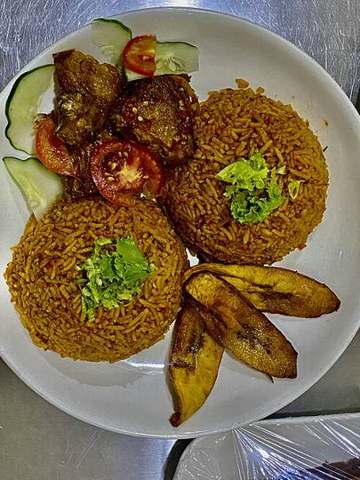
Jollof rice · fufu with light soup · kelewele · banku
Culture and famous for
Kente cloth; highlife and Afrobeats music; Ashanti gold
Popular sports
Football (Black Stars), boxing
Geography and climate
- Highest point
- Mount Afadja, 885 m
- Rivers, lakes and seas
- Volta River; Lake Volta (one of the largest man-made lakes)
- Climate
- Tropical
- Coastline
- Has a sea coast
- Population density
- 147 people per km²
Wars and conflicts
- Anglo-Ashanti wars
Empires and states that once stood here
Alliances and memberships
Political unions and regional organisations
African UnionECOWASCommonwealth of Nations
Ghana in depth
Detailed facts from the CIA World Factbook (public domain, latest edition).
Overview
- History in brief
- Ghana is a multiethnic country rich in natural resources and is one of the most stable and democratic countries in West Africa. Ghana has been inhabited for at least several thousand years, but little is known about its early inhabitants. By the 12th century, the gold trade started to boom in Bono (Bonoman) state in what is today southern Ghana, and it became the genesis of the Akan people's power and wealth in the region. Beginning in the 15th century, the Portuguese, followed by other European powers, arrived and competed for trading rights. Numerous kingdoms and empires emerged in the area, among the most powerful were the Kingdom of Dagbon in the north and the Asante (Ashanti) Empire in the south. By the mid-18th century, Asante was a highly organized state with immense wealth; it provided enslaved people for the Atlantic slave trade, and in return received firearms that facilitated its territorial expansion. The Asante resisted increasing British influence in the coastal areas, engaging in a series of wars during the 19th century before ultimately falling under British control. Formed from the merger of the British colony of the Gold Coast and the Togoland trust territory, Ghana in 1957 became the first Sub-Saharan country in colonial Africa to gain its independence, with Kwame NKRUMAH as its first leader.Ghana endured a series of coups before Lt. Jerry RAWLINGS took power in 1981 and banned political parties. After approving a new constitution and restoring multiparty politics in 1992, RAWLINGS won presidential elections in 1992 and 1996 but was constitutionally prevented from running for a third term in 2000. John KUFUOR of the opposition New Patriotic Party (NPP) succeeded him and was reelected in 2004. John Atta MILLS of the National Democratic Congress won the 2008 presidential election and took over as head of state. MILLS died in 2012 and was constitutionally succeeded by his vice president, John Dramani MAHAMA, who subsequently won the 2012 presidential election. In 2016, Nana Addo Dankwa AKUFO-ADDO of the NPP defeated MAHAMA, marking the third time that Ghana’s presidency had changed parties since the return to democracy. AKUFO-ADDO was reelected in 2020. In recent years, Ghana has taken an active role in promoting regional stability and is highly integrated in international affairs.
Geography
- Location
- Western Africa, bordering the Gulf of Guinea, between Cote d'Ivoire and Togo
- Size compared
- slightly smaller than Oregon
- Land borders
- Total: 2,420 kmBorder countries: Burkina Faso 602 km; Cote d'Ivoire 720 km; Togo 1098 km
- Coastline
- 539 km
- Climate
- tropical; warm and comparatively dry along southeast coast; hot and humid in southwest; hot and dry in north
- Terrain
- mostly low plains with dissected plateau in south-central area
- Elevation
- Highest point: Mount Afadjato 885 mLowest point: Atlantic Ocean 0 mMean elevation: 190 m
- Natural resources
- gold, timber, industrial diamonds, bauxite, manganese, fish, rubber, hydropower, petroleum, silver, salt, limestone
- Major rivers
- Volta river mouth (shared with Burkina Faso [s]) - 1,600 kmNote: [s] after country name indicates river source; [m] after country name indicates river mouth
- Natural hazards
- dry, dusty, northeastern harmattan winds from January to March; droughts
- Notes
- Lake Volta is the world's largest artificial lake (manmade reservoir) by surface area (8,482 sq km; 3,275 sq mi); the lake was created after the Akosombo Dam was completed in 1965
- Environmental issues
- drought in north; deforestation; overgrazing; soil erosion; poaching and habitat destruction; water pollution; inadequate potable water
People and society
- Population
- Total: 35,336,133 (2025 est.)Male: 17,278,776Female: 18,057,357
- Nationality
- Noun: Ghanaian(s)Adjective: Ghanaian
- Ethnic groups
- Akan 45.7%, Mole-Dagbani 18.5%, Ewe 12.8%, Ga-Dangme 7.1%, Gurma 6.4%, Guan 3.2%, Grusi 2.7%, Mande 2%, other 1.6% (2021 est.)
- Languages
- Asante 16%, Ewe 14%, Fante 11.6%, Boron (Brong) 4.9%, Dagomba 4.4%, Dangme 4.2%, Dagarte (Dagaba) 3.9%, Kokomba 3.5%, Akyem 3.2%, Ga 3.1%, other 31.2% (2010 est.)
- Religions
- Christian 71.3% (Pentecostal/Charismatic 31.6%, Protestant 17.4%, Catholic 10%, other 12.3%), Muslim 19.9%, traditionalist 3.2%, other 4.5%, none 1.1% (2021 est.)
- Median age
- Total: 21.6 years (2025 est.)Male: 20.6 yearsFemale: 22.3 years
- Population growth
- 2.12% (2025 est.)
- Life expectancy
- Total population: 70.1 years (2024 est.)Male: 68.4 yearsFemale: 71.8 years
- Children per woman
- 3.51 children born/woman (2025 est.)
- Urbanization
- Urban population: 59.2% of total population (2023)Rate of urbanization: 3.06% annual rate of change (2020-25 est.)
- Largest cities
- 3.768 million Kumasi, 2.660 million ACCRA (capital), 1.078 million Sekondi Takoradi (2023)
- Literacy
- Total population: 76.5% (2021 est.)Male: 81.3% (2021 est.)Female: 72.1% (2021 est.)
- Years in school
- Total: 12 years (2022 est.)Male: 12 years (2022 est.)Female: 12 years (2022 est.)
Government
- Official names
- Conventional long form: Republic of GhanaConventional short form: GhanaFormer: Gold CoastEtymology: named for a tribal chieftain who ruled a large part of the region prior to the 13th century, even though his territory was northwest of modern-day Ghana; the former name, Gold Coast, came from the gold that Portuguese explorers discovered in the region in the late 15th century
- Government type
- presidential republic
- Capital
- Name: AccraGeographic coordinates: 5 33 N, 0 13 WTime difference: UTC 0 (5 hours ahead of Washington, DC, during Standard Time)Etymology: the name derives from the Akan word nkran, meaning "ant," and may refer to the nickname local forest dwellers gave to the Nigerian tribes who settled in the area in the 16th century
- Regions
- 16 regions; Ahafo, Ashanti, Bono, Bono East, Central, Eastern, Greater Accra, North East, Northern, Oti, Savannah, Upper East, Upper West, Volta, Western, Western North
- Independence
- 6 March 1957 (from the UK)
- National holiday
- Independence Day, 6 March (1957)
- Constitution
- History: several previous; latest drafted 31 March 1992, approved and promulgated 28 April 1992, entered into force 7 January 1993Amendment process: proposed by Parliament; consideration requires prior referral to the Council of State, a body of prominent citizens who advise the president of the republic; passage of amendments to "entrenched" constitutional articles (including those on national sovereignty, fundamental rights and freedoms, the structure and authorities of the branches of government, and amendment procedures) requires approval in a referendum by at least 40% participation of eligible voters and at least 75% of votes cast, followed by at least two-thirds majority vote in Parliament, and assent of the president; amendments to non-entrenched articles do not require referenda
- Legal system
- mixed system of English common law and customary law
- Voting age
- 18 years of age; universal
- Flag meaning
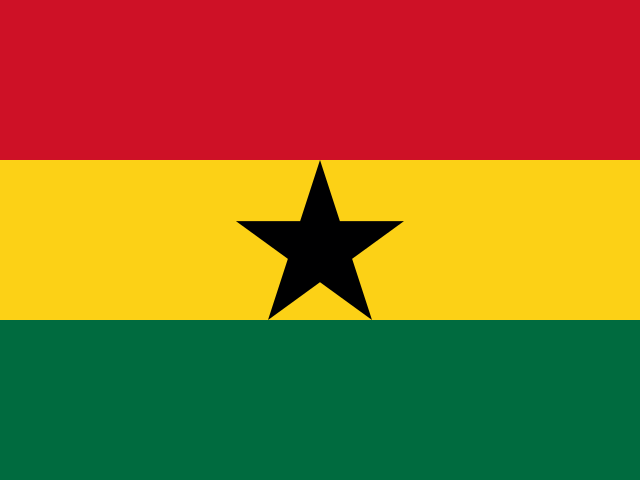
- Description: three equal horizontal bands of red (top), yellow, and green, with a large five-pointed black star centered in the yellow bandMeaning: red stands for the blood shed for independence, yellow for the country's mineral wealth, and green for its forests and natural wealth; the black star is said to be the lodestar of African freedomHistory: uses the colors of the Pan-African movement
- National symbols
- black star, golden eagle
- National colours
- red, yellow, green, black
- National anthem
- Title: "God Bless Our Homeland Ghana"Lyrics/music: unknown/Philip GBEHOHistory: music adopted 1957, lyrics adopted 1966; the lyrics were changed twice, in 1960 when a republic was declared and after a 1966 coup
- UNESCO World Heritage Sites
- Total World Heritage Sites: 2 (both cultural)Selected World Heritage Site locales: Forts and Castles, Volta, Greater Accra, Central and Western Regions; Asante Traditional Buildings
Economy
- Overview
- West African lower-middle income economy; major gold, oil and cocoa exporter; macroeconomic challenges following nearly four decades of sustained growth; recent progress in debt restructuring, fiscal reforms, financial stability, and curbing runaway inflation under 2023-26 IMF credit facility program
- GDP (PPP)
- $243.124 billion (2024 est.)
- GDP per person (PPP)
- $7,100 (2024 est.)
- GDP growth
- 5.7% (2024 est.)
- Inflation
- 22.8% (2024 est.)
- Unemployment
- 3.1% (2024 est.)
- Below poverty line
- 23.4% (2016 est.)
- Farm products
- cassava, yams, plantains, maize, oil palm fruit, taro, rice, oranges, pineapples, cocoa beans (2023)
- Industries
- mining, lumbering, light manufacturing, aluminum smelting, food processing, cement, small commercial ship building, petroleum
- Exports
- $25.365 billion (2023 est.)
- Main exports
- gold, crude petroleum, cocoa beans, manganese ore, cocoa paste (2023)
- Export partners
- Switzerland 24%, UAE 18%, India 8%, South Africa 7%, China 7% (2023)
- Main imports
- refined petroleum, cars, plastics, plastic products, footwear (2023)
- Import partners
- China 30%, Netherlands 8%, India 5%, USA 5%, Russia 5% (2023)
- Money sent home from abroad
- 3% of GDP (2023 est.)
Energy, internet and transport
- Electricity access
- Electrification - total population: 85.1% (2022 est.)Electrification - urban areas: 95%Electrification - rural areas: 71.6%
- Electricity sources
- Fossil fuels: 61.5% of total installed capacity (2023 est.)Solar: 0.6% of total installed capacity (2023 est.)Hydroelectricity: 37.8% of total installed capacity (2023 est.)Biomass and waste: 0.1% of total installed capacity (2023 est.)
- Internet users
- Percent of population: 70% (2023 est.)
- Mobile phones
- Total subscriptions: 39.1 million (2024 est.)Subscriptions per 100 inhabitants: 114 (2024 est.)
- TV and radio
- state-owned TV station, 2 state-owned radio networks; several privately owned TV stations and a large number of privately owned radio stations; transmissions of multiple international broadcasters are accessible; several cable and satellite TV subscription services are obtainable
- Airports
- 11 (2025)
- Railways
- Total: 947 km (2022)Narrow gauge: 947 km (2022) 1.067-m gauge
- Merchant ships
- Total: 52 (2023)By type: general cargo 8, oil tanker 3, other 41
Military and space
- Armed forces
- Ghana Armed Forces (GAF): Army, Air Force, Ghana NavyMinistry of Interior: Ghana Police Service (2025)
- Military spending
- 0.4% of GDP (2024 est.)
- Military service
- 18-27 years of age for voluntary military service; no conscription (2025)
- Space programme
- has nascent space program focused on Earth observation, space science education, and telecommunications; seeks to exploit remote sensing (RS) technology for agriculture, natural-resource management, weather forecasting, and national security; relies on foreign imagery for analysis but seeks to develop its own RS satellite capabilities; has established cooperative relationships with China, Japan, and a number of regional states, particularly South Africa; working with Egypt, Kenya, Nigeria, Sudan, and Uganda on a satellite to monitor climate changes in the African continent; member of the African Space Agency; partner in the Square Kilometer Array radio telescope (2025)
- Space milestones
- 2017 - first satellite (GhanaSat-1), a technology demonstration/remote sensing nanosatellite built by a Gabonese university with assistance from Japan and released from the International Space Station; established Ghana Radio Astronomy Observatory2024 - released a national space policy
Global issues
- Refugees and displaced people
- Refugees: 17,334 (2024 est.)IDPs: 4,937 (2024 est.)
Neighbouring countries
- Phone code
- +233
- Internet domain
- .gh