Indonesia
Republic of Indonesia
The world's largest archipelago (17,000+ islands) and Muslim-majority country. Home to the Srivijaya and Majapahit empires before 350 years of Dutch rule. Suharto's military rule ended in 1998; capital moving to Nusantara.
See Indonesia on the 3D globeTake a quiz
Population284 million
Area1,904,569 km²
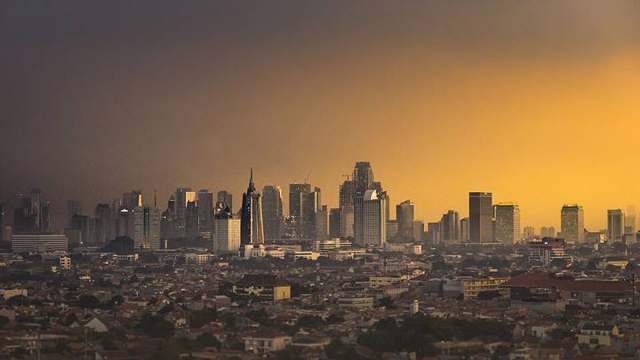
CapitalJakarta
RegionSouth-Eastern Asia
Did you know?
- Has about 17,000 islands and 700+ languages
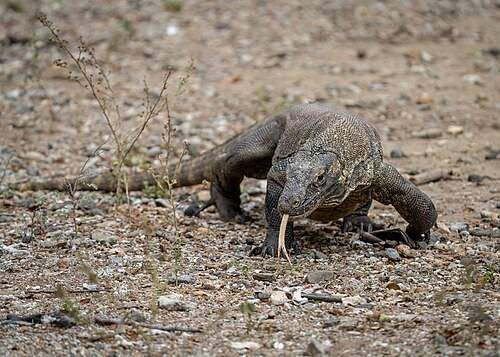
- Komodo dragons live only here
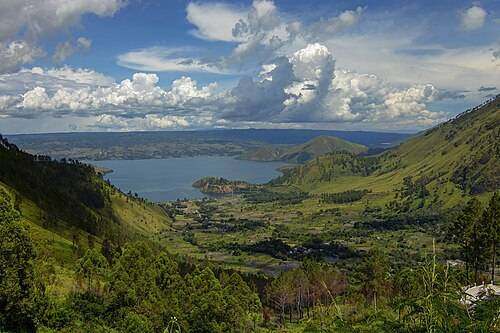
- Lake Toba's eruption 74,000 years ago was one of the largest ever
Key facts about Indonesia
- Government
- Presidential republic
- Religion
- Sunni Islam ~87%, Christian ~10%, Hindu ~2% (Bali)
- Founded / independence
- 1945 (from Netherlands)
- Rich in
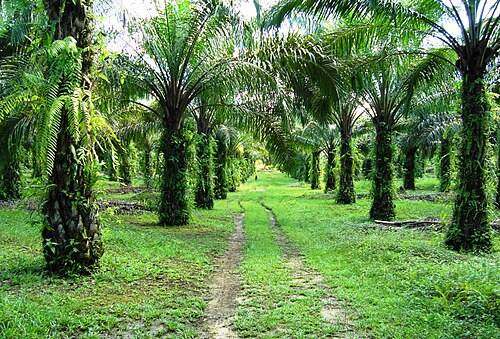
- Nickel (world's largest), coal, palm oil, gas, tin
- Languages
- Indonesian
Indonesian (Malay-based) plus over 700 languages: Javanese, Sundanese, Madurese, Balinese - Currency
- Indonesian rupiah (Rp)
- People are called
- Indonesian
- Main cities
- Jakarta, Surabaya, Bandung, Medan, Semarang
Timeline of Indonesia
- 800sBorobudur built
- 1293Majapahit
- 1602Dutch East India Company
- 1945Independence declared
- 1965Mass killings
- 1998Suharto falls
- 2004Tsunami
Places to see in Indonesia
- Borobudur
- Prambanan
- Bali temples and rice terraces
- Komodo National Park
- Raja Ampat
- Mount Bromo
Food and drink
Nasi goreng · rendang · satay · gado-gado · tempeh
Culture and famous for
Batik; gamelan music; wayang shadow puppets
Popular sports
Badminton, football, pencak silat
Geography and climate
- Highest point
- Puncak Jaya, 4,884 m
- Rivers, lakes and seas
- Kapuas, Mahakam; Lake Toba (supervolcano)
- Climate
- Tropical
- Coastline
- Has a sea coast
- Population density
- 149 people per km²
Wars and conflicts
- War of Independence 1945–49
- 1965–66 mass killings
- East Timor occupation 1975–99
Empires and states that once stood here
Srivijaya c. 650–1377Majapahit 1293–1527Dutch Empire 1602–1975
Alliances and memberships
Political unions and regional organisations
BRICSASEANOrganisation of Islamic Cooperation
Economy and trade
Indonesia in depth
Detailed facts from the CIA World Factbook (public domain, latest edition).
Overview
- History in brief
- The archipelago was once largely under the control of Buddhist and Hindu rulers. By around the 7th century, a Buddhist kingdom arose on Sumatra and expanded into Java and the Malay Peninsula until it was conquered in the late 13th century by the Hindu Majapahit Empire from Java. Majapahit (1290-1527) united most of modern-day Indonesia and Malaysia. Traders introduced Islam around the 11th century, and the religion gradually expanded over the next 500 years. The Portuguese conquered parts of Indonesia in the 16th century, but the Dutch ousted them (except in East Timor) and began colonizing the islands in the early 17th century. It would be the early 20th century before Dutch colonial rule was established across the entirety of what would become the boundaries of the modern Indonesian state.Japan occupied the islands from 1942 to 1945. Indonesia declared its independence shortly before Japan's surrender, but it required four years of sometimes brutal fighting, intermittent negotiations, and UN mediation before the Netherlands agreed to transfer sovereignty in 1949. A period of sometimes unruly parliamentary democracy ended in 1957 when President SOEKARNO declared martial law and instituted "Guided Democracy." After an abortive coup in 1965 by alleged communist sympathizers, SOEKARNO was gradually eased from power. From 1967 until 1998, President SUHARTO ruled Indonesia with his "New Order" government. After street protests toppled SUHARTO in 1998, free and fair legislative elections took place in 1999 while the country's first direct presidential election occurred in 2004. Indonesia has since become a robust democracy, holding four direct presidential elections, each considered by international observers to have been largely free and fair.Indonesia is now the world's third-most-populous democracy and the world's largest Muslim-majority nation. It has had strong economic growth since overcoming the Asian financial crisis of the late 1990s. By the 2020s, it had the largest economy in Southeast Asia, and its economy ranked in the world's top 10 in terms of purchasing power parity. It has also made considerable gains in reducing poverty. Although relations amongst its diverse population--there are more than 300 ethnic groups--have been harmonious in the 2000s, there have been areas of sectarian discontent and violence, as well as instances of religious extremism and terrorism. A political settlement to an armed separatist conflict in Aceh was achieved in 20
Geography
- Location
- Southeastern Asia, archipelago between the Indian Ocean and the Pacific Ocean
- Size compared
- slightly less than three times the size of Texas
- Land borders
- Total: 2,958 kmBorder countries: Malaysia 1,881 km; Papua New Guinea 824 km; Timor-Leste 253 km
- Coastline
- 54,716 km
- Climate
- tropical; hot, humid; more moderate in highlands
- Terrain
- mostly coastal lowlands; larger islands have interior mountains
- Elevation
- Highest point: Puncak Jaya 4,884 mLowest point: Indian/Pacific Oceans 0 mMean elevation: 367 m
- Natural resources
- petroleum, tin, natural gas, nickel, timber, bauxite, copper, fertile soils, coal, gold, silver
- Major rivers
- Sepik (shared with Papua New Guinea [s]) - 1,126 km; Fly (shared with Papua New Guinea [s]) - 1,050 kmNote: [s] after country name indicates river source; [m] after country name indicates river mouth
- Major lakes
- Fresh water lake(s): Danau Toba - 1,150 sq kmnote - located in the caldera of a super volcano that erupted more than 70,000 years ago; it is the largest volcanic lake in the World
- Natural hazards
- occasional floods; severe droughts; tsunamis; earthquakes; volcanoes; forest firesVolcanism: Indonesia contains the most volcanoes of any country in the world, with over 75 historically active; significant volcanic activity occurs on Java, Sumatra, the Sunda Islands, Halmahera Island, Sulawesi Island, Sangihe Island, and in the Banda Sea; Merapi (2,968 m), Indonesia's most active volcano, has been deemed a Decade Volcano by the International Association of Volcanology and Chemistry of the Earth's Interior, worthy of study due to its explosive history and close proximity to human populations; in 2018, a large explosion and flank collapse destroyed most of the island of Anak Krakatau (Child of Krakatau) and generated a deadly tsunami that left more than 400 dead; other notable historically active volcanoes include Agung, Awu, Karangetang, Krakatau (Krakatoa), Makian, Raung, Sinabung, and Tambora; see note 2 under "Geography - note"
- Notes
- Note 1: 13,466 islands are in the archipelago, of which 922 are permanently inhabited; Indonesia is the world's largest country composed solely of islands; the country straddles the equator and occupies a strategic location along major sea lanes from the Indian Ocean to the Pacific Ocean note 2: Indonesia is one of the countries along the Ring of Fire, which is a belt bordering the Pacific Ocean that contains about 75% of the world's volcanoes, up to 90% of the world's earthquakes, and 80% of tsunamisNote 3: despite having the fourth largest population in the world, Indonesia is the most heavily forested region on earth after the Amazon
- Environmental issues
- large-scale deforestation (much of it illegal) and related wildfires cause heavy smog; over-exploitation of marine resources; air pollution from vehicle emissions; waste disposal; water pollution from industrial wastes, sewage
People and society
- Population
- Total: 283,587,097 (2025 est.)Male: 141,778,977Female: 141,808,120
- Nationality
- Noun: Indonesian(s)Adjective: Indonesian
- Ethnic groups
- Javanese 40.1%, Sundanese 15.5%, Malay 3.7%, Batak 3.6%, Madurese 3%, Betawi 2.9%, Minangkabau 2.7%, Buginese 2.7%, Bantenese 2%, Banjarese 1.7%, Balinese 1.7%, Acehnese 1.4%, Dayak 1.4%, Sasak 1.3%, Chinese 1.2%, other 15% (2010 est.)
- Languages
- Bahasa Indonesia (official, modified form of Malay), English, Dutch, local dialects (of which the most widely spoken is Javanese); note - more than 700 languages are used in IndonesiaMajor-language sample(s): Fakta Dunia, sumber informasi dasar yang sangat diperlukan. (Indonesian)The World Factbook, the indispensable source for basic information.
- Religions
- Muslim 87.4%, Protestant 7.5%, Roman Catholic 3.1%, Hindu 1.7%, other 0.8% (includes Buddhist and Confucian) (2022 est.)
- Median age
- Total: 31.8 years (2025 est.)Male: 30.8 yearsFemale: 32.3 years
- Population growth
- 0.7% (2025 est.)
- Life expectancy
- Total population: 73.6 years (2024 est.)Male: 71.3 yearsFemale: 76 years
- Children per woman
- 1.93 children born/woman (2025 est.)
- Urbanization
- Urban population: 58.6% of total population (2023)Rate of urbanization: 1.99% annual rate of change (2020-25 est.)
- Largest cities
- 11.249 million JAKARTA (capital), 3.729 million Bekasi, 3.044 million Surabaya, 3.041 million Depok, 2.674 million Bandung, 2.514 million Tangerang (2023)
- Literacy
- Total population: 96% (2020 est.)Male: 97.4% (2020 est.)Female: 94.6% (2020 est.)
- Years in school
- Total: 13 years (2023 est.)Male: 13 years (2023 est.)Female: 13 years (2023 est.)
Government
- Official names
- Conventional long form: Republic of IndonesiaConventional short form: IndonesiaLocal long form: Republik IndonesiaLocal short form: IndonesiaFormer: Netherlands East Indies (Dutch East Indies), Netherlands New GuineaEtymology: the name is an 18th-century construct of two Greek words, "Indos" (India) and "nesoi" (islands), meaning "Indian islands"
- Government type
- presidential republic
- Capital
- Name: JakartaGeographic coordinates: 6 10 S, 106 49 ETime difference: UTC+7 (12 hours ahead of Washington, DC, during Standard Time)Time zone note: Indonesia has three time zonesEtymology: derives from the Sanscrit name Jayakarta, meaning "victory and prosperity;" Prince FATILLAH conquered and renamed the city, formerly known as Sunda Kelapa, in 1527
- Regions
- 35 provinces (provinsi-provinsi, singular - provinsi), 1 autonomous province*, 1 special region** (daerah istimewa), and 1 national capital district*** (daerah khusus ibukota); Aceh*, Bali, Banten, Bengkulu, Gorontalo, Jakarta***, Jambi, Jawa Barat (West Java), Jawa Tengah (Central Java), Jawa Timur (East Java), Kalimantan Barat (West Kalimantan), Kalimantan Selatan (South Kalimantan), Kalimantan Tengah (Central Kalimantan), Kalimantan Timur (East Kalimantan), Kalimantan Utara (North Kalimantan), Kepulauan Bangka Belitung (Bangka Belitung Islands), Kepulauan Riau (Riau Islands), Lampung, Maluku, Maluku Utara (North Maluku), Nusa Tenggara Barat (West Nusa Tenggara), Nusa Tenggara Timur (East Nusa Tenggara), Papua, Papua Barat (West Papua), Papua Barat Daya (Southwest Papua), Papua Pegunungan (Papua Highlands), Papua Selatan (South Papua), Papua Tengah (Central Papua), Riau, Sulawesi Barat (West Sulawesi), Sulawesi Selatan (South Sulawesi), Sulawesi Tengah (Central Sulawesi), Sulawesi Tenggara (Southeast Sulawesi), Sulawesi Utara (North Sulawesi), Sumatera Barat (West Sumatra), Sumatera Selatan (South Sumatra), Sumatera Utara (North Sumatra), Yogyakarta**
- Independence
- 17 August 1945 (declared independence from the Netherlands)
- National holiday
- Independence Day, 17 August (1945)
- Constitution
- History: drafted July to August 1945, effective 18 August 1945, abrogated by 1949 and 1950 constitutions; 1945 constitution restored 5 July 1959Amendment process: proposed by the People’s Consultative Assembly, with at least two thirds of its members present; passage requires simple majority vote by the Assembly membership; constitutional articles on the unitary form of the state cannot be amended
- Legal system
- civil law system based on the Roman-Dutch model and influenced by customary law
- Voting age
- 17 years of age; universal; married persons regardless of age
- Flag meaning
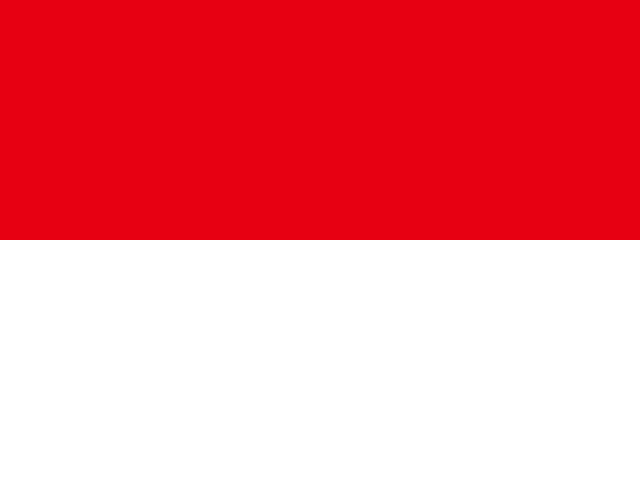
- Description: two equal horizontal bands of red (top) and whiteMeaning: red stands for courage and white for purityHistory: the colors derive from the banner of the Majapahit Empire of the 13th-15th centuries
- National symbols
- garuda (mythical bird)
- National colours
- red, white
- National anthem
- Title: "Indonesia Raya" (Great Indonesia)Lyrics/music: Wage Rudolf SOEPRATMANHistory: adopted 1945
- UNESCO World Heritage Sites
- Total World Heritage Sites: 10 (6 cultural, 4 natural)Selected World Heritage Site locales: Borobudur Temple Compounds (c); Komodo National Park (n); Prambanan Temple Compounds (c); Ujung Kulon National Park (n); Sangiran Early Man Site (c); Lorentz National Park (n); Tropical Rainforest Heritage of Sumatra (n); Cultural Landscape of Bali Province (c); Ombilin Coal Mining Heritage of Sawahlunto (c); Cosmological Axis of Yogyakarta and its Historic Landmarks (c)
Economy
- Overview
- upper middle-income, largest and growing Southeast Asian economy; higher lending rates to moderate inflation; ongoing relocation of capital fueling infrastructure projects; major tourism sector prompting green economy goals
- GDP (PPP)
- $4.102 trillion (2024 est.)
- GDP per person (PPP)
- $14,500 (2024 est.)
- GDP growth
- 5% (2024 est.)
- Inflation
- 3.7% (2023 est.)
- Unemployment
- 3.3% (2024 est.)
- Below poverty line
- 9% (2024 est.)
- Farm products
- oil palm fruit, rice, sugarcane, maize, coconuts, cassava, bananas, eggs, chicken, mangoes/guavas (2023)
- Industries
- petroleum and natural gas, textiles, automotive, electrical appliances, apparel, footwear, mining, cement, medical instruments and appliances, handicrafts, chemical fertilizers, plywood, rubber, processed food, jewelry, and tourism
- Exports
- $300.868 billion (2024 est.)
- Main exports
- coal, palm oil, iron alloys, lignite, garments (2023)
- Export partners
- China 24%, USA 9%, India 8%, Japan 8%, Singapore 5% (2023)
- Main imports
- refined petroleum, crude petroleum, plastics, vehicle parts/accessories, integrated circuits (2023)
- Import partners
- China 29%, Singapore 8%, Japan 7%, USA 5%, Malaysia 5% (2023)
- Money sent home from abroad
- 1.1% of GDP (2024 est.)
Energy, internet and transport
- Electricity access
- Electrification - total population: 100% (2022 est.)Electrification - urban areas: 100%Electrification - rural areas: 98.2%
- Electricity sources
- Fossil fuels: 82% of total installed capacity (2023 est.)Solar: 0.2% of total installed capacity (2023 est.)Wind: 0.1% of total installed capacity (2023 est.)Hydroelectricity: 6.4% of total installed capacity (2023 est.)Geothermal: 4.4% of total installed capacity (2023 est.)Biomass and waste: 6.9% of total installed capacity (2023 est.)
- Internet users
- Percent of population: 69% (2023 est.)
- Mobile phones
- Total subscriptions: 347 million (2024 est.)Subscriptions per 100 inhabitants: 123 (2024 est.)
- TV and radio
- mix of about a dozen national TV networks, including 1 public broadcaster and the rest private; more than 100 local TV stations; widespread use of satellite and cable TV systems; public radio broadcaster operates 6 national networks, as well as regional and local stations; more than 700 radio stations, with over 650 privately operated (2019)
- Airports
- 556 (2025)
- Railways
- Total: 8,159 km (2014)Narrow gauge: 8,159 km (2014) 1.067-m gauge (565 km electrified)
- Merchant ships
- Total: 11,422 (2023)By type: bulk carrier 160, container ship 219, general cargo 2,347, oil tanker 714, other 7,982
Military and space
- Armed forces
- Indonesian National Armed Forces (Tentara Nasional Indonesia, TNI): Army (TNI-Angkatan Darat, TNI-AD), Navy (TNI-Angkatan Laut, TNI-AL; includes Marine Corps (Korps Marinir or KorMar)), Air Force (TNI-Angkatan Udara, TNI-AU)Indonesian National Police (aka The State Police of the Republic of Indonesia or POLRI)Ministry of Transportation: Indonesia Sea and Coast Guard (Kesatuan Penjagaan Laut dan Pantai Republik Indonesia, KPLP); Coordinating Ministry for Political, Legal, and Security Affairs: Maritime Security Agency of the Republic of Indonesia (Badan Keamanan Laut Republik Indonesia, Bakamla) (2025)
- Military spending
- 0.8% of GDP (2024 est.)
- Military service
- 18 years of age for voluntary service for men and women; upper age limits vary by military service, position, specialty; compulsory service authorized but not utilized (2025)
- Space programme
- focuses largely on rocket development and satellite acquisition/operation; manufactures remote sensing (RS) satellites; has a sounding (research) rocket program to develop an orbital satellite launch vehicle (SLV); researching and developing a range of other space-related technologies related to satellite payloads, communications, RS, and astronomy; has relations with several foreign space agencies and industries, including those of France, Germany, India, Japan, Russia, South Korea, and the US; national space program includes building up the country's private space sector (2025)
- Space milestones
- 1964 - launched first sounding rocket (Kartika)1976 - first communications satellite (Palapa A1) built and launched by US2005 - re-started sounding rocket program with goal of producing a satellite launch vehicle (SLV)2007 - first remote sensing (RS) satellite (LAPAN-A1) built by Germany and launched by India2015 - first domestically produced RS satellite (LAPAN-A2) launched by India2023-2024 - two communications satellites (SATRIA-1 and Merah Putih 2) to provide high-speed internet access across the Indonesian archipelago built by European company and launched by US
Global issues
- Refugees and displaced people
- Refugees: 11,964 (2024 est.)IDPs: 95,521 (2024 est.)Stateless persons: 2,643 (2024 est.)
Neighbouring countries
Timor-LesteMalaysiaPapua New Guinea
- Phone code
- +62
- Internet domain
- .id