Lebanon
Lebanese Republic · لبنان · Liban
Home of the Phoenicians, who spread the alphabet. Power is divided by religion. Devastated by civil war, the 2020 Beirut port explosion and an economic collapse; Israel–Hezbollah fighting continued into 2026.
See Lebanon on the 3D globeTake a quiz
Population5.8 million
Area10,452 km²
CapitalBeirut
RegionWestern Asia
Did you know?
- You can ski and swim in the sea on the same day
- Byblos is one of the oldest continuously inhabited cities
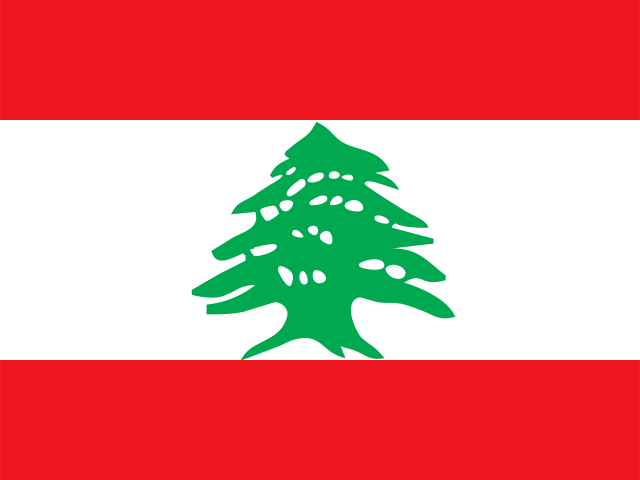
- The cedar tree is on its flag
Key facts about Lebanon
- Government
- Parliamentary confessional republic
- Religion
- Islam ~68% (Shia and Sunni), Christian ~32% (mostly Maronite)
- Founded / independence
- 1943 (from France)
- Rich in
- Banking (collapsed 2019), tourism, cedar wood, diaspora remittances
- Languages
- Arabic, French
Arabic (Levantine dialect), French, English - Currency
- Lebanese pound (ل.ل)
- People are called
- Lebanese
- Main cities
- Beirut, Tripoli, Sidon, Tyre, Zahle
Timeline of Lebanon
- 1200 BCPhoenician cities
- 1516Ottoman rule
- 1920French mandate
- 1943Independence
- 1975Civil war
- 2006War with Israel
- 2020Beirut port explosion
Places to see in Lebanon
- Baalbek Roman temples
- Byblos
- Jeita Grotto
- Cedars of God
- Beirut Corniche
- Tyre ruins
Food and drink
Hummus · tabbouleh · kibbeh · manakish · baklava
Culture and famous for
Phoenician alphabet; poet Kahlil Gibran; nightlife and cuisine
Popular sports
Basketball, football
Geography and climate
- Highest point
- Qurnat as Sawda', 3,088 m
- Rivers, lakes and seas
- Litani River
- Climate
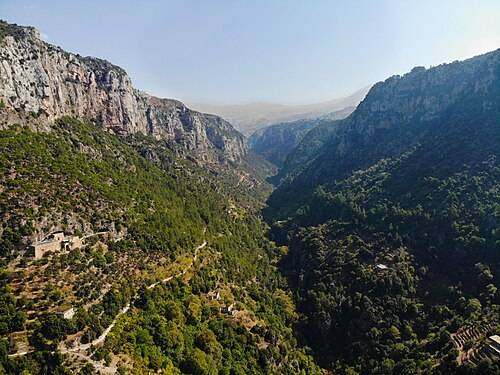
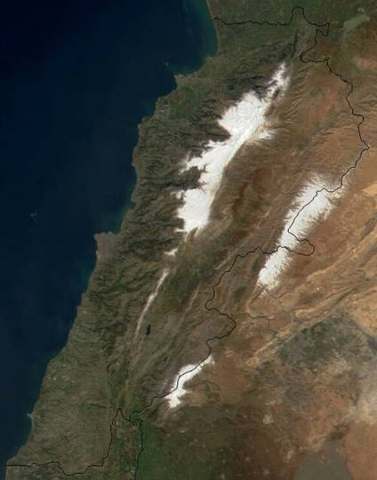
- Mediterranean; snowy mountains
- Coastline
- Has a sea coast
- Population density
- 555 people per km²
Wars and conflicts
- Civil War 1975–90
- Israel wars 1982, 2006, 2024
- Israel–Hezbollah strikes 2026
Empires and states that once stood here
Phoenicia c. 1500–332 BCKingdom of Jerusalem 1099–1291
Alliances and memberships
Political unions and regional organisations
Arab LeagueOrganisation of Islamic Cooperation
Lebanon in depth
Detailed facts from the CIA World Factbook (public domain, latest edition).
Overview
- History in brief
- As a result of its location at the crossroads of three continents, the area that is modern-day Lebanon is rich in cultural and religious diversity. This region was subject to various foreign conquerors for much of its history, including the Romans, Arabs, and Ottomans. Following World War I, France acquired a mandate over the northern portion of the former Ottoman Empire province of Syria. From it the French demarcated the region of Lebanon in 1920, and it gained independence in 1943. Lebanon subsequently experienced periods of political turmoil interspersed with prosperity built on its position as a regional center for finance and trade.The country's 1975-90 civil war, which resulted in an estimated 120,000 fatalities, was followed by years of social and political instability, and sectarianism remains a key element of Lebanese political life. The Israeli defense forces, which occupied parts of Lebanon during the civil war, did not completely withdraw until 2000. Neighboring Syria influenced Lebanon's foreign and domestic policies while its military occupied Lebanon from 1976 until 2005, but its influence diminished significantly after 2005. Over 1.5 million Syrian refugees fled to Lebanon after the start of the Syrian conflict in 2011. Hizballah -- a major Lebanese political party, militia, and US-designated foreign terrorist organization -- and Israel continued attacks and counterattacks against each other after Syria's withdrawal and fought a brief war in 2006. After HAMAS attacked Israel on 7 October 2023, the intensity and frequency of these cross-border attacks increased substantially into a cycle of hostilities, mostly limited to the border areas as of January 2024. Lebanon's borders with Syria and Israel remain unresolved.Lebanon's prosperity has significantly diminished since the beginning of the country's economic crisis in 2019, which has crippled its economy, shut down its previously lucrative banking sector, reduced the value of its currency, and caused many Lebanese to emigrate in search of better prospects.
Geography
- Location
- Middle East, bordering the Mediterranean Sea, between Israel and Syria
- Size compared
- about one-third the size of Maryland
- Land borders
- Total: 484 kmBorder countries: Israel 81 km; Syria 403 km
- Coastline
- 225 km
- Climate
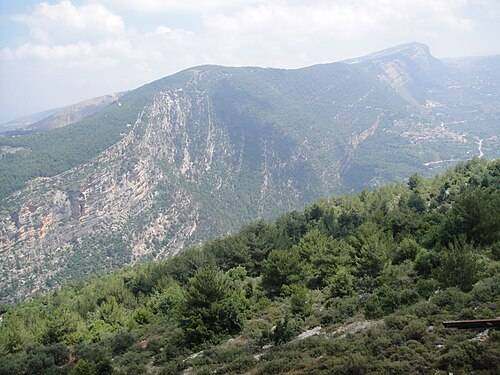
- Mediterranean; mild to cool, wet winters with hot, dry summers; the Lebanon Mountains experience heavy winter snows
- Terrain
- narrow coastal plain; El Beqaa (Bekaa Valley) separates Lebanon and Anti-Lebanon Mountains
- Elevation
- Highest point: Qornet es Saouda 3,088 mLowest point: Mediterranean Sea 0 mMean elevation: 1,250 m
- Natural resources
- limestone, iron ore, salt, water-surplus state in a water-deficit region, arable land
- Natural hazards
- earthquakes; dust storms, sandstorms
- Notes
- smallest country in continental Asia; Nahr el Litani is the only major river in Near East not crossing an international boundary
- Environmental issues
- deforestation; soil deterioration, erosion; desertification; species loss; air pollution in Beirut from vehicular traffic and the burning of industrial wastes; pollution of coastal waters from raw sewage and oil spills; waste-water management
People and society
- Population
- Total: 5,364,482 (2024 est.)Male: 2,678,543Female: 2,685,939
- Nationality
- Noun: Lebanese (singular and plural)Adjective: Lebanese
- Ethnic groups
- Arab 95%, Armenian 4%, other 1%
- Languages
- Arabic (official), French, English, ArmenianMajor-language sample(s): كتاب حقائق العالم، المصدر الذي لا يمكن الاستغناء عنه للمعلومات الأساسية (Arabic)The World Factbook, une source indispensable d'informations de base. (French)The World Factbook, the indispensable source for basic information.
- Religions
- Muslim 67.8% (31.9% Sunni, 31.2% Shia, smaller percentages of Alawites and Ismailis), Christian 32.4% (Maronite Catholics are the largest Christian group), Druze 4.5%, very small numbers of Jews, Baha'is, Buddhists, and Hindus (2020 est.)
- Median age
- Total: 29.4 years (2025 est.)Male: 35.6 yearsFemale: 36.9 years
- Population growth
- -0.77% (2025 est.)
- Life expectancy
- Total population: 79.2 years (2024 est.)Male: 77.8 yearsFemale: 80.7 years
- Children per woman
- 2.2 children born/woman (2025 est.)
- Urbanization
- Urban population: 89.4% of total population (2023)Rate of urbanization: -1.23% annual rate of change (2020-25 est.)
- Largest cities
- 2.421 million BEIRUT (capital) (2023)
- Literacy
- Total population: 92% (2019 est.)Male: 94.8% (2019 est.)Female: 89.5% (2019 est.)
- Years in school
- Total: 11 years (2023 est.)Male: 12 yearsFemale: 11 years (2014)
Government
- Official names
- Conventional long form: Lebanese RepublicConventional short form: LebanonLocal long form: Al Jumhuriyah al LubnaniyahLocal short form: LubnanFormer: Greater LebanonEtymology: derives from the Semitic root lbn, meaning "white," and probably refers to the country's snow-capped mountains
- Government type
- parliamentary democratic republic
- Capital
- Name: BeirutGeographic coordinates: 33 52 N, 35 30 ETime difference: UTC+2 (7 hours ahead of Washington, DC, during Standard Time)Daylight saving time: +1hr, begins last Sunday in March; ends last Sunday in OctoberEtymology: derived from the Phoenician or Hebrew word be'erot, meaning "the wells," which were the only source of water in the region
- Regions
- 8 governorates (mohafazat, singular - mohafazah); Aakkar, Baalbek-Hermel, Beqaa (Bekaa), Beyrouth (Beirut), Liban-Nord (North Lebanon), Liban-Sud (South Lebanon), Mont-Liban (Mount Lebanon), Nabatiye
- Independence
- 22 November 1943 (from League of Nations mandate under French administration)
- National holiday
- Independence Day, 22 November (1943)
- Constitution
- History: drafted 15 May 1926, adopted 23 May 1926Amendment process: proposed by the president of the republic and introduced as a government bill to the National Assembly or proposed by at least 10 members of the Assembly and agreed upon by two thirds of its members; if proposed by the National Assembly, review and approval by two-thirds majority of the Cabinet is required; if approved, the proposal is next submitted to the Cabinet for drafting as an amendment; Cabinet approval requires at least two-thirds majority, followed by submission to the National Assembly for discussion and vote; passage requires at least two-thirds majority vote of a required two-thirds quorum of the Assembly membership and promulgation by the president
- Legal system
- mixed system of civil law based on the French civil code, Ottoman legal tradition, and religious laws covering personal status, marriage, divorce, and other family relations of the Jewish, Islamic, and Christian communities
- Voting age
- 21 years of age; authorized for all men and women regardless of religion; excludes persons convicted of felonies and other crimes or those imprisoned; excludes all military and security service personnel regardless of rank
- Flag meaning
- Description: three horizontal bands consisting of red (top), white (middle, double-width), and red (bottom), with a green cedar tree centered on the white bandMeaning: red stands for blood shed for liberation, and white for peace, the snow of the mountains, and purity; the green cedar tree is the national symbol and represents eternity, steadiness, happiness, and prosperity
- National symbols
- cedar tree
- National colours
- red, white, green
- National anthem
- Title: "Kulluna lil-watan" (All of Us, For Our Country!)Lyrics/music: Rachid NAKHLE/Wadih SABRAHistory: adopted 1927
- UNESCO World Heritage Sites
- Total World Heritage Sites: 6 (all cultural)Selected World Heritage Site locales: Anjar; Baalbek; Byblos; Tyre; Ouadi Qadisha (the Holy Valley) and the Forest of the Cedars of God (Horsh Arz el-Rab); Rachid Karami International Fair-Tripoli
Economy
- Overview
- lower middle-income Middle Eastern economy; hyperinflation and sharp poverty increases; banks have ceased lending; economic contraction, destroyed infrastructure, and reduced consumer demand resulting from Israel-Hezbollah conflict
- GDP (PPP)
- $65.415 billion (2023 est.)
- GDP per person (PPP)
- $11,300 (2023 est.)
- GDP growth
- -0.8% (2023 est.)
- Inflation
- 45.2% (2024 est.)
- Unemployment
- 11.6% (2023 est.)
- Farm products
- potatoes, milk, tomatoes, apples, oranges, olives, cucumbers/gherkins, chicken, lemons/limes, wheat (2023)
- Industries
- banking, tourism, real estate and construction, food processing, wine, jewelry, cement, textiles, mineral and chemical products, wood and furniture products, oil refining, metal fabricating
- Exports
- $11.77 billion (2023 est.)
- Main exports
- jewelry, cars, diamonds, scrap iron, gold (2023)
- Export partners
- UAE 26%, Egypt 7%, Turkey 5%, Iraq 5%, USA 4% (2023)
- Main imports
- refined petroleum, gold, cars, packaged medicine, garments (2023)
- Import partners
- Switzerland 12%, China 11%, Greece 9%, Turkey 8%, Italy 6% (2023)
- Money sent home from abroad
- 33.3% of GDP (2023 est.)
Energy, internet and transport
- Electricity access
- Electrification - total population: 100% (2022 est.)
- Electricity sources
- Fossil fuels: 52.6% of total installed capacity (2023 est.)Solar: 31% of total installed capacity (2023 est.)Wind: 0.1% of total installed capacity (2023 est.)Hydroelectricity: 15.5% of total installed capacity (2023 est.)Biomass and waste: 0.7% of total installed capacity (2023 est.)
- Internet users
- Percent of population: 84% (2023 est.)
- Mobile phones
- Total subscriptions: 4.29 million (2021 est.)Subscriptions per 100 inhabitants: 77 (2021 est.)
- TV and radio
- 7 TV stations, 1 of which is state-owned; more than 30 radio stations, 1 of which is state-owned; satellite and cable TV services available; transmissions of at least 2 international broadcasters are accessible through partner stations (2019)
- Airports
- 8 (2025)
- Railways
- Total: 401 km (2017)Standard gauge: 319 km (2017) 1.435-m gaugeNarrow gauge: 82 km (2017) 1.050-m gauge
- Merchant ships
- Total: 51 (2023)By type: bulk carrier 2, container ship 1, general cargo 30, oil tanker 1, other 17
Military and space
- Armed forces
- Lebanese Armed Forces (LAF): Army Command (includes Presidential Guard Brigade, Land Border Regiments), Naval Forces, Air ForcesMinistry of Interior: General Directorate of Internal Security Forces (law enforcement; includes Mobile Gendarmerie), General Directorate for Public Security (border control, some domestic security duties) (2025)
- Military spending
- 2.9% of GDP (2022 est.)
- Military service
- 18-25 years of age for voluntary military service for men and women; no conscription (2026)
Global issues
- Refugees and displaced people
- Refugees: 765,390 (2024 est.)IDPs: 984,514 (2024 est.)Stateless persons: 40,000 (2024 est.)
Neighbouring countries
- Phone code
- +961
- Internet domain
- .lb