Nepal
Federal Democratic Republic of Nepal · नेपाल
Unified by Prithvi Narayan Shah in 1768 and never colonised. The monarchy was abolished in 2008 after the civil war. Youth-led protests toppled the government in 2025.
See Nepal on the 3D globeTake a quiz
Population30 million
Area147,181 km²
CapitalKathmandu
RegionSouthern Asia
Did you know?
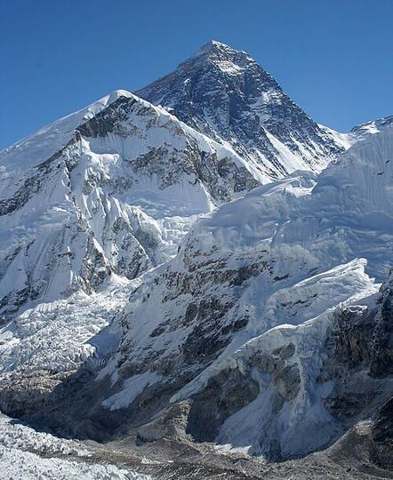
- Has 8 of the world's 10 highest mountains
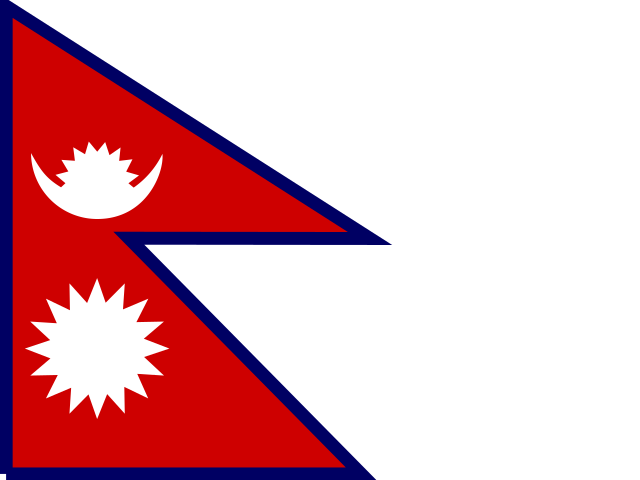
- The only national flag that is not a rectangle
- The Buddha was born in Lumbini
Key facts about Nepal
- Government
- Federal parliamentary republic (interim government after 2025 protests)
- Religion
- Hindu ~81%, Buddhist ~8%, Islam ~5%
- Founded / independence
- 1768 unification
- Rich in
- Hydropower, tourism (8 of the 10 highest peaks, Everest), remittances
- Languages
- Nepali
Nepali; Maithili, Bhojpuri, Tharu, Tamang, Newar - Currency
- Nepalese rupee (₨)
- People are called
- Nepalese
- Main cities
- Kathmandu, Pokhara, Lalitpur, Biratnagar
Timeline of Nepal
- 1768Unification
- 1816Treaty with British
- 1951End of Rana rule
- 1953Everest first climbed
- 2008Republic
- 2015Earthquake
- 2025Youth protests topple government
Places to see in Nepal
- Mount Everest
- Kathmandu Durbar Square
- Boudhanath Stupa
- Lumbini (Buddha's birthplace)
- Pokhara
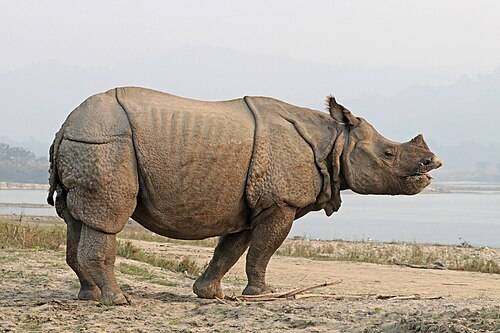
- Chitwan National Park
Food and drink
Dal bhat · momos · sel roti
Culture and famous for
Sherpa climbers; Gurkha soldiers; Hindu and Buddhist festivals
Popular sports
Football, cricket, mountaineering
Geography and climate
- Highest point
- Mount Everest, 8,849 m
- Rivers, lakes and seas
- Koshi, Gandaki, Karnali
- Climate
- Subtropical to arctic
- Coastline
- Landlocked
- Population density
- 204 people per km²
Wars and conflicts
- Gorkha conquests
- Anglo-Nepalese War 1814–16
- Maoist civil war 1996–2006
Alliances and memberships
Political unions and regional organisations
Nepal in depth
Detailed facts from the CIA World Factbook (public domain, latest edition).
Overview
- History in brief
- During the late 18th and early 19th centuries, the principality of Gorkha united many of the other principalities and states of the sub-Himalayan region into a Nepali Kingdom. Nepal retained its independence after the Anglo-Nepalese War of 1814-16, and the subsequent peace treaty laid the foundations for two centuries of amicable relations between Britain and Nepal. In 1951, the Nepali monarch ended the century-old system of hereditary rule and instituted a cabinet system that brought political parties into the government. That arrangement lasted until 1960, when political parties were again banned, but it was reinstated in 1990 with the establishment of a multiparty democracy within the framework of a constitutional monarchy. A Maoist-led insurgency broke out in 1996. During the ensuing 10-year civil war between Maoist and government forces, the monarchy dissolved the cabinet and parliament. In 2001, Crown Prince DIPENDRA first massacred the royal family and then shot himself. His uncle GYANENDRA became king, and the monarchy reassumed absolute power the next year. A peace accord in 2006 led to the promulgation of an interim constitution in 2007. After a nationwide Constituent Assembly (CA) election in 2008, the newly formed CA declared Nepal a federal democratic republic, abolished the monarchy, and elected the country's first president.When the CA failed to draft a Supreme Court-mandated constitution, then-Prime Minister Baburam BHATTARAI dissolved the CA. An interim government held elections in 2013, in which the Nepali Congress (NC) won the largest share of seats. In 2014, NC formed a coalition government with the second-place Communist Party of Nepal-Unified Marxist-Leninist (UML). Nepal's new constitution came into effect in 2015, at which point the CA became the Parliament and Khagda Prasad Sharma OLI the first post-constitution prime minister (2015-16). He resigned ahead of a no-confidence motion, and Parliament elected Communist Party of Nepal-Maoist (CPN-M) leader Pushpa Kamal DAHAL as prime minister.The parties headed by OLI and DAHAL ran in coalition and swept the parliamentary elections in 2017, and OLI was sworn in as prime minister in 2018. OLI's efforts to dissolve parliament and hold elections were declared unconstitutional in 2021, and the opposition-supported NC leader Sher Bahadur DEUBA was named prime minister. The NC won a majority of seats in the parliamentary elections in 2022, but DAHAL then broke with the ruling coalition and p
Geography
- Location
- Southern Asia, between China and India
- Size compared
- slightly larger than New York State
- Land borders
- Total: 3,159 kmBorder countries: China 1,389 km; India 1,770 km
- Coastline
- 0 km (landlocked)
- Climate
- varies from cool summers and severe winters in north to subtropical summers and mild winters in south
- Terrain
- Tarai or flat river plain of the Ganges in south; central hill region with rugged Himalayas in north
- Elevation
- Highest point: Mount Everest (highest peak in Asia and highest point on earth above sea level) 8,849 mLowest point: Kanchan Kalan 70 mMean elevation: 2,565 m
- Natural resources
- quartz, water, timber, hydropower, scenic beauty, small deposits of lignite, copper, cobalt, iron ore
- Natural hazards
- severe thunderstorms; flooding; landslides; drought and famine depending on the timing, intensity, and duration of the summer monsoons
- Notes
- landlocked; strategic location between China and India; contains eight of world's 10 highest peaks, including Mount Everest and Kanchenjunga -- the world's tallest and third-tallest mountains -- on the borders with China and India, respectively
- Environmental issues
- deforestation (overuse of wood for fuel and lack of alternatives); forest degradation; soil erosion; contaminated water from human and animal wastes, agricultural runoff, and industrial effluents; unmanaged solid waste; wildlife conservation; air pollution from vehicular emissions
People and society
- Population
- Total: 31,334,402 (2025 est.)Male: 15,352,706Female: 15,981,696
- Nationality
- Noun: Nepali (singular and plural)Adjective: Nepali
- Ethnic groups
- Chhettri 16.5%, Brahman-Hill 11.3%, Magar 6.9%, Tharu 6.2%, Tamang 5.6%, Bishwokarma 5%, Musalman 4.9%, Newar 4.6%, Yadav 4.2%, Rai 2.2%, Pariyar 1.9%, Gurung 1.9%, Thakuri 1.7%, Mijar 1.6%, Teli 1.5%, Yakthung/Limbu 1.4%, Chamar/Harijan/Ram 1.4%, Koiri/Kushwaha 1.2%, other 20% (2021 est.)
- Languages
- Nepali (official) 44.9%, Maithali 11.1%, Bhojpuri 6.2%, Tharu 5.9%, Tamang 4.9%, Bajjika 3.9%, Avadhi 3%, Nepalbhasha (Newari) 3%, Magar Dhut 2.8%, Doteli 1.7%, Urdu 1.4%, Yakthung/Limbu 1.2%, Gurung 1.1%, other 8.9% (2021 est.)Major-language sample(s): विश्व तथ्य पुस्तक,आधारभूत जानकारीको लागि अपरिहार्य स्रोत (Nepali)The World Factbook, the indispensable source for basic information.
- Religions
- Hindu 81.2%, Buddhist 8.2%, Muslim 5.1%, Kirat 3.2%, Christian 1.8%; less than 1%: Prakriti, Bon, Jains, Sikh (2021 est.)
- Median age
- Total: 28.1 years (2025 est.)Male: 26.5 yearsFemale: 28.6 years
- Population growth
- 0.66% (2025 est.)
- Life expectancy
- Total population: 73 years (2024 est.)Male: 72.2 yearsFemale: 73.7 years
- Children per woman
- 1.82 children born/woman (2025 est.)
- Urbanization
- Urban population: 21.9% of total population (2023)Rate of urbanization: 3.09% annual rate of change (2020-25 est.)
- Largest cities
- 1.571 million KATHMANDU (capital) (2023)
- Literacy
- Total population: 68.7% (2019 est.)Male: 79.8% (2019 est.)Female: 59.4% (2019 est.)
- Years in school
- Total: 14 years (2023 est.)Male: 14 years (2023 est.)Female: 14 years (2023 est.)
Government
- Official names
- Conventional long form: noneConventional short form: NepalLocal long form: noneLocal short form: NepalEtymology: the name probably comes from the Sanskrit term nepala, from the words for "fly down" and "house," which would refer to the villages at the base of the mountains
- Government type
- federal parliamentary republic
- Capital
- Name: KathmanduGeographic coordinates: 27 43 N, 85 19 ETime difference: UTC+5.75 (10.75 hours ahead of Washington, DC, during Standard Time)Etymology: the name comes from the Nepalese words kath (wooden) and mandu (temple), referring to the local temples that are often still built from wood
- Regions
- 7 provinces (pradesh, singular - pradesh); Bagmati, Gandaki, Karnali, Koshi, Lumbini, Madhesh, Sudurpashchim
- Independence
- 1768 (unified by Prithvi Narayan SHAH)
- National holiday
- Constitution Day, 20 September (2015)
- Constitution
- History: several previous; latest approved by the Second Constituent Assembly 16 September 2015, signed by the president and effective 20 September 2015Amendment process: proposed as a bill by either house of the Federal Parliament; bills affecting a state border or powers delegated to a state must be submitted to the affected state assembly; passage of such bills requires a majority vote of that state assembly membership; bills not requiring state assembly consent require at least two-thirds majority vote by the membership of both houses of the Federal Parliament; parts of the constitution on the sovereignty, territorial integrity, independence, and sovereignty vested in the people cannot be amended
- Legal system
- English common law and Hindu legal concepts
- Voting age
- 18 years of age; universal
- Flag meaning
- Description: crimson red with a blue border, in the shape of two overlapping right triangles; the smaller upper triangle has a stylized white moon, and the larger lower triangle has a 12-pointed white sunMeaning: red stands for the rhododendron (the national flower) and victory and bravery, and the blue border for peace and harmony; the two triangles are a combination of two pennants that originally symbolized the Himalaya Mountains, but today they refer to Hinduism and Buddhism, the country's two main religions; the moon stands for the serenity of the people, as well as Himalayan shade and cool weather, and the sun for the heat and higher temperatures in the rest of the country
- National symbols
- rhododendron blossom
- National colours
- red
- National anthem
- Title: "Sayaun Thunga Phool Ka" (Hundreds of Flowers)Lyrics/music: Pradeep Kumar RAI/Ambar GURUNGHistory: adopted 2007
- UNESCO World Heritage Sites
- Total World Heritage Sites: 4 (2 cultural, 2 natural)Selected World Heritage Site locales: Kathmandu Valley (c); Sagarmatha National Park (n); Chitwan National Park (n); Lumbini, Buddha Birthplace (c)
Economy
- Overview
- low-income South Asian economy; post-conflict fiscal federalism increasing stability; COVID-19 hurt trade and tourism; widening current account deficits; environmentally fragile economy from earthquakes; growing Chinese relations and investments
- GDP (PPP)
- $149.643 billion (2024 est.)
- GDP per person (PPP)
- $5,000 (2024 est.)
- GDP growth
- 3.7% (2024 est.)
- Inflation
- 7.1% (2023 est.)
- Unemployment
- 10.8% (2024 est.)
- Below poverty line
- 20.3% (2022 est.)
- Farm products
- rice, vegetables, potatoes, sugarcane, maize, wheat, bison milk, milk, mangoes/guavas, bananas (2023)
- Industries
- tourism, carpets, textiles, small rice, jute, sugar, oilseed mills, cigarettes, cement and brick production
- Exports
- $3.744 billion (2024 est.)
- Main exports
- knotted carpets, garments, flat-rolled iron, synthetic fibers, palm oil (2023)
- Export partners
- India 67%, USA 12%, Germany 3%, China 2%, UK 2% (2023)
- Main imports
- refined petroleum, natural gas, garments, iron reductions, broadcasting equipment (2023)
- Import partners
- India 71%, China 17%, UAE 3%, Singapore 2%, Germany 1% (2023)
- Money sent home from abroad
- 33.1% of GDP (2024 est.)
Energy, internet and transport
- Electricity access
- Electrification - total population: 91.3% (2022 est.)Electrification - urban areas: 97.7%Electrification - rural areas: 93.7%
- Electricity sources
- Solar: 1% of total installed capacity (2023 est.)Wind: 0.1% of total installed capacity (2023 est.)Hydroelectricity: 99% of total installed capacity (2023 est.)
- Internet users
- Percent of population: 56% (2023 est.)
- Mobile phones
- Total subscriptions: 29.6 million (2024 est.)Subscriptions per 100 inhabitants: 100 (2024 est.)
- TV and radio
- state operates 3 TV stations, as well as national and regional radio stations; 117 television channels are licensed, 71 of which are cable TV, 3 are distributed through Direct-To-Home (DTH) system, and 4 are digital terrestrial; 736 FM radio stations are licensed, and at least 314 of those are community stations (2019)
- Airports
- 51 (2025)
- Railways
- Total: 59 km (2018)Narrow gauge: 59 km (2018) 0.762-m gauge
Military and space
- Armed forces
- Nepalese Armed Forces (Ministry of Defense): Nepali Army (includes Air Wing)Ministry of Home Affairs: Nepal Police, Nepal Armed Police Force (APF) (2025)
- Military spending
- 1% of GDP (2024 est.)
- Military service
- 18 years of age for voluntary military service for men and women; upper age limit varies; no conscription (2025)
Global issues
- Refugees and displaced people
- Refugees: 19,874 (2024 est.)IDPs: 18,671 (2024 est.)Stateless persons: 467 (2024 est.)
Neighbouring countries
- Phone code
- +977
- Internet domain
- .np