China
People's Republic of China · 中国
One of the oldest continuous civilisations, ruled by dynasties for over 2,000 years. The Qing fell in 1912; the Communists won the civil war in 1949. Market reforms since 1978 made it the second-largest economy.
See China on the 3D globeTake a quiz

Did you know?
- Uses a single time zone despite spanning five
- Has the world's largest high-speed rail network
- Giant pandas live only here
Key facts about China
- Government
- Communist one-party socialist republic
- Religion
- Folk religion and unaffiliated majority; Buddhism ~18%, Christianity ~5%, Islam ~2%
- Founded / independence
- 221 BC (Qin unification); 1949 People's Republic
- Rich in
- Manufacturing (world's largest), rare earths, coal, solar and EV industry
- Languages
- Chinese
Mandarin (standard), plus Cantonese, Wu (Shanghainese), Min (Hokkien), Hakka, Xiang, Gan; Tibetan, Uyghur, Mongolian, Zhuang - Currency
- Chinese yuan (¥)
- People are called
- Chinese
- Main cities
- Shanghai, Beijing, Chongqing, Guangzhou, Shenzhen, Chengdu
Timeline of China
- 221 BCQin unifies China
- 618Tang dynasty
- 1271Yuan (Mongol) dynasty
- 1644Qing dynasty
- 1912Republic
- 1949People's Republic
- 1978Economic reforms
- 2008Beijing Olympics
Places to see in China
- Great Wall
- Forbidden City
- Terracotta Army
- Li River and Guilin
- Potala Palace
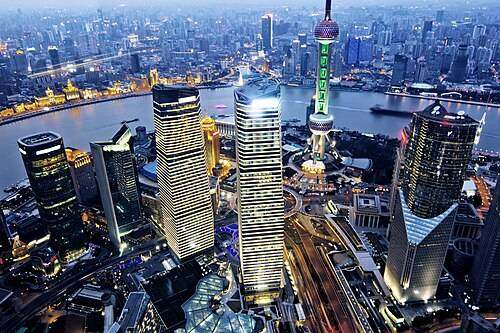
- the Bund, Shanghai
- Zhangjiajie
Food and drink
Peking duck · dumplings · hotpot · dim sum · noodles · mapo tofu
Culture and famous for
Four great inventions: paper, printing, gunpowder, compass; tea; silk; Confucius; kung fu
Popular sports
Table tennis, badminton, basketball, football
Geography and climate
- Highest point
- Mount Everest (border), 8,849 m
- Rivers, lakes and seas
- Yangtze (Asia's longest), Yellow River
- Climate
- Huge range: tropical south, desert, subarctic north
- Coastline
- Has a sea coast
- Population density
- 145 people per km²
Wars and conflicts
- Opium Wars
- Taiping Rebellion
- Sino-Japanese wars
- Chinese Civil War
- Korean War
Empires and states that once stood here
Zhou dynasty 1046–256 BCQin dynasty 221–206 BCHan dynasty 206 BC–220 ADTang dynasty 618–907Tibetan Empire 618–842Song dynasty 960–1279Ming dynasty 1368–1644Portuguese Empire 1415–1999Qing dynasty 1644–1912Tibet (de facto independent) 1912–1951Manchukuo 1932–1945
Alliances and memberships
Military and security
Shanghai Cooperation Organisation
Political unions and regional organisations
Economy and trade
Defence treaties
- China–North Korea Treaty of Friendship (1961): China's only formal military alliance, renewed every 20 years.
China in depth
Detailed facts from the CIA World Factbook (public domain, latest edition).
Overview
- History in brief
- China's historical civilization dates to at least the 13th century B.C., first under the Shang (to 1046 B.C.) and then the Zhou (1046-221 B.C.) dynasties. The imperial era of China began in 221 B.C. under the Qin Dynasty and lasted until the fall of the Qing Dynasty in 1912. During this period, China alternated between periods of unity and disunity under a succession of imperial dynasties. In the 19th century, the Qing Dynasty suffered heavily from overextension by territorial conquest, insolvency, civil war, imperialism, military defeats, and foreign expropriation of ports and infrastructure. It collapsed following the Revolution of 1911, and China became a republic under SUN Yat-sen of the Kuomintang (KMT or Nationalist) Party. However, the republic was beset by division, warlordism, and continued foreign intervention. In the late 1920s, a civil war erupted between the ruling KMT-controlled government, led by CHIANG Kai-shek, and the Chinese Communist Party (CCP). Japan occupied much of northeastern China in the early 1930s, and then launched a full-scale invasion of the country in 1937. The resulting eight years of warfare devastated the country and cost up to 20 million Chinese lives by the time of Japan’s defeat in 1945. The Nationalist-Communist civil war continued with renewed intensity after the end of World War II and culminated with a CCP victory in 1949, under the leadership of MAO Zedong.MAO and the CCP established an autocratic socialist system that, while ensuring the PRC's sovereignty, imposed strict controls over everyday life and launched agricultural, economic, political, and social policies -- such as the Great Leap Forward (1958-1962) and the Cultural Revolution (1966-1976) -- that cost the lives of millions of people. MAO died in 1976. Beginning in 1978, leaders DENG Xiaoping, JIANG Zemin, and HU Jintao focused on market-oriented economic development and opening up the country to foreign trade, while maintaining the rule of the CCP. Since the change, China has been among the world’s fastest growing economies, with real gross domestic product averaging over 9% growth annually through 2021, lifting an estimated 800 million people out of poverty and dramatically improving overall living standards. By 2011, the PRC’s economy was the second largest in the world. Current leader XI Jinping has continued these policies but has also maintained tight political controls. Over the past decade, China has increased its global outreach, including mi
Geography
- Location
- Eastern Asia, bordering the East China Sea, Korea Bay, Yellow Sea, and South China Sea, between North Korea and Vietnam
- Size compared
- slightly smaller than the US
- Land borders
- Total: 22,457 kmBorder countries: Afghanistan 91 km; Bhutan 477 km; Burma 2,129 km; India 2,659 km; Kazakhstan 1,765 km; North Korea 1,352 km; Kyrgyzstan 1,063 km; Laos 475 km; Mongolia 4,630 km; Nepal 1,389 km; Pakistan 438 km; Russia (northeast) 4,133 km and Russia (northwest) 46 km; Tajikistan 477 km; Vietnam 1,297 km
- Coastline
- 14,500 km
- Climate
- extremely diverse; tropical in south to subarctic in north
- Terrain
- mostly mountains, high plateaus, deserts in west; plains, deltas, and hills in east
- Elevation
- Highest point: Mount Everest (highest peak in Asia and highest point on earth above sea level) 8,849 mLowest point: Turpan Pendi (Turfan Depression) -154 mMean elevation: 1,840 m
- Natural resources
- coal, iron ore, helium, petroleum, natural gas, arsenic, bismuth, cobalt, cadmium, ferrosilicon, gallium, germanium, hafnium, indium, lithium, mercury, tantalum, tellurium, tin, titanium, tungsten, antimony, manganese, magnesium, molybdenum, selenium, strontium, vanadium, magnetite, aluminum, lead, zinc, rare earth elements, uranium, hydropower potential (world's largest), arable land
- Major rivers
- Yangtze - 6,300 km; Huang He - 5,464 km; Amur river source (shared with Mongolia and Russia [m]) - 4,444 km; Lancang Jiang (Mekong) river source (shared with Burma, Laos, Thailand, Cambodia, and Vietnam [m]) - 4,350 km; Yarlung Zangbo Jiang (Brahmaputra) river source (shared with India and Bangladesh [m]) - 3,969 km; Yin-tu Ho (Indus) river source (shared with India and Pakistan [m]) - 3,610 km; Nu Jiang (Salween) river source (shared with Thailand and Burma [m]) - 3,060 km; Irrawaddy river source (shared with Burma [m]) - 2,809 km; Zhu Jiang (Pearl) (shared with Vietnam [s]) - 2,200 km; Yuan Jiang (Red river) source (shared with Vietnam [m]) - 1,149 kmNote: [s] after country name indicates river source; [m] after country name indicates river mouth
- Major lakes
- Fresh water lake(s): Dongting Hu - 3,100 sq km; Poyang Hu - 3,350 sq km; Hongze Hu - 2,700 sq km; Tai Hu - 2,210 sq km; Hulun Nur - 1,590Salt water lake(s): Quinghai Hu - 4,460 sq km; Nam Co - 2,500 sq km; Siling Co - 1,860 sq km; Tangra Yumco - 1,400 sq km; Bosten Hu 1,380 sq km
- Natural hazards
- frequent typhoons (about five per year along southern and eastern coasts); damaging floods; tsunamis; earthquakes; droughts; land subsidenceVolcanism: China contains some historically active volcanoes including Changbaishan (also known as Baitoushan, Baegdu, or P'aektu-san), Hainan Dao, and Kunlun although most have been relatively inactive in recent centuries
- Notes
- Note 1: world's fourth largest country (after Russia, Canada, and the US) and largest country situated entirely in Asia; Mount Everest, on the border with Nepal, is the world's tallest peak above sea levelNote 2: the largest cave chamber in the world is the Miao Room, in the Gebihe cave system at China's Ziyun Getu He Chuandong National Park, which encloses about 10.78 million cu m (380.7 million cu ft); the world's largest sinkhole is the Xiaoxhai Tiankeng sinkhole in Chongqing Municipality, which is 660 m deep, with a volume of 130 million cu m
- Environmental issues
- air pollution and acid rain from reliance on coal; carbon dioxide emissions from the burning of fossil fuels; water shortages, particularly in the north; water pollution from untreated wastes; coastal destruction due to land reclamation, industrial development, and aquaculture; deforestation and habitat destruction; poor land management leading to soil erosion, landslides, floods, droughts, dust storms, and desertification; trade in endangered species
People and society
- Population
- Total: 1,407,181,209 (2025 est.)Male: 716,908,592Female: 690,272,617
- Nationality
- Noun: Chinese (singular and plural)Adjective: Chinese
- Ethnic groups
- Han Chinese 91.1%, ethnic minorities 8.9% (includes Zhang, Hui, Manchu, Uighur, Miao, Yi, Tujia, Tibetan, Mongol, Dong, Buyei, Yao, Bai, Korean, Hani, Li, Kazakh, Dai, and other nationalities) (2021 est.)
- Languages
- Standard Chinese or Mandarin (official; Putonghua, based on the Beijing dialect), Yue (Cantonese), Wu (Shanghainese), Minbei (Fuzhou), Minnan (Hokkien-Taiwanese), Xiang, Gan, Hakka dialects, minority languages; note - Zhuang is official in Guangxi Zhuang, Yue is official in Guangdong, Mongolian is official in Nei Mongol, Uyghur is official in Xinjiang Uygur, Kyrgyz is official in Xinjiang Uyghur, and Tibetan is official in Xizang (Tibet)Major-language sample(s): 世界概況 – 不可缺少的基本消息來源 (Standard Chinese)The World Factbook, the indispensable source for basic information.
- Religions
- folk religion 21.9%, Buddhist 18.2%, Christian 5.1%, Muslim 1.8%, Hindu < 0.1%, Jewish < 0.1%, other 0.7% (includes Daoist (Taoist)), unaffiliated 52.1% (2021 est.)
- Median age
- Total: 40.8 years (2025 est.)Male: 39 yearsFemale: 41.5 years
- Population growth
- -0.08% (2025 est.)
- Life expectancy
- Total population: 78.7 years (2024 est.)Male: 76 yearsFemale: 81.7 years
- Children per woman
- 1.2 children born/woman (2025 est.)
- Urbanization
- Urban population: 64.6% of total population (2023)Rate of urbanization: 1.78% annual rate of change (2020-25 est.)
- Largest cities
- 29.211 million Shanghai, 21.766 million BEIJING (capital), 17.341 million Chongqing, 14.284 million Guangzhou, 14.239 million Tianjin, 13.073 million Shenzhen (2023)
- Literacy
- Total population: 96.7% (2020 est.)Male: 98.4% (2020 est.)Female: 95.1% (2020 est.)
Government
- Official names
- Conventional long form: People's Republic of ChinaConventional short form: ChinaLocal long form: Zhonghua Renmin GongheguoLocal short form: ZhongguoAbbreviation: PRCEtymology: English name could be derived from the Qin (Chin, Ts'in) rulers in the 3rd century B.C., or from the province of Shaanxi (Shensi) with its capital of Xi'an (Sian); the Chinese name Zhongguo translates as "Central Nation" or "Middle Country"
- Government type
- communist party-led state
- Capital
- Name: BeijingGeographic coordinates: 39 55 N, 116 23 ETime difference: UTC+8 (13 hours ahead of Washington, DC, during Standard Time)Time zone note: China is the largest country (in terms of area) with just one time zone; before 1949 it was divided into fiveEtymology: the name comes from the Chinese words bei (north) and jing (capital)
- Regions
- 23 provinces (sheng, singular and plural), 5 autonomous regions (zizhiqu, singular and plural), 4 municipalities (shi, singular and plural), and two special administrative regions (tebie xingzhengqu, singular and plural)Provinces: Anhui, Fujian, Gansu, Guangdong, Guizhou, Hainan, Hebei, Heilongjiang, Henan, Hubei, Hunan, Jiangsu, Jiangxi, Jilin, Liaoning, Qinghai, Shaanxi, Shandong, Shanxi, Sichuan, Yunnan, Zhejiang; (see note on Taiwan)Autonomous regions: Guangxi, Nei Mongol (Inner Mongolia), Ningxia, Xinjiang Uyghur, Xizang (Tibet)Municipalities: Beijing, Chongqing, Shanghai, TianjinSpecial administrative regions: Hong Kong, Macau
- Independence
- 1 October 1949 (People's Republic of China established); notable earlier dates: 221 B.C. (unification under the Qin Dynasty); 1 January 1912 (Qing Dynasty replaced by the Republic of China)
- National holiday
- National Day (anniversary of the founding of the People's Republic of China), 1 October (1949)
- Constitution
- History: several previous; latest promulgated 4 December 1982Amendment process: proposed by the Standing Committee of the National People’s Congress or supported by more than one fifth of the National People’s Congress membership; passage requires more than two-thirds majority vote of the Congress membership
- Legal system
- civil law influenced by Soviet and continental European civil law systems; legislature retains power to interpret statutes
- Voting age
- 18 years of age; universal
- Flag meaning
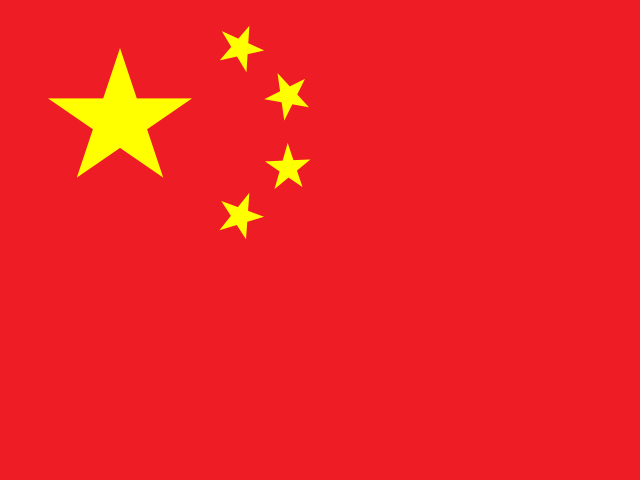
- Description: red with a large five-pointed yellow star and four smaller ones in the upper-left corner; the small stars are arranged in a vertical arc around the large oneMeaning: red represents revolution; the stars symbolize the four social classes -- the working class, the peasantry, the urban petty bourgeoisie, and the national bourgeoisie (capitalists) -- united under the Communist Party of China
- National symbols
- dragon, giant panda
- National colours
- red, yellow
- National anthem
- Title: "Yiyongjun Jinxingqu" (The March of the Volunteers)Lyrics/music: TIAN Han/NIE ErHistory: adopted 1982; the anthem, which was banned during the Cultural Revolution, is more commonly known as "Zhongguo Guoge" (Chinese National Song)
- UNESCO World Heritage Sites
- Total World Heritage Sites: 60 (41 cultural, 15 natural, 4 mixed)Selected World Heritage Site locales: Imperial Palaces of the Ming and Qing Dynasties (c); Mausoleum of the First Qin Emperor (c); The Great Wall (c); Summer Palace, an Imperial Garden in Beijing (c); Jiuzhaigou Valley Scenic and Historic Interest Area (n); Historic Ensemble of the Potala Palace, Lhasa (c); Ancient Ancient City of Ping Yao (c); Historic Center of Macau (c); Historic Monuments of Dengfeng in “The Centre of Heaven and Earth” (c); The Grand Canal (c); Mount Huangshan (m); Mogao Caves (c); Mount Taishan (m); Peking Man Site at Zhoukoudian(c); Huanglong Scenic and Historic Interest Area (n);Wulingyuan Scenic and Historic Interest Area (n); Ancient Building Complex in the Wudang Mountains (c); Mountain Resort and its Outlying Temples, Chengde (c); Temple and Cemetery of Confucius and the Kong Family Mansion in Qufu (c); Lushan National Park (c); Mount Emei Scenic Area, including Leshan Giant Buddha Scenic Area (m); Classical Gardens of Suzhou (c); Old Town of Lijiang (c); Temple of Heaven: an Imperial Sacrificial Altar in Beijing (c); Dazu Rock Carvings (c); Mount Wuyi (m); Ancient Villages in Southern Anhui – Xidi and Hongcun (c); Imperial Tombs of the Ming and Qing Dynasties (c); Longmen Grottoes (c); Mount Qingcheng and the Dujiangyan Irrigation System (c); Yungang Grottoes (c); Three Parallel Rivers of Yunnan Protected Areas (n); Capital Cities and Tombs of the Ancient Koguryo Kingdom (c); Sichuan Giant Panda Sanctuaries - Wolong, Mt. Siguniang, and Jiajin Mountains (c); Yin Xu (c); Kaiping Diaolou and Villages (c); South China Karst (n); Fujian Tulou (c); Mount Sanqingshan National Park (n); Mount Wutai (c); China Danxia (n); West Lake Cultural Landscape of Hangzhou (c); Chengjiang Fossil Site (n); Site of Xanadu (c); Cultural Landscape of Honghe Hani Rice Terraces(c); Xinjiang Tianshan (n); Silk Roads: the Routes Network of Chang'an-Tianshan Corridor (c); Tusi Sites (c); Hubei Shennongjia (n); Zuojiang Huashan Rock Art Cultural Landscape (c); Kulangsu, a Historic International Settlement (c); Qinghai Hoh Xil (n); Fanjingshan (n); Archaeological Ruins of Liangzhu City (c); Migratory Bird Sanctuaries along the Coast of Yellow Sea-Bohai Gulf of China (n); Quanzhou: Emporium of the World in Song-Yuan China (c); Cultural Landscape of Old Tea Forests of the Jingmai Mountain in Pu’er (c); Badain Jaran Desert - Towers of Sand and Lakes (n); Beijing Central Axis: A Building Ensemble
Economy
- Overview
- world’s second-largest economy by nominal GDP; global leader in exports and manufacturing; historically strong growth slowing; challenges of aging workforce, weak productivity, rising youth unemployment, struggling property sector, and public debt; state-sponsored economic controls and infrastructure investments
- GDP (PPP)
- $33.598 trillion (2024 est.)
- GDP per person (PPP)
- $23,800 (2024 est.)
- GDP growth
- 5% (2024 est.)
- Inflation
- 0.2% (2024 est.)
- Unemployment
- 4.6% (2024 est.)
- Below poverty line
- 0% (2020 est.)
- Farm products
- maize, rice, vegetables, wheat, sugarcane, potatoes, cucumbers/gherkins, tomatoes, watermelons, pork (2023)
- Industries
- world leader in gross value of industrial output; mining and ore processing, iron, steel, aluminum, and other metals, coal; machine building; armaments; textiles and apparel; petroleum; cement; chemicals; fertilizer; consumer products (including footwear, toys, and electronics); food processing; transportation equipment, including automobiles, railcars and locomotives, ships, aircraft; telecommunications equipment, commercial space launch vehicles, satellites
- Exports
- $3.793 trillion (2024 est.)
- Main exports
- broadcasting equipment, computers, integrated circuits, garments, machine parts (2023)
- Export partners
- USA 13%, Hong Kong 8%, Japan 5%, Germany 5%, S. Korea 4% (2023)
- Main imports
- crude petroleum, integrated circuits, iron ore, gold, natural gas (2023)
- Import partners
- S. Korea 7%, USA 7%, Japan 6%, Australia 6%, Russia 6% (2023)
- Money sent home from abroad
- 0.2% of GDP (2024 est.)
Energy, internet and transport
- Electricity access
- Electrification - total population: 100% (2022 est.)
- Electricity sources
- Fossil fuels: 64.2% of total installed capacity (2023 est.)Nuclear: 4.7% of total installed capacity (2023 est.)Solar: 6.3% of total installed capacity (2023 est.)Wind: 9.6% of total installed capacity (2023 est.)Hydroelectricity: 13.3% of total installed capacity (2023 est.)Biomass and waste: 1.9% of total installed capacity (2023 est.)
- Internet users
- Percent of population: 78% (2023 est.)
- Mobile phones
- Total subscriptions: 1.87 billion (2024 est.)Subscriptions per 100 inhabitants: 132 (2024 est.)
- TV and radio
- all broadcast media are owned by, or affiliated with, the Chinese Communist Party (CCP) or a government agency; no privately owned TV or radio stations; state-run Chinese Central TV, provincial, and municipal stations offer more than 2,000 channels; the Central Propaganda Department and local (provincial, municipal) officials direct news reporting and approve all programming; foreign-made TV programs must be approved/censored prior to broadcast; widespread use of online platforms (Bilibili, Tencent Video, iQiyi, etc) to access domestic and international films and TV shows; Cyberspace Administration of China (CAC) regulates video platforms (2022)
- Airports
- 552 (2025)
- Railways
- Total: 150,000 km (2021) 1.435-m gauge (100,000 km electrified); 104,0000 traditional, 40,000 high-speed
- Merchant ships
- Total: 8,314 (2023)By type: bulk carrier 1,831, container ship 419, general cargo 1,392, oil tanker 1,196, other 3,476
Military and space
- Armed forces
- People's Liberation Army (PLA): Ground Forces or People's Liberation Army Army (PLAA), Navy (PLAN, includes Marine Corps (PLANMC)), Air Force (PLAAF), Rocket Force (PLARF), Aerospace Force (ASF), Cyberspace Force (CSF), Information Support Force (ISF), Joint Logistics Support Force (JLSF); People's Armed Police (PAP, includes Coast Guard, Border Defense Force, Internal Security Forces); PLA Reserve Force (2025)
- Military spending
- 1.5% of GDP (2024 est.)
- Military service
- 18-26 years of age depending on education level for men and women for both volunteer and selective compulsory military service; 24-month service obligation (2025)
- Space programme
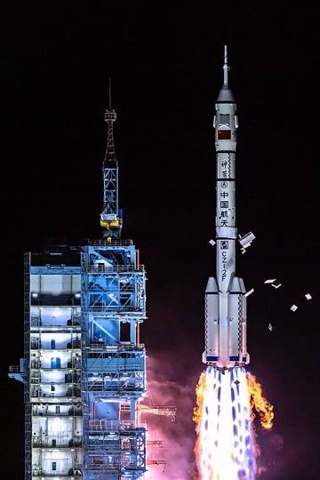
- considered one of the world’s leading space powers, with a comprehensive and ambitious space program; can manufacture and operate the full spectrum of space launch vehicles (SLVs) and spacecraft, including human-crewed, lunar/inter-planetary/asteroid probes, satellites (communications, remote sensing, navigational, scientific, etc.), space stations, and reusable space transportation; has an astronaut/taikonaut program; researches and develops a range of space-related capabilities, including advanced telecommunications, optics, spacecraft components, and satellite payloads; participates in international space programs and co-leads (with Australia and Japan) the Global Earth Observation System of Systems; has signed agreements with more than 45 national space agencies, including those of Brazil, Canada, France, and Russia, as well several international organizations; has also cooperated with ESA; two state-owned aerospace enterprises dominate space industry, but a substantial commercial space sector includes launch services (2025)
- Space milestones
- 1960s - began launching rockets and initiated satellite and satellite launch vehicle (SLV) programs1970 - launched first communications satellite (Dongfanghong I)2003 - first manned space flight; launched first satellite for global navigational system (Beidou)2011 - placed temporary space station (Tiangong-1) into Earth orbit2013 - first unmanned lunar landing mission (Chang'e-3); placed a second temporary space station (Tiangong-2) in Earth orbit2017 - employed a communications satellite (Micius) to perform the world’s first quantum-encrypted virtual teleconference between Beijing and Vienna2019 - landed a rover vehicle (Chang’e-4) on the far side of the Moon2021 - landed a probe and operated a rover vehicle on Mars; signed agreement with Russia to set up an international manned lunar research station; announced intent to send a manned mission to Mars by 20332022 - completed construction of a permanent manned space station (Tiangong) in Earth orbit2024 - successful landing and return of robotic spacecraft/probe (Chang'e-6) from the far side the Moon; first launch of "Thousand Sails" commercial communications satellite constellation project2025 - launched asteroid sample return mission probe (Tianwen-2); launched world's first quantum communications microsatellite (Jinan-1)
Global issues
- Refugees and displaced people
- Refugees: 814 (2024 est.)IDPs: 198,400 (2024 est.)
- Drug trade
- USG identification: major illicit drug-producing and/or drug-transit countrymajor precursor-chemical producer (2025)
Neighbouring countries
AfghanistanBhutanMyanmarIndiaKazakhstanNepalNorth KoreaKyrgyzstanLaosMongoliaPakistanRussiaTajikistanVietnam
- Phone code
- +86
- Internet domain
- .cn