Vietnam
Socialist Republic of Vietnam · Việt Nam
Under Chinese rule for about 1,000 years until 938. Colonised by France; independence was won through wars against France and then the US-backed south. Reunified in 1976; reforms since 1986 made it a manufacturing hub.
See Vietnam on the 3D globeTake a quiz
Population101 million
Area331,212 km²
CapitalHanoi
RegionSouth-Eastern Asia
Did you know?
- Son Doong is the world's largest known cave
- Second-largest coffee exporter
- Ha Long Bay has about 1,600 limestone islands
Key facts about Vietnam
- Government
- Communist one-party socialist republic
- Religion
- Folk religion and unaffiliated majority; Buddhist ~15%, Catholic ~7%
- Founded / independence
- 938 (independence from China); 1945/1976
- Rich in
- Electronics, garments, coffee, rice, seafood
- Languages
- Vietnamese
Vietnamese: Northern, Central, Southern dialects; Tày, Khmer, Hmong - Currency
- Vietnamese đồng (₫)
- People are called
- Vietnamese
- Main cities
- Ho Chi Minh City, Hanoi, Hai Phong, Da Nang, Can Tho
Timeline of Vietnam
- 938Independence from China
- 1802Nguyen dynasty
- 1887French Indochina
- 1954Dien Bien Phu victory
- 1975Fall of Saigon
- 1986Doi Moi reforms
Places to see in Vietnam
- Ha Long Bay
- Hoi An old town
- Hue Imperial City
- Phong Nha caves
- Mekong Delta
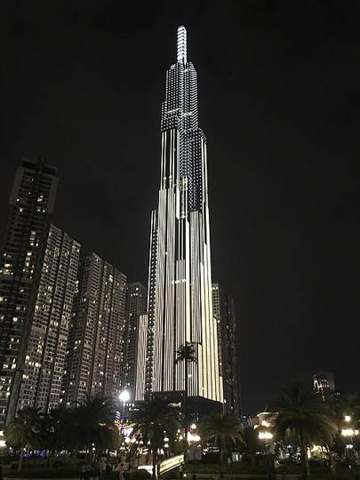
- Ho Chi Minh City
Food and drink
Pho · banh mi · spring rolls · bun cha · Vietnamese coffee
Culture and famous for
Water puppetry; áo dài dress; conical hats
Popular sports
Football, martial arts (Vovinam)
Geography and climate
- Highest point
- Fansipan, 3,143 m
- Rivers, lakes and seas
- Mekong, Red River
- Climate
- Tropical south, subtropical north
- Coastline
- Has a sea coast
- Population density
- 305 people per km²
Wars and conflicts
- Wars against China
- First Indochina War
- Vietnam War 1955–75
- Sino-Vietnamese War 1979
Empires and states that once stood here
Alliances and memberships
Political unions and regional organisations
Economy and trade
Vietnam in depth
Detailed facts from the CIA World Factbook (public domain, latest edition).
Overview
- History in brief
- Vietnam's early history included periods of occupation by outside forces and eventual power consolidation under Vietnamese dynastic families. A succession of Han Chinese emperors ruled the area, which was centered on the Red River Valley, until approximately the 10th century. The Ly Dynasty (11th-13th century) created the first independent Vietnamese state, which was known as Dai Viet, and established their capital at Thang Long (Hanoi). Under the Tran Dynasty (13th-15th century), TRAN Hung Dao, one of Vietnam’s national heroes, led Dai Viet forces to fight off Mongol invaders in 1279. After a brief Chinese occupation in the early 1400s, Vietnamese resistance leader LE Thai To made himself emperor and established the Le Dynasty, which lasted until the late 18th century despite decades of political turmoil, civil war, and division. During this period, Dai Viet expanded southward to the Central Highlands and Mekong Delta, reaching the approximate boundaries of modern-day Vietnam by the 1750s. Dai Viet suffered additional civil war and division in the latter half of the 18th century, but it was reunited and renamed Vietnam under Emperor NGUYEN Phuc Anh (aka Gia Long) in 1802.France began its conquest of Vietnam in 1858 and made Vietnam part of French Indochina in 1887. Vietnam declared independence after World War II, but the French continued to rule until communist forces under Ho Chi MINH defeated them in 1954. Under the Geneva Accords of 1954, Vietnam was divided into the communist North and anti-communist South. Fighting erupted between the two governments shortly afterwards with the North supporting communist rebels in the South and eventually committing thousands of combat troops. The US provided to the South significant economic and military assistance, including large numbers of US military forces, which reached a peak strength of over 500,000 troops in 1968. US combat forces were withdrawn following a cease-fire agreement in 1973. Two years later, North Vietnamese forces overran the South, reuniting the country under communist rule. The conflict, known as the Second Indochina War (1955-1975), devastated Vietnam, spilled over into the neighboring countries of Cambodia and Laos, and is estimated to have resulted in the deaths of up to 3 million Vietnamese civilians and soldiers. It also caused more than 58,000 US combat and non-combat deaths and created deep domestic divisions in the US.Despite the return of peace, the country experienced little econ
Geography
- Location
- Southeastern Asia, bordering the Gulf of Thailand, Gulf of Tonkin, and South China Sea, as well as China, Laos, and Cambodia
- Size compared
- about three times the size of Tennessee; slightly larger than New Mexico
- Land borders
- Total: 4,616 kmBorder countries: Cambodia 1,158 km; China 1,297 km; Laos 2,161 km
- Coastline
- 3,444 km (excludes islands)
- Climate
- tropical in south; monsoonal in north with hot, rainy season (May to September) and warm, dry season (October to March)
- Terrain
- low, flat delta in south and north; central highlands; hilly, mountainous in far north and northwest
- Elevation
- Highest point: Fan Si Pan 3,144 mLowest point: South China Sea 0 mMean elevation: 398 m
- Natural resources
- antimony, phosphates, coal, manganese, rare earth elements, bauxite, chromate, offshore oil and gas deposits, timber, hydropower, arable land
- Major rivers
- Sông Tiên Giang (Mekong) river mouth (shared with China [s], Burma, Laos, Thailand, Cambodia) - 4,350 km; Pearl river source (shared with China [m]) - 2,200 km; Red river mouth (shared with China [s]) - 1,149 kmNote: [s] after country name indicates river source; [m] after country name indicates river mouth
- Natural hazards
- occasional typhoons (May to January) with extensive flooding, especially in the Mekong River delta
- Notes
- Note 1: extending 1,650 km (1,025 mi) north to south, the country is only 50 km (31 mi) across at its narrowest pointNote 2: Son Doong in Phong Nha-Ke Bang National Park is the world's largest cave (greatest cross-sectional area) and is the largest known cave passage in the world by volume at 38.5 million cu m (about 1.35 billion cu ft); it connects to Thoong cave, but not yet officially -- when recognized, it will add an additional 1.6 million cu m; it is so massive that it contains its own jungle, underground river, and localized weather system, with clouds forming inside the cave and spewing from its exits
- Environmental issues
- deforestation and soil degradation from logging and slash-and-burn agriculture; water pollution; overfishing; groundwater contamination limits potable water supply; air pollution
People and society
- Population
- Total: 106,688,169 (2025 est.)Male: 53,597,784Female: 53,090,385
- Nationality
- Noun: Vietnamese (singular and plural)Adjective: Vietnamese
- Ethnic groups
- Kinh (Viet) 85.3%, Tay 1.9%, Thai 1.9%, Muong 1.5%, Khmer 1.4%, Mong 1.4%, Nung 1.1%, other 5.5% (2019 est.)
- Languages
- Vietnamese (official); English (often as a second language); some French, Chinese, and Khmer; mountain-area languages (including Mon-Khmer and Malayo-Polynesian)Major-language sample(s): Dữ kiện thế giới, là nguồn thông tin cơ bản không thể thiếu. (Vietnamese)The World Factbook, the indispensable source for basic information.
- Religions
- Catholic 6.1%, Buddhist 5.8%, Protestant 1%, other 0.8%, none 86.3% (2019 est.)
- Median age
- Total: 33.5 years (2025 est.)Male: 32 yearsFemale: 34.2 years
- Population growth
- 0.86% (2025 est.)
- Life expectancy
- Total population: 76.1 years (2024 est.)Male: 73.5 yearsFemale: 78.9 years
- Children per woman
- 2.01 children born/woman (2025 est.)
- Urbanization
- Urban population: 39.5% of total population (2023)Rate of urbanization: 2.7% annual rate of change (2020-25 est.)
- Largest cities
- 9.321 million Ho Chi Minh City, 5.253 million HANOI (capital), 1.865 million Can Tho, 1.423 million Hai Phong, 1.221 million Da Nang, 1.111 million Bien Hoa (2023)
- Literacy
- Total population: 96.1% (2022 est.)Male: 97.2% (2022 est.)Female: 95.1% (2022 est.)
- Years in school
- Total: 14 years (2022 est.)Male: 15 years (2022 est.)Female: 14 years (2022 est.)
Government
- Official names
- Conventional long form: Socialist Republic of VietnamConventional short form: VietnamLocal long form: Cong Hoa Xa Hoi Chu Nghia Viet NamLocal short form: Viet NamFormer: Democratic Republic of Vietnam (North Vietnam), Republic of Vietnam (South Vietnam)Abbreviation: SRVEtymology: the name translates as "Viet south;" Viet is an ethnic term of unknown origin that dates back to ancient times, and nam (south) refers to the country's location
- Government type
- communist party-led state
- Capital
- Name: Hanoi (Ha Noi)Geographic coordinates: 21 02 N, 105 51 ETime difference: UTC+7 (12 hours ahead of Washington, DC, during Standard Time)Etymology: the name means "inside the river," from the Vietnamese words ha (river) and noi (inside), and refers to its location in a bend of the Red River
- Regions
- 58 provinces (tinh, singular and plural) and 5 municipalities (thanh pho, singular and plural)Provinces: An Giang, Bac Giang, Bac Kan, Bac Lieu, Bac Ninh, Ba Ria-Vung Tau, Ben Tre, Binh Dinh, Binh Duong, Binh Phuoc, Binh Thuan, Ca Mau, Cao Bang, Dak Lak, Dak Nong, Dien Bien, Dong Nai, Dong Thap, Gia Lai, Ha Giang, Ha Nam, Ha Tinh, Hai Duong, Hau Giang, Hoa Binh, Hung Yen, Khanh Hoa, Kien Giang, Kon Tum, Lai Chau, Lam Dong, Lang Son, Lao Cai, Long An, Nam Dinh, Nghe An, Ninh Binh, Ninh Thuan, Phu Tho, Phu Yen, Quang Binh, Quang Nam, Quang Ngai, Quang Ninh, Quang Tri, Soc Trang, Son La, Tay Ninh, Thai Binh, Thai Nguyen, Thanh Hoa, Thua Thien-Hue, Tien Giang, Tra Vinh, Tuyen Quang, Vinh Long, Vinh Phuc, Yen BaiMunicipalities: Can Tho, Da Nang, Ha Noi (Hanoi), Hai Phong, Ho Chi Minh City (Saigon)
- Independence
- 2 September 1945 (from France)
- National holiday
- Independence Day (National Day), 2 September (1945)
- Constitution
- History: several previous; latest adopted 28 November 2013, effective 1 January 2014Amendment process: proposed by the president, by the National Assembly’s Standing Committee, or by at least two thirds of the National Assembly membership; a decision to draft an amendment requires approval by at least a two-thirds majority vote of the Assembly membership, followed by the formation of a constitutional drafting committee to write a draft and collect citizens’ opinions; passage requires at least two-thirds majority of the Assembly membership; the Assembly can opt to conduct a referendum
- Legal system
- civil law system with European influences
- Voting age
- 18 years of age; universal
- Flag meaning
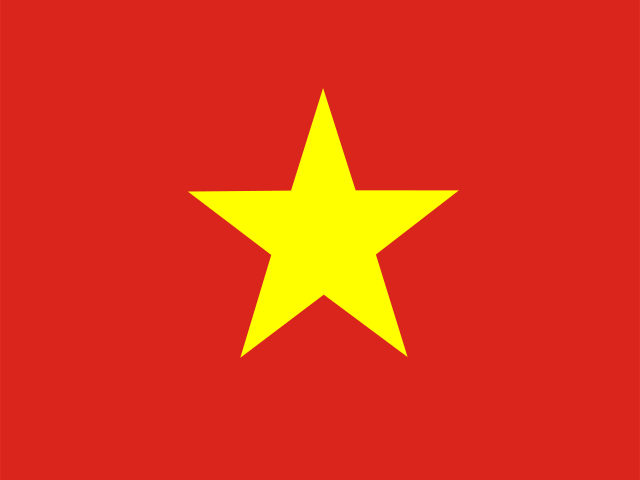
- Description: red field with a five-pointed yellow star in the centerMeaning: red stands for revolution and blood, and the five-pointed star for the five elements of the populace -- peasants, workers, intellectuals, traders, and soldiers -- that unite to build socialism
- National symbols
- five-pointed yellow star on a red field, lotus blossom
- National colours
- red, yellow
- National anthem
- Title: "Tien quan ca" (The Song of the Marching Troops)Lyrics/music: Nguyen Van CAOHistory: adopted as the national anthem of the Democratic Republic of Vietnam in 1945; it became the national anthem of the unified Socialist Republic of Vietnam in 1976; only the first verse is used as the official anthem
- UNESCO World Heritage Sites
- Total World Heritage Sites: 9 (6 cultural, 2 natural, 1 mixed)Selected World Heritage Site locales: Complex of Hué Monuments (c); Ha Long Bay (n); Hoi An Ancient Town (c); My Son Sanctuary (c); Phong Nha-Ke Bang National Park (n); Imperial Citadel of Thang Long - Hanoi (c); Citadel of the Ho Dynasty (c); Trang An Landscape Complex (m); Yen Tu-Vinh Nghiem-Con Son, Kiep Bac Complex of Monuments and Landscapes (c)
Economy
- Overview
- lower middle-income socialist East Asian economy; rapid economic growth since Đổi Mới reforms; strong investment and productivity growth; tourism and manufacturing hub; TPP signatory; declining poverty aside from ethnic minorities; systemic corruption
- GDP (PPP)
- $1.456 trillion (2024 est.)
- GDP per person (PPP)
- $14,400 (2024 est.)
- GDP growth
- 7.1% (2024 est.)
- Inflation
- 3.6% (2024 est.)
- Unemployment
- 1.5% (2024 est.)
- Below poverty line
- 4.3% (2022 est.)
- Farm products
- rice, vegetables, sugarcane, cassava, maize, pork, fruits, bananas, coconuts, coffee (2023)
- Industries
- food processing, garments, shoes, machine-building; mining, coal, steel; cement, chemical fertilizer, glass, tires, oil, mobile phones
- Exports
- $429.383 billion (2024 est.)
- Main exports
- broadcasting equipment, garments, integrated circuits, machine parts, footwear (2023)
- Export partners
- USA 28%, China 20%, Japan 6%, Hong Kong 4%, Germany 3% (2023)
- Main imports
- integrated circuits, broadcasting equipment, fabric, plastics, telephones (2023)
- Import partners
- China 49%, Singapore 6%, Japan 6%, Hong Kong 5%, Taiwan 4% (2023)
- Money sent home from abroad
- 3.2% of GDP (2023 est.)
Energy, internet and transport
- Electricity access
- Electrification - total population: 100% (2022 est.)
- Electricity sources
- Fossil fuels: 50.6% of total installed capacity (2023 est.)Solar: 9.7% of total installed capacity (2023 est.)Wind: 4.2% of total installed capacity (2023 est.)Hydroelectricity: 34.3% of total installed capacity (2023 est.)Biomass and waste: 1.1% of total installed capacity (2023 est.)
- Internet users
- Percent of population: 78% (2023 est.)
- Mobile phones
- Total subscriptions: 129 million (2024 est.)Subscriptions per 100 inhabitants: 128 (2024 est.)
- TV and radio
- state-controlled broadcast media, with oversight from the Ministry of Information and Communication (MIC); state-controlled national TV provider, Vietnam Television (VTV), has several channels with regional broadcasting centers; law limits access to satellite TV, but many access foreign programming via home satellite equipment; state-controlled Voice of Vietnam, the national radio broadcaster, broadcasts on several channels and is repeated on AM, FM, and shortwave stations (2018)
- Airports
- 36 (2025)
- Railways
- Total: 2,600 km (2014)Standard gauge: 178 km (2014) 1.435-m gauge; 253 km mixed gaugeNarrow gauge: 2,169 km (2014) 1.000-m gauge
- Merchant ships
- Total: 1,973 (2022)By type: bulk carrier 117, container ship 45, general cargo 1,176, oil tanker 134, other 501
Military and space
- Armed forces
- People's Army of Vietnam (PAVN; aka Vietnam People's Army, VPA): Ground Forces (Army), Navy (includes naval infantry), Air Defense - Air Force, Vietnam Border Guard, Vietnam Coast GuardVietnam People's Ministry of Public Security; Vietnam Civil Defense Force (2025)
- Military spending
- 1.8% of GDP (2023 est.)
- Military service
- 18-27 years of age for compulsory and voluntary military service for men and women (in practice only men are drafted); service obligation is 24-36 months depending on the branch of service (including Coast Guard and Ministry of Public Security) (2025)
- Space programme
- has a growing national space program focused on acquiring, operating, and exploiting satellites, as well as expanding domestic capabilities in satellites and associated sub-system production, space sciences, and technology applications; builds and operates communications and remote sensing satellites; conducting research and development on space science and applied space technologies, such as advanced optics and space data exploitation; has worked closely with Japan on its space program; has also established relationships with the space agencies or commercial space sectors of some European countries (such as France), India, and the US (2025)
- Space milestones
- 1980 - first Vietnamese astronaut/cosmonaut into space on Soviet spacecraft2008 - first telecommunications satellite (VINASAT-1) built by US company and launched on European rocket2012 - first educational/scientific cube satellite (F-1) built jointly with and launched by Japan; second telecommunications satellite (VINASAT-2) built by US and launched on European rocket2013 - first domestically built remote-sensing (RS)/technology-demonstrator cube satellite (PicoDragon) launched by Japan; first RS satellite (VNREDSat-1a or Vietnam Natural Resources, Environment, and Disaster Monitoring Satellite) launched on European rocket2016 - signed an agreement with India to establish a satellite tracking and imaging center in Ho Chi Minh City in exchange for access to Indian RS imagery2018 - completed National Space Center in Hanoi2021 - announced a developmental roadmap for producing “Made in Vietnam” small satellites as part of a larger effort to increase space sciences and technology through 2030; signed an agreement with Japan to increase cooperation on space defense
Global issues
- Refugees and displaced people
- Refugees: 19 (2024 est.)IDPs: 2,568 (2024 est.)Stateless persons: 20,590 (2024 est.)
Neighbouring countries
- Phone code
- +84
- Internet domain
- .vn