Cameroon
Republic of Cameroon · Cameroun
German colony, then split between France and Britain. One of the world's longest-serving presidents has ruled since 1982 and won again in 2025.
See Cameroon on the 3D globeTake a quiz
Population29 million
Area475,442 km²
CapitalYaoundé
RegionMiddle Africa
Did you know?
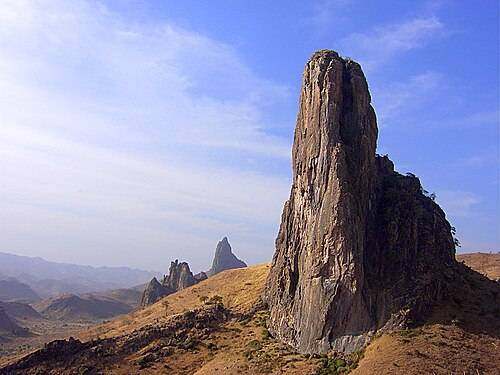
- Called "Africa in miniature" for its variety of landscapes
- Has around 250 languages
- First African team to reach a World Cup quarter-final (1990)
Key facts about Cameroon
- Government
- Presidential republic (authoritarian)
- Religion
- Christian ~70%, Islam ~20%
- Founded / independence
- 1960 (from France); 1961 union with British south
- Rich in
- Oil, cocoa, coffee, timber
- Languages
- English, French
French and English; over 250 languages; Cameroonian Pidgin, Fulfulde - Currency
- Central African CFA franc (Fr)
- People are called
- Cameroonian
- Main cities
- Douala, Yaoundé, Bamenda, Garoua
Timeline of Cameroon
- 1884German colony
- 1919Split French and British
- 1960Independence
- 1961Reunified with south
- 2016Anglophone crisis
Places to see in Cameroon
- Mount Cameroon
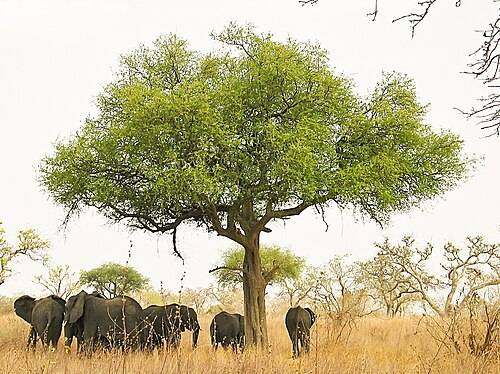
- Waza National Park
- Kribi beaches and Lobé Falls
- Foumban sultan's palace
- Dja Reserve
Food and drink
Ndolé · poulet DG · achu soup
Culture and famous for
Makossa music; called "Africa in miniature"
Popular sports
Football (Indomitable Lions)
Geography and climate
- Highest point
- Mount Cameroon, 4,040 m
- Rivers, lakes and seas
- Sanaga River; Lake Chad
- Climate
- Tropical to Sahelian
- Coastline
- Has a sea coast
- Population density
- 61 people per km²
Wars and conflicts
- Independence insurgency
- Anglophone crisis since 2016
- Boko Haram
Alliances and memberships
Political unions and regional organisations
African UnionOrganisation of Islamic CooperationCommonwealth of Nations
Cameroon in depth
Detailed facts from the CIA World Factbook (public domain, latest edition).
Overview
- History in brief
- Powerful chiefdoms ruled much of the area of present-day Cameroon before it became a German colony known as Kamerun in 1884. After World War I, the territory was divided between France and the UK as League of Nations mandates. French Cameroon became independent in 1960 as the Republic of Cameroon. The following year, the southern portion of neighboring British Cameroon voted to merge with the new country to form the Federal Republic of Cameroon. In 1972, a new constitution replaced the federation with a unitary state, the United Republic of Cameroon. The country has generally enjoyed stability, which has enabled the development of agriculture, roads, and railways, as well as a petroleum industry. Nonetheless, unrest and violence in the country's two western, English-speaking regions have persisted since 2016. Movement toward democratic reform is slow, and political power remains firmly in the hands of President Paul BIYA.
Geography
- Location
- Central Africa, bordering the Bight of Biafra, between Equatorial Guinea and Nigeria
- Size compared
- slightly larger than California; about four times the size of Pennsylvania
- Land borders
- Total: 5,018 kmBorder countries: Central African Republic 901 km; Chad 1,116 km; Republic of the Congo 494 km; Equatorial Guinea 183 km; Gabon 349 km; Nigeria 1975 km
- Coastline
- 402 km
- Climate
- varies with terrain, from tropical along coast to semiarid and hot in north
- Terrain
- diverse, with coastal plain in southwest, dissected plateau in center, mountains in west, plains in north
- Elevation
- Highest point: Fako on Mont Cameroun 4,045 mLowest point: Atlantic Ocean 0 mMean elevation: 667 m
- Natural resources
- petroleum, bauxite, iron ore, timber, hydropower
- Major lakes
- Fresh water lake(s): Lake Chad (endorheic lake shared with Niger, Nigeria, and Chad) - 10,360-25,900 sq kmnote - area varies by season and year to year
- Natural hazards
- volcanic activity with periodic releases of poisonous gases from Lake Nyos and Lake Monoun volcanoesVolcanism: Mt. Cameroon (4,095 m), which last erupted in 2000, is the most frequently active volcano in West Africa; lakes in the Oku volcanic field sometimes release fatal levels of gas, which killed about 1,700 people in 1986
- Notes
- sometimes referred to as the hinge of Africa because of its central location on the continent and its position at the west-south juncture of the Gulf of Guinea; areas of thermal springs and indications of current or prior volcanic activity; Mount Cameroon, the highest mountain in Sub-Saharan west Africa, is an active volcano
- Environmental issues
- deforestation; overgrazing; soil erosion; desertification; poaching; overfishing; overhunting
People and society
- Population
- Total: 31,518,954 (2025 est.)Male: 15,683,611Female: 15,835,343
- Nationality
- Noun: Cameroonian(s)Adjective: Cameroonian
- Ethnic groups
- Bamileke-Bamu 22.2%, Biu-Mandara 16.4%, Arab-Choa/Hausa/Kanuri 13.5%, Beti/Bassa, Mbam 13.1%, Grassfields 9.9%, Adamawa-Ubangi, 9.8%, Cotier/Ngoe/Oroko 4.6%, Southwestern Bantu 4.3%, Kako/Meka 2.3%, foreign/other ethnic group 3.8% (2022 est.)
- Languages
- 24 major African language groups, English (official), French (official)Major-language sample(s): The World Factbook, the indispensable source for basic information. (English)The World Factbook, une source indispensable d'informations de base. (French)
- Religions
- Roman Catholic 33.1%, Muslim 30.6%, Protestant 27.1% other Christian 6.1%, animist 1.3%, other 0.7%, none 1.2% (2022 est.)
- Median age
- Total: 19.4 years (2025 est.)Male: 18.6 yearsFemale: 19.2 years
- Population growth
- 2.37% (2025 est.)
- Life expectancy
- Total population: 64.2 years (2024 est.)Male: 62.3 yearsFemale: 66.1 years
- Children per woman
- 3.87 children born/woman (2025 est.)
- Urbanization
- Urban population: 59.3% of total population (2023)Rate of urbanization: 3.43% annual rate of change (2020-25 est.)
- Largest cities
- 4.509 million YAOUNDE (capital), 4.063 million Douala (2023)
- Literacy
- Total population: 72.6% (2018 est.)Male: 79.7% (2018 est.)Female: 66.2% (2018 est.)
- Years in school
- Total: 11 years (2023 est.)Male: 12 years (2023 est.)Female: 10 years (2023 est.)
Government
- Official names
- Conventional long form: Republic of CameroonConventional short form: CameroonLocal long form: République du Cameroun (French)/Republic of Cameroon (English)Local short form: Cameroun/CameroonFormer: Kamerun, French Cameroon, British Cameroon, Federal Republic of Cameroon, United Republic of CameroonEtymology: in the 16th century, Portuguese explorers named an estuary near the mouth of the Wouri River the Rio dos Camaroes (River of Prawns) after the abundant shrimp in the water; the name Camaroes evolved into "Cameroon"
- Government type
- presidential republic
- Capital
- Name: YaoundeGeographic coordinates: 3 52 N, 11 31 ETime difference: UTC+1 (6 hours ahead of Washington, DC, during Standard Time)Etymology: Germans founded the city in 1888, but the name comes from the native Ewondo people; the meaning of the name is unclear
- Regions
- 10 regions (régions, singular - région); Adamaoua, Centre, East (Est), Far North (Extrême-Nord), Littoral, North (Nord), North-West (Nord-Ouest), West (Ouest), South (Sud), South-West (Sud-Ouest)
- Independence
- 1 January 1960 (from French-administered UN trusteeship)
- National holiday
- State Unification Day (National Day), 20 May (1972)
- Constitution
- History: several previous; latest effective 18 January 1996Amendment process: proposed by the president of the republic or by Parliament; amendment drafts require approval of at least one third of the membership in either house of Parliament; passage requires absolute majority vote of the Parliament membership; passage of drafts requested by the president for a second reading in Parliament requires two-thirds majority vote of its membership; the president can opt to submit drafts to a referendum, in which case passage requires a simple majority; constitutional articles on Cameroon’s unity and territorial integrity and its democratic principles cannot be amended
- Legal system
- mixed system of English common law, French civil law, and customary law
- Voting age
- 20 years of age; universal
- Flag meaning
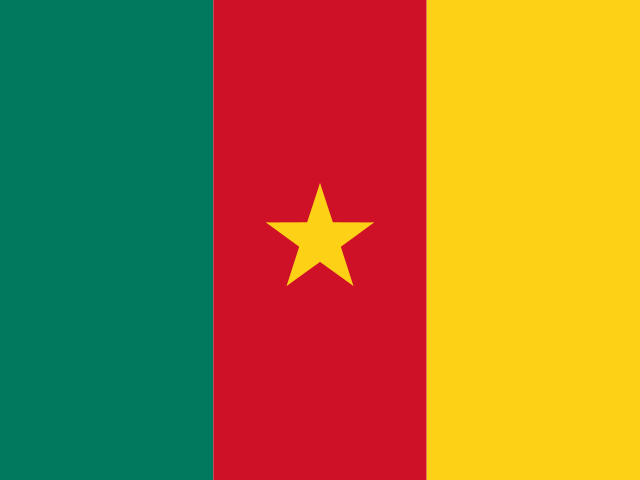
- Description: three equal vertical bands of green (left side), red, and yellow, with a small five-pointed yellow star centered in the red bandMeaning: red stands for unity; yellow for the sun, happiness, and the northern savannahs; green for hope and the southern forests; the star is called the "star of unity;" the vertical tricolor design is similar to the French flagHistory: uses the colors of the Pan-African movement
- National symbols
- lion
- National colours
- green, red, yellow
- National anthem
- Title: "O Cameroun, Berceau de Nos Ancêtres" (O Cameroon, Cradle of Our Forefathers)Lyrics/music: Rene Djam AFAME, Samuel Minkio BAMBA, Moise Nyatte NKO'O [French], Benard Nsokika FONLON [English]/Rene Djam AFAMEHistory: adopted 1957; lyrics were changed slightly to the current version in 1978
- UNESCO World Heritage Sites
- Total World Heritage Sites: 3 (two natural and one cultural)Selected World Heritage Site locales: Dja Faunal Reserve (n); Sangha Trinational Forest (n); Diy-Gid-Biy Cultural Landscape of the Mandara Mountains (c)
Economy
- Overview
- largest CEMAC economy with many natural resources; recent political instability and terrorism reducing economic output; systemic corruption; poor property rights enforcement; increasing poverty in northern regions
- GDP (PPP)
- $143.264 billion (2024 est.)
- GDP per person (PPP)
- $4,900 (2024 est.)
- GDP growth
- 3.7% (2024 est.)
- Inflation
- 4.5% (2024 est.)
- Unemployment
- 3.6% (2024 est.)
- Farm products
- cassava, plantains, oil palm fruit, maize, taro, tomatoes, sorghum, sugarcane, bananas, vegetables (2023)
- Industries
- petroleum production and refining, aluminum production, food processing, light consumer goods, textiles, lumber, ship repair
- Exports
- $8.353 billion (2023 est.)
- Main exports
- crude petroleum, natural gas, gold, cocoa beans, wood (2023)
- Export partners
- Netherlands 21%, France 14%, UAE 13%, India 9%, China 8% (2023)
- Main imports
- garments, refined petroleum, plastic products, wheat, rice (2023)
- Import partners
- China 43%, France 6%, India 6%, Belgium 4%, UAE 4% (2023)
- Money sent home from abroad
- 1.6% of GDP (2023 est.)
Energy, internet and transport
- Electricity access
- Electrification - total population: 71% (2022 est.)Electrification - urban areas: 94%Electrification - rural areas: 25%
- Electricity sources
- Fossil fuels: 36.1% of total installed capacity (2023 est.)Solar: 0.3% of total installed capacity (2023 est.)Hydroelectricity: 63.1% of total installed capacity (2023 est.)Biomass and waste: 0.5% of total installed capacity (2023 est.)
- Internet users
- Percent of population: 42% (2023 est.)
- Mobile phones
- Total subscriptions: 31.5 million (2024 est.)Subscriptions per 100 inhabitants: 108 (2024 est.)
- TV and radio
- government maintains tight control over broadcast media; state-owned Cameroon Radio Television (CRTV), with both TV and radio broadcasts, was the only officially recognized and fully licensed broadcaster until 2007, when the government issued licenses to 2 private TV broadcasters and 1 private radio broadcaster; about 70 privately owned, unlicensed radio stations operate under “administrative tolerance,” meaning the stations could be subject to closure at any time (2023)
- Airports
- 37 (2025)
- Railways
- Total: 987 km (2014)Narrow gauge: 987 km (2014) 1.000-m gauge
- Merchant ships
- Total: 198 (2023)By type: bulk carrier 2, general cargo 91, oil tanker 42, other 63
Military and space
- Armed forces
- Cameroon Armed Forces (Forces Armees Camerounaises, FAC): Army, Cameroon Navy (includes naval infantry or fusiliers marin), Air Force, National Gendarmerie, National Firefighting CorpsGeneral Delegation for National Security (Délégation Générale à la Sûreté Nationale or DGSN): Cameroon Police (2025)
- Military spending
- 1% of GDP (2024 est.)
- Military service
- 18-23 years of age for voluntary military service for men and women (18-28 for medical services); no conscription; service obligation 4 years (2025)
Global issues
- Refugees and displaced people
- Refugees: 443,740 (2024 est.)IDPs: 1,058,405 (2024 est.)
Neighbouring countries
Central African RepublicChadRepublic of the CongoEquatorial GuineaGabonNigeria
- Phone code
- +237
- Internet domain
- .cm