Chile
Republic of Chile
The Mapuche resisted Spain for centuries. A 1973 coup ended Allende's government; Pinochet ruled until 1990.
See Chile on the 3D globeTake a quiz
Population19.8 million
Area756,102 km²
CapitalSantiago
RegionSouth America
Did you know?
- About 4,300 km long but only about 177 km wide on average
- The Atacama is the driest non-polar desert
- Easter Island's 900 moai statues
Key facts about Chile
- Government
- Presidential republic
- Religion
- Catholic ~55%, unaffiliated ~25%
- Founded / independence
- 1818 (from Spain)
- Rich in
- Copper (world's largest), lithium, wine, salmon, fruit
- Languages
- Spanish
Spanish (Chilean); Mapudungun, Aymara, Rapa Nui - Currency
- Chilean peso ($)
- People are called
- Chilean
- Main cities
- Santiago, Valparaíso, Concepción, Antofagasta
Timeline of Chile
- 1541Santiago founded
- 1818Independence
- 1879War of the Pacific
- 1960Strongest earthquake ever (9.5)
- 1973Coup
- 1990Democracy
Places to see in Chile
- Torres del Paine
- Atacama Desert
- Easter Island moai
- Valparaíso
- Chiloé churches
- Lake District
Food and drink
Empanadas · pastel de choclo · seafood · pisco
Culture and famous for
Poets Pablo Neruda and Gabriela Mistral (Nobel laureates)
Popular sports
Football, tennis
Geography and climate
- Highest point
- Ojos del Salado, 6,893 m (highest volcano)
- Rivers, lakes and seas
- Loa, Biobío
- Climate
- Desert north, Mediterranean centre, cold south
- Coastline
- Has a sea coast
- Population density
- 26 people per km²
Wars and conflicts
- War of the Pacific 1879–84
- 1973 coup and Pinochet dictatorship
Empires and states that once stood here
Alliances and memberships
Military and security
Political unions and regional organisations
CELACOrganization of American States
Economy and trade
Chile in depth
Detailed facts from the CIA World Factbook (public domain, latest edition).
Overview
- History in brief
- Indigenous groups inhabited central and southern Chile for several thousand years, living in mixed pastoralist and settled communities. The Inca then ruled the north of the country for nearly a century prior to the arrival of the Spanish in the 16th century. In 1541, the Spanish established the Captaincy General of Chile, which lasted until Chile declared its independence in 1810. The subsequent struggle with the Spanish became tied to other South American independence conflicts, with a decisive victory not being achieved until 1818. In the War of the Pacific (1879-83), Chile defeated Peru and Bolivia to win its current northernmost regions. By the 1880s, the Chilean central government cemented its control over the central and southern regions inhabited by Mapuche Indigenous peoples. Between 1891 and 1973, a series of elected governments succeeded each other until the Marxist government of Salvador ALLENDE was overthrown in 1973 in a military coup led by General Augusto PINOCHET, who ruled until a democratically elected president was inaugurated in 1990. Economic reforms that were maintained consistently since the 1980s contributed to steady growth, reduced poverty rates by over half, and helped secure the country's commitment to democratic and representative government. Chile has increasingly assumed regional and international leadership roles befitting its status as a stable, democratic nation.
Geography
- Location
- Southern South America, bordering the South Pacific Ocean, between Argentina and Peru
- Size compared
- slightly smaller than twice the size of Montana
- Land borders
- Total: 7,801 kmBorder countries: Argentina 6,691 km; Bolivia 942 km; Peru 168 km
- Coastline
- 6,435 km
- Climate
- temperate; desert in north; Mediterranean in central region; cool and damp in south
- Terrain
- low coastal mountains, fertile central valley, rugged Andes in east
- Elevation
- Highest point: Nevado Ojos del Salado 6,893 m (highest volcano in the world)Lowest point: Pacific Ocean 0 mMean elevation: 1,871 m
- Natural resources
- copper, timber, iron ore, nitrates, precious metals, molybdenum, hydropower
- Major lakes
- Fresh water lake(s): Lago General Carrera (shared with Argentina) - 2,240 sq km; Lago O'Higgins (shared with Argentina) - 1,010 sq km; Lago Llanquihue - 800 sq km; Lago Fagnano (shared with Argentina) - 590 sq km
- Natural hazards
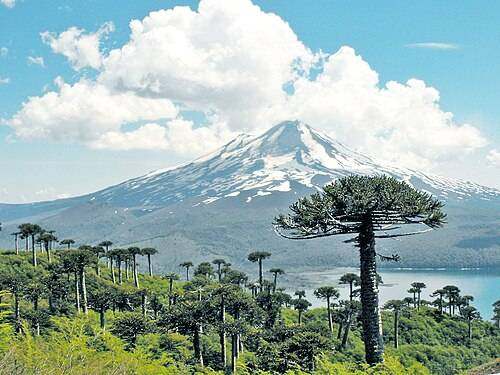
- severe earthquakes; active volcanism; tsunamisVolcanism: significant volcanic activity due to more than three-dozen active volcanoes along the Andes Mountains; Lascar (5,592 m), which last erupted in 2007, is the most active volcano in the northern Chilean Andes; Llaima (3,125 m) in central Chile, which last erupted in 2009, is another of the country's most active; Chaiten's 2008 eruption forced major evacuations; other notable historically active volcanoes include Cerro Hudson, Calbuco, Copahue, Guallatiri, Llullaillaco, Nevados de Chillan, Puyehue, San Pedro, and Villarrica; see note 2 under "Geography - note"
- Notes
- Note 1: Chile is the longest country north-to-south in the world, extending across 39 degrees of latitudeNote 2: Chile is one of the countries along the Ring of Fire, which is a belt bordering the Pacific Ocean that contains about 75% of the world's volcanoes and up to 90% of the world's earthquakesNote 3: the Atacama Desert in the north of Chile is the driest desert in the world; Ojos del Salado (6,893 m) in the Atacama Desert is the highest active volcano in the world, Chile's tallest mountain, and the second-highest in the Western Hemisphere and the Southern Hemisphere; the volcano's small crater lake is the world's highest lake at 6,390 m
- Environmental issues
- air pollution from industrial and vehicle emissions; water pollution from raw sewage; noise pollution; improper garbage disposal; soil degradation; widespread deforestation; pollution and ecosystem degradation from mining; wildlife conservation
People and society
- Population
- Total: 19,091,343 (2025 est.)Male: 9,379,883Female: 9,711,460
- Nationality
- Noun: Chilean(s)Adjective: Chilean
- Ethnic groups
- White and non-Indigenous 88.9%, Mapuche 9.1%, Aymara 0.7%, other Indigenous groups 1% (includes Rapa Nui, Likan Antai, Quechua, Colla, Diaguita, Kawesqar, Yagan or Yamana), unspecified 0.3% (2012 est.)
- Languages
- Spanish 99.5% (official), English 10.2%, Indigenous 1% (includes Mapudungun, Aymara, Quechua, Rapa Nui), other 2.3%, unspecified 0.2% (2012 est.)Major-language sample(s): La Libreta Informativa del Mundo, la fuente indispensable de información básica. (Spanish)The World Factbook, the indispensable source for basic information.
- Religions
- Catholic 57%, none 25.7%, Evangelical or Protestant 16.2%, other Christians and traditions related to Christ 1.3%; less than 1%: Buddhist, Catholic Orthodox, Church of Jesus Christ of Latter-Day Saints, Islam, Judaism, other religions, no religion (2024)
- Median age
- Total: 38.9 years (2025 est.)Male: 35.8 yearsFemale: 38.2 years
- Population growth
- 0.46% (2025 est.)
- Life expectancy
- Total population: 80.3 years (2024 est.)Male: 77.3 yearsFemale: 83.3 years
- Children per woman
- 1.25 children born/woman (2025 est.)
- Urbanization
- Urban population: 88% of total population (2023)Rate of urbanization: 0.78% annual rate of change (2020-25 est.)
- Largest cities
- 6.903 million SANTIAGO (capital), 1.009 million Valparaiso, 912,000 Concepcion (2023)
- Literacy
- Total population: 96.4% (2017 est.)Male: 96.5% (2017 est.)Female: 96.3% (2017 est.)
- Years in school
- Total: 17 years (2023 est.)Male: 17 years (2023 est.)Female: 17 years (2023 est.)
Government
- Official names
- Conventional long form: Republic of ChileConventional short form: ChileLocal long form: República de ChileLocal short form: ChileEtymology: derivation of the name is unclear; it may come from a local word meaning either "land's end" or "cold," or a local word that was confused with the Mexican Spanish word chili, meaning a chili pepper, in reference to the area's shape
- Government type
- presidential republic
- Capital
- Name: Santiago; note - Valparaiso is the seat of the national legislatureGeographic coordinates: 33 27 S, 70 40 WTime difference: UTC-3 (2 hours ahead of Washington, DC, during Standard Time)Daylight saving time: +1hr, begins second Sunday in August; ends second Sunday in May; note - Punta Arenas observes DST throughout the yearTime zone note: Chile has three time zones: the continental portion at UTC-3; the southern Aysén and Magallanes regions, which do not use daylight savings time and remain at UTC-3 year-round; and Easter Island at UTC-5Etymology: Santiago is named after Saint James, the patron saint of Spain (Santo Iago in Spanish); Valparaiso derives from the Spanish words valle (valley) and paraíso (paradise)
- Regions
- 16 regions (regiones, singular - region); Antofagasta, Araucanía, Arica y Parinacota, Atacama, Aysén, Biobío, Coquimbo, Libertador General Bernardo O'Higgins, Los Lagos, Los Ríos, Magallanes y de la Antártica Chilena (Magallanes and Chilean Antarctica), Maule, Ñuble, Región Metropolitana (Santiago), Tarapacá, Valparaíso
- Independence
- 18 September 1810 (from Spain)
- National holiday
- Independence Day, 18 September (1810)
- Constitution
- History: many previous; latest adopted 11 September 1980, effective 11 March 1981; in September 2022 and again in December 2023, referendums presented for a new constitution were both defeated, and the September 1980 constitution remains in forceAmendment process: proposed by members of either house of the National Congress or by the president of the republic; passage requires at least four-sevenths majority vote of the membership in both houses and approval by the president; passage of amendments to constitutional articles, such as the republican form of government, basic rights and freedoms, the Constitutional Tribunal, electoral justice, the Council of National Security, or the constitutional amendment process, requires at least four-sevenths majority vote by both houses of Congress and approval by the president; the president can opt to hold a referendum when Congress and the president disagree on an amendment
- Legal system
- civil law system influenced by several Western European civil legal systems; Constitutional Tribunal reviews legislative acts
- Voting age
- 18 years of age; universal
- Flag meaning
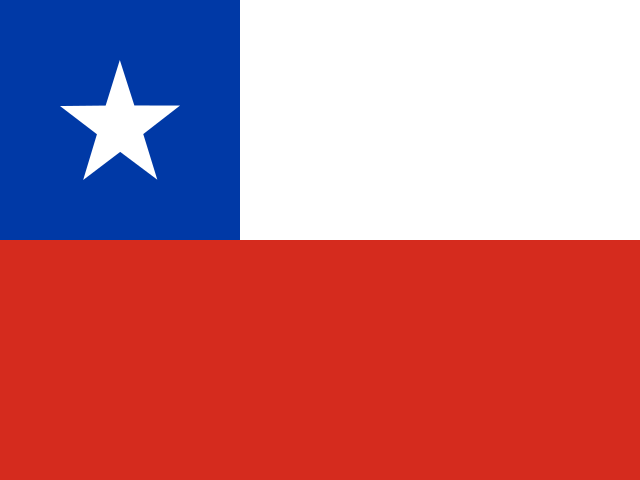
- Description: two equal horizontal bands of white (top) and red; a blue square sits in the top left corner of the flag, the same height as the white band; the square has a five-pointed white star in the centerMeaning: the star represents a guide to progress and honor; blue stands for the sky, white for the Andes Mountains, and red for the blood spilled to achieve independence
- National symbols
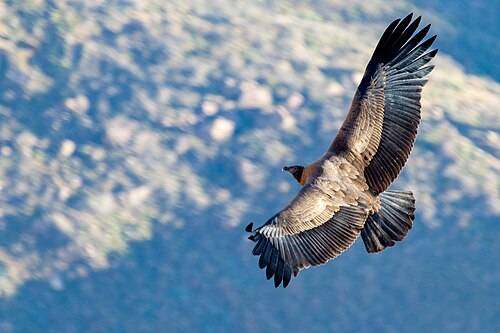
- huemul (mountain deer), Andean condor
- National colours
- red, white, blue
- National anthem
- Title: "Himno Nacional de Chile" (National Anthem of Chile)Lyrics/music: Eusebio LILLO Robles and Bernardo DE VERA y Pintado/Ramon CARNICER y BattleHistory: music adopted 1828, original lyrics adopted 1818, adapted lyrics adopted 1847; under Augusto PINOCHET's military rule, a verse glorifying the army was added; some citizens refused to sing this verse as a protest, and it was removed when democracy was restored in 1990
- UNESCO World Heritage Sites
- Total World Heritage Sites: 7 (all cultural)Selected World Heritage Site locales: Rapa Nui National Park; Churches of Chiloe; Historic Valparaiso; Humberstone and Santa Laura Saltpeter Works; Sewell Mining Town; Qhapaq Ñan/Andean Road System; Chinchorro archeological sites
Economy
- Overview
- export-driven economy; leading copper producer; though hit by COVID-19, fairly quick rebound from increased liquidity and rapid vaccine rollouts; decreasing poverty but still lingering inequality; public debt rising but still manageable; recent political violence has had negative economic consequences
- GDP (PPP)
- $596.556 billion (2024 est.)
- GDP per person (PPP)
- $30,200 (2024 est.)
- GDP growth
- 2.6% (2024 est.)
- Inflation
- 4.3% (2024 est.)
- Unemployment
- 9.1% (2024 est.)
- Below poverty line
- 6.5% (2022 est.)
- Farm products
- grapes, milk, apples, wheat, tomatoes, potatoes, chicken, maize, sugar beets, pork (2023)
- Industries
- copper, lithium, other minerals, foodstuffs, fish processing, iron and steel, wood and wood products, transport equipment, cement, textiles
- Exports
- $111.123 billion (2024 est.)
- Main exports
- copper ore, refined copper, fish, carbonates, pitted fruits (2023)
- Export partners
- China 39%, USA 16%, Japan 7%, S. Korea 6%, Brazil 4% (2023)
- Main imports
- refined petroleum, crude petroleum, cars, garments, trucks (2023)
- Import partners
- China 23%, USA 20%, Brazil 10%, Argentina 7%, Germany 5% (2023)
- Money sent home from abroad
- 0% of GDP (2024 est.)
Energy, internet and transport
- Electricity access
- Electrification - total population: 100% (2022 est.)
- Electricity sources
- Fossil fuels: 35.6% of total installed capacity (2023 est.)Solar: 20.6% of total installed capacity (2023 est.)Wind: 10.8% of total installed capacity (2023 est.)Hydroelectricity: 26.6% of total installed capacity (2023 est.)Geothermal: 0.5% of total installed capacity (2023 est.)Biomass and waste: 5.9% of total installed capacity (2023 est.)
- Internet users
- Percent of population: 95% (2023 est.)
- Mobile phones
- Total subscriptions: 26.2 million (2024 est.)Subscriptions per 100 inhabitants: 133 (2024 est.)
- TV and radio
- national and local terrestrial TV channels, coupled with extensive cable TV networks; the state-owned Television Nacional de Chile (TVN) network is self-financed through commercial advertising and is not under direct government control; large number of privately owned TV stations; about 250 radio stations
- Airports
- 379 (2025)
- Railways
- Total: 7,281.5 km (2014)Narrow gauge: 3,853.5 km (2014) 1.000-m gaugeBroad gauge: 3,428 km (2014) 1.676-m gauge (1,691 km electrified)
- Merchant ships
- Total: 249 (2023)By type: bulk carrier 3, container ship 5, general cargo 66, oil tanker 14, other 161
Military and space
- Armed forces
- Armed Forces of Chile (Fuerzas Armadas de Chile): Chilean Army (Ejército de Chile), Chilean Navy (Armada de Chile, includes Marine Corps and Maritime Territory and Merchant Marine Directorate or Directemar), Chilean Air Force (Fuerza Aerea de Chile, FACh) (2025)
- Military spending
- 1.5% of GDP (2024 est.)
- Military service
- 18-24 for voluntary military service for men and women (17 for men with parental permission); selective compulsory service for men 18-24 (there are usually enough volunteers to make compulsory service unnecessary); service obligation is a maximum of 24 months (2025)
Global issues
- Refugees and displaced people
- Refugees: 15,788 (2024 est.)IDPs: 8,323 (2024 est.)Stateless persons: 1,688 (2024 est.)
Neighbouring countries
- Phone code
- +56
- Internet domain
- .cl