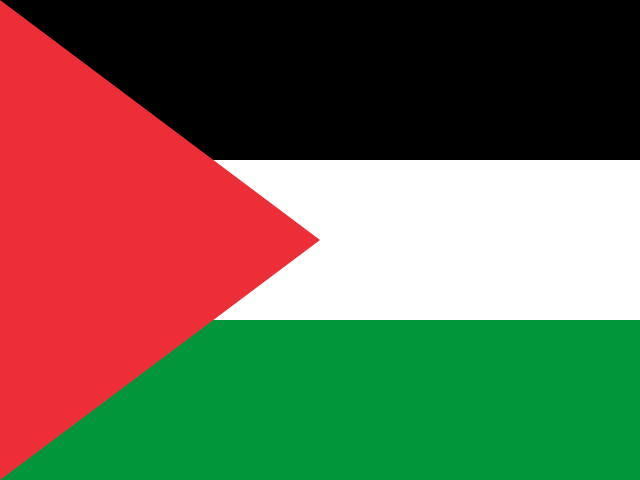
Palestine
State of Palestine · فلسطين
Historic Palestine was ruled by Ottomans and then Britain. Most Palestinians were displaced in 1948. Since 1967 Israel has occupied the West Bank and Gaza; the 2023–25 war devastated Gaza before an October 2025 ceasefire. Recognised by about 150 countries, including the UK, France and Canada since 2025.
See Palestine on the 3D globeTake a quiz
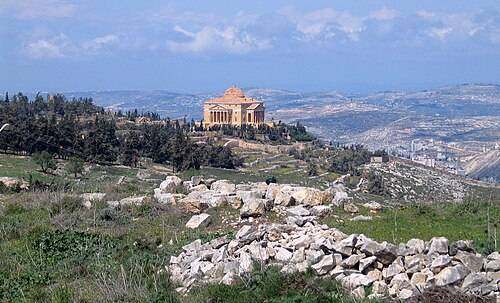
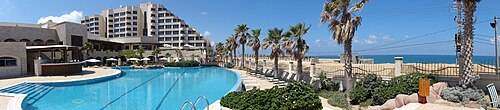
Population5.5 million
Area6,220 km²
CapitalRamallah
RegionWestern Asia
Did you know?
- Jericho is among the oldest cities in the world
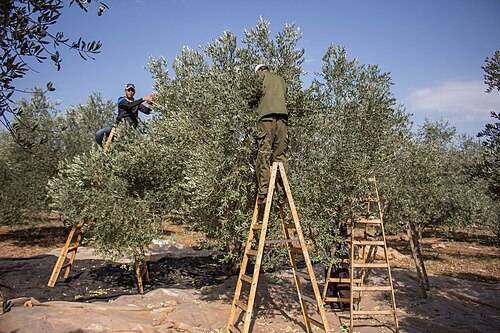
- Olive trees are central to the economy and identity
- Bethlehem is the traditional birthplace of Jesus
Key facts about Palestine
- Government
- Partially recognised state; West Bank under Palestinian Authority and Israeli occupation; Gaza devastated by war
- Religion
- Sunni Islam ~98%, Christian ~1%
- Founded / independence
- 1988 (declared)
- Rich in
- Olive oil, stone, agriculture; economy largely destroyed
- Languages
- Arabic
Arabic (Palestinian Levantine dialect) - Currency
- Egyptian pound (E£), Israeli new shekel (₪), Jordanian dinar (JD)
- People are called
- Palestinian
- Main cities
- Gaza City, Hebron, Nablus, Ramallah, Jerusalem (East)
Timeline of Palestine
- 1517Ottoman rule
- 1920British mandate
- 1948Nakba
- 1967Israeli occupation
- 1993Oslo Accords
- 2012UN observer state
- 2023Gaza war
- 2025Ceasefire
Places to see in Palestine
- Church of the Nativity, Bethlehem
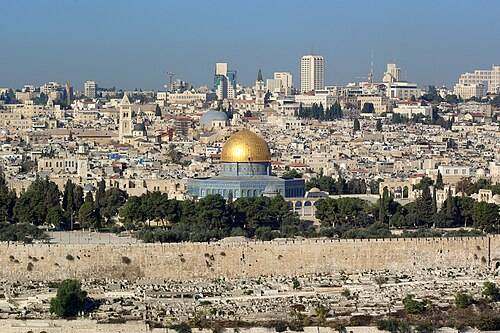
- Al-Aqsa Mosque
- Hebron old city
- Jericho
- Nablus old city
Food and drink
Musakhan · maqluba · knafeh (Nablus) · olive oil
Culture and famous for
Tatreez embroidery; keffiyeh; poet Mahmoud Darwish
Popular sports
Football
Geography and climate
- Highest point
- Mount Nabi Yunis, 1,030 m
- Rivers, lakes and seas
- Jordan River; Dead Sea
- Climate
- Mediterranean to semi-arid
- Coastline
- Has a sea coast
- Population density
- 884 people per km²
Wars and conflicts
- 1948 Nakba
- 1967 occupation
- Intifadas
- Gaza wars, 2023–25 war (over 65,000 killed)
Empires and states that once stood here
Kingdom of Jerusalem 1099–1291
Alliances and memberships
Political unions and regional organisations
Arab LeagueOrganisation of Islamic Cooperation
Palestine in depth
Detailed facts from the CIA World Factbook (public domain, latest edition).
Overview
- History in brief
- The landlocked West Bank -- the larger of the two Palestinian territories -- is home to some three million Palestinians. Inhabited since at least the 15th century B.C., the area currently known as the West Bank has been dominated by a succession of different powers. In the early 16th century, it was incorporated into the Ottoman Empire. The West Bank fell to British forces during World War I, becoming part of the British Mandate of Palestine. After the 1948 Arab-Israeli War, Transjordan (later renamed Jordan) captured the West Bank and annexed it in 1950; Israel then captured it in the Six-Day War in 1967. Under the Oslo Accords -- a series of agreements that were signed between 1993 and 1999 -- Israel transferred to the newly created Palestinian Authority (PA) security and civilian responsibility for the many Palestinian-populated areas of the West Bank, as well as the Gaza Strip. In addition to establishing the PA as an interim government, the Oslo Accords divided the West Bank into three areas, with one fully managed by the PA (Area A), another fully managed by Israel (Area C), and a third with shared control (Area B) until a permanent agreement could be reached between the Palestine Liberation Organization (PLO) and Israel. In 2000, a violent intifada, or uprising, began across the Palestinian territories, and in 2001, negotiations for a permanent agreement between the PLO and Israel on final status issues stalled. Subsequent attempts to re-start direct negotiations have not resulted in progress toward determining final status of the area. The PA last held national elections in 2006, when the Islamic Resistance Movement (HAMAS) won a majority of seats in the Palestinian Legislative Council (PLC). Fatah, the dominant Palestinian political faction in the West Bank, and HAMAS failed to maintain a unity government, leading to violent clashes between their respective supporters and to HAMAS's violent seizure of all PA military and governmental institutions in the Gaza Strip in 2007. In 2018, the Palestinian Constitutional Court dissolved the PLC. In recent years, Fatah and HAMAS have made several attempts at reconciliation, but the factions have been unable to implement agreements.
Geography
- Location
- Middle East, west of Jordan, east of Israel
- Size compared
- slightly smaller than Delaware
- Land borders
- Total: 478 kmBorder countries: Israel 330 km; Jordan 148 km
- Coastline
- 0 km (landlocked)
- Climate
- temperate; temperature and precipitation vary with altitude, warm to hot summers, cool to mild winters
- Terrain
- mostly rugged, dissected upland in west, flat plains descending to Jordan River Valley to the east
- Elevation
- Highest point: Khallat al Batrakh 1,020 mLowest point: Dead Sea -431 m
- Natural resources
- arable land
- Major lakes
- Salt water lake(s): Dead Sea (shared with Jordan and Israel) - 1,020 sq kmnote - endorheic hypersaline lake; 9.6 times saltier than the ocean; lake shore is 431 meters below sea level
- Natural hazards
- droughts
- Notes
- landlocked; highlands are main recharge area for Israel's coastal aquifers (2017)
- Environmental issues
- adequacy of freshwater supply; sewage treatment
People and society
- Population
- Total: 3,310,554 (2025 est.)Male: 1,682,493Female: 1,628,061
- Ethnic groups
- Palestinian Arab, Jewish, other
- Languages
- Arabic, Hebrew (spoken by Israeli settlers and many Palestinians), English (widely understood)Major-language sample(s): كتاب حقائق العالم، المصدر الذي لا يمكن الاستغناء عنه للمعلومات الأساسية (Arabic)The World Factbook, the indispensable source for basic information.
- Religions
- Muslim 80-85% (predominantly Sunni), Jewish 12-14%, Christian 1-2.5% (mainly Greek Orthodox), other, unaffiliated, unspecified <1% (2012 est.)
- Median age
- Total: 22 years (2025 est.)Male: 21.6 yearsFemale: 22.1 years
- Population growth
- 2.03% (2025 est.)
- Life expectancy
- Total population: 76.5 years (2024 est.)Male: 74.4 yearsFemale: 78.8 years
- Children per woman
- 3.44 children born/woman (2025 est.)
- Urbanization
- Urban population: 77.6% of total population (2023)Rate of urbanization: 2.85% annual rate of change (2020-25 est.)
- Literacy
- Total population: 98% (2022 est.)Male: 99% (2022 est.)Female: 97% (2022 est.)
- Years in school
- Total: 13 years (2023 est.)Male: 12 years (2023 est.)Female: 14 years (2023 est.)
Government
- Official names
- Conventional long form: noneConventional short form: West BankEtymology: name refers to the location of the British Mandate of Palestine that was occupied and administered by Jordan in 1948, on the west bank of the Jordan River; the designation was retained after the 1967 Six-Day War and subsequent changes in administration
- UNESCO World Heritage Sites
- Total World Heritage Sites: 4 (all cultural)Selected World Heritage Site locales: Ancient Jericho/Tell es-Sultan; Birthplace of Jesus: Church of the Nativity and the Pilgrimage Route, Bethlehem; Hebron/Al-Khalil Old Town; Land of Olives and Vines – Cultural Landscape of Southern Jerusalem, Battir
Economy
- GDP (PPP)
- $20.339 billion (2024 est.)
- GDP per person (PPP)
- $3,800 (2024 est.)
- GDP growth
- -26.6% (2024 est.)
- Inflation
- 53.7% (2024 est.)
- Unemployment
- 24.5% (2022 est.)
- Below poverty line
- 29.2% (2016 est.)
- Farm products
- tomatoes, cucumbers, olives, poultry, milk, potatoes, sheep milk, eggplants, gourds
- Industries
- small-scale manufacturing, quarrying, textiles, soap, olive-wood carvings, and mother-of-pearl souvenirs
- Exports
- $2.885 billion (2024 est.)
- Main exports
- scrap iron, tropical fruits, olive oil, building stone, prepared meat (2023)
- Export partners
- Jordan 51%, Turkey 12%, UAE 8%, Saudi Arabia 5%, UK 4% (2023)
- Main imports
- cement, raw sugar, cars, baked goods, perfumes (2023)
- Import partners
- Egypt 25%, Jordan 17%, China 8%, Germany 7%, UAE 7% (2023)
- Money sent home from abroad
- 5.4% of GDP (2024 est.)
Energy, internet and transport
- Electricity access
- Electrification - total population: 100% (2022 est.)
- Electricity sources
- Fossil fuels: 66.5% of total installed capacity (2023 est.)Solar: 33.5% of total installed capacity (2023 est.)
- Internet users
- Percent of population: 87% (2023 est.)
- Mobile phones
- Total subscriptions: 4,148,420 (2023 est.)Subscriptions per 100 inhabitants: 77 (2023 est.)
- TV and radio
- the Palestinian Authority operates 1 TV and 1 radio station; about 20 private TV and 40 radio stations; Jordanian TV and satellite TV accessible
- Airports
- 1 (2025)
Military and space
- Armed forces
- per the Oslo Accords, the Palestinian Authority (PA) is not permitted a conventional military but maintains security and police forces; PA security personnel have operated exclusively in the West Bank since HAMAS seized power in the Gaza Strip in 2007; PA forces include the Palestinian National Security Forces, Presidential Guard, Civil Police, Civil Defense, Preventive Security Organization, the General Intelligence Organization, and the Military Intelligence Organization (2024)
- Military spending
- not available
Global issues
- Refugees and displaced people
- IDPs: 2,032,011 (2024 est.)
Neighbouring countries
- Phone code
- +970
- Internet domain
- .ps