Jordan
Hashemite Kingdom of Jordan · الأردن
Site of the Nabataean city of Petra. Created as Transjordan under British mandate, ruled by the Hashemite dynasty. Hosts millions of Palestinian and Syrian refugees.
See Jordan on the 3D globeTake a quiz
Population11.5 million
Area89,342 km²
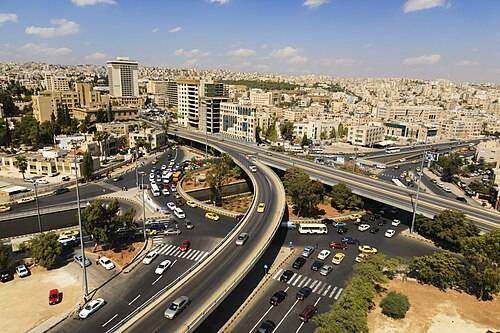
CapitalAmman
RegionWestern Asia
Did you know?
- Petra's city was carved into rose-coloured rock
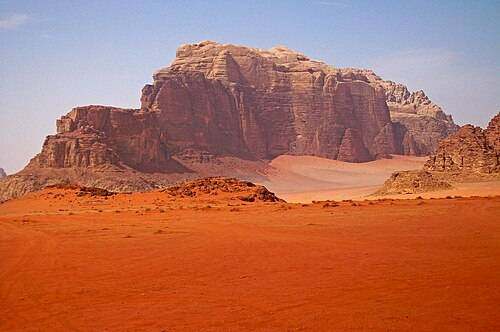
- Wadi Rum was a filming location for Hollywood Mars movies
- Has almost no oil, unlike its neighbours
Key facts about Jordan
- Government
- Constitutional monarchy
- Religion
- Sunni Islam ~95%, Christian ~2%
- Founded / independence
- 1946 (from UK mandate)
- Rich in
- Phosphates, potash, tourism (Petra)
- Languages
- Arabic
Arabic (Levantine dialect) - Currency
- Jordanian dinar (د.ا)
- People are called
- Jordanian
- Main cities
- Amman, Zarqa, Irbid, Aqaba
Timeline of Jordan
- 300 BCNabataean Petra
- 106Roman annexation
- 1921Emirate of Transjordan
- 1946Independence
- 1967Loses West Bank
- 1994Peace with Israel
Places to see in Jordan
- Petra
- Wadi Rum
- Dead Sea
- Jerash Roman city
- Aqaba Red Sea reefs
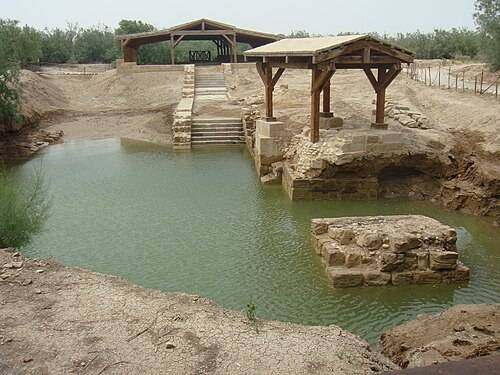
- Baptism Site
Food and drink
Mansaf (lamb in yoghurt sauce) · falafel · knafeh
Culture and famous for
Petra is one of the New Seven Wonders
Popular sports
Football, taekwondo
Geography and climate
- Highest point
- Jabal Umm al Dami, 1,854 m
- Rivers, lakes and seas
- Jordan River; Dead Sea
- Climate
- Desert and Mediterranean
- Coastline
- Has a sea coast
- Population density
- 129 people per km²
Wars and conflicts
- Arab-Israeli wars 1948, 1967
- Black September 1970
Alliances and memberships
Political unions and regional organisations
Arab LeagueOrganisation of Islamic Cooperation
Jordan in depth
Detailed facts from the CIA World Factbook (public domain, latest edition).
Overview
- History in brief
- After World War I and the dissolution of the Ottoman Empire, the League of Nations awarded Britain the mandate to govern much of the Middle East. In 1921, Britain demarcated from Palestine a semi-autonomous region of Transjordan and recognized ABDALLAH I from the Hashemite family as the country's first leader. The Hashemites also controlled the Hijaz, or the western coastal area of modern-day Saudi Arabia, until 1925, when IBN SAUD and Wahhabi tribes pushed them out. The country gained its independence in 1946 and thereafter became the Hashemite Kingdom of Jordan. The country has had four kings. Long-time ruler King HUSSEIN (r. 1953-99) successfully navigated competing pressures from the major powers (US, UK, and Soviet Union), various Arab states, Israel, and Palestinian militants, the latter of which led to a brief civil war in 1970 that is known as "Black September" and ended in King HUSSEIN ousting the militants.Jordan's borders have changed since it gained independence. In 1948, Jordan took control of the West Bank and East Jerusalem in the first Arab-Israeli War, eventually annexing those territories in 1950 and granting its new Palestinian residents Jordanian citizenship. In 1967, Jordan lost the West Bank and East Jerusalem to Israel in the Six-Day War but retained administrative claims to the West Bank until 1988, when King HUSSEIN permanently relinquished Jordanian claims to the West Bank in favor of the Palestine Liberation Organization (PLO). King HUSSEIN signed a peace treaty with Israel in 1994, after Israel and the PLO signed the Oslo Accords in 1993.Jordanian kings continue to claim custodianship of the Muslim holy sites in Jerusalem by virtue of their Hashemite heritage as descendants of the Prophet Mohammad and agreements with Israel and Jerusalem-based religious and Palestinian leaders. After Israel captured East Jerusalem in the 1967 War, it authorized the Jordanian-controlled Islamic Trust, or Waqf, to continue administering the Al Haram ash Sharif/Temple Mount holy compound, and the Jordan-Israel peace treaty reaffirmed Jordan's "special role" in administering the Muslim holy shrines in Jerusalem. Jordanian kings claim custodianship of the Christian sites in Jerusalem on the basis of the 7th-century Pact of Omar, when the Muslim leader, after conquering Jerusalem, agreed to permit Christian worship.King HUSSEIN died in 1999 and was succeeded by his eldest son and current King ABDALLAH II. In 2009, ABDALLAH II designated his son HUS
Geography
- Location
- Middle East, northwest of Saudi Arabia, between Israel (to the west) and Iraq
- Size compared
- about three-quarters the size of Pennsylvania; slightly smaller than Indiana
- Land borders
- Total: 1,744 kmBorder countries: Iraq 179 km; Israel 307 km; Saudi Arabia 731 km; Syria 379 km; West Bank 148 km
- Coastline
- 26 km
- Climate
- mostly arid desert; rainy season in west (November to April)
- Terrain
- mostly arid desert plateau; a great north-south geological rift along the west of the country is the dominant topographical feature and includes the Jordan River Valley, the Dead Sea, and the Jordanian Highlands
- Elevation
- Highest point: Jabal Umm ad Dami 1,854 mLowest point: Dead Sea -431 mMean elevation: 812 m
- Natural resources
- phosphates, potash, shale oil
- Major lakes
- Salt water lake(s): Dead Sea (shared with Israel and West Bank) - 1,020 sq kmnote - endorheic hypersaline lake; 9.6 times saltier than the ocean; lake shore is 431 meters below sea level
- Natural hazards
- droughts; periodic earthquakes; flash floods
- Notes
- strategic location at the head of the Gulf of Aqaba; the Arab country that shares the longest border with Israel and the West Bank; the Dead Sea, the lowest point in Asia and the second saltiest body of water in the world (after Lac Assal in Djibouti), lies on Jordan's western border with Israel and the West Bank; Jordan is almost landlocked but does have a 26 km southwestern coastline with a single port, Al 'Aqabah (Aqaba)
- Environmental issues
- limited natural freshwater resources; declining water table; salination; deforestation; overgrazing; soil erosion; desertification; biodiversity and ecosystem damage/loss
People and society
- Population
- Total: 11,312,507 (2025 est.)Male: 5,908,853Female: 5,403,654
- Nationality
- Noun: Jordanian(s)Adjective: Jordanian
- Ethnic groups
- Jordanian 69.3%, Syrian 13.3%, Palestinian 6.7%, Egyptian 6.7%, Iraqi 1.4%, other 2.6% (2015 est.)
- Languages
- Arabic (official), English (widely understood among upper and middle classes)Major-language sample(s): كتاب حقائق العالم، المصدر الذي لا يمكن الاستغناء عنه للمعلومات الأساسية (Arabic)The World Factbook, the indispensable source for basic information.
- Religions
- Muslim 97.1% (official; predominantly Sunni), Christian 2.1% (majority Greek Orthodox, but some Greek and Roman Catholics, Syrian Orthodox, Coptic Orthodox, Armenian Orthodox, and Protestant denominations), Buddhist 0.4%, Hindu 0.1%, Jewish <0.1%, folk <0.1%, other <0.1%, unaffiliated <0.1% (2020 est.)
- Median age
- Total: 25.4 years (2025 est.)Male: 25.5 yearsFemale: 24.4 years
- Population growth
- 1.68% (2025 est.)
- Life expectancy
- Total population: 76.5 years (2024 est.)Male: 75 yearsFemale: 78.1 years
- Children per woman
- 2.83 children born/woman (2025 est.)
- Urbanization
- Urban population: 92% of total population (2023)Rate of urbanization: 0.98% annual rate of change (2020-25 est.)
- Largest cities
- 2.232 million AMMAN (capital) (2023)
- Literacy
- Total population: 94.8% (2023 est.)Male: 97.5% (2023 est.)Female: 92.3% (2023 est.)
- Years in school
- Total: 13 years (2023 est.)Male: 13 years (2023 est.)Female: 14 years (2023 est.)
Government
- Official names
- Conventional long form: Hashemite Kingdom of JordanConventional short form: JordanLocal long form: Al Mamlakah al Urduniyah al HashimiyahLocal short form: Al UrdunFormer: TransjordanEtymology: named for the Jordan River, which makes up part of Jordan's northwest border; the origin of the river's name is unclear, but it may come from a local word meaning "river"
- Government type
- parliamentary constitutional monarchy
- Capital
- Name: AmmanGeographic coordinates: 31 57 N, 35 56 ETime difference: UTC+3 (8 hours ahead of Washington, DC, during Standard Time)Etymology: in the 13th century B.C., the Ammonites named their primary city Rabbath Ammon; rabbath meant "capital," so the name translated as "The Capital of [the] Ammon[ites];" over time, the name was shortened to Ammon, and then to Amman
- Regions
- 12 governorates (muhafazat, singular - muhafazah); 'Ajlun, Al 'Aqabah, Al Balqa', Al Karak, Al Mafraq, Al ‘Asimah (Amman), At Tafilah, Az Zarqa', Irbid, Jarash, Ma'an, Madaba
- Independence
- 25 May 1946 (from League of Nations mandate under British administration)
- National holiday
- Independence Day, 25 May (1946)
- Constitution
- History: previous 1928 (pre-independence); latest initially adopted 28 November 1947, revised and ratified 1 January 1952Amendment process: constitutional amendments require at least a two-thirds majority vote of both the Senate and the House and ratification by the king
- Legal system
- mixed system developed from Ottoman Empire codes (based on French law), British common law, and Islamic law
- Voting age
- 18 years of age; universal
- Flag meaning
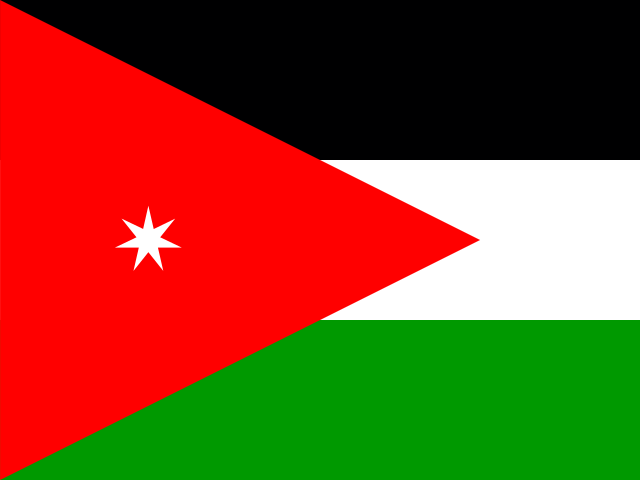
- Description: three equal horizontal bands of black (top), white, and green; a red isosceles triangle is on the left side, with a small white seven-pointed star in the centerMeaning: black stands for the Abbassid Caliphate, white for the Ummayyad Caliphate, and green for the Fatimid Caliphate; the triangle stands for the Great Arab Revolt of 1916, and the star's points for the seven verses of the opening Sura (Al-Fatiha) of the Quran, as well as faith in One God, humanity, national spirit, humility, social justice, virtue, and aspirationsHistory: the design is based on the Arab Revolt flag of World War I
- National symbols
- eagle
- National colours
- black, white, green, red
- National anthem
- Title: "As-salam al-malaki al-urdoni" (Long Live the King of Jordan)Lyrics/music: Abdul-Mone'm al-RIFAI'/Abdul-Qader al-TANEERHistory: adopted 1946; the shortened version of the anthem is most commonly used; the full version is reserved for special occasions
- UNESCO World Heritage Sites
- Total World Heritage Sites: 7 (6 cultural, 1 mixed)Selected World Heritage Site locales: Petra (c); Quseir Amra (c); Um er-Rasas (Kastrom Mefa'a) (c); Wadi Rum Protected Area (m); Baptism Site “Bethany Beyond the Jordan” (Al-Maghtas) (c); As-Salt - The Place of Tolerance and Urban Hospitality (c); Umm Al-Jimāl (c)
Economy
- Overview
- upper-middle-income Middle Eastern economy; high debt and unemployment, especially for youth and women; global events triggering trade slump and decreased revenue from tourism; growing manufacturing and agricultural sectors; key US foreign assistance recipient; natural-resource-poor and import-reliant
- GDP (PPP)
- $109.986 billion (2024 est.)
- GDP per person (PPP)
- $9,500 (2024 est.)
- GDP growth
- 2.5% (2024 est.)
- Inflation
- 1.6% (2024 est.)
- Unemployment
- 18% (2024 est.)
- Below poverty line
- 15.7% (2018 est.)
- Farm products
- tomatoes, milk, chicken, potatoes, olives, cucumbers/gherkins, onions, chillies/peppers, peaches/nectarines, sheep milk (2023)
- Industries
- tourism, information technology, clothing, fertilizer, potash, phosphate mining, pharmaceuticals, petroleum refining, cement, inorganic chemicals, light manufacturing
- Exports
- $22.186 billion (2023 est.)
- Main exports
- fertilizers, garments, phosphates, jewelry, phosphoric acid (2023)
- Export partners
- USA 21%, India 13%, Saudi Arabia 11%, China 7%, Iraq 6% (2023)
- Main imports
- cars, refined petroleum, gold, crude petroleum, jewelry (2023)
- Import partners
- China 17%, Saudi Arabia 14%, UAE 8%, India 6%, USA 5% (2023)
- Money sent home from abroad
- 8.8% of GDP (2023 est.)
Energy, internet and transport
- Electricity access
- Electrification - total population: 100% (2022 est.)Electrification - urban areas: 100%Electrification - rural areas: 98.9%
- Electricity sources
- Fossil fuels: 76.9% of total installed capacity (2023 est.)Solar: 15.3% of total installed capacity (2023 est.)Wind: 7.7% of total installed capacity (2023 est.)Hydroelectricity: 0.1% of total installed capacity (2023 est.)
- Internet users
- Percent of population: 93% (2023 est.)
- Mobile phones
- Total subscriptions: 8.05 million (2024 est.)Subscriptions per 100 inhabitants: 70 (2024 est.)
- TV and radio
- radio and TV dominated by the government-owned Jordan Radio and Television Corporation (JRTV) that operates a main network, a sports network, a film network, and a satellite channel; first independent TV broadcaster aired in 2007; international satellite TV and Israeli and Syrian TV broadcasts are available; roughly 30 radio stations; transmissions of multiple international radio broadcasters are available
- Airports
- 18 (2025)
- Railways
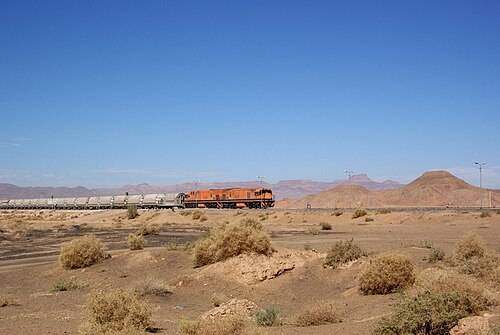
- Total: 509 km (2020)Narrow gauge: 509 km (2014) 1.050-m gauge
- Merchant ships
- Total: 34 (2023)By type: general cargo 5, other 29
Military and space
- Armed forces
- Jordanian Armed Forces (JAF; aka Arab Army): Jordanian Army (Jordanian Ground Forces; includes Special Operations Forces, Border Guards, Royal Guard), Jordanian Air Force, Jordanian Navy)Ministry of Interior: Public Security Directorate (includes national police, the Gendarmerie, and the Civil Defense Directorate) (2025)
- Military spending
- 4.5% of GDP (2024 est.)
- Military service
- 17 years of age for voluntary military service for men and women; initial service term is 24 months; selective compulsory military service (3 months) for men turning 18 will be reinstated in 2026; compulsory military service for jobless men aged 25-29 was reinstated in 2020 (12 months; 3 months of military training and 9 months of professional and technical training) (2025)
Global issues
- Refugees and displaced people
- Refugees: 675,388 (2024 est.)Stateless persons: 17 (2024 est.)
Neighbouring countries
IraqIsraelPalestineSaudi ArabiaSyria
- Phone code
- +962
- Internet domain
- .jo