Egypt
Arab Republic of Egypt · مصر
Pharaonic Egypt lasted 3,000 years, building the pyramids. Ruled by Greeks, Romans, Arabs, Ottomans and Britain. The 2011 revolution ended Mubarak's rule; the military took power again in 2013.
See Egypt on the 3D globeTake a quiz
Population118 million
Area1,002,450 km²
CapitalCairo
RegionNorthern Africa
Did you know?
- The Great Pyramid was the tallest structure on Earth for nearly 4,000 years
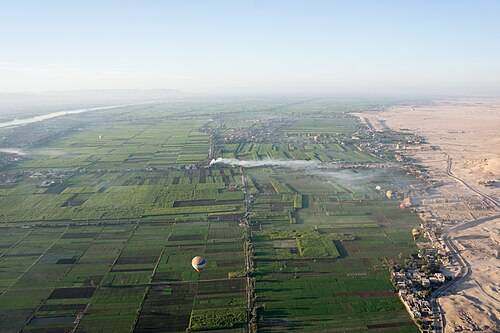
- About 95% of people live along the Nile
- The Grand Egyptian Museum opened fully in 2025
Key facts about Egypt
- Government
- Presidential republic (military-backed)
- Religion
- Sunni Islam ~90%, Coptic Christian ~10%
- Founded / independence
- c. 3100 BC; 1922 independence
- Rich in
- Suez Canal, tourism (pyramids), natural gas, cotton
- Languages
- Arabic
Arabic (Egyptian Masri dialect, most understood in Arab world); Coptic liturgical - Currency
- Egyptian pound (£)
- People are called
- Egyptian
- Main cities
- Cairo, Alexandria, Giza, Shubra El Kheima, Port Said
Timeline of Egypt
- 2560 BCGreat Pyramid
- 30 BCRoman rule
- 641Arab conquest
- 1869Suez Canal opens
- 1952Revolution
- 1979Peace with Israel
- 2011Revolution
Places to see in Egypt
- Pyramids of Giza
- Sphinx
- Valley of the Kings
- Karnak and Luxor temples
- Abu Simbel
- Grand Egyptian Museum
- Red Sea reefs
Food and drink
Koshari · ful medames · molokhia · falafel (ta'meya)
Culture and famous for
Pharaonic heritage; Arabic cinema and music; Nobel author Naguib Mahfouz
Popular sports
Football (Mohamed Salah), squash
Geography and climate
- Highest point
- Mount Catherine, 2,629 m
- Rivers, lakes and seas
- Nile (world's longest river); Suez Canal
- Climate
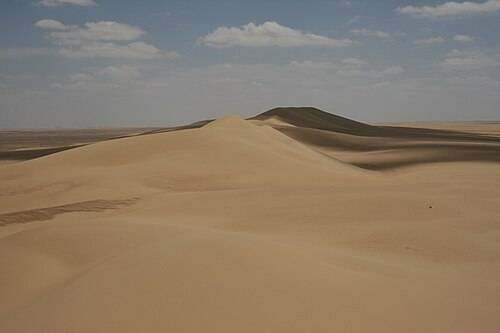
- Hot desert
- Coastline
- Has a sea coast
- Population density
- 118 people per km²
Wars and conflicts
- Arab-Israeli wars 1948–73
- Suez Crisis 1956
- 2011 revolution
Empires and states that once stood here
Ancient Egypt c. 3100–30 BCMamluk Sultanate 1250–1517United Arab Republic 1958–1961
Alliances and memberships
Political unions and regional organisations
BRICSAfrican UnionArab LeagueOrganisation of Islamic Cooperation
Egypt in depth
Detailed facts from the CIA World Factbook (public domain, latest edition).
Overview
- History in brief
- The regularity and richness of the annual Nile River flood, coupled with semi-isolation provided by deserts to the east and west, allowed for the development of one of the world's great civilizations in Egypt. A unified kingdom arose circa 3200 B.C., and a series of dynasties ruled in Egypt for the next three millennia. The last native dynasty fell to the Persians in 341 B.C., who in turn were replaced by the Greeks, Romans, and Byzantines. Arab conquerors introduced Islam and the Arabic language in the 7th century and ruled for the next six centuries. The Mamluks, a local military caste, took control around 1250 and continued to govern after the Ottoman Turks conquered Egypt in 1517.Completion of the Suez Canal in 1869 elevated Egypt as an important world transportation hub. Ostensibly to protect its investments, Britain seized control of Egypt's government in 1882, but the country's nominal allegiance to the Ottoman Empire continued until 1914. Egypt gained partial independence from the UK in 1922 and full sovereignty in 1952. British forces evacuated the Suez Canal Zone in 1956. The completion of the Aswan High Dam in 1971 and the resultant Lake Nasser have reaffirmed the time-honored place of the Nile River in the agriculture and ecology of Egypt. A rapidly growing population (the largest in the Arab world), limited arable land, and dependence on the Nile all continue to overtax resources and stress society. The government has struggled to meet the demands of Egypt's fast-growing population as it implements large-scale infrastructure projects, energy cooperation, and foreign direct investment appeals.Inspired by the 2010 Tunisian revolution, Egyptian opposition groups led demonstrations and labor strikes countrywide, culminating in President Hosni MUBARAK's ouster in 2011. Egypt's military assumed national leadership until a new legislature was in place in early 2012; later that same year, Muslim Brotherhood candidate Mohamed MORSI won the presidential election. Following protests throughout the spring of 2013 against MORSI's government and the Muslim Brotherhood, the Egyptian Armed Forces intervened and removed MORSI from power in July 2013 and replaced him with interim president Adly MANSOUR. Simultaneously, the government began enacting laws to limit freedoms of assembly and expression. In 2014, voters approved a new constitution by referendum and then elected former defense minister Abdel Fattah EL-SISI president. EL-SISI was reelected to a secon
Geography
- Location
- Northern Africa, bordering the Mediterranean Sea, between Libya and the Gaza Strip, and the Red Sea north of Sudan, and includes the Asian Sinai Peninsula
- Size compared
- more than eight times the size of Ohio; slightly more than three times the size of New Mexico
- Land borders
- Total: 2,612 kmBorder countries: Gaza Strip 13 km; Israel 208 km; Libya 1,115 km; Sudan 1,276 km
- Coastline
- 2,450 km
- Climate
- desert; hot, dry summers with moderate winters
- Terrain
- vast desert plateau interrupted by Nile valley and delta
- Elevation
- Highest point: Mount Catherine 2,629 mLowest point: Qattara Depression -133 mMean elevation: 321 m
- Natural resources
- petroleum, natural gas, iron ore, phosphates, manganese, limestone, gypsum, talc, asbestos, lead, rare earth elements, zinc
- Major rivers
- An Nīl (Nile) river mouth (shared with Rwanda [s], Tanzania, Uganda, South Sudan, and Sudan) - 6,650 kmNote: [s] after country name indicates river source; [m] after country name indicates river mouth
- Major lakes
- Salt water lake(s): Lake Manzala - 1,360 sq kmnote - largest of Nile Delta lakes
- Natural hazards
- periodic droughts; frequent earthquakes; flash floods; landslides; hot, driving windstorms called khamsin occur in spring; dust storms; sandstorms
- Notes
- controls Sinai Peninsula, the only land bridge between Africa and remainder of Eastern Hemisphere; controls Suez Canal, a sea link between Indian Ocean and Mediterranean Sea
- Environmental issues
- rapid growth in population straining natural resources; increasing soil salination below Aswan High Dam; desertification; oil pollution in coastal ecosystems; water pollution from agricultural pesticides, raw sewage, and industrial effluents; limited natural freshwater resources away from the Nile
People and society
- Population
- Total: 112,870,457 (2025 est.)Male: 57,960,635Female: 54,909,822
- Nationality
- Noun: Egyptian(s)Adjective: Egyptian
- Ethnic groups
- Egyptian 99.7%, other 0.3% (2006 est.)
- Languages
- Arabic (official); English and French widely understood by educated classesMajor-language sample(s): كتاب حقائق العالم، أفضل مصدر للمعلومات الأساسية (Arabic)The World Factbook, the indispensable source for basic information.
- Religions
- Muslim (predominantly Sunni) 90%, Christian (majority Coptic Orthodox, other Christians include Armenian Apostolic, Catholic, Maronite, Orthodox, and Anglican) 10%
- Median age
- Total: 24.6 years (2025 est.)Male: 24.3 yearsFemale: 24.4 years
- Population growth
- 1.4% (2025 est.)
- Life expectancy
- Total population: 75 years (2024 est.)Male: 73.8 yearsFemale: 76.2 years
- Children per woman
- 2.53 children born/woman (2025 est.)
- Urbanization
- Urban population: 43.1% of total population (2023)Rate of urbanization: 1.9% annual rate of change (2020-25 est.)
- Largest cities
- 22.183 million CAIRO (capital), 5.588 million Alexandria, 778,000 Bur Sa'id (2023)
- Literacy
- Total population: 79.5% (2022 est.)Male: 85.3% (2022 est.)Female: 73.3% (2022 est.)
- Years in school
- Total: 13 years (2023 est.)Male: 13 years (2023 est.)Female: 13 years (2023 est.)
Government
- Official names
- Conventional long form: Arab Republic of EgyptConventional short form: EgyptLocal long form: Jumhuriyat Misr al-ArabiyahLocal short form: MisrFormer: United Arab Republic (short-lived unification with Syria)Etymology: the English name Egypt derives from the ancient Greek name for the country, "Aguptos," and the ancient Roman name, "Aegyptus," with the Greek form coming from the words aia gupos, or "land of the vulture;" the Arabic name for the country, Misr, can be traced to the Assyrian word misir, meaning "fort"
- Government type
- presidential republic
- Capital
- Name: CairoGeographic coordinates: 30 03 N, 31 15 ETime difference: UTC+2 (7 hours ahead of Washington, DC, during Standard Time)Daylight saving time: +1hr, begins last Friday in April; ends last Friday in OctoberEtymology: the ancient Egyptian name of the original city was Khere-ohe or Kheri-aha; the modern city's name may also derive from the Arabic al-qahir, meaning "the victorious;" this is an Arabic name for the planet Mars, which was in the ascendant on the day in 969 A.D. when construction on the new part of the city began
- Regions
- 27 governorates (muhafazat, singular - muhafazat); Ad Daqahliyah, Al Bahr al Ahmar (Red Sea), Al Buhayrah, Al Fayyum, Al Gharbiyah, Al Iskandariyah (Alexandria), Al Isma'iliyah (Ismailia), Al Jizah (Giza), Al Minufiyah, Al Minya, Al Qahirah (Cairo), Al Qalyubiyah, Al Uqsur (Luxor), Al Wadi al Jadid (New Valley), As Suways (Suez), Ash Sharqiyah, Aswan, Asyut, Bani Suwayf, Bur Sa'id (Port Said), Dumyat (Damietta), Janub Sina' (South Sinai), Kafr ash Shaykh, Matruh, Qina, Shamal Sina' (North Sinai), Suhaj
- Independence
- 28 February 1922 (from UK protectorate status; the military-led revolution that began on 23 July 1952 led to a republic being declared on 18 June 1953 and all British troops withdrawn on 18 June 1956)
- National holiday
- Revolution Day, 23 July (1952)
- Constitution
- History: several previous; latest approved by a constitutional committee in December 2013, approved by referendum held on 14-15 January 2014, ratified by interim president on 19 January 2014Amendment process: proposed by the president of the republic or by one fifth of the House of Representatives members; a decision to accept the proposal requires majority vote by House members; passage of amendment requires a two-thirds majority vote by House members and passage by majority vote in a referendum; articles of reelection of the president and principles of freedom are not amendable unless the amendment "brings more guarantees"
- Legal system
- mixed system based on Napoleonic civil and penal law, Islamic religious law, and vestiges of colonial-era laws; Supreme Constitutional Court reviews laws
- Voting age
- 18 years of age; universal and compulsory
- Flag meaning
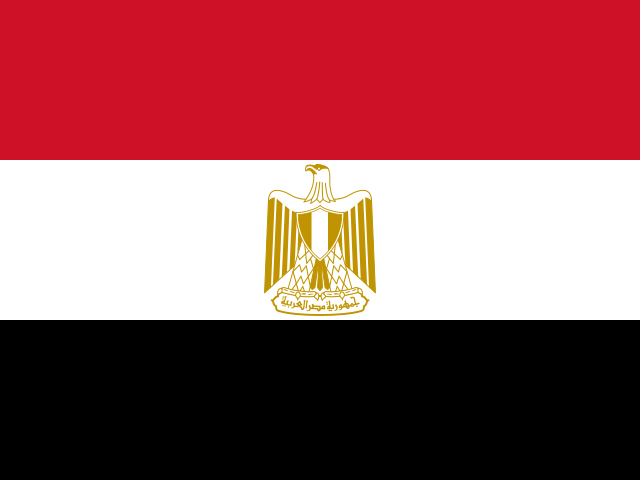
- Description: three equal horizontal bands of red (top), white, and black; centered in the white band is the national emblem, a gold Eagle of Saladin; it faces the left side, with a shield on its chest, above a scroll with the country's name in ArabicMeaning: the band colors derive from the Arab Liberation flag and represent oppression (black) overcome through bloody struggle (red), to be replaced by a bright future (white)
- National symbols
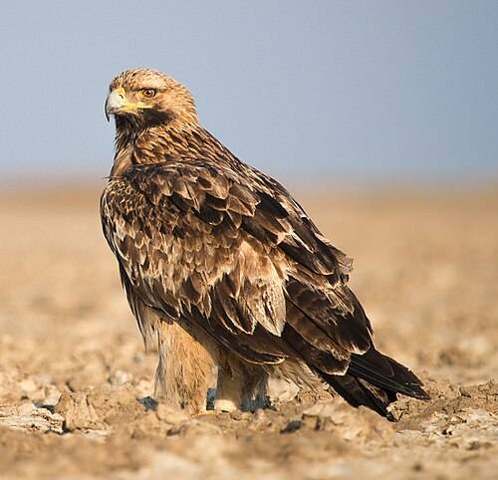
- golden eagle, white lotus
- National colours
- red, white, black
- National anthem
- Title: "Bilady, Bilady, Bilady" (My Homeland, My Homeland, My Homeland)Lyrics/music: Younis-al QADI/Sayed DARWISHHistory: adopted 1979; the current anthem was written after the 1979 peace treaty with Israel; the composer is considered the father of modern Egyptian music; of the three verses, only the first verse is sung, preceded and followed by the chorus
- UNESCO World Heritage Sites
- Total World Heritage Sites: 7 (6 cultural, 1 natural)Selected World Heritage Site locales: Memphis and its Necropolis (c); Ancient Thebes with its Necropolis (c); Nubian Monuments (c); Saint Catherine Area (c); Abu Mena (c); Historic Cairo (c); Wadi Al-Hitan (Whale Valley) (n)
Economy
- Overview
- Africa’s second-largest economy; 2030 Vision to diversify markets and energy infrastructure; improving fiscal, external, and current accounts; underperforming private sector; poor labor force participation; expanded credit access
- GDP (PPP)
- $1.958 trillion (2024 est.)
- GDP per person (PPP)
- $16,800 (2024 est.)
- GDP growth
- 2.4% (2024 est.)
- Inflation
- 28.3% (2024 est.)
- Unemployment
- 7.2% (2024 est.)
- Below poverty line
- 29.7% (2019 est.)
- Farm products
- sugarcane, sugar beets, wheat, maize, potatoes, tomatoes, rice, milk, onions, oranges (2023)
- Industries
- textiles, food processing, tourism, chemicals, pharmaceuticals, hydrocarbons, construction, cement, metals, light manufactures
- Exports
- $68.218 billion (2023 est.)
- Main exports
- refined petroleum, natural gas, fertilizers, garments, crude petroleum (2023)
- Export partners
- Saudi Arabia 10%, Turkey 9%, Italy 6%, USA 5%, UAE 5% (2023)
- Main imports
- refined petroleum, wheat, plastics, natural gas, packaged medicine (2023)
- Import partners
- China 16%, Saudi Arabia 6%, Russia 6%, USA 6%, Germany 5% (2023)
- Money sent home from abroad
- 4.9% of GDP (2023 est.)
Energy, internet and transport
- Electricity access
- Electrification - total population: 100% (2022 est.)
- Electricity sources
- Fossil fuels: 87.9% of total installed capacity (2023 est.)Solar: 2.2% of total installed capacity (2023 est.)Wind: 2.8% of total installed capacity (2023 est.)Hydroelectricity: 7% of total installed capacity (2023 est.)Biomass and waste: 0.2% of total installed capacity (2023 est.)
- Internet users
- Percent of population: 73% (2023 est.)
- Mobile phones
- Total subscriptions: 113 million (2024 est.)Subscriptions per 100 inhabitants: 97 (2024 est.)
- TV and radio
- mix of state-run and private broadcast media; state-run TV operates 2 national and 6 regional terrestrial networks, as well as a few satellite channels; dozens of private satellite channels and a large number of Arabic satellite channels are available for free; some limited satellite services are also available via subscription; state-run radio operates about 30 stations belonging to 8 networks; privately-owned radio includes 8 major stations (2019)
- Airports
- 73 (2025)
- Railways
- Total: 5,085 km (2014)Standard gauge: 5,085 km (2014) 1.435-m gauge (62 km electrified)
- Merchant ships
- Total: 441 (2023)By type: bulk carrier 14, container ship 6, general cargo 23, oil tanker 42, other 356
Military and space
- Armed forces
- Egyptian Armed Forces (EAF): Army (includes Republican Guard), Navy (includes Coast Guard), Air Force, Air Defense Forces, Border Guard ForcesInterior Ministry: Public Security Sector Police, the Central Security Force, National Security Agency (2025)
- Military spending
- 0.7% of GDP (2024 est.)
- Military service
- voluntary enlistment possible from age 16 for men and 17 for women; 18-30 years of age for compulsory service for men; service obligation 14-36 months, followed by a 9-year reserve obligation; active service length depends on education; high school drop-outs serve for the full 36 months, while college graduates serve for lesser periods of time, depending on their education level (2025)
- Space programme
- has a growing space program and seeks to become a regional space power; operates satellites; builds satellites jointly with foreign partners but developing localized satellite manufacturing and support infrastructure; acquiring other space-related technologies through transfers and domestic development, including in communications, Earth imaging/remote sensing (RS), and satellite payloads and components; works with a variety of foreign governments and commercial space companies, including those of Belarus, Canada, China, the ESA and its member states (particularly France, Germany, Italy), Ghana, India, Japan, Kazakhstan, Kenya, Nigeria, Russia, South Africa, Sudan, Uganda, Ukraine, the UAE, and the US; also a member of the Arab Space Coordination Group; has an active commercial space sector (2025)
- Space milestones
- 1960 - initiated a space program1998 - first communications satellite (NileSat-101) built in Europe and launched on a European rocket (first African country to have its own communications satellite)2007 - first remote sensing (RS) satellite (Egypsat-1) built and launched by Russia2019 - first domestically produced RS cube satellites (NARSSCube-1 and 2) released from International Space Station; signed agreement with China for construction of satellite assembly, integrating, and testing facilities2020 - announced a 10-year national space program, including initiating an astronaut training program and jointly developing with several African countries an RS satellite for monitoring climate changes2022 - inaugurated a “space city” containing a satellite manufacturing facility, a research center, a space academy, and the headquarters of the African Space Agency (AfSA; inaugurated 2025); latest NileSat-series (NileSat-301) communications satellite acquired from Europe and launched by the US2023 - three RS satellites (Horus-1, Horus-2, and MisrSat-2) built jointly with and launched by China; joined the China-led International Lunar Research Station project2024 - experimental RS satellite (Nexsat-1) jointly developed with a European commercial company and launched by China
Global issues
- Refugees and displaced people
- Refugees: 876,962 (2024 est.)Stateless persons: 5 (2024 est.)
Neighbouring countries
- Phone code
- +20
- Internet domain
- .eg