Algeria
People's Democratic Republic of Algeria · الجزائر
Numidian kingdoms, Roman Africa, then Arab and Ottoman rule. France colonised it for 132 years; the brutal independence war killed hundreds of thousands. A 1990s civil war against Islamists killed up to 200,000.
See Algeria on the 3D globeTake a quiz
Population47 million
Area2,381,741 km²
CapitalAlgiers
RegionNorthern Africa
Did you know?
- Africa's largest country by area
- Tassili rock paintings are up to 12,000 years old
- Couscous is UNESCO heritage shared with its neighbours
Key facts about Algeria
- Government
- Presidential republic
- Religion
- Sunni Islam ~99%
- Founded / independence
- 1962 (from France)
- Rich in
- Oil and natural gas, phosphates; Africa's largest country
- Languages
- Arabic
Arabic (Algerian Darja), Berber (Kabyle, Chaoui, Tuareg); French widely used - Currency
- Algerian dinar (د.ج)
- People are called
- Algerian
- Main cities
- Algiers, Oran, Constantine, Annaba
Timeline of Algeria
- 1830French invasion
- 1954Independence war begins
- 1962Independence
- 1991Civil war
- 2019Hirak protest movement
Places to see in Algeria
- Casbah of Algiers
- Roman ruins of Timgad and Djémila
- Tassili n'Ajjer rock art
- M'zab Valley
- Notre-Dame d'Afrique
Food and drink
Couscous · chakhchoukha · mechoui · makroud
Culture and famous for
Raï music; Tuareg culture; writer Albert Camus was born here
Popular sports
Football, athletics
Geography and climate
- Highest point
- Mount Tahat, 2,908 m
- Rivers, lakes and seas
- Sahara covers over 80%; Chelif River
- Climate
- Mediterranean coast, Sahara desert
- Coastline
- Has a sea coast
- Population density
- 20 people per km²
Wars and conflicts
- French conquest 1830–47
- War of Independence 1954–62
- civil war 1991–2002
Alliances and memberships
Political unions and regional organisations
African UnionArab LeagueOrganisation of Islamic Cooperation
Economy and trade
Algeria in depth
Detailed facts from the CIA World Factbook (public domain, latest edition).
Overview
- History in brief
- Algeria has known many empires and dynasties, including the ancient Numidians (3rd century B.C.), Phoenicians, Carthaginians, Romans, Vandals, Byzantines, over a dozen different Arab and Amazigh dynasties, Spaniards, and Ottoman Turks. Under the Turks, the Barbary pirates operated from North Africa and preyed on shipping, from about 1500 until the French captured Algiers in 1830. The French southward conquest of Algeria proceeded throughout the 19th century and was marked by many atrocities. A bloody eight-year struggle culminated in Algerian independence in 1962.Algeria's long-dominant political party, the National Liberation Front (FLN), was established in 1954 as part of the struggle for independence and has since played a large role in politics, though it is falling out of favor with the youth and current President Abdelmadjid TEBBOUNE. The Government of Algeria in 1988 instituted a multi-party system in response to public unrest, but the surprising first-round success of the Islamic Salvation Front (FIS) in the 1991 legislative election led the Algerian military to intervene and postpone the second round of elections to prevent what the secular elite feared would be an extremist-led government from assuming power. An army crackdown on the FIS escalated into an FIS insurgency and intense violence from 1992-98 that resulted in over 100,000 deaths, many of which were attributed to extremist groups massacring villagers. The government gained the upper hand by the late 1990s, and FIS’s armed wing, the Islamic Salvation Army, disbanded in 2000. FIS membership is now illegal. In 1999, Abdelaziz BOUTEFLIKA won the presidency with the backing of the military, in an election that was boycotted by several candidates protesting alleged fraud. He won subsequent elections in 2004, 2009, and 2014. Widespread protests against his decision to seek a fifth term broke out in early 2019. BOUTEFLIKA resigned in April 2019, and in December 2019, Algerians elected former Prime Minister Abdelmadjid TEBBOUNE as the country’s new president. A longtime FLN member, TEBBOUNE ran for president as an independent. In 2020, Algeria held a constitutional referendum on governmental reforms, which TEBBOUNE enacted in 2021. Subsequent reforms to the national electoral law introduced open-list voting to curb corruption. The new law also eliminated gender quotas in Parliament, and the 2021 legislative elections saw female representation plummet. The referendum, parliamentary elections, a
Geography
- Location
- Northern Africa, bordering the Mediterranean Sea, between Morocco and Tunisia
- Size compared
- slightly less than 3.5 times the size of Texas
- Land borders
- Total: 6,734 kmBorder countries: Libya 989 km; Mali 1,359 km; Mauritania 460 km; Morocco 1,941 km; Niger 951 km; Tunisia 1,034 km
- Coastline
- 998 km
- Climate
- arid to semiarid; mild, wet winters with hot, dry summers along coast; drier with cold winters and hot summers on high plateau; sirocco is a hot, dust/sand-laden wind especially common in summer
- Terrain
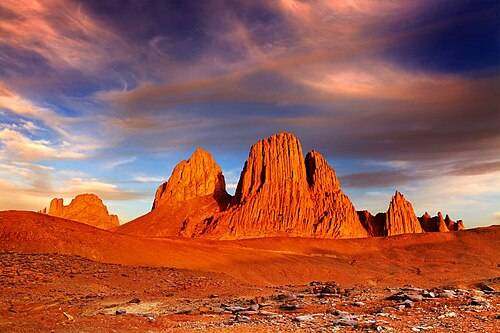
- mostly high plateau and desert; Atlas Mountains in the far north and Hoggar Mountains in the south; narrow, discontinuous coastal plain
- Elevation
- Highest point: Tahat 2,908 mLowest point: Chott Melrhir -40 mMean elevation: 800 m
- Natural resources
- petroleum, natural gas, iron ore, phosphates, uranium, lead, zinc
- Natural hazards
- mountainous areas subject to severe earthquakes; mudslides and floods in rainy season; droughts
- Notes
- largest country in Africa but 80% desert; canyons and caves in the southern Hoggar Mountains and in the barren Tassili n'Ajjer area in the southeast of the country contain numerous examples of prehistoric art -- rock paintings and carvings depicting human activities and wild and domestic animals (elephants, giraffes, cattle) -- that date to the African Humid Period, roughly 5,000 to 11,000 years ago, when the region was completely vegetated
- Environmental issues
- air pollution in major cities; soil erosion from overgrazing and other poor farming practices; desertification; river and coastal pollution from dumping of raw sewage, petroleum refining wastes, and other industrial effluents; pollution in Mediterranean Sea from oil wastes, soil erosion, and fertilizer runoff; inadequate potable water
People and society
- Population
- Total: 47,735,685 (2025 est.)Male: 24,219,668Female: 23,516,017
- Nationality
- Noun: Algerian(s)Adjective: Algerian
- Ethnic groups
- Arab-Amazigh 99%, European less than 1%
- Languages
- Arabic (official), French (lingua franca), Tamazight (official) (dialects include Kabyle (Taqbaylit), Shawiya (Tacawit), Mzab, Tuareg (Tamahaq))Major-language sample(s): كتاب حقائق العالم، المصدر الذي لا يمكن الاستغناء عنه للمعلومات الأساسية (Arabic)The World Factbook, the indispensable source for basic information.
- Religions
- Muslim (official; predominantly Sunni) 99%, other (includes Christian, Jewish, Ahmadi Muslim, Shia Muslim, Ibadi Muslim) <1% (2012 est.)
- Median age
- Total: 29.3 years (2025 est.)Male: 28.8 yearsFemale: 29.4 years
- Population growth
- 1.47% (2025 est.)
- Life expectancy
- Total population: 77.9 years (2024 est.)Male: 77.2 yearsFemale: 78.7 years
- Children per woman
- 2.91 children born/woman (2025 est.)
- Urbanization
- Urban population: 75.3% of total population (2023)Rate of urbanization: 1.99% annual rate of change (2020-25 est.)
- Largest cities
- 2.902 million ALGIERS (capital), 936,000 Oran (2022)
- Literacy
- Female: 74.2% (2019 est.)
- Years in school
- Total: 15 years (2023 est.)Male: 15 years (2023 est.)Female: 16 years (2023 est.)
Government
- Official names
- Conventional long form: People's Democratic Republic of AlgeriaConventional short form: AlgeriaLocal long form: Al Jumhuriyah al Jaza'iriyah ad Dimuqratiyah ash Sha'biyahLocal short form: Al Jaza'irEtymology: the country name derives from the capital city of Algiers
- Government type
- presidential republic
- Capital
- Name: AlgiersGeographic coordinates: 36 45 N, 3 03 ETime difference: UTC+1 (6 hours ahead of Washington, DC, during Standard Time)Etymology: name derives from the Arabic al-jazair, meaning "the islands," and refers to the four islands formerly off the coast of the capital but joined to the mainland since 1525
- Regions
- 58 provinces (wilayas, singular - wilaya); Adrar, Ain Defla, Ain Temouchent, Alger (Algiers), Annaba, Batna, Bechar, Bejaia, Beni Abbes, Biskra, Blida, Bordj Badji Mokhtar, Bordj Bou Arreridj, Bouira, Boumerdes, Chlef, Constantine, Djanet, Djelfa, El Bayadh, El Meghaier, El Meniaa, El Oued, El Tarf, Ghardaia, Guelma, Illizi, In Guezzam, In Salah, Jijel, Khenchela, Laghouat, Mascara, Medea, Mila, Mostaganem, M'Sila, Naama, Oran, Ouargla, Ouled Djellal, Oum el Bouaghi, Relizane, Saida, Setif, Sidi Bel Abbes, Skikda, Souk Ahras, Tamanrasset, Tebessa, Tiaret, Timimoun, Tindouf, Tipaza, Tissemsilt, Tizi Ouzou, Tlemcen, Touggourt
- Independence
- 5 July 1962 (from France)
- National holiday
- Independence Day, 5 July (1962); Revolution Day, 1 November (1954)
- Constitution
- History: several previous; latest approved by referendum 1 November 2020Amendment process: proposed by the president of the republic or through the president with the support of three fourths of the members of both houses of Parliament in joint session; passage requires approval by both houses, approval by referendum, and promulgation by the president; the president can forego a referendum if the Constitutional Council determines the proposed amendment does not conflict with basic constitutional principles; articles including the republican form of government, the integrity and unity of the country, and fundamental citizens’ liberties and rights cannot be amended
- Legal system
- mixed system of French civil law and Islamic law; judicial review of legislative acts in ad hoc Constitutional Council composed of various public officials including several Supreme Court justices
- Voting age
- 18 years of age; universal
- Flag meaning
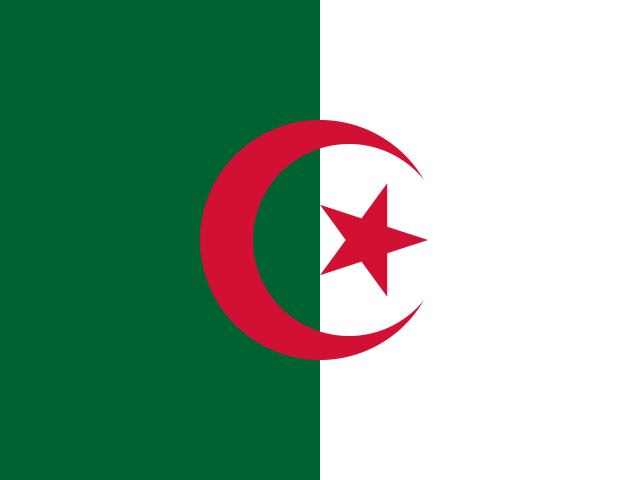
- Description: two equal vertical bands of green (left) and white; a red, five-pointed star inside a red crescent, centered over the two-color boundaryMeaning: the colors represent Islam (green), purity and peace (white), and liberty (red); the crescent and star are also Islamic symbols, but the crescent is more closed than those of other Muslim countries because Algerians believe the long crescent horns bring happiness
- National symbols
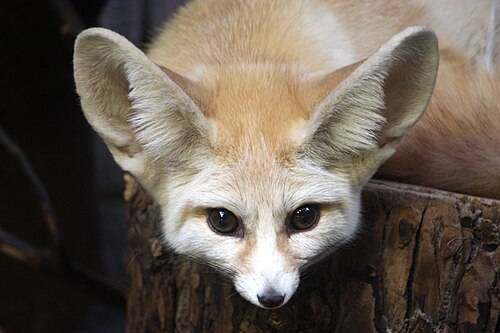
- five-pointed star between the extended horns of a crescent moon; fennec fox
- National colours
- green, white, red
- National anthem
- Title: "Kassaman" (We Pledge)Lyrics/music: Mufdi ZAKARIAH/Mohamed FAWZIHistory: adopted 1962; ZAKARIAH wrote "Kassaman" as a poem while imprisoned in Algiers by French colonial forces
- UNESCO World Heritage Sites
- Total World Heritage Sites: 7 (6 cultural, 1 mixed)Selected World Heritage Site locales: Beni Hammad Fort (c); Djémila (c); Casbah of Algiers (c); M'zab Valley (c); Tassili n'Ajjer (m); Timgad (c); Tipasa (c)
Economy
- Overview
- suffering oil and gas economy; lack of sector and market diversification; political instability chilling domestic consumption; poor credit access and declines in business confidence; COVID-19 austerity policies; delayed promised socio-economic reforms
- GDP (PPP)
- $722.912 billion (2024 est.)
- GDP per person (PPP)
- $15,400 (2024 est.)
- GDP growth
- 3.3% (2024 est.)
- Inflation
- 4% (2024 est.)
- Unemployment
- 11.5% (2024 est.)
- Farm products
- potatoes, watermelons, wheat, milk, onions, tomatoes, vegetables, oranges, dates, barley (2023)
- Industries
- petroleum, natural gas, light industries, mining, electrical, petrochemical, food processing
- Exports
- $59.426 billion (2023 est.)
- Main exports
- natural gas, crude petroleum, refined petroleum, fertilizers, iron bars (2023)
- Export partners
- Italy 29%, France 14%, Spain 13%, USA 6%, Netherlands 4% (2023)
- Main imports
- wheat, plastics, cars, milk, corn (2023)
- Import partners
- China 24%, France 12%, Italy 8%, Turkey 7%, Brazil 6% (2023)
- Money sent home from abroad
- 0.8% of GDP (2023 est.)
Energy, internet and transport
- Electricity access
- Electrification - total population: 100% (2022 est.)Electrification - urban areas: 100%Electrification - rural areas: 99.3%
- Electricity sources
- Fossil fuels: 98.1% of total installed capacity (2023 est.)Solar: 0.9% of total installed capacity (2023 est.)Hydroelectricity: 0.9% of total installed capacity (2023 est.)
- Internet users
- Percent of population: 77% (2023 est.)
- Mobile phones
- Total subscriptions: 54.1 million (2024 est.)Subscriptions per 100 inhabitants: 115 (2024 est.)
- TV and radio
- Radio Algérienne is the state-run radio broadcast; the National Company of Television (Entreprise Nationale de Télévision (ENTV)) is the primary state-run public TV station (2024)
- Airports
- 95 (2025)
- Railways
- Total: 4,020 km (2019)
- Merchant ships
- Total: 119 (2022)By type: bulk carrier 1, container ship 4, general cargo 11, oil tanker 14, other 89
Military and space
- Armed forces
- Algerian People's National Army (ANP): Land Forces, Naval Forces (includes Coast Guard), Air Forces, Territorial Air Defense Forces, Republican Guard, National GendarmerieMinistry of Interior: General Directorate of National Security (national police) (2025)
- Military spending
- 8% of GDP (2024 est.)
- Military service
- 18 years of age for voluntary military service for men and women; 19 years of age for mandatory national service for men (all Algerian men must register at age 17); 12 months national service obligation (2025)
- Space programme
- has a national space policy and space research program with stated goals of supporting internal development, managing resources, mastering space technology, and reinforcing national sovereignty; builds and operates communications and remote sensing (RS) satellites; researching and developing a range of space-related capabilities, including satellites and satellite payloads, communications, RS, instrumentation, image processing, and geo-spatial information; works with a variety of foreign space agencies and industries, including Argentina, China, France, Germany, India, Russia, Slovenia, Ukraine, the UK, and other African countries; member of the African Space Agency and the Arab Space Coordination Group (2025)
- Space milestones
- 2002 - first remote sensing (RS) satellite (Alsat-1A) built jointly with the UK and launched by Russia2006 - announced a national space program2010 and 2016 - first Algerian-designed and -built RS satellites (Alsat-2A and 2B) launched by India2017 - first communications satellite (Alcomsat-1) built jointly with and launched by China; announced a 2040 national space plan2026 - RS satellite (AlSat-3A) launched by China
Global issues
- Refugees and displaced people
- Refugees: 188,206 (2024 est.)IDPs: 25 (2024 est.)
Neighbouring countries
TunisiaLibyaNigerWestern SaharaMauritaniaMaliMorocco
- Phone code
- +213
- Internet domain
- .dz