Libya
State of Libya · ليبيا
Phoenician, Greek and Roman cities like Leptis Magna. Gaddafi ruled 1969–2011; since his fall the country has been split between rival authorities.
See Libya on the 3D globeTake a quiz
Population7.4 million
Area1,759,540 km²
CapitalTripoli
RegionNorthern Africa
Did you know?
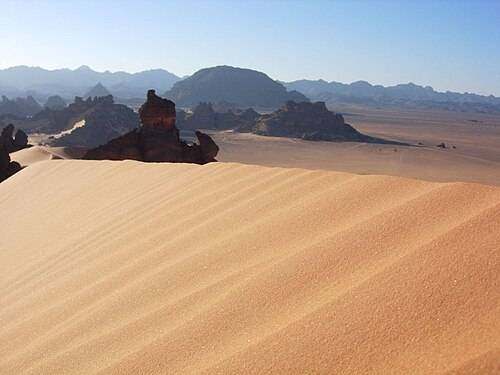
- About 90% desert
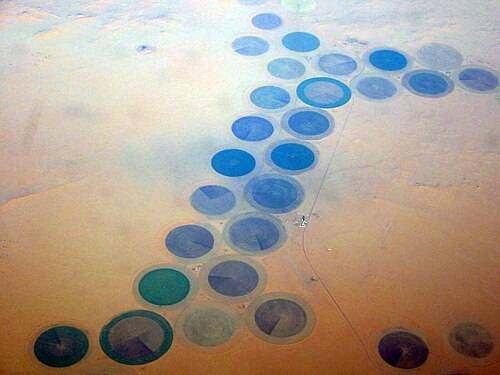
- Built the world's largest irrigation pipeline project
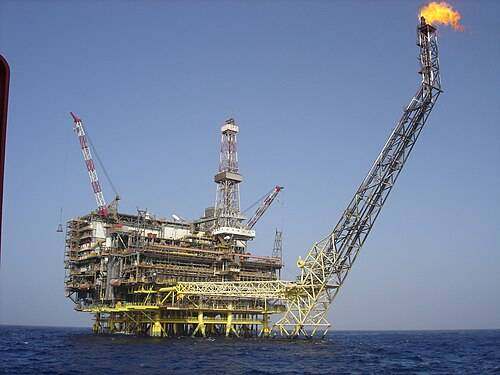
- Has Africa's largest oil reserves
Key facts about Libya
- Government
- Divided: rival governments in Tripoli and the east
- Religion
- Sunni Islam ~97%
- Founded / independence
- 1951 (from UK/France)
- Rich in
- Oil (largest reserves in Africa)
- Languages
- Arabic
Arabic (Libyan dialect); Berber (Amazigh), Tuareg - Currency
- Libyan dinar (ل.د)
- People are called
- Libyan
- Main cities
- Tripoli, Benghazi, Misrata
Timeline of Libya
- 630 BCGreek Cyrene
- 1551Ottoman rule
- 1911Italian invasion
- 1951Independence
- 1969Gaddafi coup
- 2011Revolution
Places to see in Libya
- Leptis Magna
- Sabratha
- Cyrene
- Ghadames old town
- Akakus rock art
Food and drink
Bazeen · couscous · shorba · asida
Culture and famous for
Roman and Greek ruins; Berber and Tuareg culture
Popular sports
Football
Geography and climate
- Highest point
- Bikku Bitti, 2,267 m
- Rivers, lakes and seas
- Great Man-Made River (water pipelines)
- Climate
- Desert; Mediterranean coast
- Coastline
- Has a sea coast
- Population density
- 4 people per km²
Wars and conflicts
- Italian conquest
- WWII North Africa campaign
- 2011 civil war and NATO intervention
- second civil war 2014–20
Alliances and memberships
Political unions and regional organisations
African UnionArab LeagueOrganisation of Islamic Cooperation
Economy and trade
Libya in depth
Detailed facts from the CIA World Factbook (public domain, latest edition).
Overview
- History in brief
- Berbers have inhabited central north Africa since ancient times, but Phoenicians, Greeks, Carthaginians, Persians, Egyptians, Romans, and Vandals have all settled and ruled the region. In the 7th century, Islam spread through the area. In the mid-16th century, Ottoman rule began; the Italians supplanted the Ottoman Turks in the area around Tripoli in 1911 and held it until 1943, when they were defeated in World War II. Libya then came under UN administration and achieved independence in 1951. Col. Muammar al-QADHAFI assumed leadership with a military coup in 1969 and began to espouse a political system that combined socialism and Islam. During the 1970s, QADHAFI used oil revenues to promote his ideology outside Libya, supporting subversive and terrorist activities that included the downing of two airliners -- one over Scotland and another in Northern Africa -- and a discotheque bombing in Berlin. UN sanctions in 1992 isolated QADHAFI politically and economically; the sanctions were lifted in 2003 when Libya accepted responsibility for the bombings and agreed to claimant compensation. QADHAFI also agreed to end Libya's program to develop weapons of mass destruction, and he made significant strides in normalizing relations with Western nations. Unrest that began in several Middle Eastern and North African countries in 2010 erupted in Libyan cities in 2011. QADHAFI's brutal crackdown on protesters spawned an eight-month civil war that saw the emergence of a National Transitional Council (NTC), UN authorization of air and naval intervention by the international community, and the toppling of the QADHAFI regime. In 2012, the NTC handed power to an elected parliament, the General National Congress (GNC), which was replaced two years later with the House of Representatives (HoR). In 2015, the UN brokered the Libyan Political Agreement (LPA) among a broad array of political parties and social groups, establishing an interim executive body. However, hardliners continued to oppose and hamper the LPA implementation, leaving Libya with eastern and western-based rival governments. In 2018, the international community supported a recalibrated plan that aimed to break the political deadlock with a National Conference in 2019. These plans, however, were derailed when the eastern-based, self-described Libyan National Army (LNA) launched an offensive to seize Tripoli. The LNA offensive collapsed in 2020, and a subsequent UN-sponsored cease-fire helped formalize the pause in
Geography
- Location
- Northern Africa, bordering the Mediterranean Sea, between Egypt, Tunisia, and Algeria
- Size compared
- about 2.5 times the size of Texas; slightly larger than Alaska
- Land borders
- Total: 4,339 kmBorder countries: Algeria 989 km; Chad 1,050 km; Egypt 1,115 km; Niger 342 km; Sudan 382 km; Tunisia 461 km
- Coastline
- 1,770 km
- Climate
- Mediterranean along coast; dry, extreme desert interior
- Terrain
- mostly barren, flat to undulating plains, plateaus, depressions
- Elevation
- Highest point: Bikku Bitti 2,267 mLowest point: Sabkhat Ghuzayyil -47 mMean elevation: 423 m
- Natural resources
- petroleum, natural gas, gypsum
- Natural hazards
- hot, dry, dust-laden ghibli is a southern wind lasting one to four days in spring and fall; dust storms, sandstorms
- Notes
- Note 1: more than 90% of the country is desert or semidesertNote 2: the volcano Waw an Namus lies in south central Libya in the middle of the Sahara; the caldera is an oasis -- the name means "oasis of mosquitoes" -- containing several small lakes that host many species of insects and birds
- Environmental issues
- desertification; limited natural freshwater resources; water pollution; threats to coastal ecosystem from sewage, oil byproducts, and industrial waste
People and society
- Population
- Total: 7,361,263 (2024 est.)Male: 3,747,364Female: 3,613,899
- Nationality
- Noun: Libyan(s)Adjective: Libyan
- Ethnic groups
- Amazigh and Arab 97%, other 3% (includes Egyptian, Greek, Indian, Italian, Maltese, Pakistani, Tunisian, and Turkish)
- Languages
- Arabic (official), Italian, English (all widely understood in the major cities); Tamazight (Nafusi, Ghadamis, Suknah, Awjilah, Tamasheq)Major-language sample(s): كتاب حقائق العالم، المصدر الذي لا يمكن الاستغناء عنه للمعلومات الأساسية (Arabic)The World Factbook, the indispensable source for basic information.
- Religions
- Muslim (official; virtually all Sunni) 96.6%, Christian 2.7%, Buddhist <1%, Hindu <1%, Jewish <1%, folk religion <1%, other <1%, unaffiliated <1% (2020 est.)
- Median age
- Total: 26.4 years (2025 est.)Male: 26.3 yearsFemale: 26.2 years
- Population growth
- 1.35% (2025 est.)
- Life expectancy
- Total population: 77.7 years (2024 est.)Male: 75.5 yearsFemale: 80 years
- Children per woman
- 2.96 children born/woman (2025 est.)
- Urbanization
- Urban population: 81.6% of total population (2023)Rate of urbanization: 1.45% annual rate of change (2020-25 est.)
- Largest cities
- 1.183 million TRIPOLI (capital), 984,000 Misratah, 859,000 Benghazi (2023)
Government
- Official names
- Conventional long form: State of LibyaConventional short form: LibyaLocal long form: Dawlat LibiyaLocal short form: LibiyaEtymology: the name probably derives from the Libu, a North African tribe first mentioned in texts from the 13th century B.C.; the ancient Greeks and Romans used the name for the entire North African coast west of Egypt
- Government type
- in transition
- Capital
- Name: Tripoli (Tarabulus)Geographic coordinates: 32 53 N, 13 10 ETime difference: UTC+2 (7 hours ahead of Washington, DC, during Standard Time)Etymology: the name derives from the Greek words tri and polis, meaning "three cities;" the modern-day city was founded in the 14th century to replace the three ancient cities of Pallantium, Tegea, and Mantineia
- Regions
- 22 governorates (muhafazah, singular - muhafazat); Al Butnan, Al Jabal al Akhdar, Al Jabal al Gharbi, Al Jafarah, Al Jufrah, Al Kufrah, Al Marj, Al Marqab, Al Wahat, An Nuqat al Khams, Az Zawiyah, Banghazi (Benghazi), Darnah, Ghat, Misratah, Murzuq, Nalut, Sabha, Surt, Tarabulus (Tripoli), Wadi al Hayat, Wadi ash Shati
- Independence
- 24 December 1951 (from UN trusteeship)
- National holiday
- Liberation Day, 23 October (2011)
- Constitution
- History: previous 1951, 1977, 2011 (interim)
- Legal system
- Libya's post-revolution system is in flux and driven by state and non-state entities
- Voting age
- 18 years of age, universal
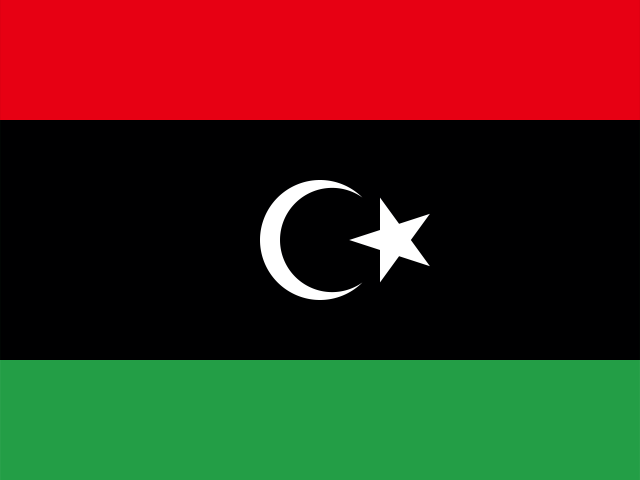
- Flag meaning
- Description: three horizontal bands of red (top), black (double-width), and green, with a white crescent and star centered on the black stripeMeaning: the colors represent the three major regions of the country: red stands for Fezzan, black for Cyrenaica, and green for Tripolitania; the crescent and star represent IslamHistory: the National Transitional Council reintroduced this flag design from the former Kingdom of Libya (1951-69) in 2011 to replace the all-green banner of the QADHAFI regime
- National symbols
- star and crescent, hawk
- National colours
- red, black, green
- National anthem
- Title: "Libya, Libya, Libya"Lyrics/music: Al Bashir AL AREBI/Mohamad Abdel WAHABHistory: adopted 1951, but replaced in 1969 when QADHAFI came to power; readopted 2011 with some modification to the lyrics; also known as "Ya Beladi" (O My Country)
- UNESCO World Heritage Sites
- Total World Heritage Sites: 5 (all cultural)Selected World Heritage Site locales: Archaeological Site of Cyrene; Archaeological Site of Leptis Magna, Archaeological Site of Sabratha; Rock-Art Sites of Tadrart Acacus; Old Town of Ghadamès
Economy
- Overview
- upper middle-income, fossil fuel-based North African economy; 31% economic contraction due to COVID-19 and 2020 oil blockade; reduced government spending; central bank had to devalue currency; public wages are over 60% of expenditures
- GDP (PPP)
- $90.609 billion (2024 est.)
- GDP per person (PPP)
- $12,300 (2024 est.)
- GDP growth
- -0.6% (2024 est.)
- Inflation
- 2.1% (2024 est.)
- Unemployment
- 18.7% (2024 est.)
- Farm products
- potatoes, onions, watermelons, tomatoes, dates, olives, milk, chicken, wheat, vegetables (2023)
- Industries
- petroleum, petrochemicals, aluminum, iron and steel, food processing, textiles, handicrafts, cement
- Exports
- $37.753 billion (2023 est.)
- Main exports
- crude petroleum, natural gas, refined petroleum, gold, scrap iron (2023)
- Export partners
- Italy 23%, Germany 15%, Spain 9%, France 7%, China 6% (2023)
- Main imports
- refined petroleum, broadcasting equipment, tobacco, garments, cars (2023)
- Import partners
- China 17%, Turkey 15%, Italy 8%, UAE 8%, Egypt 8% (2023)
- Money sent home from abroad
- 0% of GDP (2023 est.)
Energy, internet and transport
- Electricity access
- Electrification - total population: 70% (2022 est.)Electrification - urban areas: 100%
- Electricity sources
- Fossil fuels: 100% of total installed capacity (2023 est.)
- Internet users
- Percent of population: 89% (2023 est.)
- Mobile phones
- Total subscriptions: 13.9 million (2022 est.)Subscriptions per 100 inhabitants: 205 (2022 est.)
- TV and radio
- state-funded and private TV stations; some provinces operate local TV stations; pan-Arab satellite TV stations are available; state-funded radio (2019)
- Airports
- 75 (2025)
- Merchant ships
- Total: 96 (2023)By type: general cargo 2, oil tanker 13, other 81
Military and space
- Armed forces
- the Libyan Armed Forces of the Tripoli-based Government of National Unity (GNU) have various ground, air, and naval/coast guard forces, which include a mix of nominally integrated and semi-regular units, tribal armed groups and militias, civilian volunteers, and foreign military contractors; the GNU's armed forces are nominally under the control of the Ministry of Defense; the GNU also has various internal security forces under both the Ministry of Defense and the Ministry of Interior (2025)
- Military spending
- not available
- Military service
- not available
Global issues
- Refugees and displaced people
- Refugees: 277,010 (2024 est.)IDPs: 139,305 (2024 est.)
Neighbouring countries
AlgeriaChadEgyptNigerSudanTunisia
- Phone code
- +218
- Internet domain
- .ly