Czechia
Czech Republic · Česko
The Kingdom of Bohemia was a centre of the Holy Roman Empire, then Habsburg land until 1918. Czechoslovakia was dismembered by Nazi Germany, became communist in 1948, and split peacefully in 1993 after the 1989 Velvet Revolution.
See Czechia on the 3D globeTake a quiz
Population10.9 million
Area78,865 km²
CapitalPrague
RegionCentral Europe
Did you know?
- Drinks the most beer per person in the world
- Pilsner lager was invented in Plzeň in 1842
- Prague Castle is one of the largest castle complexes in the world
Key facts about Czechia
- Government
- Parliamentary republic
- Religion
- Mostly unaffiliated (~70%); Catholic ~7%
- Founded / independence
- 1993 (Czechoslovakia split); 1918 first state
- Rich in
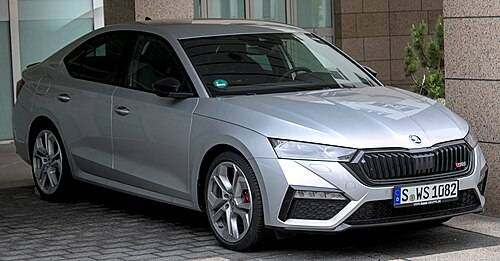
- Cars (Škoda), machinery, beer, glass, tourism
- Languages
- Czech, Slovak
Czech; Moravian dialects; Common Czech in Bohemia - Currency
- Czech koruna (Kč)
- People are called
- Czech
- Main cities
- Prague, Brno, Ostrava, Plzeň, Liberec
Timeline of Czechia
- 870Prague Castle founded
- 1348Charles University founded
- 1618Defenestration starts Thirty Years' War
- 1918Czechoslovakia
- 1968Prague Spring crushed
- 1989Velvet Revolution
- 1993Czech Republic
- 2004Joins EU
Places to see in Czechia
- Prague Castle
- Charles Bridge
- Old Town astronomical clock
- Český Krumlov
- Karlovy Vary spa
Food and drink
Svíčková · roast pork with dumplings · trdelník · pilsner beer
Culture and famous for
Bohemian glass; puppetry; writers Kafka and Kundera; composer Dvořák
Popular sports
Ice hockey, football, tennis
Geography and climate
- Highest point
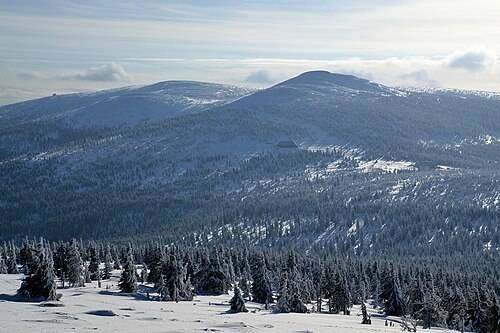
- Sněžka, 1,603 m
- Rivers, lakes and seas
- Vltava, Elbe, Morava
- Climate
- Continental
- Coastline
- Landlocked
- Population density
- 138 people per km²
Wars and conflicts
- Hussite Wars
- Thirty Years' War (began in Prague 1618)
- 1938 Munich
- 1968 Soviet invasion
Empires and states that once stood here
Holy Roman Empire 800/962–1806Habsburg Monarchy (Austrian Empire) 1526–1867
Alliances and memberships
Military and security
Political unions and regional organisations
European UnionCouncil of EuropeVisegrád Group
Economy and trade
Czechia in depth
Detailed facts from the CIA World Factbook (public domain, latest edition).
Overview
- History in brief
- At the close of World War I, the Czechs and Slovaks of the former Austro-Hungarian Empire merged to form Czechoslovakia, a parliamentarian democracy. During the interwar years, having rejected a federal system, the new country's predominantly Czech leaders were frequently preoccupied with meeting the increasingly strident demands of other ethnic minorities within the republic, most notably the Slovaks, the Sudeten Germans, and the Ruthenians (Ukrainians). On the eve of World War II, Nazi Germany occupied the territory that today comprises Czechia, and Slovakia became an independent state allied with Germany. After the war, a reunited but truncated Czechoslovakia (less Ruthenia) fell within the Soviet sphere of influence when the pro-Soviet Communist party staged a coup in February 1948. In 1968, an invasion by fellow Warsaw Pact troops ended the efforts of the country's leaders to liberalize communist rule and create "socialism with a human face," ushering in a period of repression known as "normalization." The peaceful "Velvet Revolution" swept the Communist Party from power at the end of 1989 and inaugurated a return to democratic rule and a market economy. On 1 January 1993, the country underwent a nonviolent "velvet divorce" into its two national components, the Czech Republic and Slovakia. The Czech Republic joined NATO in 1999 and the European Union in 2004. The country formally added the short-form name Czechia in 2016, while also continuing to use the full form name, the Czech Republic.
Geography
- Location
- Central Europe, between Germany, Poland, Slovakia, and Austria
- Size compared
- about two-thirds the size of Pennsylvania; slightly smaller than South Carolina
- Land borders
- Total: 2,046 kmBorder countries: Austria 402 km; Germany 704 km; Poland 699 km; Slovakia 241 km
- Coastline
- 0 km (landlocked)
- Climate
- temperate; cool summers; cold, cloudy, humid winters
- Terrain
- Bohemia in the west consists of rolling plains, hills, and plateaus surrounded by low mountains; Moravia in the east consists of very hilly country
- Elevation
- Highest point: Snezka 1,602 mLowest point: Labe (Elbe) River 115 mMean elevation: 433 m
- Natural resources
- hard coal, soft coal, kaolin, clay, graphite, timber, arable land
- Major rivers
- Labe (Elbe) river source (shared with Germany [m]) - 1,252 kmNote: [s] after country name indicates river source; [m] after country name indicates river mouth
- Natural hazards
- flooding
- Notes
- Note 1: landlocked; strategically located on some of oldest and most significant land routes in Europe; Moravian Gate is a traditional military corridor between the North European Plain and the Danube in central EuropeNote 2: the Hranice Abyss in Czechia is the world's deepest surveyed freshwater cave at 519 m (1,703 ft); its survey is not complete, and it may be up to 800-1,200 m (2,625-3,937 ft) deep
- Environmental issues
- air and water pollution (including acid rain) in areas of northwest Bohemia and in northern Moravia around Ostrava; pollution from industry, mining, and agriculture
People and society
- Population
- Total: 10,838,703 (2025 est.)Male: 5,337,128Female: 5,501,575
- Nationality
- Noun: Czech(s)Adjective: Czech
- Ethnic groups
- Czech 57.3%, Moravian 3.4%, other 7.7%, unspecified 31.6% (2021 est.)
- Languages
- Czech (official) 88.4%, Slovak 1.5%, other 2.6%, unspecified 7.2% (2021 est.)Major-language sample(s): World Factbook, nepostradatelný zdroj základních informací. (Czech)The World Factbook, the indispensable source for basic information.
- Religions
- Roman Catholic 7%, other believers belonging to a church or religious society 6% (includes Evangelical United Brethren Church and Czechoslovak Hussite Church), believers unaffiliated with a religious society 9.1%, none 47.8%, unspecified 30.1% (2021 est.)
- Median age
- Total: 44.4 years (2025 est.)Male: 42.7 yearsFemale: 45.7 years
- Population growth
- -0.02% (2025 est.)
- Life expectancy
- Total population: 78.6 years (2024 est.)Male: 75.6 yearsFemale: 81.8 years
- Children per woman
- 1.73 children born/woman (2025 est.)
- Urbanization
- Urban population: 74.6% of total population (2023)Rate of urbanization: 0.2% annual rate of change (2020-25 est.)
- Largest cities
- 1.323 million PRAGUE (capital) (2023)
- Years in school
- Total: 17 years (2022 est.)Male: 16 years (2022 est.)Female: 18 years (2022 est.)
Government
- Official names
- Conventional long form: Czech RepublicConventional short form: CzechiaLocal long form: Ceska republikaLocal short form: CeskoEtymology: name derives from the Czechs, a West Slavic tribe who rose to prominence in the late 9th century A.D.; the tribal name is said to come from an ancestral chief
- Government type
- parliamentary republic
- Capital
- Name: PragueGeographic coordinates: 50 05 N, 14 28 ETime difference: UTC+1 (6 hours ahead of Washington, DC, during Standard Time)Daylight saving time: +1hr, begins last Sunday in March; ends last Sunday in OctoberEtymology: the name may derive from the old Slavic word "praga" or "prah," meaning "threshold;" it could also be related to the same Slavic root word as the modern Czech "pražiti," a term for woodland cleared by burning
- Regions
- 13 regions (kraje, singular - kraj) and 1 capital city* (hlavni mesto); Jihocesky (South Bohemia), Jihomoravsky (South Moravia), Karlovarsky (Karlovy Vary), Kralovehradecky (Hradec Kralove), Liberecky (Liberec), Moravskoslezsky (Moravia-Silesia), Olomoucky (Olomouc), Pardubicky (Pardubice), Plzensky (Pilsen), Praha (Prague)*, Stredocesky (Central Bohemia), Ustecky (Usti), Vysocina (Highlands), Zlinsky (Zlin)
- Independence
- 1 January 1993 (Czechoslovakia split into the Czech Republic and Slovakia)
- National holiday
- Czechoslovak Founding Day, 28 October (1918)
- Constitution
- History: previous 1960; latest ratified 16 December 1992, effective 1 January 1993Amendment process: passage requires at least three-fifths concurrence of members present in both houses of Parliament
- Legal system
- new civil code enacted in 2014, replacing civil code of 1964 based on former Austro-Hungarian civil codes and socialist theory
- Voting age
- 18 years of age; universal
- Flag meaning
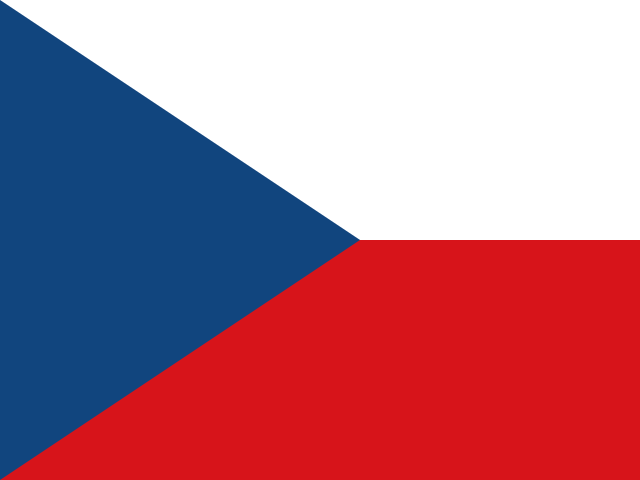
- Description: two equal horizontal bands of white (top) and red with a blue isosceles triangle based on the left side
- National symbols
- silver (or white) double-tailed rampant lion
- National colours
- white, red, blue
- National anthem
- Title: "Kde domov muj?" (Where is My Home?)Lyrics/music: Josef Kajetan TYL/Frantisek Jan SKROUPHistory: adopted 1993; the anthem was originally written as incidental music for the play "Fidlovacka" (1834), but it soon became popular as an unofficial anthem of the Czech nation; its first verse served as the official Czechoslovak anthem beginning in 1918, and the second verse (Slovak) was dropped after Czechoslovakia was dissolved in 1993
- UNESCO World Heritage Sites
- Total World Heritage Sites: 17 (16 cultural, 1 natural)Selected World Heritage Site locales: Historic Prague (c); Historic Telč (c); Historic Český Krumlov (c); Lednice-Valtice Cultural Landscape (c); Historic Kutná Hora (c); Holy Trinity Column, Olomouc (c); Karlovy Vary Spa (c); Zatec and the Landscape of Saaz Hops; Žatec and the Landscape of Saaz Hops (n)
Economy
- Overview
- high-income, diversified EU economy; manufacturing-oriented exporter led by automotive industry; moderate growth driven by household consumption and investments, despite negative contribution from net exports; tight labor market with low unemployment; gained energy independence from Russian oil in April 2025
- GDP (PPP)
- $521.928 billion (2024 est.)
- GDP per person (PPP)
- $48,000 (2024 est.)
- GDP growth
- 1.1% (2024 est.)
- Inflation
- 2.4% (2024 est.)
- Unemployment
- 2.6% (2024 est.)
- Below poverty line
- 10.2% (2021 est.)
- Farm products
- wheat, sugar beets, milk, barley, rapeseed, potatoes, maize, triticale, pork, chicken (2023)
- Industries
- motor vehicles, metallurgy, machinery and equipment, glass, armaments
- Exports
- $239.259 billion (2024 est.)
- Main exports
- cars, vehicle parts/accessories, broadcasting equipment, computers, plastic products (2023)
- Export partners
- Germany 29%, Slovakia 7%, Poland 6%, France 5%, UK 5% (2023)
- Main imports
- broadcasting equipment, vehicle parts/accessories, cars, plastic products, computers (2023)
- Import partners
- Germany 22%, China 17%, Poland 8%, Slovakia 5%, Italy 4% (2023)
- Money sent home from abroad
- 1.2% of GDP (2024 est.)
Energy, internet and transport
- Electricity access
- Electrification - total population: 100% (2022 est.)
- Electricity sources
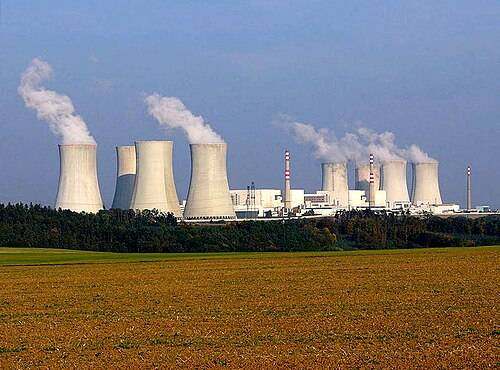
- Fossil fuels: 45.1% of total installed capacity (2023 est.)Nuclear: 40.1% of total installed capacity (2023 est.)Solar: 4.2% of total installed capacity (2023 est.)Wind: 0.9% of total installed capacity (2023 est.)Hydroelectricity: 2.6% of total installed capacity (2023 est.)Biomass and waste: 7% of total installed capacity (2023 est.)
- Internet users
- Percent of population: 86% (2023 est.)
- Mobile phones
- Total subscriptions: 13.6 million (2024 est.)Subscriptions per 100 inhabitants: 127 (2024 est.)
- TV and radio
- 22 national TV stations, with 17 privately owned; publicly operated Czech Television has 5 national channels; over 350 TV channels, many through cable, satellite, and IPTV subscription services; 63 radio broadcasters operate over 80 radio stations, including 7 multiregional radio stations or networks; publicly owned broadcaster Czech Radio operates 4 national, 14 regional, and 4 Internet stations; both Czech Radio and Czech Television are partly financed through a license fee (2019)
- Airports
- 252 (2025)
- Railways
- Total: 9,548 km (2020) 3,242 km electrified
Military and space
- Armed forces
- Czech Armed Forces: Land Forces, Air Force, Special Forces (2025)
- Military spending
- 2% of GDP (2025 est.)
- Military service
- 18-28 years of age for voluntary military service for men and women; conscription abolished 2004 (2025)
Global issues
- Refugees and displaced people
- Refugees: 392,198 (2024 est.)IDPs: 5 (2024 est.)Stateless persons: 588 (2024 est.)
Neighbouring countries
- Phone code
- +420
- Internet domain
- .cz