Germany
Federal Republic of Germany · Deutschland
Centre of the Holy Roman Empire for nearly a thousand years, but unified only in 1871 under Prussia. Defeat in WWI led to the Weimar Republic and then Nazi rule, war and the Holocaust. Divided into East and West in 1949 and reunited in 1990.
See Germany on the 3D globeTake a quiz
Did you know?
- Germans invented the printing press, the car and the jet engine
- Has over 20,000 castles
- There is no general speed limit on many motorway stretches
Key facts about Germany
- Government
- Federal parliamentary republic
- Religion
- Catholic ~24%, Protestant ~22%, Islam ~6%, unaffiliated ~45%
- Founded / independence
- 1871 unification; 1990 reunification
- Rich in
- Cars, machinery, chemicals, Europe's largest economy
- Languages
- German
German: Low German, Bavarian, Swabian, Saxon, Franconian, Alemannic dialects; Sorbian, Danish, Frisian minorities - Currency
- Euro (€)
- People are called
- German
- Main cities
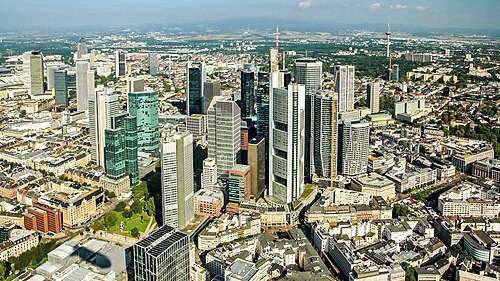
- Berlin, Hamburg, Munich, Cologne, Frankfurt, Stuttgart
Timeline of Germany
- 962Holy Roman Empire
- 1517Reformation
- 1871Unification
- 1933Nazis take power
- 1949Divided into East and West
- 1961Berlin Wall built
- 1989Wall falls
- 1990Reunification
Places to see in Germany
- Brandenburg Gate
- Neuschwanstein Castle
- Cologne Cathedral
- Berlin Wall memorial
- Rhine Valley castles
- Black Forest
Food and drink
Bratwurst · pretzels · sauerkraut · Black Forest cake · beer
Culture and famous for
Beethoven, Bach, Brahms; printing press; cars (VW, BMW, Mercedes); Oktoberfest; Christmas markets
Popular sports
Football, Formula 1, handball
Geography and climate
- Highest point
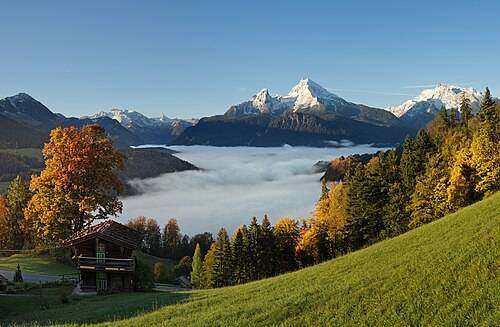
- Zugspitze, 2,962 m
- Rivers, lakes and seas
- Rhine, Elbe, Danube; Lake Constance
- Climate
- Temperate
- Coastline
- Has a sea coast
- Population density
- 234 people per km²
Wars and conflicts
- Thirty Years' War
- Franco-Prussian War
- WWI
- WWII and the Holocaust
- Cold War division
Empires and states that once stood here
Frankish Empire 481–843Holy Roman Empire 800/962–1806Kingdom of Prussia 1701–1918East Germany (GDR) 1949–1990
Alliances and memberships
Military and security
Political unions and regional organisations
European UnionEurozoneCouncil of EuropeG7
Economy and trade
Germany in depth
Detailed facts from the CIA World Factbook (public domain, latest edition).
Overview
- History in brief
- As Europe's largest economy and second most-populous nation (after Russia), Germany is a key member of the continent's economic, political, and defense organizations. European power struggles immersed Germany in two devastating world wars in the first half of the 20th century and left the country occupied by the victorious Allied powers of the US, UK, France, and the Soviet Union in 1945. With the advent of the Cold War, two German states were formed in 1949: the western Federal Republic of Germany (FRG) and the eastern German Democratic Republic (GDR). The democratic FRG embedded itself in key western economic and security organizations, including the EC (now the EU) and NATO, while the communist GDR was on the front line of the Soviet-led Warsaw Pact. The decline of the Soviet Union and the end of the Cold War allowed German reunification to occur in 1990. Since then, Germany has expended considerable funds to bring eastern productivity and wages up to western standards. In January 1999, Germany and 10 other EU countries introduced a common European exchange currency, the euro.
Geography
- Location
- Central Europe, bordering the Baltic Sea and the North Sea, between the Netherlands and Poland, south of Denmark
- Size compared
- three times the size of Pennsylvania; slightly smaller than Montana
- Land borders
- Total: 3,694 kmBorder countries: Austria 801 km; Belgium 133 km; Czechia 704 km; Denmark 140 km; France 418 km; Luxembourg 128 km; Netherlands 575 km; Poland 447 km; Switzerland 348 km
- Coastline
- 2,389 km
- Climate
- temperate and marine; cool, cloudy, wet winters and summers; occasional warm mountain (foehn) wind
- Terrain
- lowlands in north, uplands in center, Bavarian Alps in south
- Elevation
- Highest point: Zugspitze 2,963 mLowest point: Neuendorf bei Wilster -3.5 mMean elevation: 263 m
- Natural resources
- coal, lignite, natural gas, iron ore, copper, nickel, uranium, potash, salt, construction materials, timber, arable land
- Major rivers
- Donau (Danube) river source (shared with Austria, Slovakia, Hungary, Croatia, Serbia, Bulgaria, Ukraine, Moldova, and Romania [m]) - 2,888 km; Elbe river mouth (shared with Czechia [s]) - 1,252 km; Rhein (Rhine) (shared with Switzerland [s], France, and Netherlands [m]) - 1,233 kmNote: [s] after country name indicates river source; [m] after country name indicates river mouth
- Major lakes
- Fresh water lake(s): Lake Constance (shared with Switzerland and Austria) - 540 sq kmSalt water lake(s): Stettiner Haff/Zalew Szczecinski (shared with Poland) - 900 sq km
- Natural hazards
- flooding
- Notes
- strategic location on North European Plain and along the entrance to the Baltic Sea; most major rivers in Germany -- the Rhine, Weser, Oder, Elbe -- flow northward; the Danube, which originates in the Black Forest, flows eastward
- Environmental issues
- air pollution and acid rain from coal-burning utilities and industries; water pollution from raw sewage and industrial effluents; hazardous waste disposal
People and society
- Population
- Total: 84,012,284 (2025 est.)Male: 41,517,301Female: 42,494,983
- Nationality
- Noun: German(s)Adjective: German
- Ethnic groups
- German 85.4%, Turkish 1.8%, Ukrainian 1.4%, Syrian 1.1%, Romanian 1%, Poland 1%, other/stateless/unspecified 8.3% (2022 est.)
- Languages
- German (official); note - Danish, Frisian, Sorbian, and Romani are official minority languages; Low German, Danish, North Frisian, Sater Frisian, Lower Sorbian, Upper Sorbian, and Romani are recognized as regional languagesMajor-language sample(s): Das World Factbook, die unverzichtbare Quelle für grundlegende Informationen. (German)The World Factbook, the indispensable source for basic information.
- Religions
- Roman Catholic 24.8%, Protestant 22.6%, Muslim 3.7%, other 5.1%, none 43.8% (2022 est.)
- Median age
- Total: 46.9 years (2025 est.)Male: 45.5 yearsFemale: 48.3 years
- Population growth
- -0.13% (2025 est.)
- Life expectancy
- Total population: 81.9 years (2024 est.)Male: 79.6 yearsFemale: 84.4 years
- Children per woman
- 1.59 children born/woman (2025 est.)
- Urbanization
- Urban population: 77.8% of total population (2023)Rate of urbanization: 0.13% annual rate of change (2020-25 est.)
- Largest cities
- 3.574 million BERLIN (capital), 1.788 million Hamburg, 1.576 million Munich, 1.144 million Cologne, 796,000 Frankfurt (2023)
- Years in school
- Total: 17 years (2023 est.)Male: 17 years (2023 est.)Female: 17 years (2023 est.)
Government
- Official names
- Conventional long form: Federal Republic of GermanyConventional short form: GermanyLocal long form: Bundesrepublik DeutschlandLocal short form: DeutschlandFormer: German ReichEtymology: the origin of the name is unclear; it may come from Celtic words meaning "neighboring people," or it may derive from Germanic words meaning either "spear man" or "head man;" the native designation "Deutsch" comes from the Old High German "diutisc" meaning "national"
- Government type
- federal parliamentary republic
- Capital
- Name: BerlinGeographic coordinates: 52 31 N, 13 24 ETime difference: UTC+1 (6 hours ahead of Washington, DC, during Standard Time)Daylight saving time: +1hr, begins last Sunday in March; ends last Sunday in OctoberEtymology: the origin of the name is unclear but may be related to the Old Slavic (Polabian) word berl or birl, meaning "swamp" and referring to the original settlement site by the Spree River
- Regions
- 16 states (Laender, singular - Land); Baden-Wuerttemberg, Bayern (Bavaria), Berlin, Brandenburg, Bremen, Hamburg, Hessen (Hesse), Mecklenburg-Vorpommern (Mecklenburg-Western Pomerania), Niedersachsen (Lower Saxony), Nordrhein-Westfalen (North Rhine-Westphalia), Rheinland-Pfalz (Rhineland-Palatinate), Saarland, Sachsen (Saxony), Sachsen-Anhalt (Saxony-Anhalt), Schleswig-Holstein, Thueringen (Thuringia)
- Independence
- 18 January 1871 (establishment of the German Empire); divided into four zones of occupation (UK, US, USSR, and France) in 1945 after World War II; Federal Republic of Germany (FRG or West Germany) proclaimed on 23 May 1949 and included the former UK, US, and French zones; German Democratic Republic (GDR or East Germany) proclaimed on 7 October 1949 and included the former USSR zone; West Germany and East Germany unified on 3 October 1990, with all four powers formally relinquishing rights on 15 March 1991; notable earlier dates: 10 August 843 (Eastern Francia established from the division of the Carolingian Empire); 2 February 962 (crowning of OTTO I, recognized as the first Holy Roman Emperor)
- National holiday
- German Unity Day, 3 October (1990)
- Constitution
- History: previous 1919 (Weimar Constitution); latest drafted 10-23 August 1948, approved 12 May 1949, promulgated 23 May 1949, entered into force 24 May 1949Amendment process: proposed by Parliament; passage and enactment into law require two-thirds majority vote by both the Bundesrat (upper house) and the Bundestag (lower house) of Parliament; articles including those on basic human rights and freedoms cannot be amended
- Legal system
- civil law system
- Voting age
- 18 years of age; universal; age 16 for some state and municipal elections
- Flag meaning
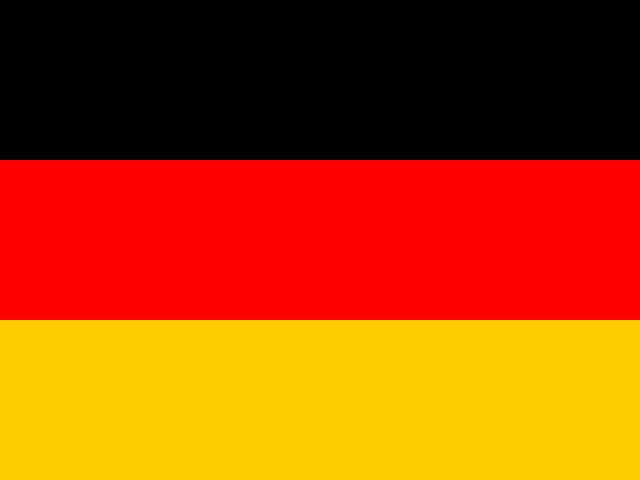
- Description: three equal horizontal bands of black (top), red, and goldHistory: the colors can be traced back to the medieval banner of the Holy Roman Emperor -- a black eagle with red claws and beak on a gold field
- National symbols
- eagle
- National colours
- black, red, yellow
- National anthem
- Title: “Lied der Deutschen”(Song of the Germans)Lyrics/music: August Heinrich HOFFMANN VON FALLERSLEBEN/Franz Joseph HAYDNHistory: first adopted 1922; the anthem, also known as "Deutschlandlied" (Song of Germany), was originally adopted for its connection to the March 1848 liberal revolution; the Nazis later appropriated the first verse -- specifically the phrase "Deutschland, Deutschland ueber alles" (Germany, Germany above all) -- to promote nationalism, and the anthem was banned after 1945; in 1952, West Germany adopted the third verse as its national anthem; in 1990, it became the national anthem for the reunited Germany
- UNESCO World Heritage Sites
- Total World Heritage Sites: 56 (54 cultural, 2 natural)Selected World Heritage Site locales: Museumsinsel (Museum Island), Berlin (c); Palaces and Parks of Potsdam and Berlin (c); Speyer Cathedral (c); Aachen Cathedral (c); Bauhaus and its Sites in Weimar, Dessau, and Bernau (c); Caves and Ice Age Art in the Swabian Jura (c); Roman Monuments, Cathedral of St. Peter, and Church of Our Lady in Trier (c); Hanseatic City of Lübeck (c); Old Town of Regensburg with Stadtamhof (c); Würzburg Residence with the Court Gardens and Residence Square (c); Pilgrimage Church of Wies (c); Castles of Augustusburg and Falkenlust at Brühl (c); St Mary's Cathedral and St Michael's Church at Hildesheim (c); Abbey and Altenmünster of Lorsch (c); Maulbronn Monastery Complex (c); Collegiate Church, Castle and Old Town of Quedlinburg (c); Cologne Cathedral (c); Castle Church in Wittenberg (c); Classical Weimar (c); Wartburg Castle (c); Garden Kingdom of Dessau-Wörlitz (c); Monastic Island of Reichenau (c); Berlin Modernism Housing Estates (c); Prehistoric Pile Dwellings around the Alps (c); Moravian Church Settlements (c); Speicherstadt and Kontorhaus District with Chilehaus (c); The Architectural Work of Le Corbusier, an Outstanding Contribution to the Modern Movement (c); Archaeological Border complex of Hedeby and the Danevirke (c); Naumburg Cathedral (c); Mathildenhöhe Darmstadt (c); ShUM Sites of Speyer, Worms and Mainz (c); The Great Spa Towns of Europe (c); Jewish-Medieval Heritage of Erfurt (c); Schwerin Residence Ensemble (c); The Palaces of King Ludwig II of Bavaria: Neuschwanstein, Linderhof, Schachen and Herrenchiemsee (c); The Palaces of King Ludwig II of Bavaria: Neuschwanstein, Linderhof, Schachen and Herrenchiemsee (c)
Economy
- Overview
- leading export-driven, core EU and eurozone economy; key automotive, chemical, engineering, finance, and green energy industries; growth stalled by energy crisis and declining exports; tight labor market with falling working-age population; fiscal rebalancing with phaseout of energy price supports
- GDP (PPP)
- $5.247 trillion (2024 est.)
- GDP per person (PPP)
- $62,800 (2024 est.)
- GDP growth
- -0.2% (2024 est.)
- Inflation
- 2.3% (2024 est.)
- Unemployment
- 3.5% (2024 est.)
- Below poverty line
- 14.8% (2021 est.)
- Farm products
- milk, sugar beets, wheat, potatoes, barley, maize, rapeseed, pork, rye, triticale (2023)
- Industries
- iron, steel, coal, cement, chemicals, machinery, vehicles, machine tools, electronics, automobiles, food and beverages, shipbuilding, textiles
- Exports
- $1.949 trillion (2024 est.)
- Main exports
- cars, vehicle parts/accessories, packaged medicine, plastic products, vaccines (2023)
- Export partners
- USA 10%, France 8%, Netherlands 7%, China 7%, Italy 6% (2023)
- Main imports
- cars, vehicle parts/accessories, garments, natural gas, vaccines (2023)
- Import partners
- China 12%, Netherlands 7%, USA 7%, Poland 6%, France 5% (2023)
- Money sent home from abroad
- 0.5% of GDP (2024 est.)
Energy, internet and transport
- Electricity access
- Electrification - total population: 100% (2022 est.)
- Electricity sources
- Fossil fuels: 49% of total installed capacity (2023 est.)Nuclear: 1.3% of total installed capacity (2023 est.)Solar: 11.1% of total installed capacity (2023 est.)Wind: 25.9% of total installed capacity (2023 est.)Hydroelectricity: 3.2% of total installed capacity (2023 est.)Biomass and waste: 9.4% of total installed capacity (2023 est.)
- Internet users
- Percent of population: 94% (2024 est.)
- Mobile phones
- Total subscriptions: 109 million (2024 est.)Subscriptions per 100 inhabitants: 129 (2024 est.)
- TV and radio
- a mix of publicly operated and privately owned TV and radio stations; 70 national and regional public broadcasters compete with nearly 400 privately owned national and regional TV stations; more than 90% of households have cable or satellite TV; hundreds of radio stations, including national and regional networks and a large number of local stations
- Airports
- 840 (2025)
- Railways
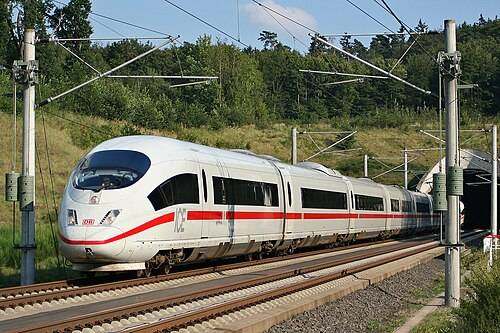
- Total: 39,379 km (2020) 20,942 km electrified
- Merchant ships
- Total: 595 (2023)By type: bulk carrier 1, container ship 69, general cargo 82, oil tanker 32, other 411
Military and space
- Armed forces
- Federal Armed Forces (Bundeswehr): German Army (Deutsche Heer), German Navy (Deutsche Marine, includes naval air arm), German Air Force (Deutsche Luftwaffe, includes air defense), Cyber and Information Space (Cyber und Informationsraum) (2025)
- Military spending
- 2.4% of GDP (2025 est.)
- Military service
- 17-23 years of age for voluntary military service for men and women (must have completed compulsory full-time education and have German citizenship); service obligation 7-23 months or 12 years (2025)
- Space programme
- has one of Europe’s largest space programs and is a top contributor to the ESA; builds and operates satellites, satellite/space launch vehicles (SLVs), probes, and unmanned orbiters; researches and develops a range of capabilities and technologies, including reusable space planes, satellite payloads, rockets, propulsion-assisted landing technologies, and aeronautics; participates in EU and ESA programs, including the Cassini-Huygens research mission to Saturn, Mars and Venus exploration missions, and the Galileo global navigation satellite system; participates in ESA’s astronaut training program and human space flight operations; hosts the European Astronaut Center; participates in international programs such as the International Space Station (ISS) and the James Webb Space Telescope; hosts mission control centers for the ISS, the ESA, and the European Organization for the Exploitation of Meteorological Satellites (EUMETSAT); has ties to foreign space programs, including those of China, Japan, Russia, and the US; has a robust commercial space sector (2025)
- Space milestones
- 1969 - first German scientific satellite (Azur) launched by US1973 - participated with other European states, particularly France and the UK, in development of Ariane satellite launch vehicle1978 - first German in space on Soviet Salyut space station1980s-1990s - participated in US Space Shuttle program, including providing astronauts1999 - launched a space-based X-ray telescope (ABRAXIS) on Russian rocket2005 - began development of reusable space plane/shuttle/transporter2019 - launched first space-based X-ray telescope (eROSITA) capable of imaging the entire sky (joint project with Russia)2023 - signed US-led Artemis Accords for the exploration of space and the Moon; adopted a new national space strategy
Global issues
- Refugees and displaced people
- Refugees: 3,098,169 (2024 est.)IDPs: 100 (2023 est.)Stateless persons: 28,813 (2024 est.)
- Drug trade
- USG identification: major precursor-chemical producer (2025)
Neighbouring countries
AustriaBelgiumCzechiaDenmarkFranceLuxembourgNetherlandsPolandSwitzerland
- Phone code
- +49
- Internet domain
- .de