Austria
Republic of Austria · Österreich
Heart of the Habsburg Empire for over 600 years and of Austria-Hungary until it collapsed in 1918. Annexed by Nazi Germany in 1938, occupied by the Allies until 1955, then declared permanent neutrality. Joined the EU in 1995.
See Austria on the 3D globeTake a quiz
Did you know?
- Vienna often ranks as the world's most liveable city
- The world's oldest zoo still operating opened at Schönbrunn in 1752
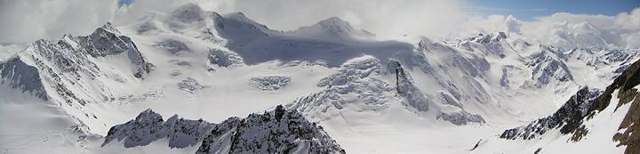
- About 60% of the country is mountains
Key facts about Austria
- Government
- Federal parliamentary republic
- Religion
- Roman Catholic ~52%, Islam ~8%, Orthodox ~5%, unaffiliated ~22%
- Founded / independence
- 1918 republic; 1955 sovereignty restored
- Rich in
- Engineering, tourism, hydropower, timber, music and culture
- Languages
- Austro-Bavarian German
German, Austrian Bavarian dialects (Viennese, Tyrolean); Alemannic in Vorarlberg; Croatian, Slovene, Hungarian minorities - Currency
- Euro (€)
- People are called
- Austrian
- Main cities
- Vienna, Graz, Linz, Salzburg, Innsbruck
Timeline of Austria
- 976Babenberg rule begins
- 1278Habsburgs take power
- 1683Ottoman siege of Vienna fails
- 1918Republic after WWI
- 1938Annexed by Nazi Germany
- 1955Sovereignty and neutrality
- 1995Joins EU
Places to see in Austria
- Schönbrunn Palace
- Hofburg
- Hallstatt village
- Salzburg old town
- Grossglockner Alpine Road
- Melk Abbey
Food and drink
Wiener schnitzel · Sachertorte · apple strudel · Tafelspitz
Culture and famous for
Classical music: Mozart, Haydn, Schubert, Strauss; Vienna coffee houses; the Vienna Philharmonic New Year's Concert
Popular sports
Alpine skiing, football
Geography and climate
- Highest point
- Grossglockner, 3,798 m
- Rivers, lakes and seas
- Danube; Lake Constance; Neusiedler See
- Climate
- Alpine and continental
- Coastline
- Landlocked
- Population density
- 110 people per km²
Wars and conflicts
- Napoleonic Wars
- Austro-Prussian War 1866
- WWI
- WWII (annexed by Germany 1938)
Empires and states that once stood here
Holy Roman Empire 800/962–1806Habsburg Monarchy (Austrian Empire) 1526–1867Polish-Lithuanian Commonwealth 1569–1795Austria-Hungary 1867–1918
Alliances and memberships
Political unions and regional organisations
European UnionEurozoneCouncil of Europe
Economy and trade
Austria in depth
Detailed facts from the CIA World Factbook (public domain, latest edition).
Overview
- History in brief
- Once the center of power for the large Austro-Hungarian Empire, Austria was reduced to a small republic after its defeat in World War I. Nazi Germany annexed Austria in 1938, and the victorious Allies then occupied the country in 1945. As a result, Austria's status remained unclear for a decade after World War II, until a State Treaty signed in 1955 ended the occupation, recognized Austria's independence, and forbade unification with Germany. A constitutional law that same year declared the country's "perpetual neutrality" as a condition for Soviet military withdrawal. Austria joined the EU in 1995, but the obligation to remain neutral kept it from joining NATO, although the country became a member of NATO's Partnership for Peace program in 1995. Austria entered the EU Economic and Monetary Union in 1999.
Geography
- Location
- Central Europe, north of Italy and Slovenia
- Size compared
- about the size of South Carolina; slightly more than two-thirds the size of Pennsylvania
- Land borders
- Total: 2,524 kmBorder countries: Czech Republic 402 km; Germany 801 km; Hungary 321 km; Italy 404 km; Liechtenstein 34 km; Slovakia 105 km; Slovenia 299 km; Switzerland 158 km
- Coastline
- 0 km (landlocked)
- Climate
- temperate; continental, cloudy; cold winters with frequent rain and some snow in lowlands and snow in mountains; moderate summers with occasional showers
- Terrain
- mostly mountains (Alps) in the west and south; mostly flat or gently sloping along the eastern and northern margins
- Elevation
- Highest point: Grossglockner 3,798 mLowest point: Neusiedler See 115 mMean elevation: 910 m
- Natural resources
- oil, coal, lignite, timber, iron ore, copper, zinc, antimony, magnesite, tungsten, graphite, salt, hydropower
- Major rivers
- Donau (Danube) (shared with Germany [s], Slovakia, Hungary, Croatia, Serbia, Bulgaria, Ukraine, Moldova, and Romania [m]) - 2,888 kmNote: [s] after country name indicates river source; [m] after country name indicates river mouth
- Major lakes
- Fresh water lake(s): Lake Constance (shared with Switzerland and Germany) - 540 sq km
- Natural hazards
- landslides; avalanches; earthquakes
- Notes
- Note 1: landlocked; strategic location at the crossroads of central Europe with many easily traversable Alpine passes and valleys; major river is the Danube; population is concentrated on eastern lowlands because of steep slopes, poor soils, and low temperatures elsewhereNote 2: the world's largest and longest ice cave system at 42 km (26 mi) is the Eisriesenwelt (Ice Giants World) inside the Hochkogel mountain near Werfen, about 40 km south of Salzburg; ice caves are bedrock caves that contain year-round ice formations; they differ from glacial caves, which are transient and are formed by melting ice and flowing water within and under glaciers
- Environmental issues
- some forest degradation from air and soil pollution; soil pollution from agricultural chemicals; air pollution from coal- and oil-fired power stations and industrial plants, and from trucks transiting Austria; water pollution
People and society
- Population
- Total: 9,174,390 (2025 est.)Male: 4,471,802Female: 4,702,588
- Nationality
- Noun: Austrian(s)Adjective: Austrian
- Ethnic groups
- Austrian 80.8%, German 2.6%, Bosnian and Herzegovinian 1.9%, Turkish 1.8%, Serbian 1.6%, Romanian 1.3%, other 10% (2018 est.)
- Languages
- German (official nationwide) 88.6%, Turkish 2.3%, Serbian 2.2%, Croatian (official in Burgenland) 1.6%, other (includes Slovene, official in southern Carinthia, and Hungarian, official in Burgenland) 5.3% (2001 est.)Major-language sample(s): Das World Factbook, die unverzichtbare Quelle für grundlegende Informationen. (German)The World Factbook, the indispensable source for basic information.
- Religions
- Roman Catholic 55.2%, Muslim 8.3%, Orthodox 4.9%, Evangelical Christian 3.8%, Jewish 0.1%, other 5.4%, none 22.4% (2021 est.)
- Median age
- Total: 44.5 years (2025 est.)Male: 43.6 yearsFemale: 46.3 years
- Population growth
- 0.28% (2025 est.)
- Life expectancy
- Total population: 82.7 years (2024 est.)Male: 80.1 yearsFemale: 85.4 years
- Children per woman
- 1.35 children born/woman (2025 est.)
- Urbanization
- Urban population: 59.5% of total population (2023)Rate of urbanization: 0.68% annual rate of change (2020-25 est.)
- Largest cities
- 1.975 million VIENNA (capital) (2023)
- Years in school
- Total: 16 years (2023 est.)Male: 16 years (2023 est.)Female: 17 years (2023 est.)
Government
- Official names
- Conventional long form: Republic of AustriaConventional short form: AustriaLocal long form: Republik OesterreichLocal short form: OesterreichEtymology: the name Oesterreich means "eastern realm" and dates to the 10th century; the designation refers to the fact that Austria was the easternmost extension of Bavaria and the German peoples; the word Austria is a Latinization of the German name
- Government type
- federal parliamentary republic
- Capital
- Name: ViennaGeographic coordinates: 48 12 N, 16 22 ETime difference: UTC+1 (6 hours ahead of Washington, DC, during Standard Time)Daylight saving time: +1hr, begins last Sunday in March; ends last Sunday in OctoberEtymology: the name may have evolved from the Roman name Vindobona, which was taken from the Celtic words vindo (white) and bona (fort)
- Regions
- 9 states (Bundeslaender, singular - Bundesland); Burgenland, Kaernten (Carinthia), Niederoesterreich (Lower Austria), Oberoesterreich (Upper Austria), Salzburg, Steiermark (Styria), Tirol (Tyrol), Vorarlberg, Wien (Vienna)
- Independence
- No official date of independence: 976 (Margravate of Austria established); 17 September 1156 (Duchy of Austria founded); 6 January 1453 (Archduchy of Austria acknowledged); 11 August 1804 (Austrian Empire proclaimed); 30 March 1867 (Austro-Hungarian dual monarchy established); 12 November 1918 (First Republic proclaimed); 27 April 1945 (Second Republic proclaimed)
- National holiday
- National Day (commemorates passage of the law on permanent neutrality), 26 October (1955)
- Constitution
- History: several previous; latest adopted 1 October 1920, revised 1929, replaced May 1934, replaced by German Weimar constitution in 1938 following German annexation, reinstated 1 May 1945Amendment process: proposed through laws designated "constitutional laws" or through the constitutional process if the amendment is part of another law; approval required by at least a two-thirds majority vote by the National Assembly and the presence of one-half of the members; a referendum is required only if requested by one-third of the National Council or Federal Council membership; passage by referendum requires absolute majority vote
- Legal system
- civil law system; Constitutional Court reviews legislative acts
- Voting age
- 16 years of age; universal
- Flag meaning
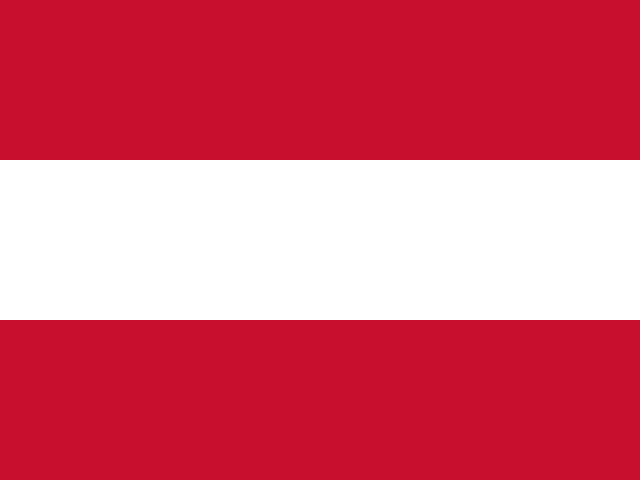
- Description: three equal horizontal bands of red (top), white, and redHistory: one of the oldest national flags in the world; according to tradition, after a fierce battle in the Third Crusade in 1191, Duke Leopold V of Austria's white tunic became blood-spattered; when his sash was removed, a white band was revealed, and the red-white-red color combination was adopted as his banner
- National symbols
- eagle, edelweiss, Alpine gentian
- National colours
- red, white
- National anthem
- Title: "Bundeshymne" (Federal Hymn)Lyrics/music: Paula von PRERADOVIC/Wolfgang Amadeus MOZART or Johann HOLZER (disputed)History: adopted 1947; Austria adopted a new national anthem after World War II to replace the former imperial anthem composed by Franz Josef HAYDN, which Germany had appropriated in 1922 and was thereafter associated with the Nazi regime; the Austrian Federal Assembly adopted a gender-neutral version of the lyrics in 2012
- UNESCO World Heritage Sites
- Total World Heritage Sites: 12 (11 cultural, 1 natural)Selected World Heritage Site locales: Historic Salzburg (c); Palace and Gardens of Schönbrunn (c); Halstadt–Dachstein/Salzkammergut Cultural Landscape (c); Semmering railway (c); Historic Graz and Schloss Eggenberg (c); Wachau Cultural Landscape (c); Historic Vienna (c); Fertő/Neusiedlersee Cultural Landscape (c); Baden bei Wien (c); Primeval Beech Forests - Dürrenstein, Kalkalpen (n)
Economy
- Overview
- one of the strongest EU and euro economies; diversified trade portfolios and relations; enormous trade economy; Russian energy dependence, but investing in alternative energy; aging labor force but large refugee population; large government debt
- GDP (PPP)
- $581.131 billion (2024 est.)
- GDP per person (PPP)
- $63,300 (2024 est.)
- GDP growth
- -1.2% (2024 est.)
- Inflation
- 2.9% (2024 est.)
- Unemployment
- 5.5% (2024 est.)
- Below poverty line
- 14.8% (2021 est.)
- Farm products
- milk, sugar beets, maize, wheat, barley, potatoes, pork, grapes, triticale, soybeans (2023)
- Industries
- construction, machinery, vehicles and parts, food, metals, chemicals, lumber and paper, electronics, tourism
- Exports
- $299.366 billion (2024 est.)
- Main exports
- cars, packaged medicine, vaccines, vehicle parts/accessories, nitrogen compounds (2023)
- Export partners
- Germany 25%, USA 9%, Italy 7%, Switzerland 5%, Hungary 4% (2023)
- Main imports
- cars, garments, vaccines, vehicle parts/accessories, refined petroleum (2023)
- Import partners
- Germany 34%, China 7%, Italy 7%, Switzerland 5%, Czechia 4% (2023)
- Money sent home from abroad
- 0.7% of GDP (2024 est.)
Energy, internet and transport
- Electricity access
- Electrification - total population: 100% (2022 est.)
- Electricity sources
- Fossil fuels: 14.9% of total installed capacity (2023 est.)Solar: 9% of total installed capacity (2023 est.)Wind: 11.9% of total installed capacity (2023 est.)Hydroelectricity: 56.4% of total installed capacity (2023 est.)Biomass and waste: 7.8% of total installed capacity (2023 est.)
- Internet users
- Percent of population: 95% (2024 est.)
- Mobile phones
- Total subscriptions: 11.4 million (2024 est.)Subscriptions per 100 inhabitants: 124 (2024 est.)
- TV and radio
- public broadcaster, Oesterreichischer Rundfunk (ORF), is a major player in the TV and radio markets; private broadcasters, cable, and satellite TV are available in most homes are widely used; some German stations carry programs for Austrian viewers; national and regional newspapers compete fiercely for readers; the print media are owned by a handful of mostly Austrian and German media groups (2023)
- Airports
- 62 (2025)
- Railways
- Total: 6,123 km (2022) 3,523 km electrified
- Merchant ships
- Total: 1 (2023)By type: other 1
Military and space
- Armed forces
- Austrian Armed Forces (Bundesheer): Land Forces, Air Force, Cyber Forces, Special Operations Forces, Militia (reserves) (2025)
- Military spending
- 1% of GDP (2024 est.)
- Military service
- registration requirement at age 17, the legal minimum age for voluntary military service; men above the age of 18 are subject to compulsory military service; women may volunteer; compulsory service is for 6 months, or optionally, alternative civil/community service (Zivildienst) for 9 months (2025)
- Space programme
- established a national space program in 2002; develops, builds, operates, and tracks satellites, including remote sensing and research/scientific satellites; member of the ESA; works closely with ESA and EU member states and the commercial sector to develop a range of space capabilities and technologies, including applications for satellite payloads, space flight, and space research; participates in a range of ESA/EU programs, including Space Surveillance and Tracking (SST), Copernicus Earth observation, and Galileo global navigation satellite system; also cooperates with other foreign space agencies and industries, including those of China, India, Russia, and the US (2025)
- Space milestones
- 1981 - became an associate ESA member (full member in 1987)1991 - first Austrian in space on Soviet Mir Space Station2013 - first domestically built science/technology (star observation) satellites (TUGSAT-1 and UniBRITE) launched by India2017 - worked with China to produce world’s first quantum-encrypted satellite communications teleconference from Beijing to Vienna2024 - signed US-led Artemis Accords outlining best practices for cooperative space exploration
Global issues
- Refugees and displaced people
- Refugees: 313,711 (2024 est.)Stateless persons: 3,919 (2024 est.)
Neighbouring countries
CzechiaGermanyHungaryItalyLiechtensteinSlovakiaSloveniaSwitzerland
- Phone code
- +43
- Internet domain
- .at