Poland
Republic of Poland · Polska
Poland-Lithuania was a large 16th-century power; neighbours partitioned it off the map in 1795. Reborn in 1918, it was invaded in 1939 and lost a sixth of its people in WWII. The Solidarity movement helped end communism in 1989.
See Poland on the 3D globeTake a quiz
Population37.5 million
Area312,679 km²
CapitalWarsaw
RegionCentral Europe
Did you know?
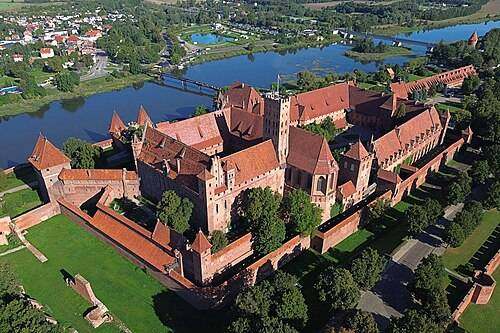
- Malbork is the largest castle in the world by area
- Wieliczka mine has chambers carved entirely of salt
- Its 1791 constitution was Europe's first modern one
Key facts about Poland
- Government
- Parliamentary republic
- Religion
- Catholic ~85%
- Founded / independence
- 966 (baptism of Mieszko I); 1918 restored
- Rich in
- Coal, copper, manufacturing, agriculture, fast-growing economy
- Languages
- Polish
Polish: Greater and Lesser Polish, Masovian, Silesian dialects; Kashubian - Currency
- Polish złoty (zł)
- People are called
- Polish
- Main cities
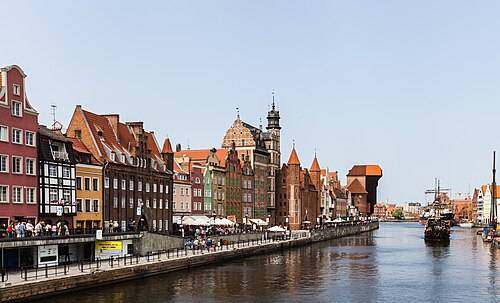
- Warsaw, Kraków, Łódź, Wrocław, Poznań, Gdańsk
Timeline of Poland
- 966Christianisation
- 1410Battle of Grunwald
- 1569Commonwealth with Lithuania
- 1795Partitioned
- 1918Independence
- 1939Invaded
- 1980Solidarity
- 1989Free elections
- 2004Joins EU
Places to see in Poland
- Kraków old town
- Wawel Castle
- Wieliczka salt mine
- Auschwitz-Birkenau memorial
- Malbork Castle
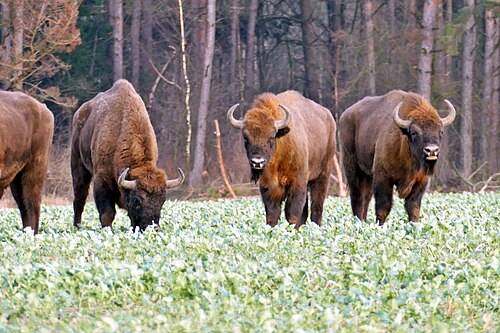
- Białowieża Forest
Food and drink
Pierogi · bigos · żurek · kiełbasa · pączki
Culture and famous for
Chopin; Marie Curie; Copernicus; Pope John Paul II
Popular sports
Football, volleyball, ski jumping
Geography and climate
- Highest point
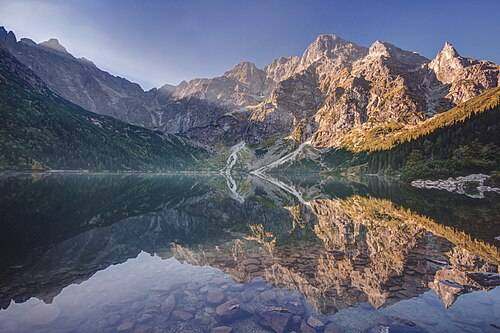
- Rysy, 2,499 m
- Rivers, lakes and seas
- Vistula, Oder; Masurian Lakes
- Climate
- Continental
- Coastline
- Has a sea coast
- Population density
- 120 people per km²
Wars and conflicts
- Partitions 1772–95
- Polish-Soviet War 1920
- WWII and the Holocaust
- Solidarity 1980s
Empires and states that once stood here
Teutonic Order State 1230–1525Austria-Hungary 1867–1918
Alliances and memberships
Military and security
Political unions and regional organisations
European UnionCouncil of EuropeVisegrád Group
Economy and trade
Poland in depth
Detailed facts from the CIA World Factbook (public domain, latest edition).
Overview
- History in brief
- Poland's history as a state began near the middle of the 10th century. By the mid-16th century, the Polish-Lithuanian Commonwealth ruled a vast tract of land in Central and Eastern Europe. During the 18th century, internal disorder weakened the nation, and in a series of agreements between 1772 and 1795, Russia, Prussia, and Austria partitioned Poland among themselves. Poland regained its independence in 1918 only to be overrun by Germany and the Soviet Union in World War II. It became a Soviet satellite state following the war. Labor turmoil in 1980 led to the formation of the independent trade union Solidarity that over time became a political force with over 10 million members. Free elections in 1989 and 1990 won Solidarity control of the parliament and the presidency, bringing the communist era to a close. A "shock therapy" program during the early 1990s enabled the country to transform its economy into one of the most robust in Central Europe. Poland joined NATO in 1999 and the EU in 2004.
Geography
- Location
- Central Europe, east of Germany
- Size compared
- about twice the size of Georgia; slightly smaller than New Mexico
- Land borders
- Total: 2,865 kmBorder countries: Belarus 375 km; Czechia 699 km; Germany 467 km; Lithuania 100 km, Russia (Kaliningrad Oblast) 209 km; Slovakia 517 km; Ukraine 498 km
- Coastline
- 440 km
- Climate
- temperate with cold, cloudy, moderately severe winters with frequent precipitation; mild summers with frequent showers and thundershowers
- Terrain
- mostly flat plain; mountains along southern border
- Elevation
- Highest point: Rysy 2,499 mLowest point: near Raczki Elblaskie -2 mMean elevation: 173 m
- Natural resources
- coal, sulfur, copper, natural gas, silver, lead, salt, amber, arable land
- Major rivers
- Wisla (Vistula) river source and mouth (shared with Belarus and Ukraine) - 1,213 kmNote: longest river in Poland
- Major lakes
- Salt water lake(s): Zalew Szczecinski/Stettiner Haff (shared with Germany) - 900 sq km
- Natural hazards
- flooding
- Notes
- historically an area of conflict because of flat terrain and the lack of natural barriers on the North European Plain
- Environmental issues
- air pollution (despite environmental policy improvements) because of coal-burning in homes and power plants; acid rain leading to forest damage; water pollution from industrial and municipal sources; disposal of hazardous wastes
People and society
- Population
- Total: 38,746,310 (2024 est.)Male: 18,441,415Female: 20,304,895
- Nationality
- Noun: Pole(s)Adjective: Polish
- Ethnic groups
- Polish 96.9%, Silesian 1.1%, German 0.2%, Ukrainian 0.1%, other and unspecified 1.7% (2011 est.)
- Languages
- Polish (official) 98.2%, Silesian 1.4%, other 1.1%, unspecified 1.2% (2011 est.)Major-language sample(s): Księga Faktów Świata, niezbędne źródło podstawowych informacji. (Polish)The World Factbook, the indispensable source for basic information.
- Religions
- Roman Catholic 70.7%, refused to answer 20.9%, no religion 6.9%; less than 1 percent: Orthodox, Jehovah Witness, Evangelic of Augsburg, Greek Catholic, Pentecostal, other Protestant, not stated, old Catholic Mariavite Church, other Christians, Islam, Buddhist, Polish Catholic Church, other, Baptist Union of Poland, Pagan, Seventh Day Adventist, Hindu, other Catholic (2021 est.)
- Median age
- Total: 43.4 years (2025 est.)Male: 41.5 yearsFemale: 44.3 years
- Population growth
- -0.98% (2025 est.)
- Life expectancy
- Total population: 76.7 years (2024 est.)Male: 72.8 yearsFemale: 80.9 years
- Children per woman
- 1.33 children born/woman (2025 est.)
- Urbanization
- Urban population: 60.2% of total population (2023)Rate of urbanization: -0.16% annual rate of change (2020-25 est.)
- Largest cities
- 1.798 million WARSAW (capital), 769,000 Krakow (2023)
- Years in school
- Total: 17 years (2023 est.)Male: 16 years (2023 est.)Female: 18 years (2023 est.)
Government
- Official names
- Conventional long form: Republic of PolandConventional short form: PolandLocal long form: Rzeczpospolita PolskaLocal short form: PolskaFormer: Polish People's RepublicEtymology: the name probably comes from the Slavic word pole (field or plain), indicating the flat nature of the country
- Government type
- parliamentary republic
- Capital
- Name: WarsawGeographic coordinates: 52 15 N, 21 00 ETime difference: UTC+1 (6 hours ahead of Washington, DC, during Standard Time)Daylight saving time: +1hr, begins last Sunday in March; ends last Sunday in OctoberEtymology: the origin of the name is unknown; Warszawa was the name of a fishing village, and several legends link the city's founding to a man named Wars or Warsz
- Regions
- 16 provinces or voivodships (wojewodztwa, singular - wojewodztwo); Dolnoslaskie (Lower Silesia), Kujawsko-Pomorskie (Kuyavia-Pomerania), Lodzkie (Lodz), Lubelskie (Lublin), Lubuskie (Lubusz), Malopolskie (Lesser Poland), Mazowieckie (Masovia), Opolskie (Opole), Podkarpackie (Subcarpathia), Podlaskie, Pomorskie (Pomerania), Slaskie (Silesia), Swietokrzyskie (Holy Cross), Warminsko-Mazurskie (Warmia-Masuria), Wielkopolskie (Greater Poland), Zachodniopomorskie (West Pomerania)
- Independence
- 11 November 1918 (republic proclaimed); notable earlier dates: 14 April 966 (adoption of Christianity, traditional founding date), 1 July 1569 (Polish-Lithuanian Commonwealth created)
- National holiday
- Constitution Day, 3 May (1791)
- Constitution
- History: several previous; latest adopted 2 April 1997, approved by referendum 25 May 1997, effective 17 October 1997Amendment process: proposed by at least one fifth of Sejm deputies, by the Senate, or by the president of the republic; passage requires at least two-thirds majority vote in the Sejm and absolute majority vote in the Senate; amendments to articles relating to sovereignty, personal freedoms, and constitutional amendment procedures also require passage by majority vote in a referendum
- Legal system
- civil law system; judicial review of legislative, administrative, and other governmental acts; constitutional law rulings of the Constitutional Tribunal are final
- Voting age
- 18 years of age; universal
- Flag meaning
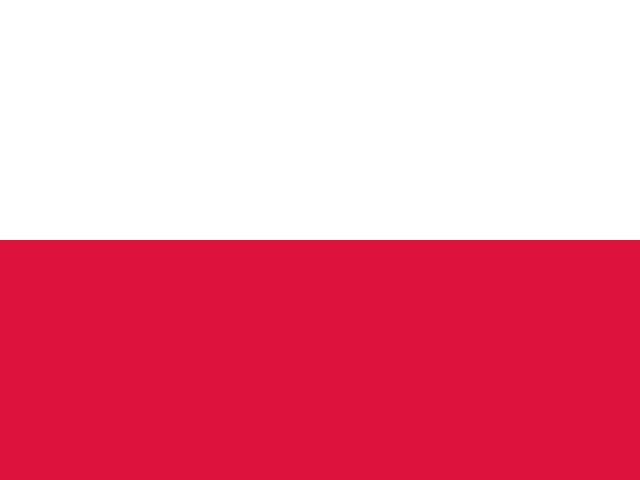
- Description: two equal horizontal bands of white (top) and redMeaning: colors derive from the Polish emblem, a white eagle on a red field
- National symbols
- white crowned eagle
- National colours
- white, red
- National anthem
- Title: "Mazurek Dabrowskiego" (Dabrowski's Mazurka)Lyrics/music: Jozef WYBICKI/traditionalHistory: adopted 1927;
- UNESCO World Heritage Sites
- Total World Heritage Sites: 17 (15 cultural, 2 natural)Selected World Heritage Site locales: Historic Krakow (c); Historic Warsaw (c); Medieval Torun (c); Wooden Tserkvas of the Carpathian Region (c); Castle of the Teutonic Order in Malbork (c); Wieliczka and Bochnia Royal Salt Mines (c); Auschwitz Birkenau Concentration Camp (c); Ancient and Primeval Beech Forests of the Carpathians (n); Białowieza Forest (n); Old City of Zamość (c)
Economy
- Overview
- high-income, diversified, EU-member economy; significant growth in GDP, trade, and investment since joining EU in 2004; private consumption and EU-funded public investments driving GDP growth; increased social spending, flooding recovery costs, and defense spending have added to public debt
- GDP (PPP)
- $1.649 trillion (2024 est.)
- GDP per person (PPP)
- $45,100 (2024 est.)
- GDP growth
- 2.9% (2024 est.)
- Inflation
- 3.8% (2024 est.)
- Unemployment
- 2.5% (2024 est.)
- Below poverty line
- 12.2% (2023 est.)
- Farm products
- sugar beets, milk, wheat, maize, potatoes, triticale, apples, rapeseed, barley, rye (2023)
- Industries
- machine building, iron and steel, coal mining, chemicals, shipbuilding, food processing, glass, beverages, textiles
- Exports
- $478.579 billion (2024 est.)
- Main exports
- vehicle parts/accessories, electric batteries, plastic products, cars, seats (2023)
- Export partners
- Germany 25%, UK 6%, Czechia 6%, France 6%, Italy 5% (2023)
- Main imports
- crude petroleum, cars, garments, vehicle parts/accessories, plastic products (2023)
- Import partners
- Germany 22%, China 12%, Italy 5%, Netherlands 4%, USA 4% (2023)
- Money sent home from abroad
- 0.9% of GDP (2024 est.)
Energy, internet and transport
- Electricity access
- Electrification - total population: 100% (2022 est.)
- Electricity sources
- Fossil fuels: 72.7% of total installed capacity (2023 est.)Solar: 6.9% of total installed capacity (2023 est.)Wind: 14.4% of total installed capacity (2023 est.)Hydroelectricity: 1.1% of total installed capacity (2023 est.)Biomass and waste: 4.9% of total installed capacity (2023 est.)
- Internet users
- Percent of population: 86% (2023 est.)
- Mobile phones
- Total subscriptions: 52.4 million (2023 est.)Subscriptions per 100 inhabitants: 132 (2022 est.)
- TV and radio
- state-run public TV operates 2 national channels supplemented by 16 regional and several niche channels; privately owned entities operate several national TV networks and some special interest channels; many privately owned local channels; roughly half of all households are linked to satellite or cable TV systems with access to foreign TV; state-run public radio operates 5 national networks and 17 regional stations; 2 privately owned national radio networks, several commercial stations, and many privately owned local radio stations (2019)
- Airports
- 318 (2025)
- Railways
- Total: 19,461 km (2020) 11,946 km electrified
- Merchant ships
- Total: 152 (2023)By type: general cargo 6, oil tanker 6, other 140
Military and space
- Armed forces
- Polish Armed Forces (Polskie Siły Zbrojne): Land Forces (Wojska Ladowe), Navy (Marynarka Wojenna), Air Force (Sily Powietrzne), Special Forces (Wojska Specjalne), Territorial Defense Forces (Wojska Obrony Terytorialnej), Cyberspace Defense Forces (Wojska Obrony Cyberprzestrzeni)Ministry of Interior and Administration: Polish National Police (Policja); Border Guard (Straż Graniczna or SG) (2025)
- Military spending
- 4.5% of GDP (2025 est.)
- Military service
- 18 years of age for voluntary military service for men and women; no conscription; professional soldiers serve on a permanent basis (for an unspecified period of time) or on a contract basis (for a specified period of time); initial contract period is 24 months (2025)
- Space programme
- builds satellites, including nano/cube remote sensing (RS) and scientific/technology satellites; researches and develops communications, RS, navigational, and other scientific applications for satellite payloads; creating infrastructure for data from meteorological and environmental satellites; researches and develops other space-related technologies, including sensors and robotic probes for interplanetary landers, and launcher systems; space program is integrated with the ESA and the EU; participates in a variety of ESA/EU and international programs; cooperates with a variety of other foreign space agencies and industries, including those of Brazil, Canada, China, ESA/EU member states (particularly France, Germany, Italy), India, Japan, Mexico, Russia, Ukraine, UK, and the US; has a commercial space sector with more than 300 active enterprises (2025)
- Space milestones
- 1978 - first Polish astronaut in space on Soviet spacecraft1991 - began cooperating with the ESA1994 - began participating in Russia's Koronas solar research missions2012 - joined ESA; first domestically built scientific nanosatellite (PW-Sat) launched on European rocket2021 - joined US-led Artemis Accords for lunar and space exploration2024 - successfully launched domestically developed experimental suborbital rocket (ILR-33 Amber 2K) to altitude of 101 kms2025 - first Polish astronaut and scientific mission on International Space Station
Global issues
- Refugees and displaced people
- Refugees: 1,019,863 (2024 est.)Stateless persons: 1,486 (2024 est.)
- Drug trade
- USG identification: major precursor-chemical producer (2025)
Neighbouring countries
BelarusCzechiaGermanyLithuaniaRussiaSlovakiaUkraine
- Phone code
- +48
- Internet domain
- .pl