Slovakia
Slovak Republic · Slovensko
Part of Great Moravia, then Hungary for about a thousand years. Joined Czechoslovakia in 1918 and separated peacefully in 1993. Uses the euro.
See Slovakia on the 3D globeTake a quiz
Population5.4 million
Area49,037 km²
CapitalBratislava
RegionCentral Europe
Did you know?
- Makes the most cars per person of any country
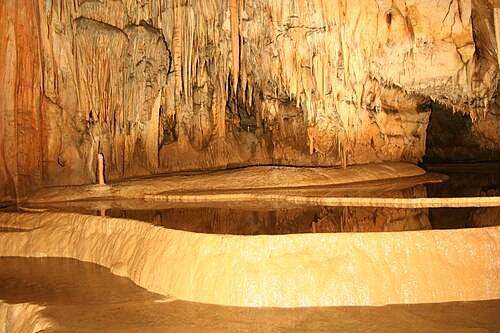
- Has around 6,000 caves
- Spiš Castle is one of Central Europe's largest
Key facts about Slovakia
- Government
- Parliamentary republic
- Religion
- Catholic ~56%, unaffiliated ~24%
- Founded / independence
- 1993 (Czechoslovakia split)
- Rich in
- Cars (most per person in the world), steel, electronics
- Languages
- Slovak
Slovak: western, central, eastern dialects; Hungarian minority - Currency
- Euro (€)
- People are called
- Slovak
- Main cities
- Bratislava, Košice, Prešov, Žilina
Timeline of Slovakia
- 833Great Moravia
- 1000Part of Hungary
- 1918Czechoslovakia
- 1939Nazi puppet state
- 1993Independence
- 2004Joins EU and NATO
- 2009Adopts euro
Places to see in Slovakia
- Bratislava Castle
- High Tatras
- Spiš Castle
- Bojnice Castle
- Slovak Paradise gorges
Food and drink
Bryndzové halušky (dumplings with sheep cheese) · kapustnica
Culture and famous for
Fujara shepherd's flute; wooden churches
Popular sports
Ice hockey, canoe slalom
Geography and climate
- Highest point
- Gerlachovský štít, 2,655 m
- Rivers, lakes and seas
- Danube, Váh
- Climate
- Continental
- Coastline
- Landlocked
- Population density
- 110 people per km²
Wars and conflicts
- WWII
- 1968 Soviet invasion
Alliances and memberships
Military and security
Political unions and regional organisations
European UnionEurozoneCouncil of EuropeVisegrád Group
Economy and trade
Slovakia in depth
Detailed facts from the CIA World Factbook (public domain, latest edition).
Overview
- History in brief
- Slovakia traces its roots to the 9th century state of Great Moravia. The Slovaks then became part of the Hungarian Kingdom, where they remained for the next 1,000 years. After the formation of the dual Austro-Hungarian monarchy in 1867, language and education policies favoring the use of Hungarian (known as "Magyarization") led to a public backlash that boosted Slovak nationalism and strengthened Slovak cultural ties with the closely related Czechs, who fell administratively under the Austrian half of the empire. When the Austro-Hungarian Empire dissolved at the end of World War I, the Slovaks joined the Czechs to form Czechoslovakia. During the interwar period, Slovak nationalist leaders pushed for autonomy within Czechoslovakia, and in 1939, in the wake of Germany's annexation of the Sudetenland, the newly established Slovak Republic became a German client state for the remainder of World War II.After World War II, Czechoslovakia was reconstituted and came under communist rule within Soviet-dominated Eastern Europe. In 1968, Warsaw Pact troops invaded and ended the efforts of Czechoslovakia's leaders to liberalize communist rule and create "socialism with a human face," ushering in a period of repression known as "normalization." The peaceful Velvet Revolution swept the Communist Party from power at the end of 1989 and inaugurated a return to democratic rule and a market economy. On 1 January 1993, Czechoslovakia underwent a nonviolent "velvet divorce" into its two national components, Slovakia and the Czech Republic. Slovakia joined both NATO and the EU in 2004 and the euro zone in 2009.
Geography
- Location
- Central Europe, south of Poland
- Size compared
- about 1.5 times the size of Maryland; about twice the size of New Hampshire
- Land borders
- Total: 1,587 kmBorder countries: Austria 105 km; Czechia 241 km; Hungary 627 km; Poland 517 km; Ukraine 97 km
- Coastline
- 0 km (landlocked)
- Climate
- temperate; cool summers; cold, cloudy, humid winters
- Terrain
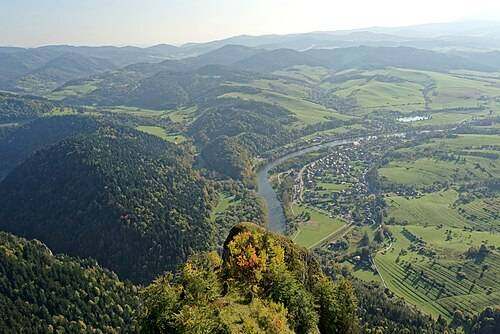
- rugged mountains in the central and northern part and lowlands in the south
- Elevation
- Highest point: Gerlachovsky Stit 2,655 mLowest point: Bodrok River 94 mMean elevation: 458 m
- Natural resources
- lignite, small amounts of iron ore, copper and manganese ore; salt; arable land
- Major rivers
- Dunaj (Danube) (shared with Germany [s], Austria, Hungary, Croatia, Serbia, Bulgaria, Ukraine, Moldova, and Romania [m]) - 2,888 kmnote – [s] after country name indicates river source; [m] after country name indicates river mouth
- Natural hazards
- flooding
- Notes
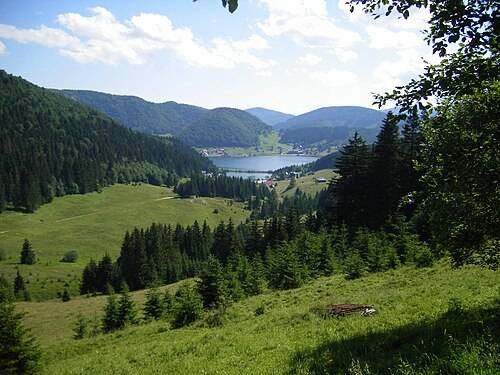
- landlocked; most of the country is rugged and mountainous; the Tatra Mountains in the north are interspersed with many scenic lakes and valleys
- Environmental issues
- air pollution and acid rain; land erosion from agricultural and mining practices; water pollution
People and society
- Population
- Total: 5,563,649 (2024 est.)Male: 2,684,747Female: 2,878,902
- Nationality
- Noun: Slovak(s)Adjective: Slovak
- Ethnic groups
- Slovak 83.8%, Hungarian 7.8%, Romani 1.2%, other 1.8% (includes Czech, Ruthenian, Ukrainian, Russian, German, Polish), unspecified 5.4% (2021 est.)
- Languages
- Slovak (official) 81.8%, Hungarian 8.5%, Roma 1.8%, other 2.2%, unspecified 5.7% (2021 est.)Major-language sample(s): Svetova Kniha Faktov, nenahraditelny zdroj zakladnej informacie. (Slovak)The World Factbook, the indispensable source for basic information.
- Religions
- Roman Catholic 55.8%, Evangelical Church of the Augsburg Confession 5.3%, Greek Catholic 4%, Reformed Christian 1.6%, other 3%, none 23.8%, unspecified 6.5% (2021 est.)
- Median age
- Total: 43.1 years (2025 est.)Male: 41.3 yearsFemale: 44.4 years
- Population growth
- -0.07% (2025 est.)
- Life expectancy
- Total population: 77.2 years (2024 est.)Male: 73.7 yearsFemale: 81 years
- Children per woman
- 1.6 children born/woman (2025 est.)
- Urbanization
- Urban population: 54% of total population (2023)Rate of urbanization: 0.17% annual rate of change (2020-25 est.)
- Largest cities
- 441,000 BRATISLAVA (capital) (2023)
- Years in school
- Total: 15 years (2023 est.)Male: 15 years (2023 est.)Female: 16 years (2023 est.)
Government
- Official names
- Conventional long form: Slovak RepublicConventional short form: SlovakiaLocal long form: Slovenska republikaLocal short form: SlovenskoEtymology: the country takes its name from the local Slav ethnic group; the origin of the group's name is unclear, although early forms were used in Medieval Latin (Sclavus) and Byzantine Greek (Sklabos)
- Government type
- parliamentary republic
- Capital
- Name: BratislavaGeographic coordinates: 48 09 N, 17 07 ETime difference: UTC+1 (6 hours ahead of Washington, DC, during Standard Time)Daylight saving time: +1hr, begins last Sunday in March; ends last Sunday in OctoberEtymology: the meaning is unclear but has medieval Slavic origins; the name was adopted in 1919 after Czechoslovakia gained its independence, replacing the name Prešporok
- Regions
- 8 regions (kraje, singular - kraj); Banska Bystrica, Bratislava, Kosice, Nitra, Presov, Trencin, Trnava, Zilina
- Independence
- 1 January 1993 (Czechoslovakia split into the Czech Republic and Slovakia)
- National holiday
- Constitution Day, 1 September (1992)
- Constitution
- History: several previous (pre-independence); latest passed by the National Council 1 September 1992, signed 3 September 1992, effective 1 October 1992Amendment process: proposed by the National Council; passage requires at least three-fifths majority vote of Council members
- Legal system
- civil law system based on Austro-Hungarian codes
- Voting age
- 18 years of age; universal
- Flag meaning
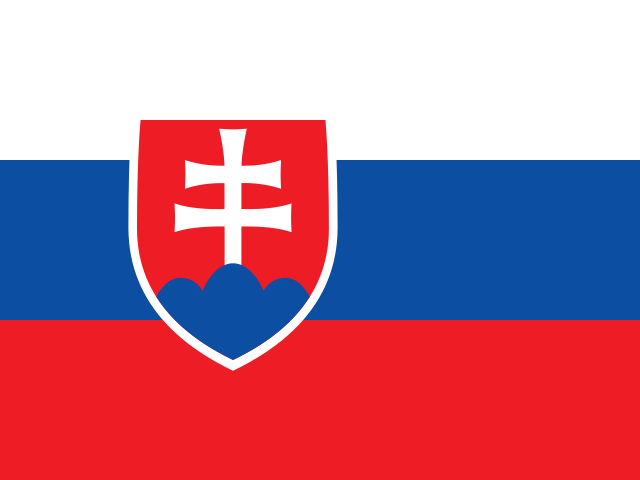
- Description: three equal horizontal bands of white (top), blue, and red; the national coat of arms (a red shield bordered in white, with a white double-barred cross of St. Cyril and St. Methodius on top of three blue hills) is centered over the bands but offset to the leftMeaning: white, blue, and red are the pan-Slav colors
- National symbols
- double-barred cross (Cross of St. Cyril and St. Methodius) over three peaks
- National colours
- white, blue, red
- National anthem
- Title: "Nad Tatrou sa blyska" (Storm Over the Tatras)Lyrics/music: Janko MATUSKA/traditionalHistory: adopted 1993; music based on an 1843 Slovak folk song "Kopala studienku" (She Was Digging a Well)
- UNESCO World Heritage Sites
- Total World Heritage Sites: 8 (6 cultural, 2 natural)Selected World Heritage Site locales: Historic Town of Banská Štiavnica (c); Levoča, Spišský Hrad, and the Associated Cultural Monuments (c); Vlkolínec (c); Caves of Aggtelek Karst and Slovak Karst (n); Bardejov Town (c); Ancient and Primeval Beech Forests of the Carpathians (n); Wooden Churches of the Slovak Carpathians (c); Frontiers of the Roman Empire - The Danube Limes (Western Segment) (c)
Economy
- Overview
- high-income EU and eurozone economy; manufacturing and exports led by automotive sector; growth supported by private consumption and public investment from EU funds, tempered by trade risks; increased taxes and withdrawal of energy subsidies contributing to rising but manageable inflation; strong labor demand and influx of foreign labor offsets aging workforce
- GDP (PPP)
- $218.762 billion (2024 est.)
- GDP per person (PPP)
- $40,300 (2024 est.)
- GDP growth
- 2.1% (2024 est.)
- Inflation
- 2.8% (2024 est.)
- Unemployment
- 5.3% (2024 est.)
- Below poverty line
- 13.7% (2021 est.)
- Farm products
- wheat, sugar beets, maize, milk, barley, rapeseed, sunflower seeds, potatoes, soybeans, pork (2023)
- Industries
- automobiles; metal and metal products; electricity, gas, coke, oil, nuclear fuel; chemicals, synthetic fibers, wood and paper products; machinery; earthenware and ceramics; textiles; electrical and optical apparatus; rubber products; food and beverages; pharmaceutical
- Exports
- $120.355 billion (2024 est.)
- Main exports
- cars, vehicle parts/accessories, video displays, broadcasting equipment, refined petroleum (2023)
- Export partners
- Germany 20%, Czechia 10%, Hungary 7%, USA 6%, Poland 6% (2023)
- Main imports
- vehicle parts/accessories, broadcasting equipment, cars, plastic products, insulated wire (2023)
- Import partners
- Germany 16%, Czechia 14%, Poland 8%, China 7%, Hungary 6% (2023)
- Money sent home from abroad
- 1.9% of GDP (2024 est.)
Energy, internet and transport
- Electricity access
- Electrification - total population: 100% (2022 est.)
- Electricity sources
- Fossil fuels: 14.4% of total installed capacity (2023 est.)Nuclear: 63.7% of total installed capacity (2023 est.)Solar: 2.1% of total installed capacity (2023 est.)Hydroelectricity: 13.9% of total installed capacity (2023 est.)Biomass and waste: 5.9% of total installed capacity (2023 est.)
- Internet users
- Percent of population: 90% (2024 est.)
- Mobile phones
- Total subscriptions: 7.63 million (2023 est.)Subscriptions per 100 inhabitants: 132 (2022 est.)
- TV and radio
- state-owned public broadcaster, Radio and Television of Slovakia (RTVS), has 2 national TV stations; roughly 50 privately owned national, regional, and local TV stations; about 40% of households connected to multi-channel cable or satellite TV; multiple RTVS national and regional radio networks; 32 privately owned radio stations
- Airports
- 116 (2025)
- Railways
- Total: 3,627 km (2020) 1,585 km electrified
Military and space
- Armed forces
- Armed Forces of the Slovak Republic (Ozbrojene Sily Slovenskej Republiky): Ground Forces (Slovenské Pozemné Sily), Air Forces (Slovenské Vzdušné Sily), Special Operations Forces (Sily Pre Speciálne Operácie)Ministry of Interior: Slovak Police Force (SPF or Policajný Zbor) (2025)
- Military spending
- 2% of GDP (2025 est.)
- Military service
- minimum age is 18 for voluntary service for men and women; citizens 18-65 can volunteer for the military reserves (2026)
Global issues
- Refugees and displaced people
- Refugees: 144,349 (2024 est.)Stateless persons: 65 (2024 est.)
Neighbouring countries
AustriaCzechiaHungaryPolandUkraine
- Phone code
- +421
- Internet domain
- .sk